
Tesla robotaxis are learning to spot cats better in the dark
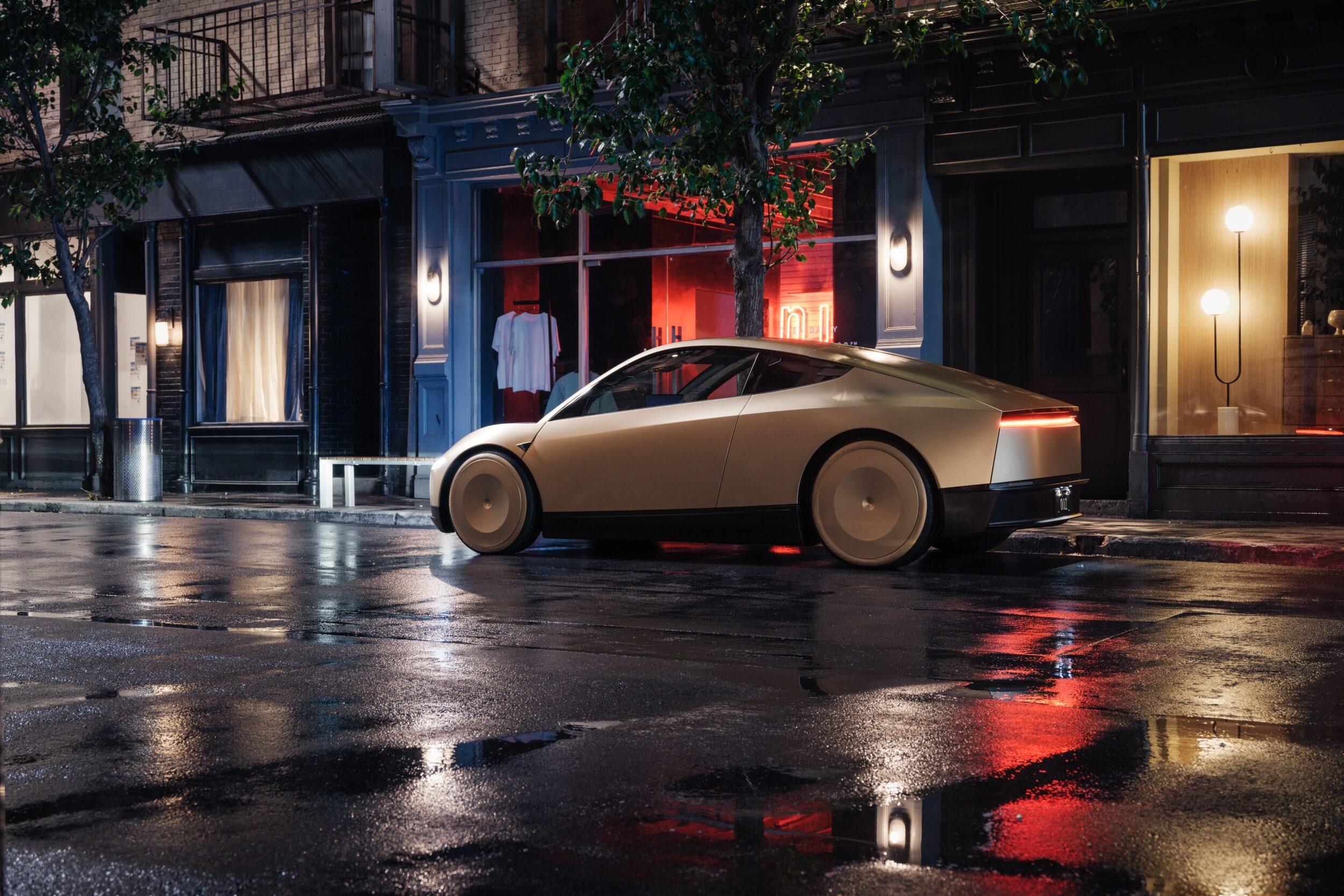
Tesla has extended its robotaxi operating hours in Austin by one hour in the evening, but Elon Musk acknowledged that object detection in the dark still limits further expansion of night-time operations. He said Tesla is trying to avoid situations in which a car fails to spot a small animal, such as a grey kitten, on dark asphalt.
Cameras need light and contrast
Tesla's autonomous driving system primarily uses cameras and neural networks. Musk claimed that artificial intelligence can improve cameras' ability to analyse the few photons available in dim conditions, but low light and low contrast are particularly challenging operating conditions for a camera-based system.
A grey animal on grey asphalt offers little contrast for a camera. Lidar addresses the same problem differently, emitting laser pulses and measuring their reflections. Its performance therefore does not depend directly on an object's colour or the ambient light. Waymo uses cameras, lidar and radar together in its sixth-generation robotaxis.
Tesla, by contrast, has stuck to a camera-only approach for years.
Robotaxi service now runs until 11pm
Tesla has extended its Austin robotaxi service's operating hours from 10pm to 11pm. That does not mean the night-time vision problem has been solved, however. Musk specifically cited pet detection as one of the main reasons why the service has not yet been extended to later hours.
This matters because the same physics applies to more than just cats. A low-contrast object could be a piece of tyre that has fallen onto the road, a dark object or a person in dark clothing. Larger objects are naturally easier to detect, but night-time vision determines an autonomous system's safety margin.
Tesla wants to scale up Cybercab quickly
The robotaxi problem is a strategic issue for Tesla, as the company ties much of its future to its autonomous service and Cybercab. Tesla has already added Cybercab to its Austin fleet, but the company has emphasised caution in expanding its robotaxi operations.
Meanwhile, the US National Highway Traffic Safety Administration, NHTSA, is investigating the behaviour of Tesla's autonomous systems and the deployment of Cybercab. This means that improving night-time object detection is not simply a convenience feature: it is directly linked to how quickly Tesla can expand its driverless service.
A kitten is simply a good example of a bigger problem
Musk's comment sounds amusing, but the technical problem is entirely serious.
An autonomous car's success is not determined solely by how well it drives in ideal conditions. Far more important is how the system behaves in edge cases: in darkness, rain, backlighting and when faced with low-contrast objects.
Tesla now has to prove that it can handle these situations with cameras and software, without adding lidar.


