
Toyota dismisses rumours of another delay for the new Highlander
 1/10
1/10 


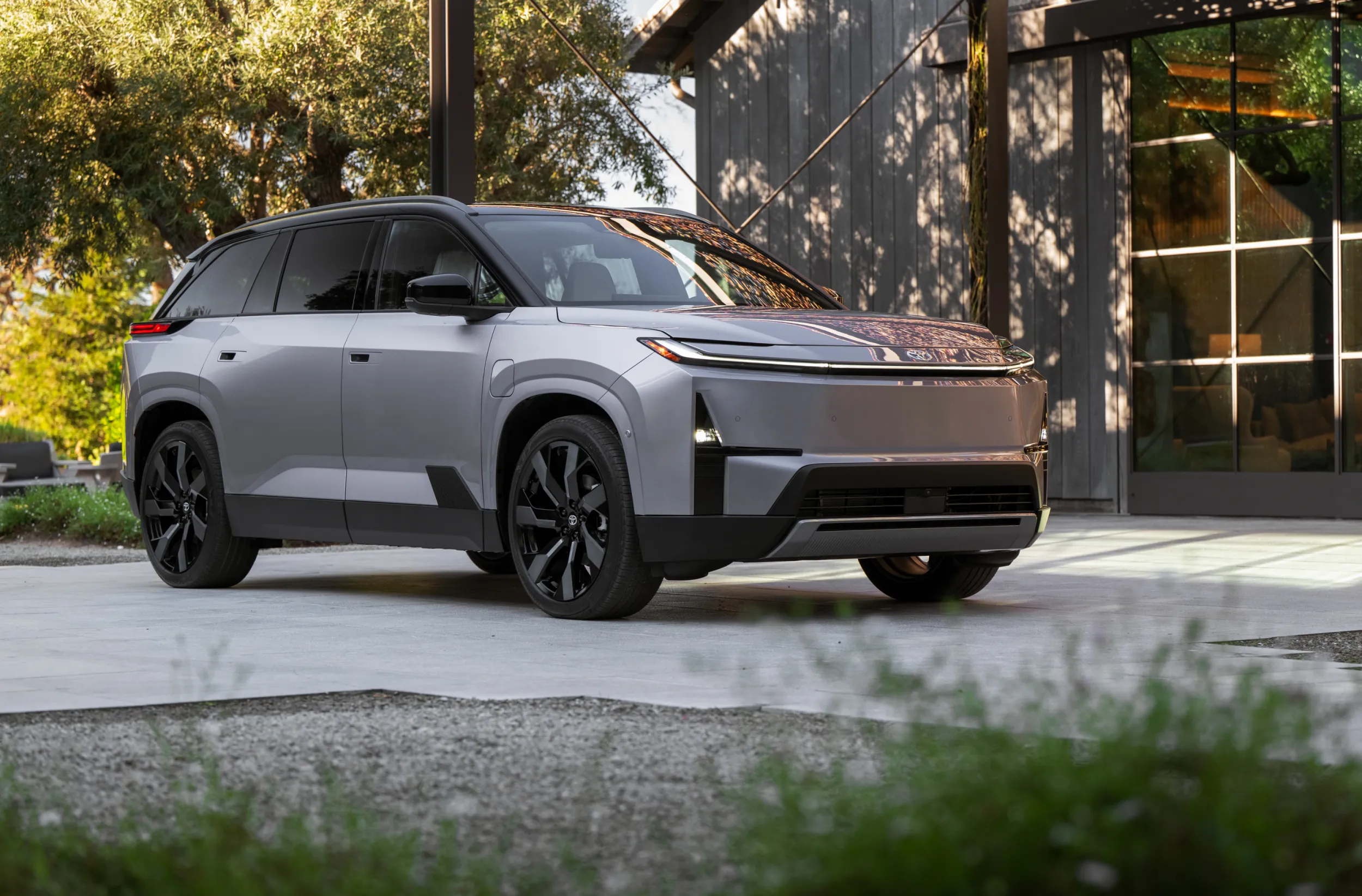
Toyota has dismissed reports that the launch of the new electric Highlander has been pushed back again. According to Nikkei Asia sources, production at the Kentucky plant could slip into 2027 or beyond, but Toyota USA says the schedule announced in July has not changed. A dispute over a few months may seem minor, but the Highlander is an exceptionally important model for Toyota: it will be the brand’s first EV built in the US and its first three-row electric SUV on that market.
Nikkei reports a new delay, Toyota says no
The latest confusion was triggered by a Nikkei Asia report claiming that Toyota had once again postponed Highlander EV production and had already informed suppliers of the change. According to the publication, series production at the Georgetown plant in Kentucky could begin no earlier than January 2027, with the market launch moving into 2027 or even later.
A Toyota USA representative told Carscoops directly, however, that the company has not changed the schedule announced in July. It still calls for the vehicle to launch in 2027, most likely in the first months of the year.
The two claims are not as irreconcilable as they may initially appear. January 2027 falls within Toyota’s officially stated timeframe. The more serious part of Nikkei’s claim is the possibility that production could move much further back. That is what Toyota is currently denying.
The original information behind the fresh dispute came from Nikkei Asia, but for the technical specifications and Toyota’s current position, it is worth relying on Toyota’s own US materials and the comment given to Carscoops.
One delay has already genuinely occurred
First, it is important to distinguish the new rumour from the delay that has already been confirmed. Toyota originally planned sales of the Highlander, unveiled in February, for late 2026 and early 2027. In official material published in March, the manufacturer still wrote that sales should begin in late 2026 and continue into early 2027.
In July, Toyota acknowledged that it was delaying the start of production by at least eight weeks. The company cited additional adjustments before the model’s launch as the reason. Production of the current internal-combustion and hybrid-powered Highlander was extended until the end of the year at the same time.
So the claim that the Highlander has been delayed is not wrong in itself. That delay already happened in the summer. The current question is whether Toyota has changed the schedule again since its July decision. The manufacturer says it has not.
This nuance matters because, against a backdrop of cooling EV demand, another postponement would be easy to interpret as a retreat in Toyota’s EV strategy. With the July delay, the company stressed that it needed more time to finalise the vehicle, rather than cutting back plans because of market weakness.
The Highlander makes a major leap in one generation
The new Highlander is not an electric version of the old model. Toyota has made the 2027 model-year Highlander fully electric, turning it into a three-row SUV with seating for up to seven. In the US market, buyers will be able to choose between XLE and Limited trim levels, and front-wheel drive or all-wheel drive.
Two battery options are available: 77.0 and 95.8 kWh. The entry-level front-wheel-drive XLE produces 165 kW, while all-wheel-drive versions offer up to 252 kW of system output. According to Toyota USA estimates, the larger-battery XLE AWD and Limited AWD can travel up to 515 km on a charge. The estimated range of the front-wheel-drive model with the smaller 77 kWh battery is 462 km, while the all-wheel-drive version with the same battery is rated at 435 km.
These are not WLTP figures, but estimates provided by Toyota for the US market. European buyers should therefore not compare them directly with EV range figures used here.
For rapid charging, Toyota promises around 30 minutes for a 10-80 per cent charge in ideal conditions. The Highlander uses a NACS charging port in North America, while battery preconditioning prepares the energy storage system for rapid charging.
The new Highlander measures 5,050 mm long, 1,989 mm wide and 1,709 mm high, with a wheelbase of 3,051 mm. There is around 450 litres of luggage space behind the third row, rising to approximately 1,291 litres with the third row folded.
Toyota needs the Highlander more than another bZ model
The Highlander’s real importance lies in its name and production location. Toyota’s current US EV line-up consists of the bZ, C-HR and bZ Woodland. The Highlander will become the fourth electric SUV, but the first three-row Toyota EV in the US market and the first Toyota EV the company will assemble in the US.
Production will take place in Georgetown, Kentucky. Battery modules will come in part from Toyota’s $13.9 billion battery plant in North Carolina.
This places the Highlander directly in a segment where American family-car buyers expect three rows of seats, a large boot and decent range. As an EV, it will have to compete with the Kia EV9, Hyundai Ioniq 9 and Rivian R1S, among others.
Toyota’s strength is not record-breaking technology on paper. With 252 kW and around 515 km of manufacturer-estimated range, it is a competitive rather than astonishing proposition in the 2026 EV market. The Highlander name is far more important. Toyota is fitting an electric powertrain to a model that American family-car buyers have known for decades.
Subaru is waiting on the same project
The Highlander schedule also affects Subaru. The Subaru Getaway related to the new Highlander uses the same technical basis, and its production is likewise linked to Toyota’s Kentucky plant. Following the Highlander delay in July, questions arose about how the Subaru model’s schedule would change.
This increases the pressure on Toyota’s engineers. Production problems with one model would no longer affect only one Toyota nameplate, but a wider EV programme and supplier network.
This is where Toyota’s caution becomes understandable. In a three-row electric family car, a minor software or trim issue would not be welcome, but a problem with the battery, charging, thermal management or production quality would be far more costly. Eight additional weeks before production are cheaper than repairing tens of thousands of cars later.
The Highlander has not been promised for Europe
From a European perspective, there is no reason to get overly excited: Toyota has not officially announced the new electric Highlander for this market. The current model programme is clearly North America-focused, and the range figures published by Toyota are also based on US-market methodology.
Nevertheless, the Highlander is also an interesting point of comparison for us. Toyota is showing how quickly electrification is beginning to transform the brand’s traditional global model names. The electric powertrain, previously hidden behind the separate bZ sub-brand, is now arriving under a familiar name such as Highlander.


