
Alfa Romeo Cuorerosso brings back the V6 and surprises with Rolls-Royce-style doors
 1/35
1/35
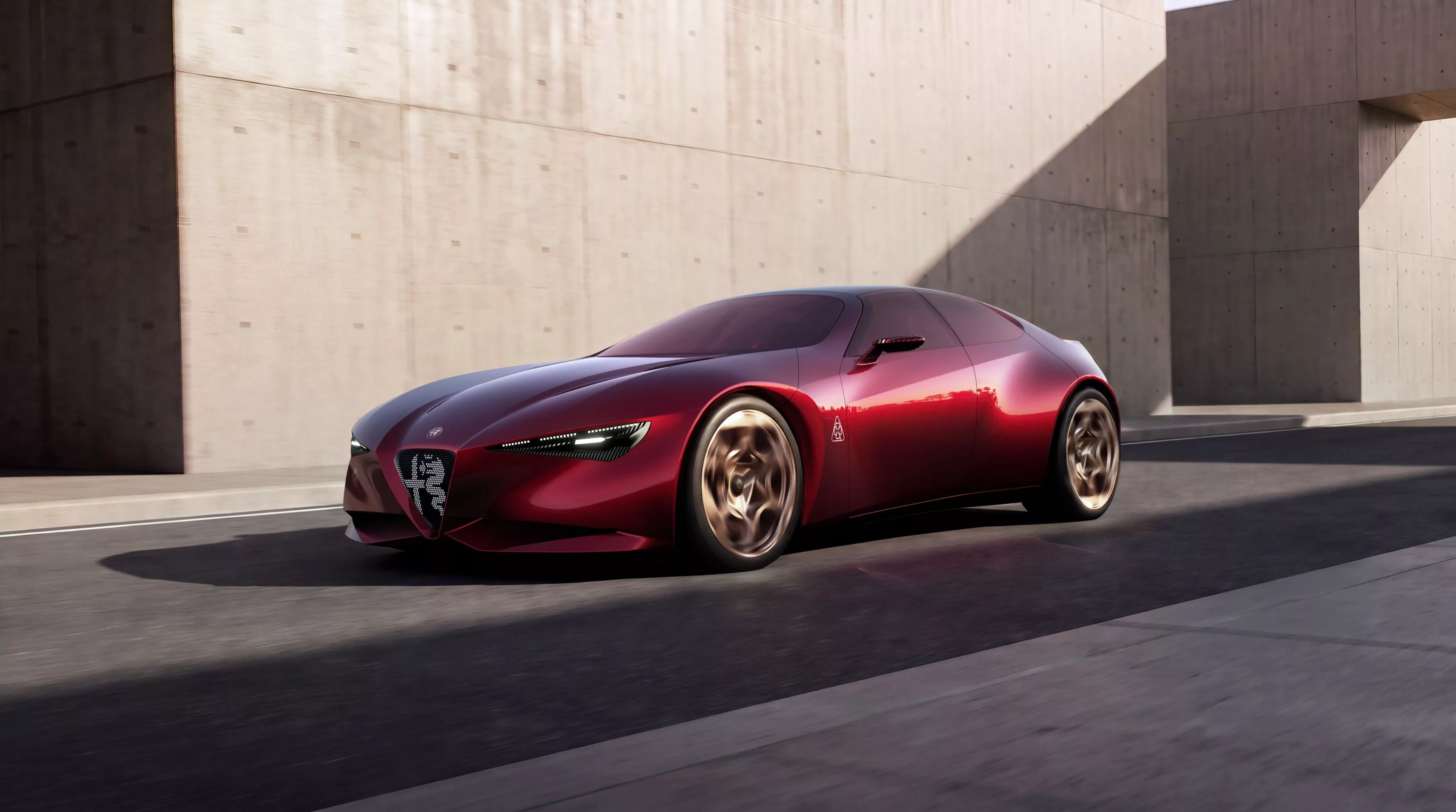
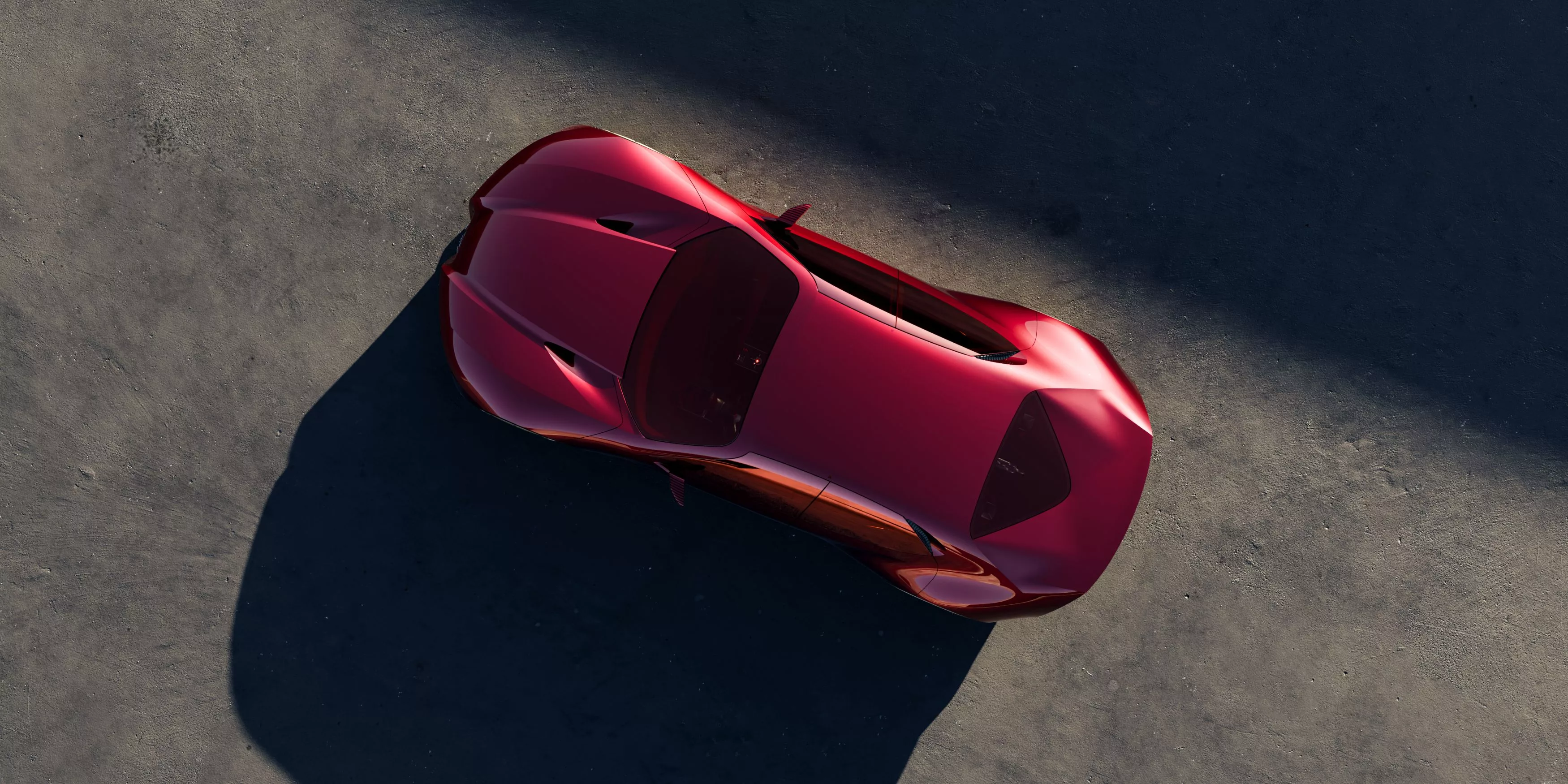
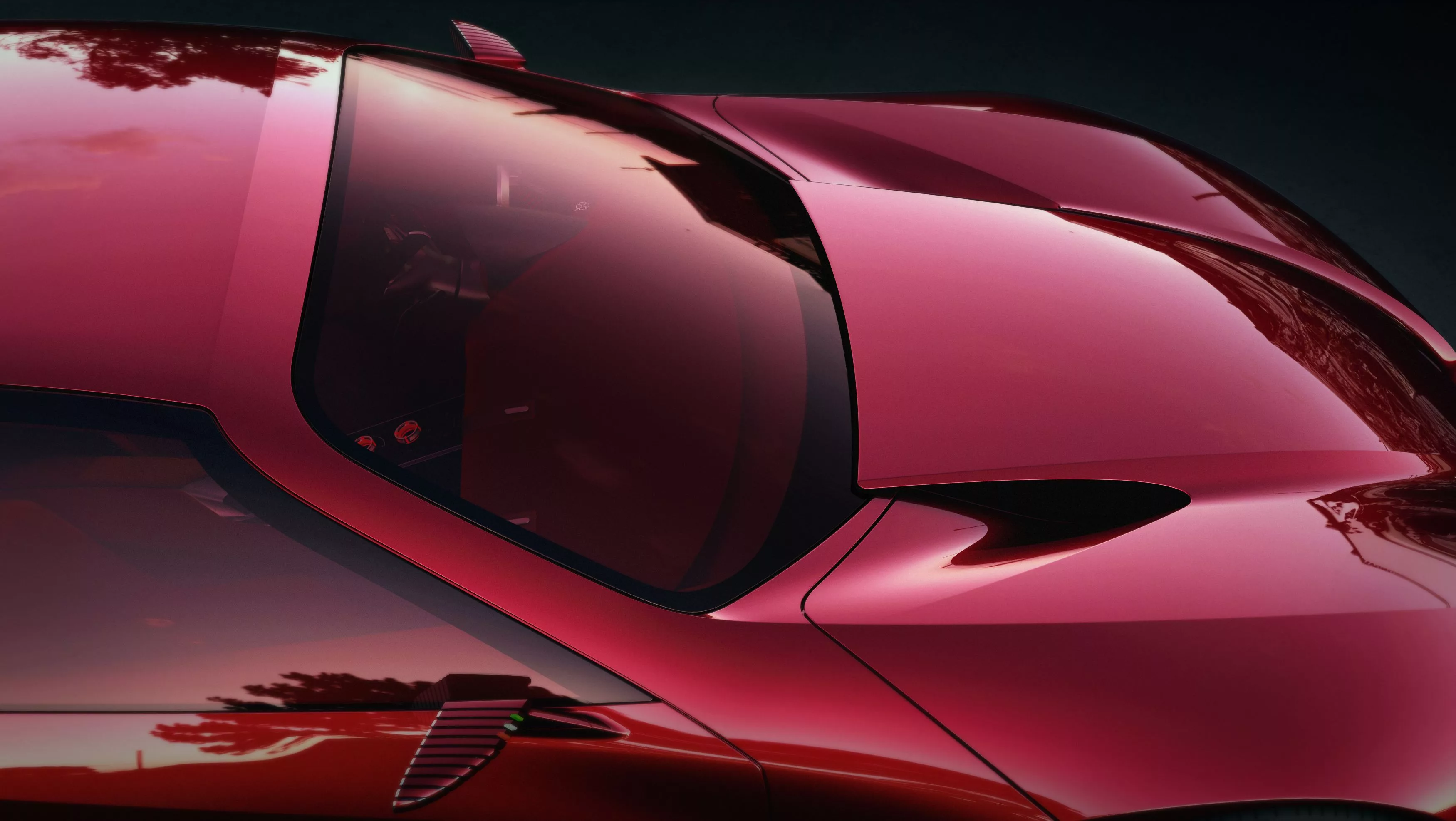
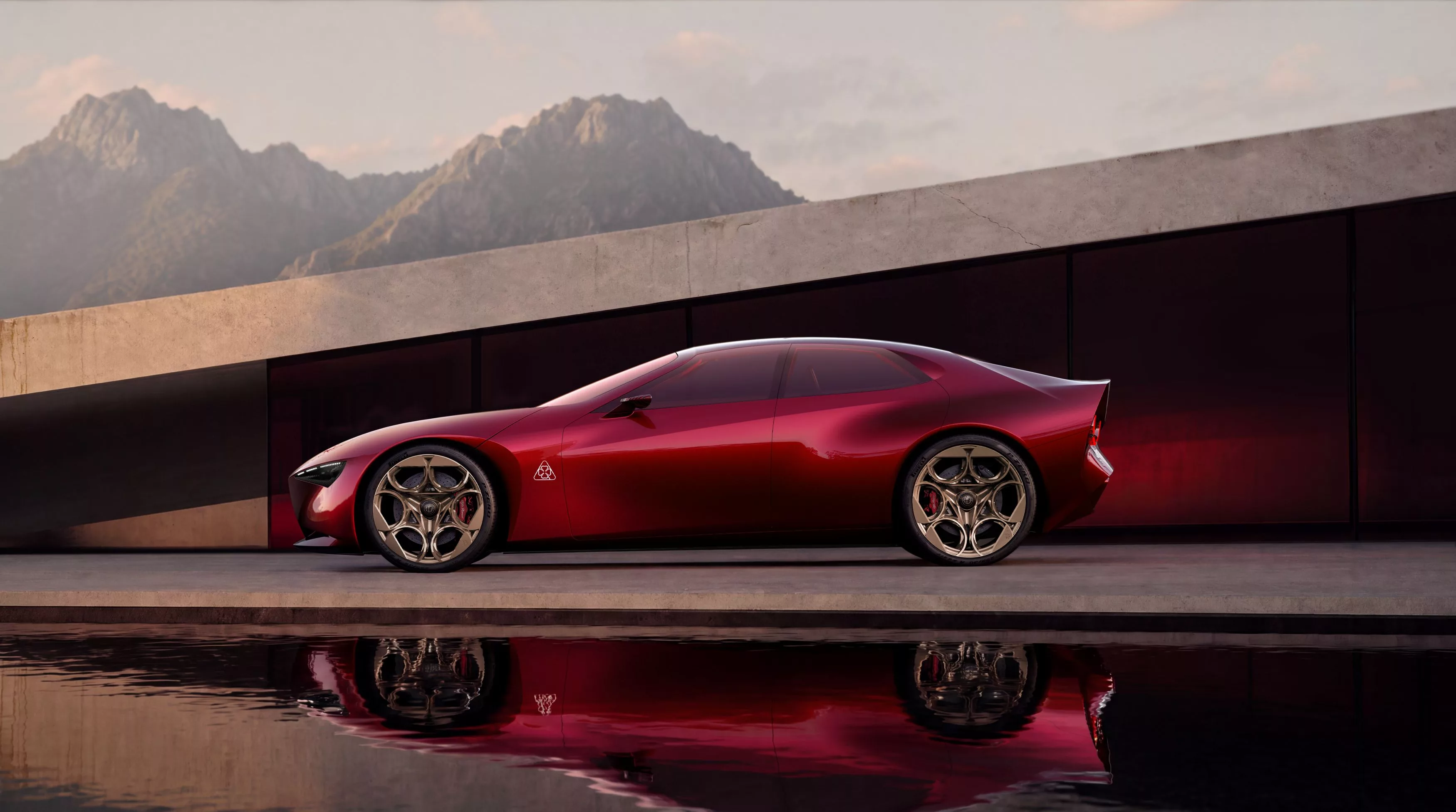
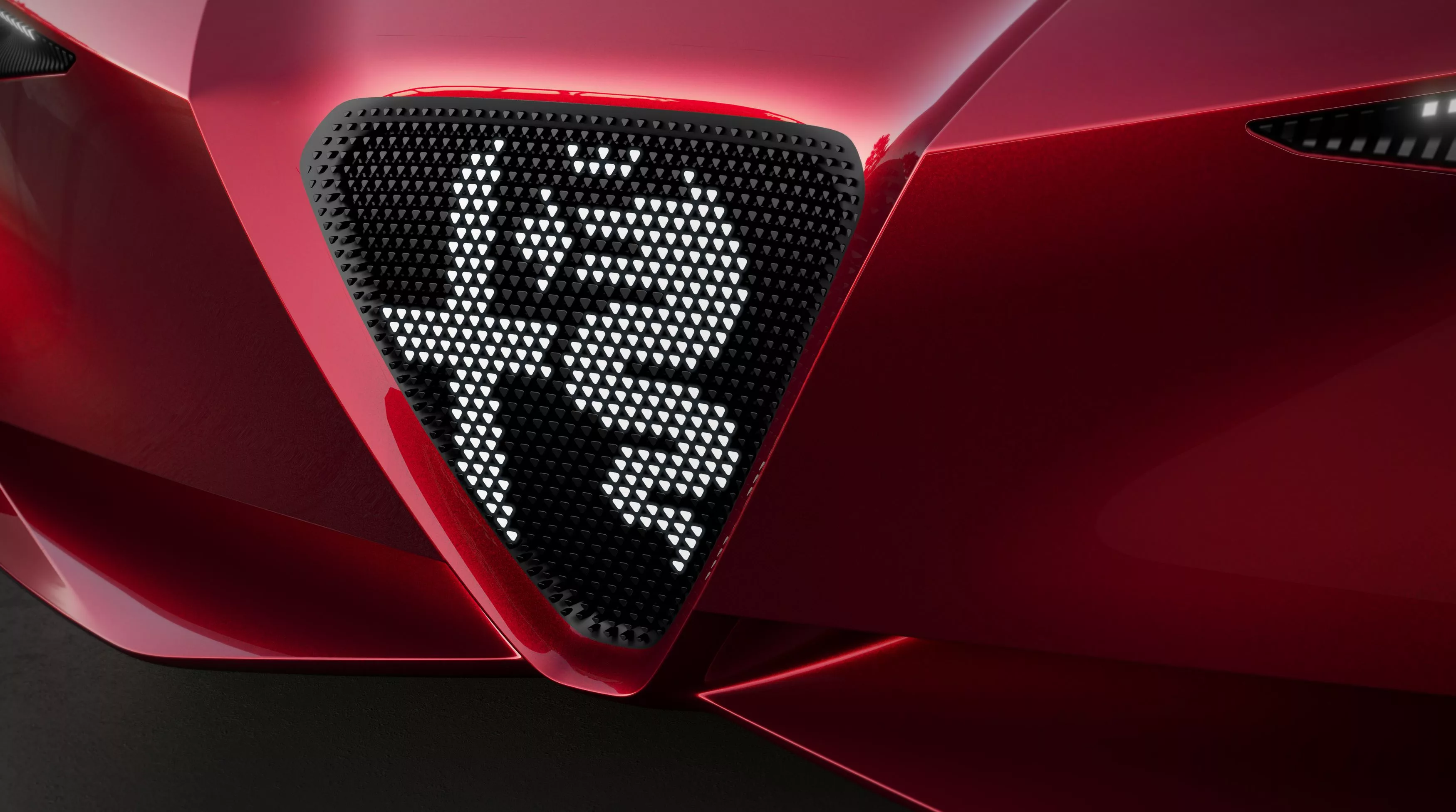
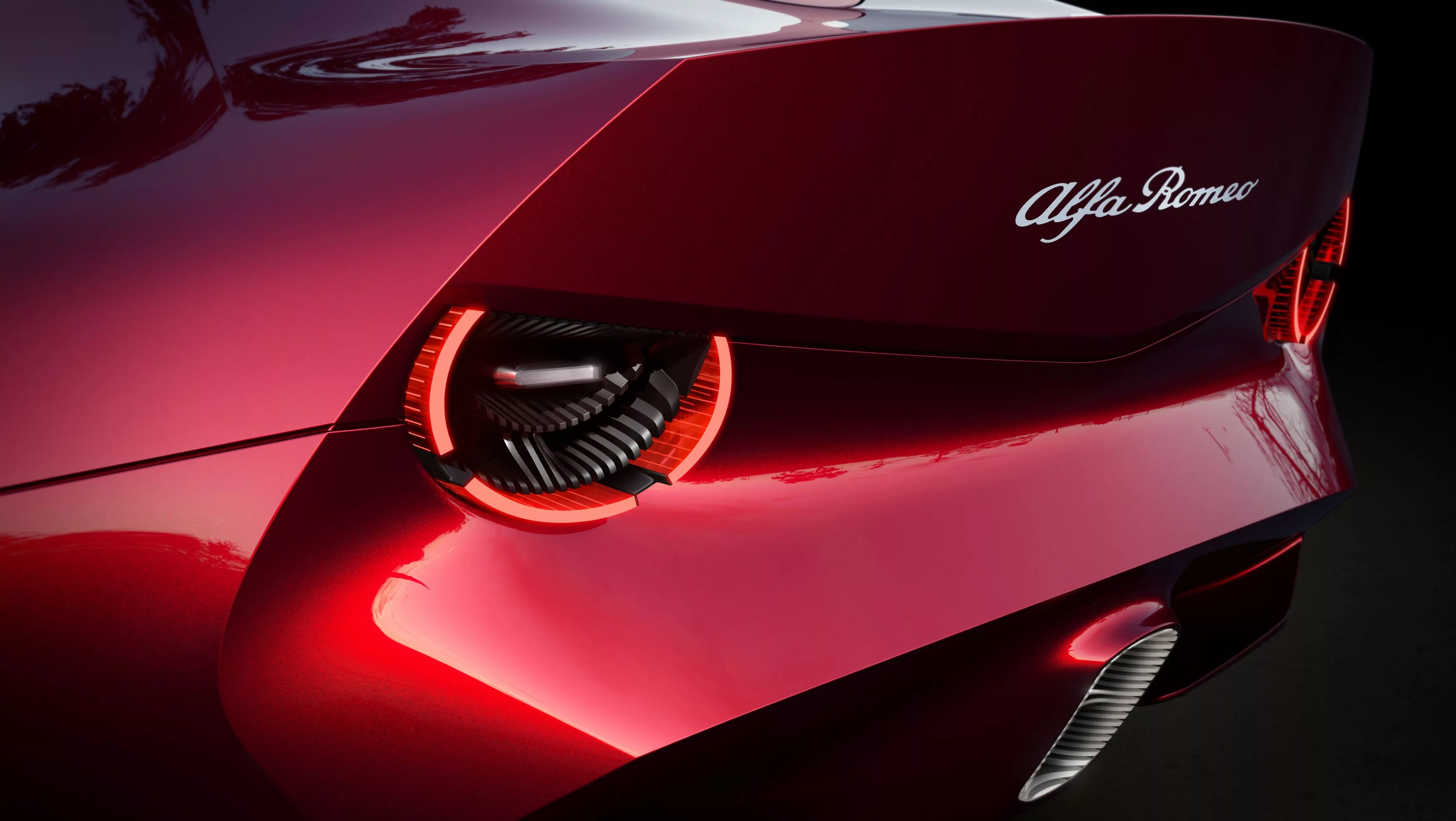
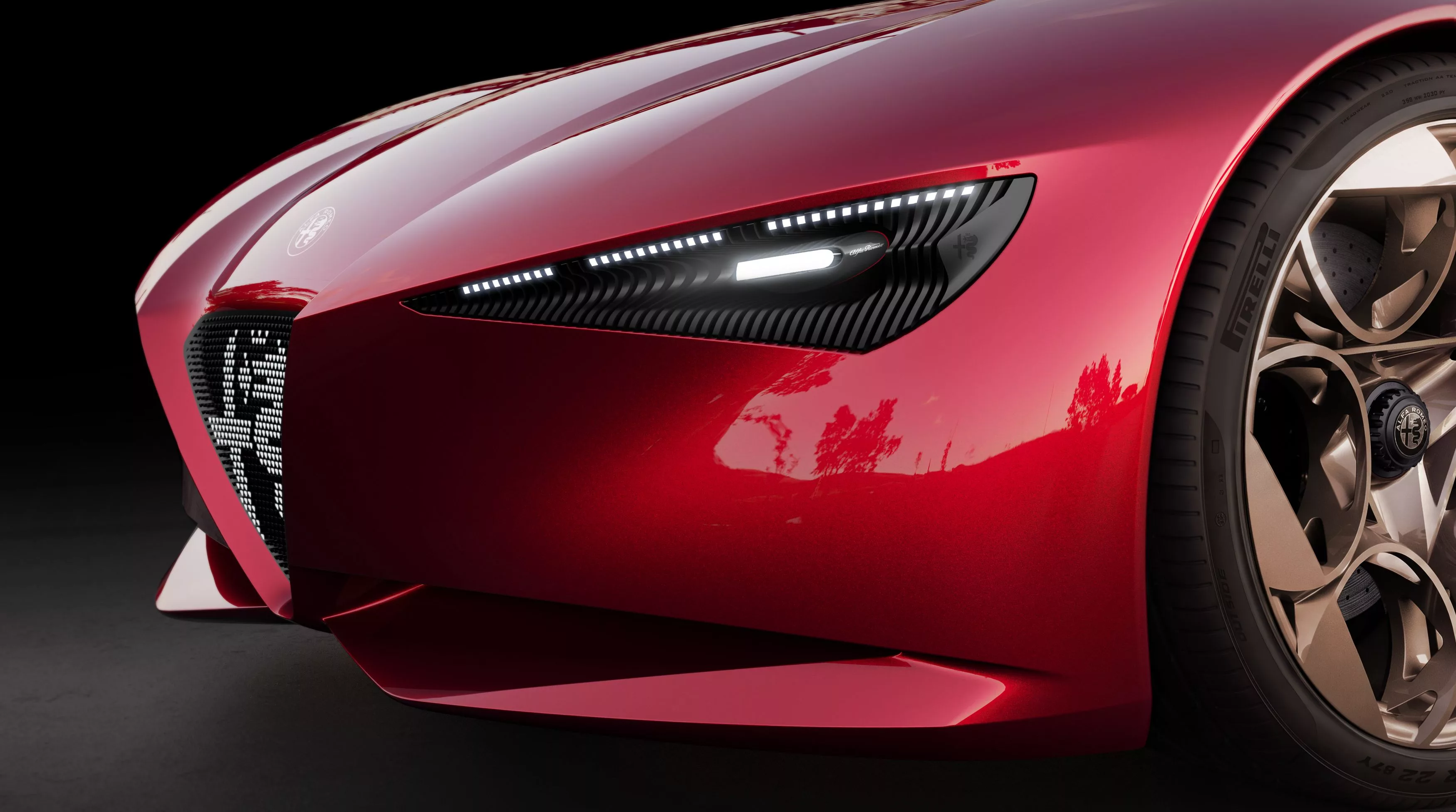
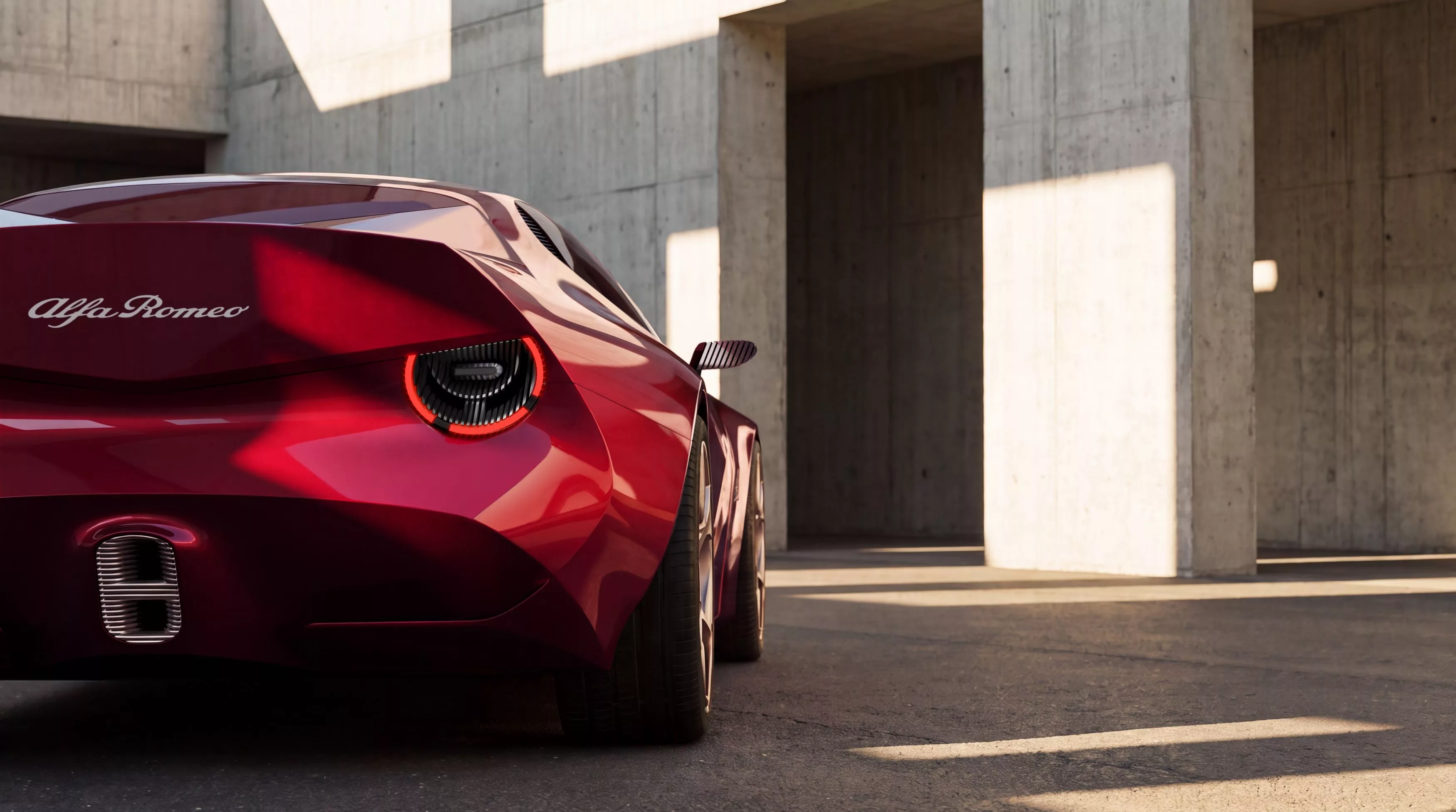
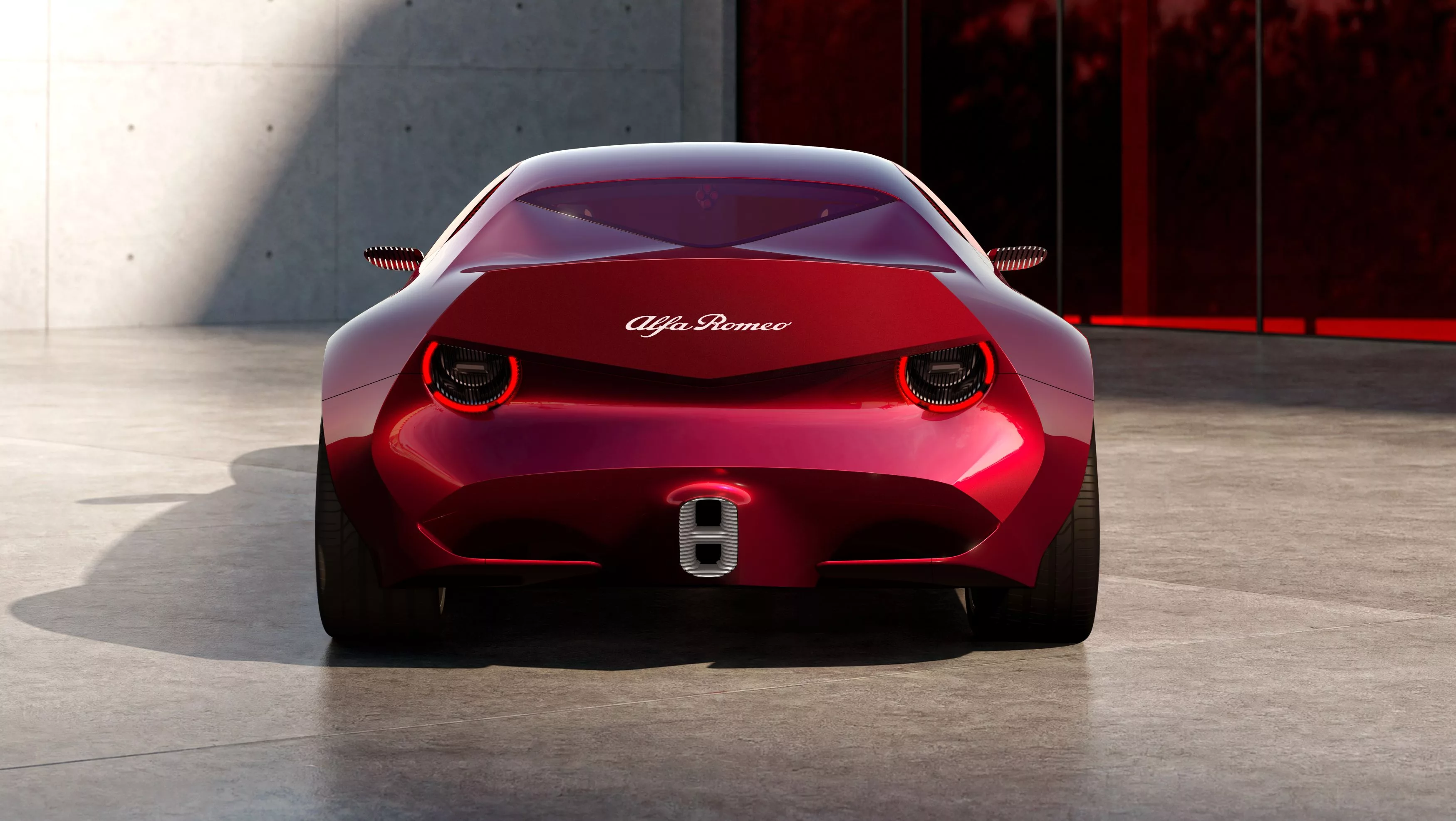
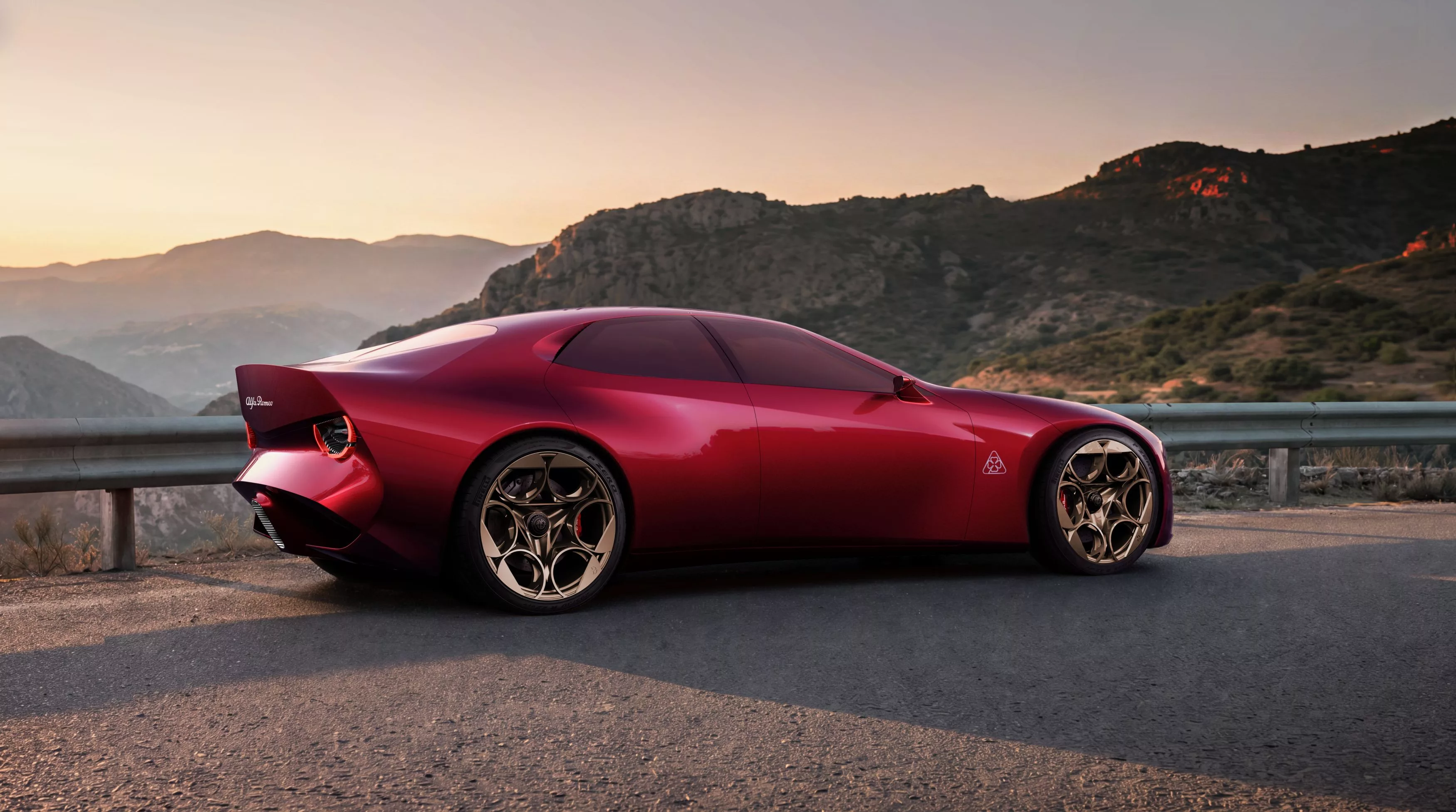
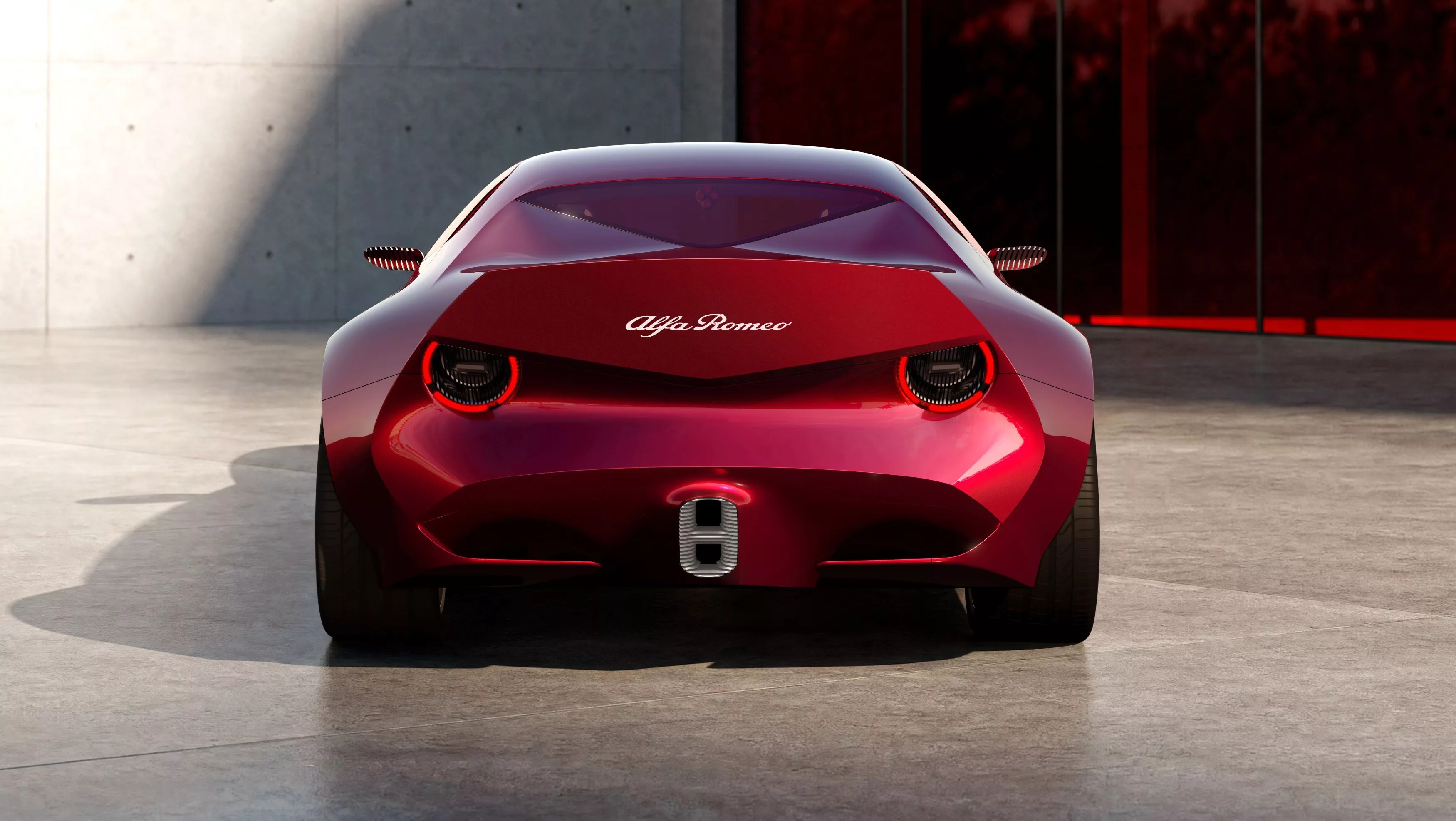
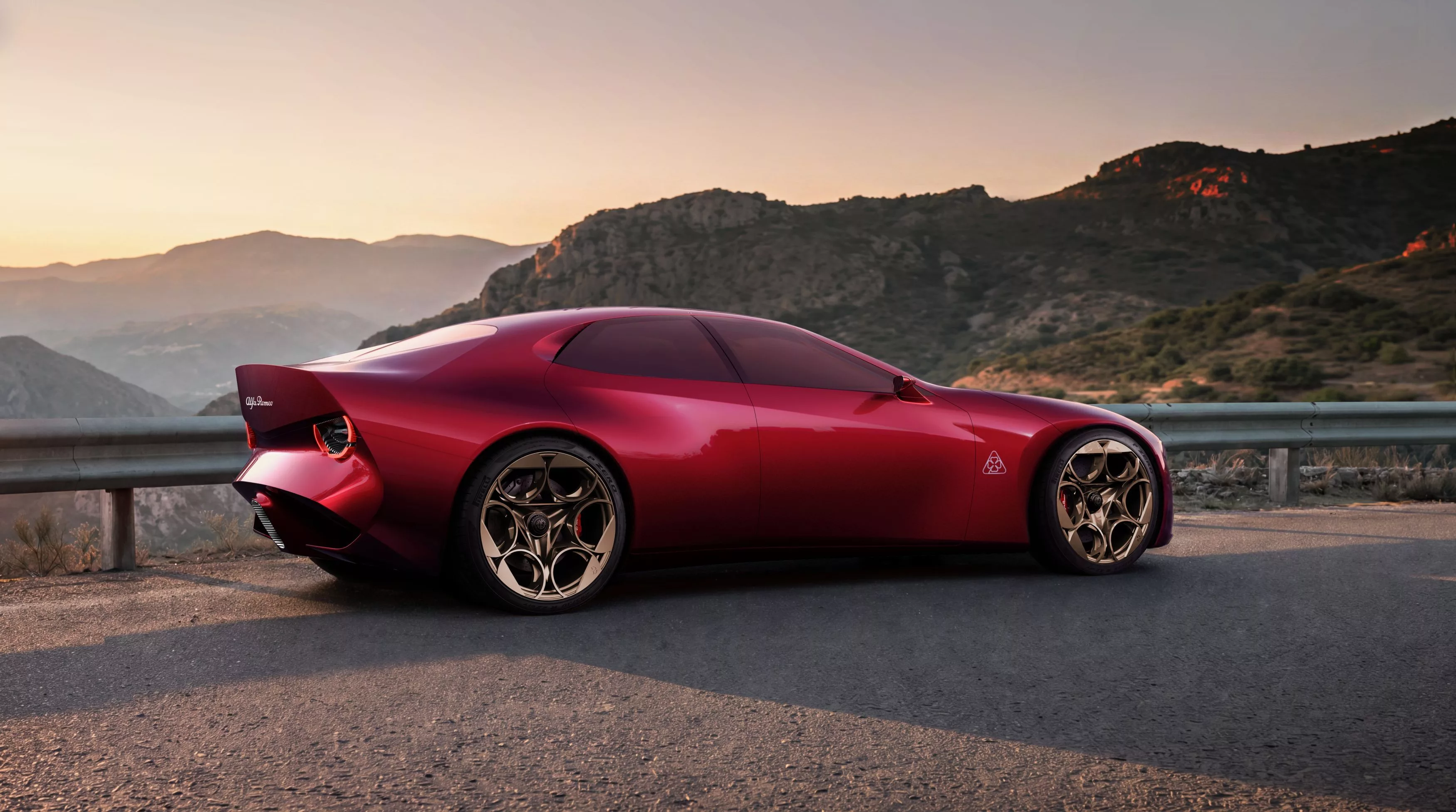
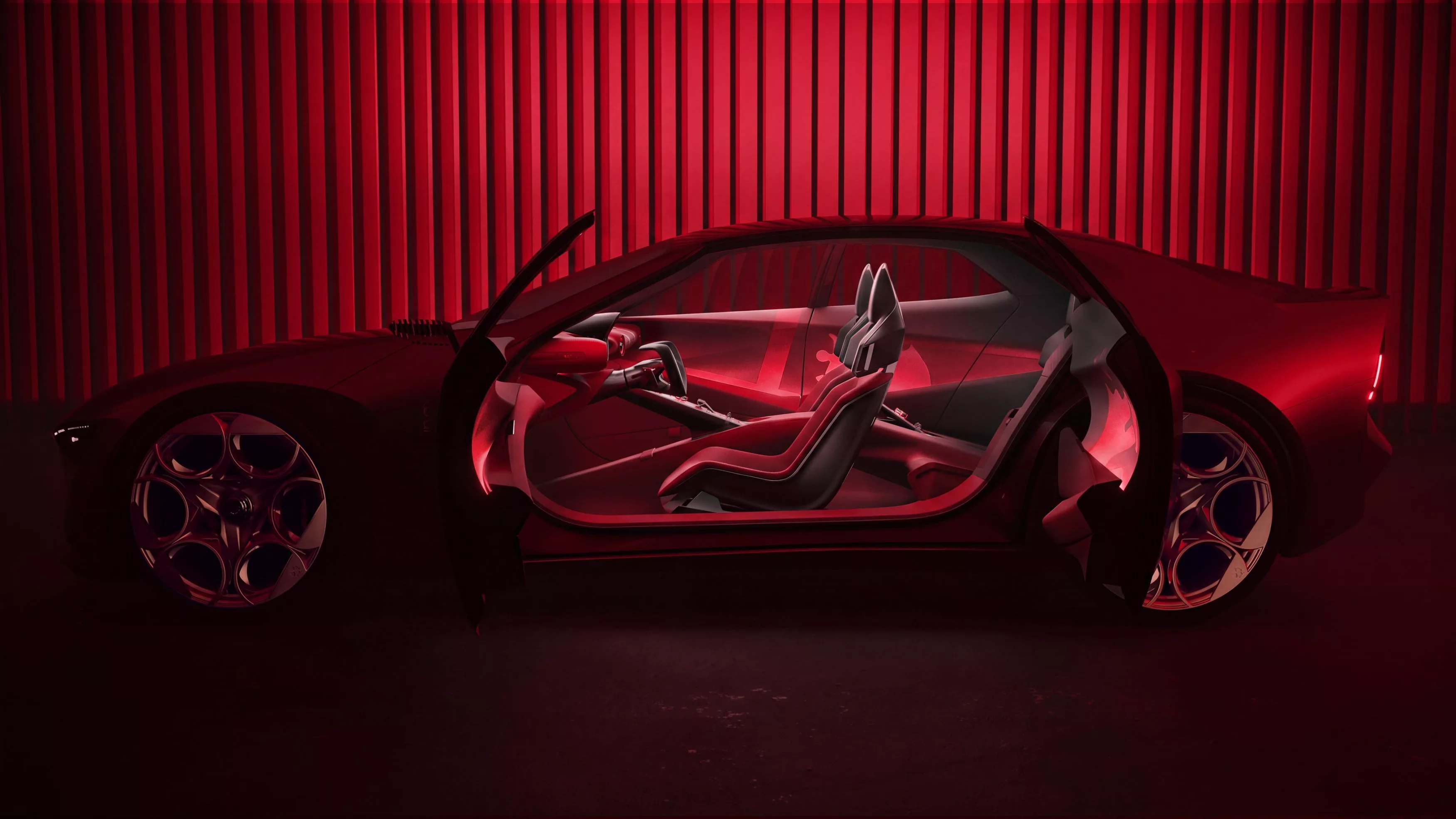
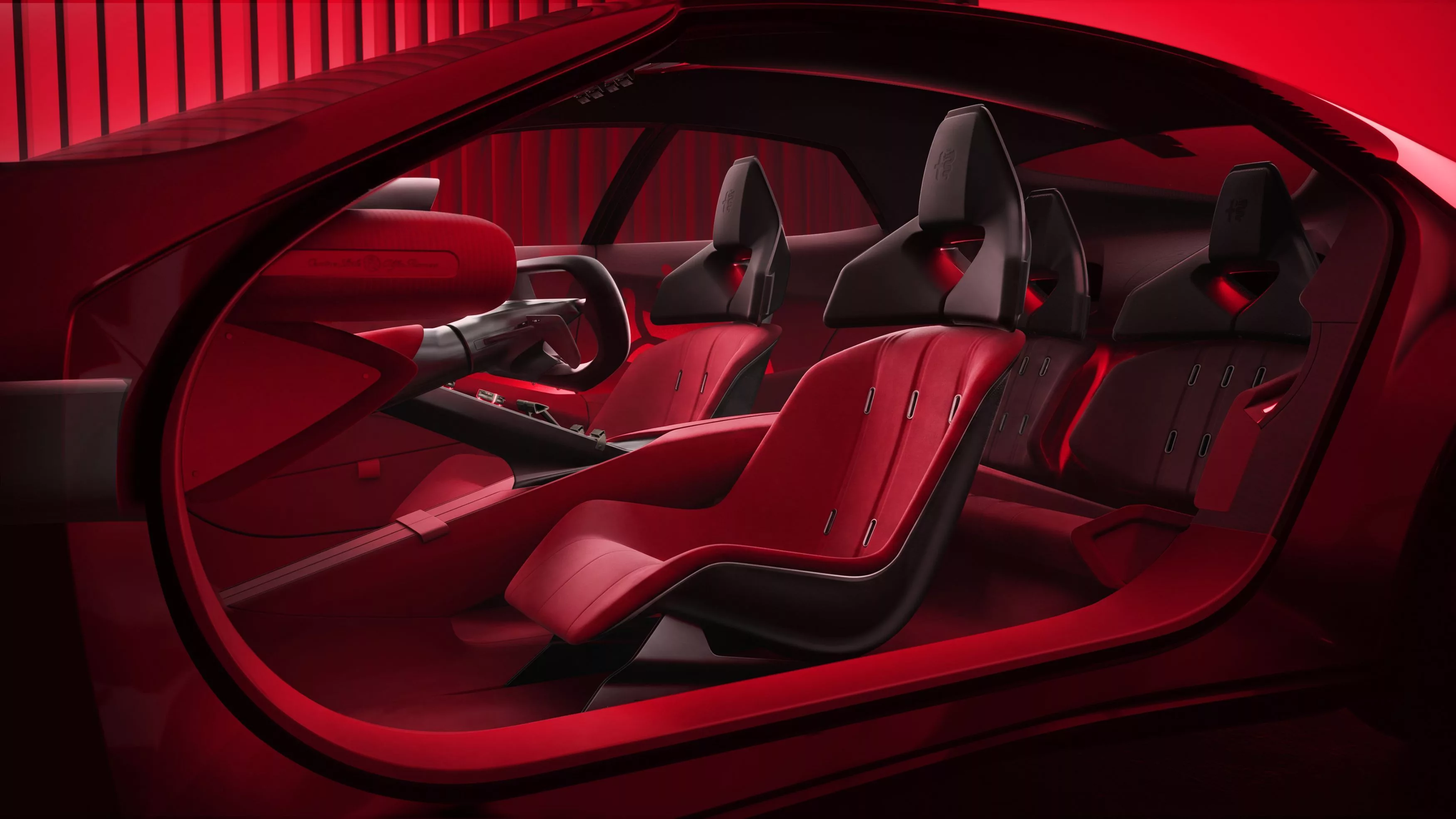
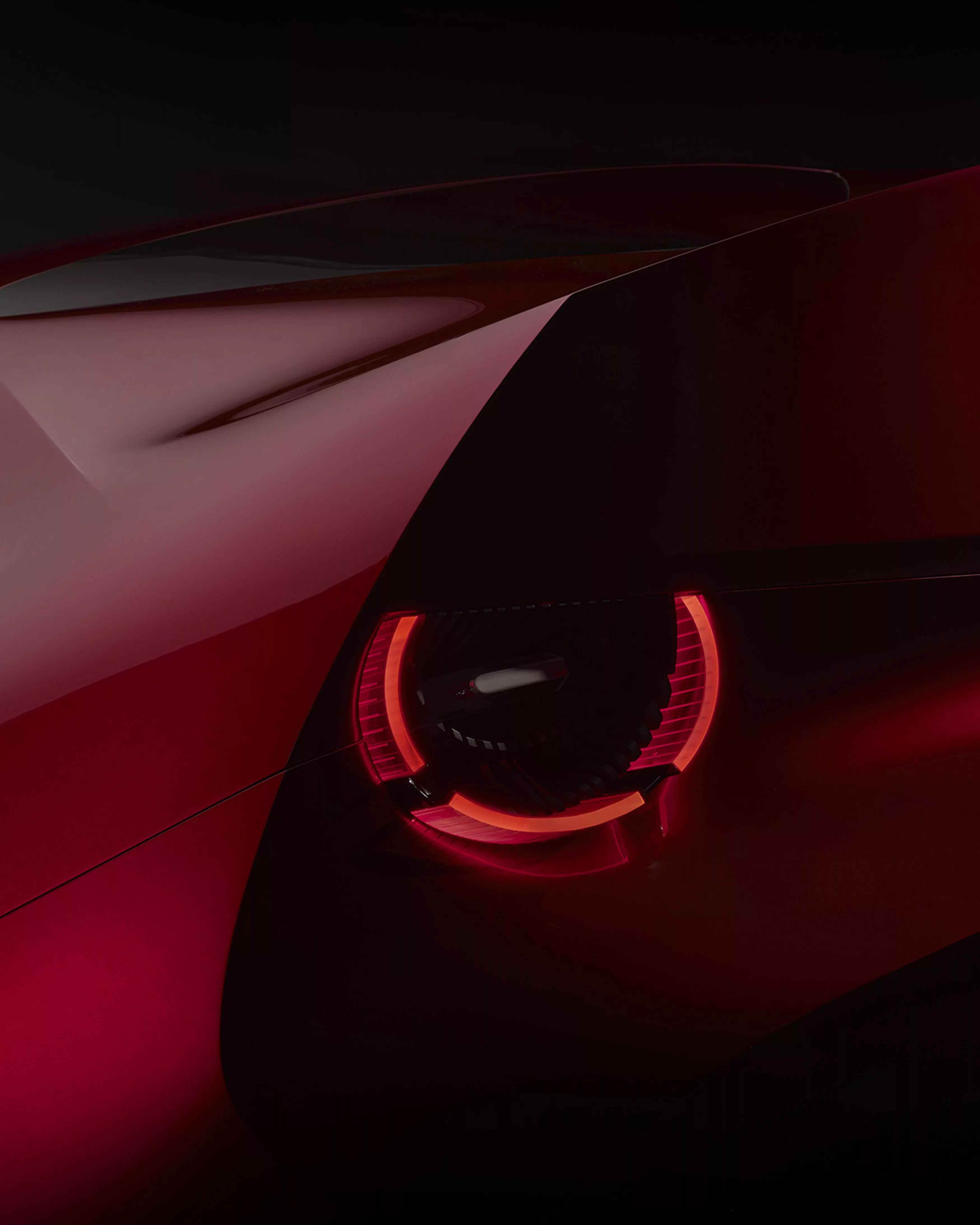
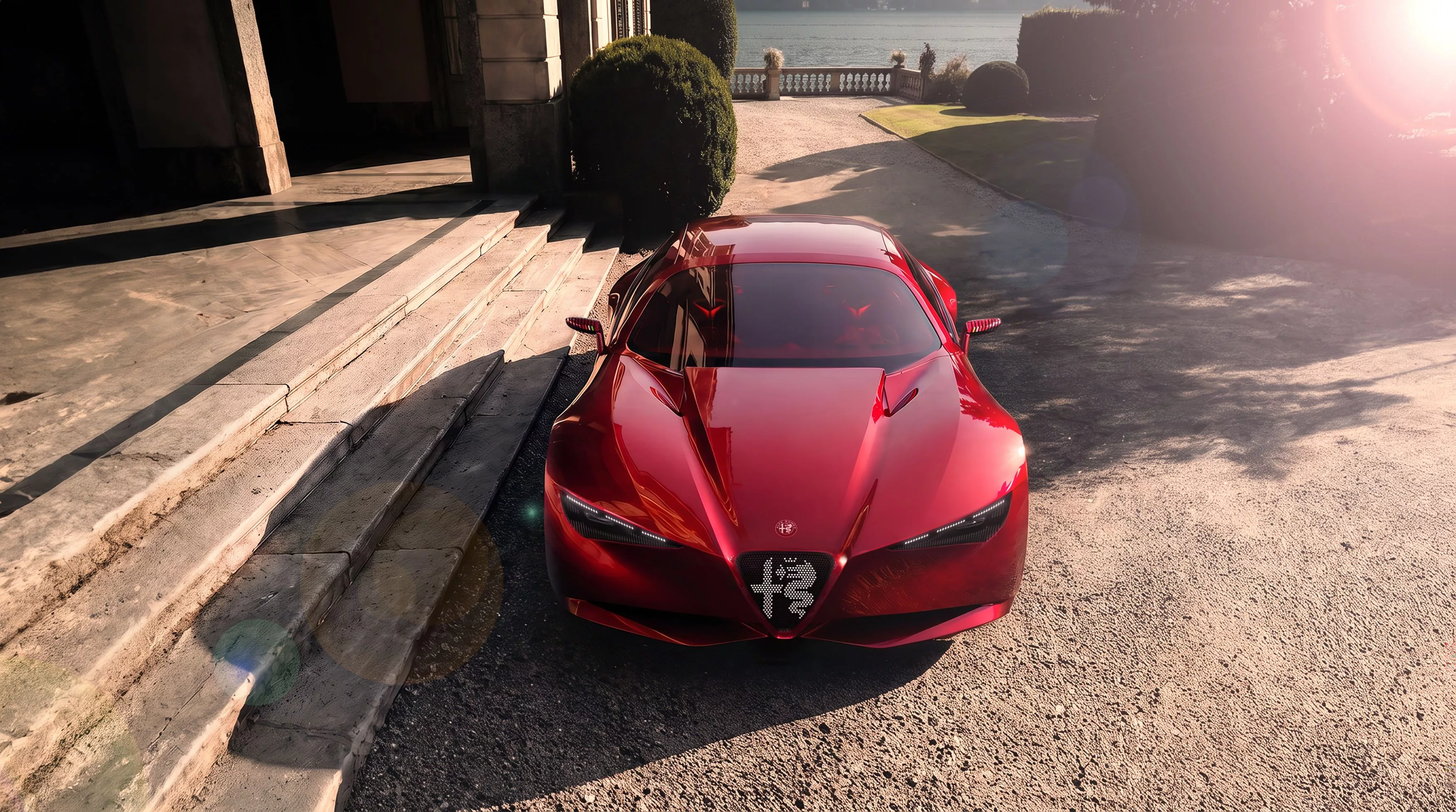
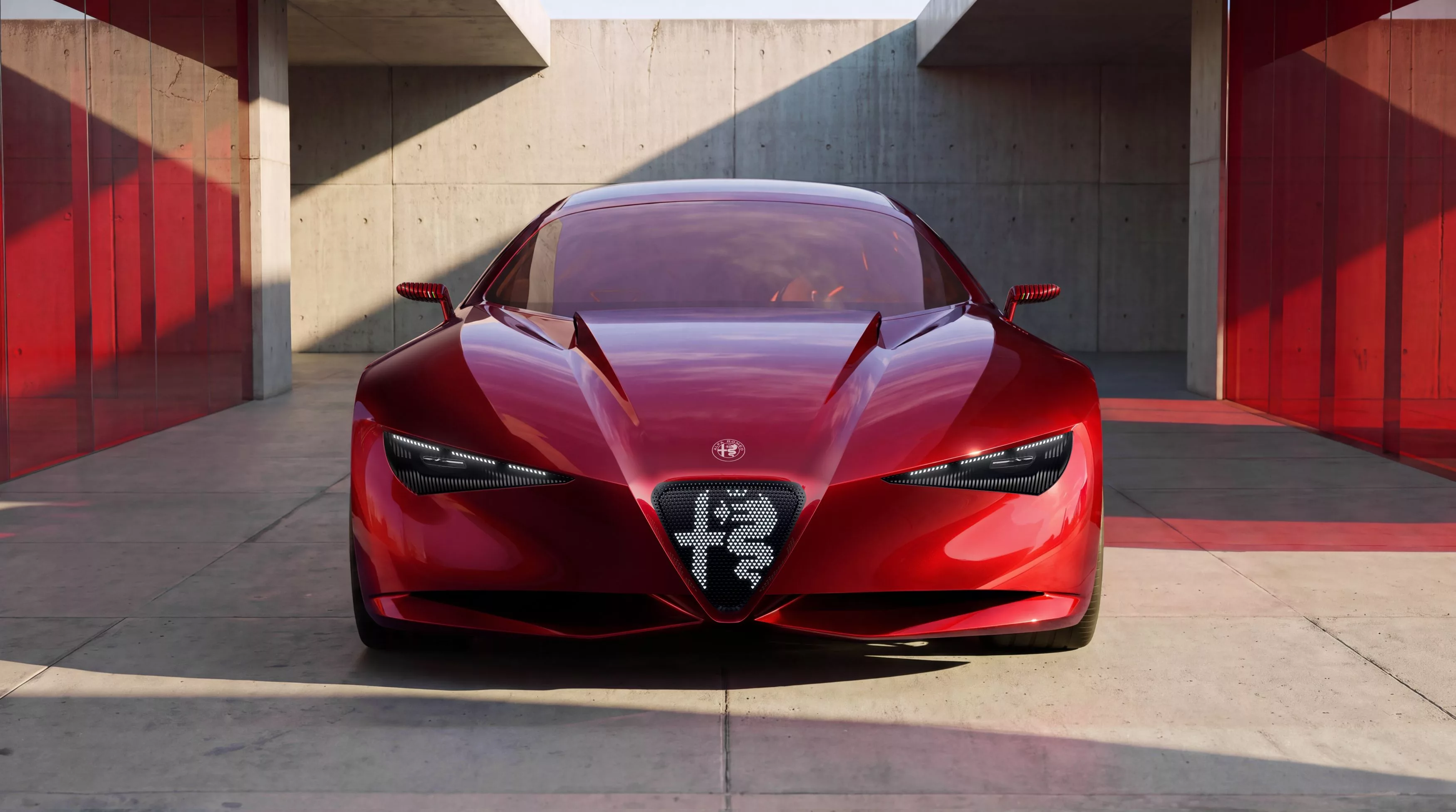
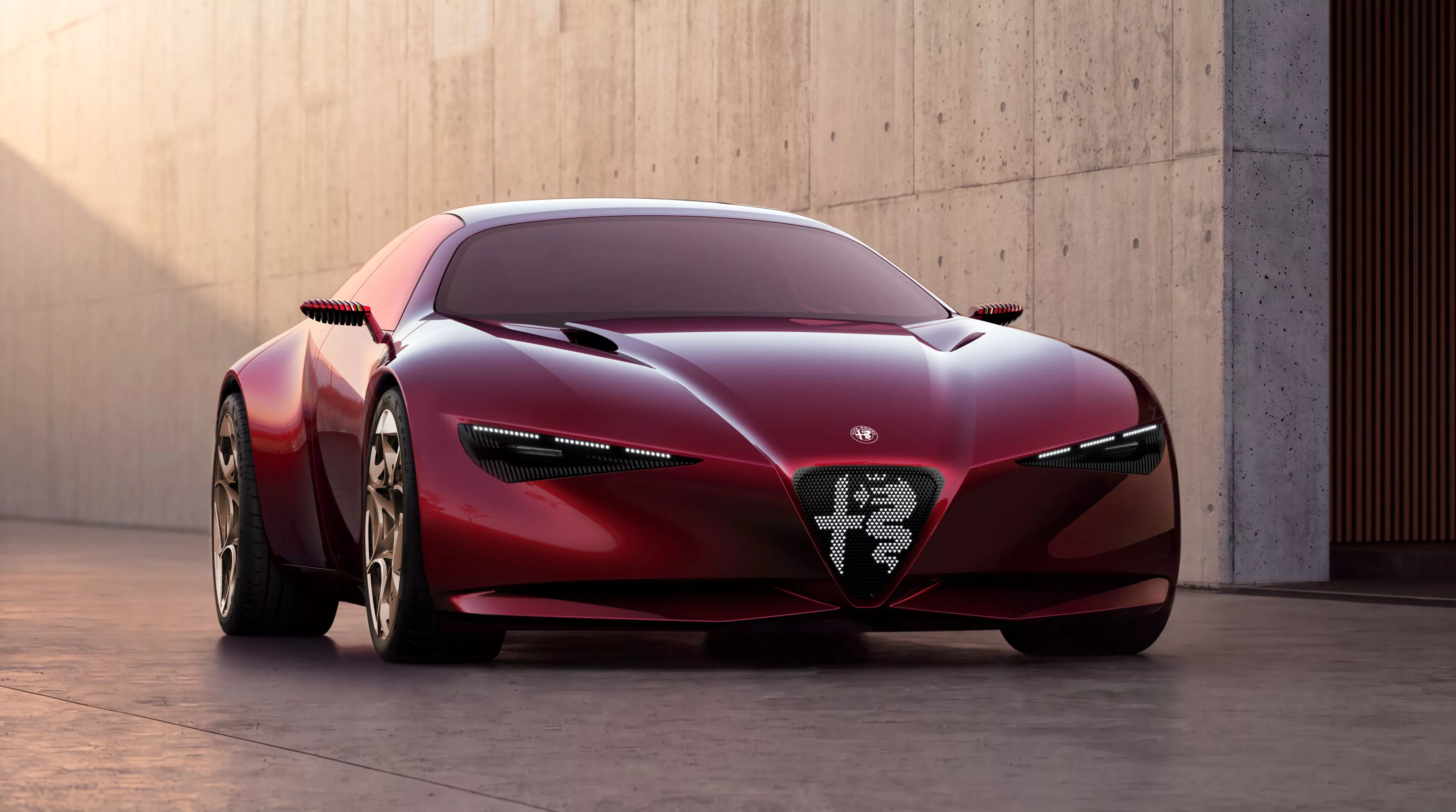
Alfa Romeo unveiled the Cuorerosso concept at the Paris Motor Show, combining a four-seat sports coupé, rear-hinged doors and the possibility of a 2.9-litre V6 hybrid powertrain. The 4.7-metre grand tourer previews the Italian brand's future design direction and signals that Alfa Romeo is not ready to say goodbye to sporty combustion engines.
A four-seat coupé with doors that open against the direction of travel
The Cuorerosso is not just another futuristic concept car. Alfa Romeo's design centre created it to show what the brand's next generation of sports cars could look like.
The car measures 4700 millimetres long, 1980 millimetres wide and just 1331 millimetres tall. Its wheelbase is 2930 millimetres, while the manufacturer quotes a weight of 1750 kilograms.
The low body, long bonnet and abruptly cut-off rear end follow the proportions of classic Italian sports cars. The Coda Tronca rear design recalls historic Alfa Romeo racing cars, and the drag coefficient is 0.28.
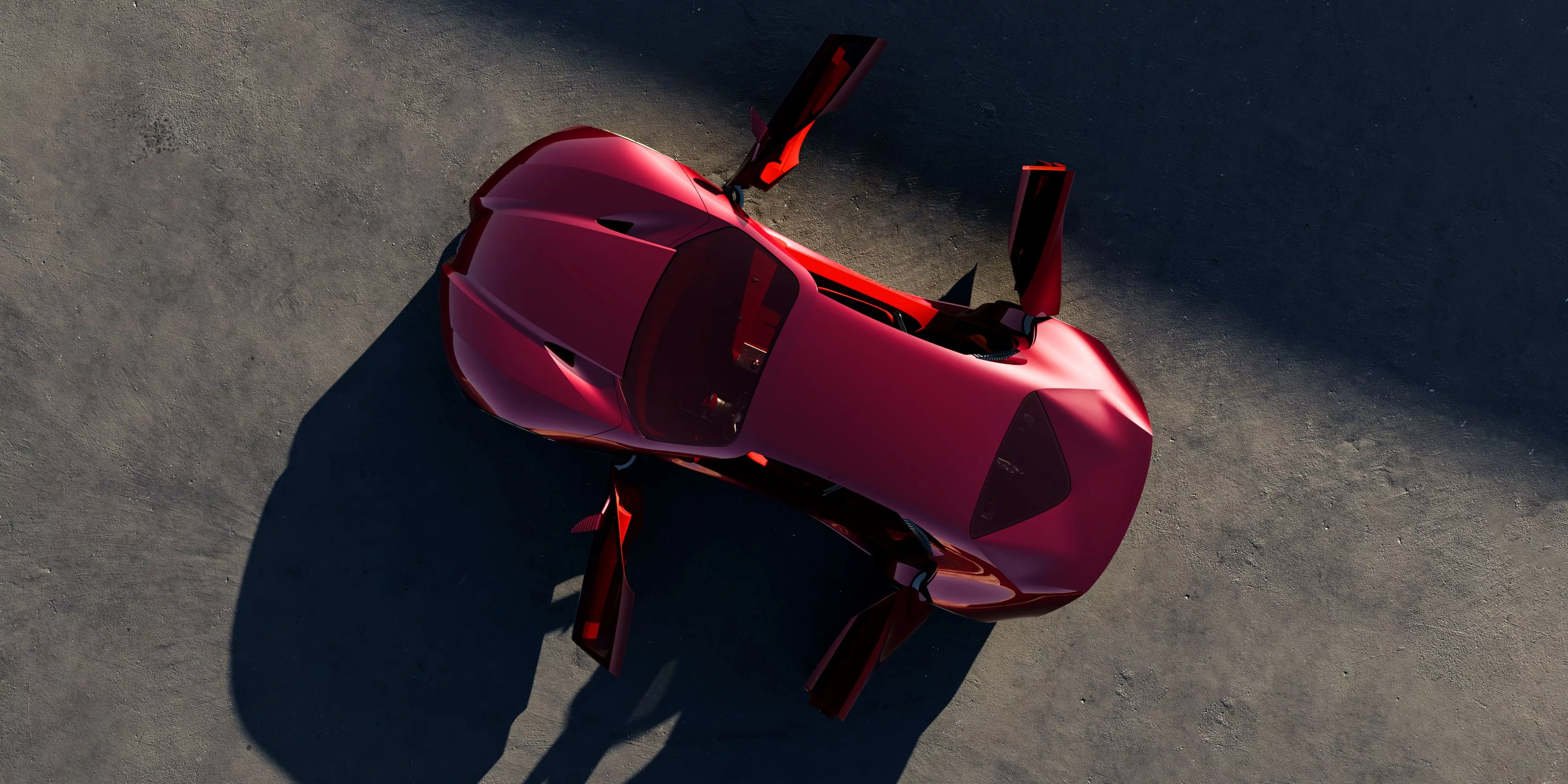
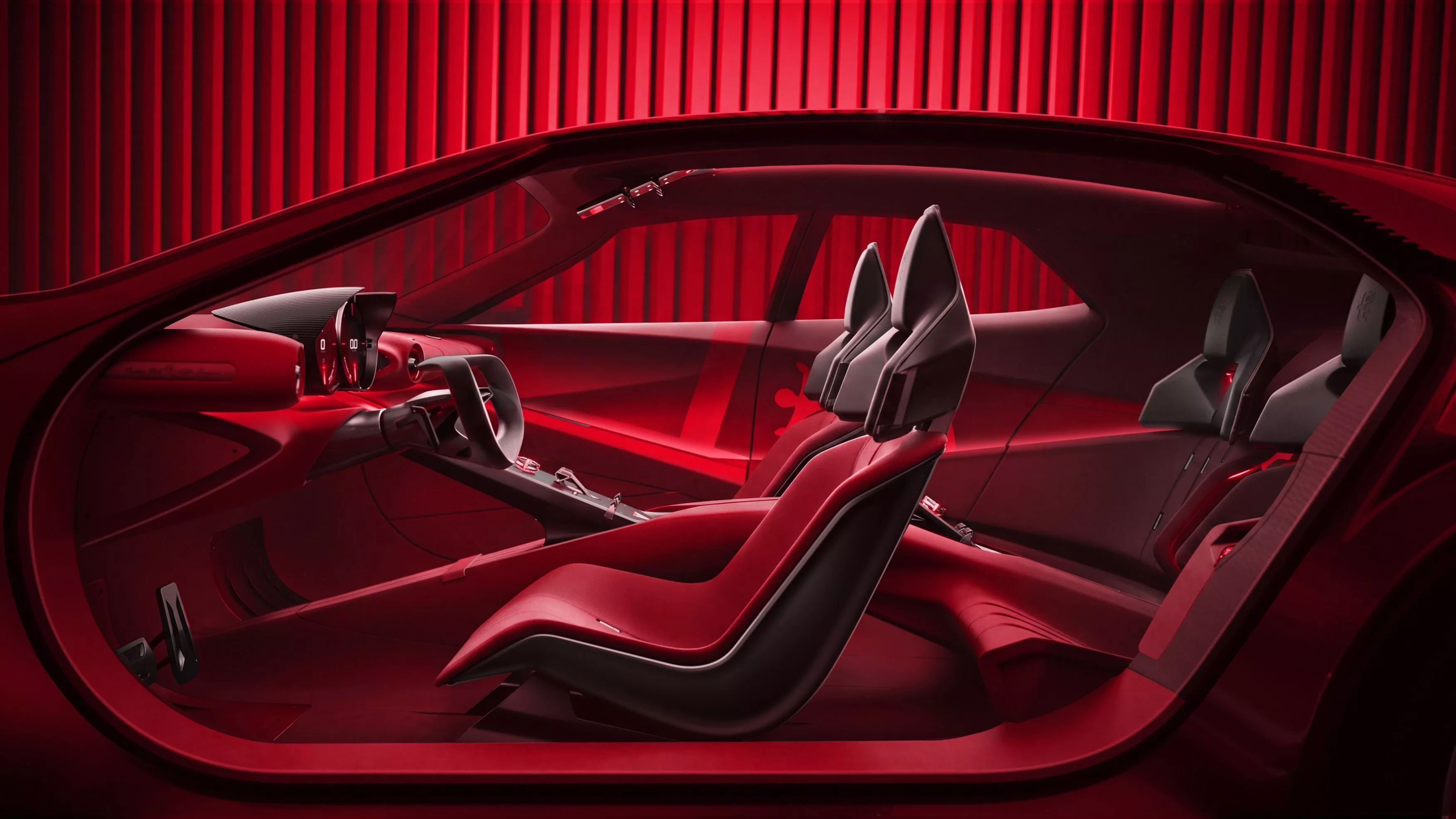
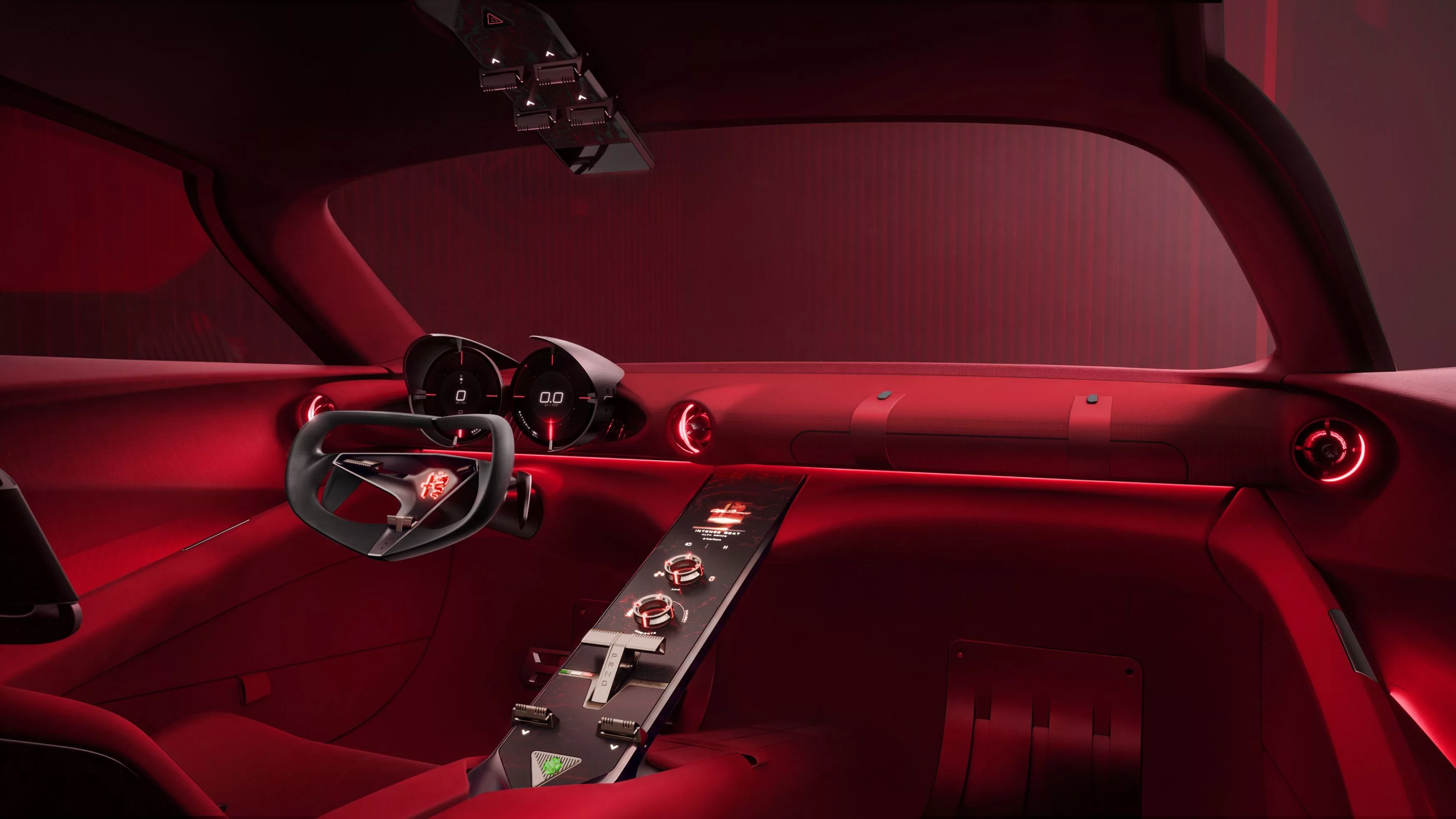
The most eye-catching feature is the doors. The rear doors open against the direction of travel, as on the Rolls-Royce Ghost. There are no conventional door handles; instead, touch-sensitive switches on the roof open the doors.
According to official information released by Alfa Romeo on 11 October, this body layout allows the Cuorerosso to combine the comfort of a four-seat grand tourer with the dynamics of a sports car.
A V6 hybrid powertrain and carbon-ceramic brakes
The most interesting news concerns the potential powertrain. Alfa Romeo envisages a 2.9-litre V6 full hybrid as the Cuorerosso's sportiest configuration, combining the combustion engine with Q4 all-wheel drive, a torque-converter automatic transmission and a carbon-fibre propshaft.
The manufacturer has not disclosed power, torque or acceleration figures. Nor has the V6 hybrid powertrain been confirmed for series production.
The chassis uses air suspension, while Brembo carbon-ceramic brakes handle braking. The steering system uses an electronic connection between the steering wheel and the road wheels rather than a mechanical link.
Alfa Romeo plans several powertrain options for its future models, including all-electric, plug-in hybrid and conventional hybrid systems. This approach gives the manufacturer more flexibility to adapt to the changing demands of the European market.
Physical controls meet digital technology in the cabin
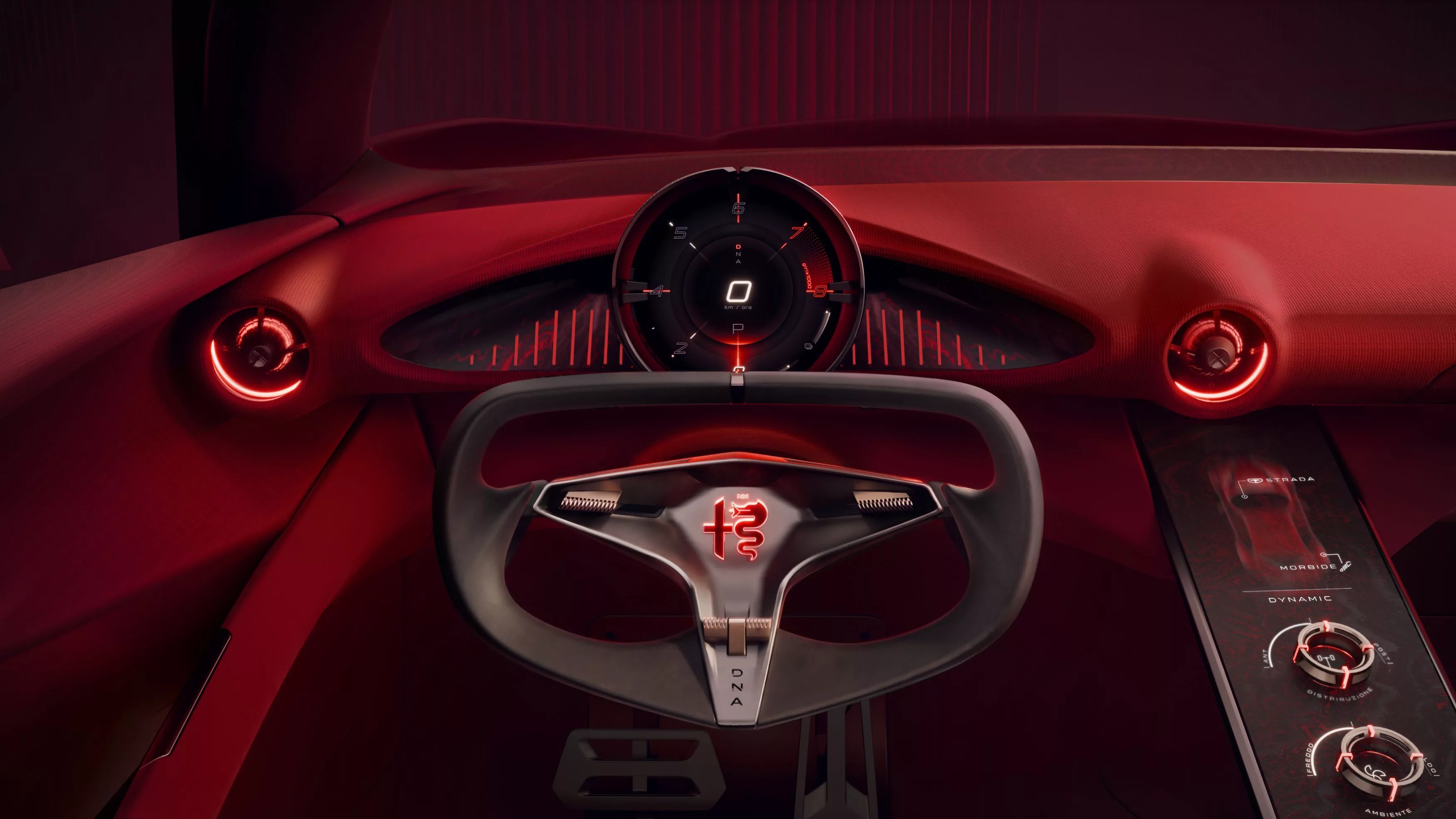
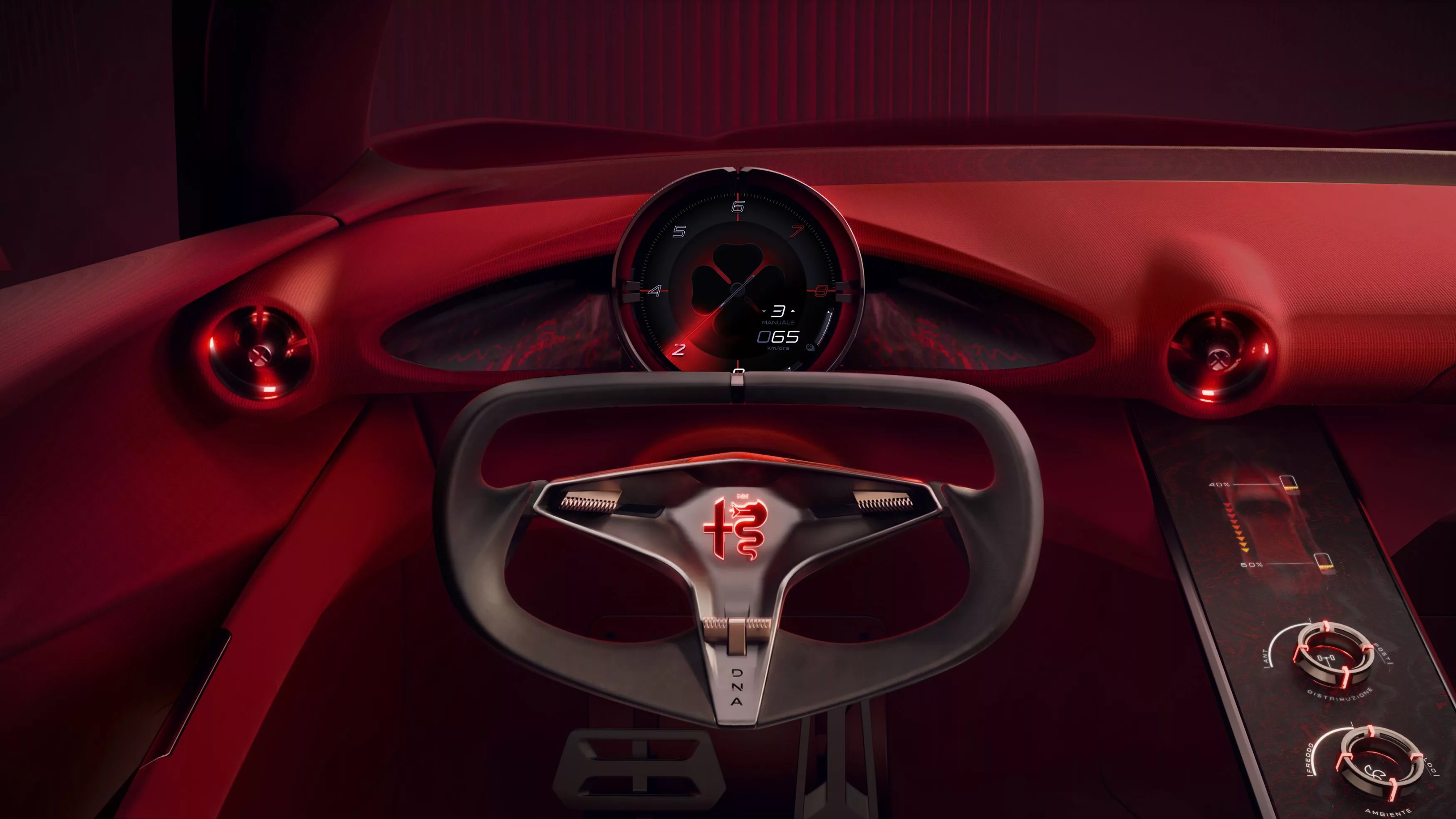
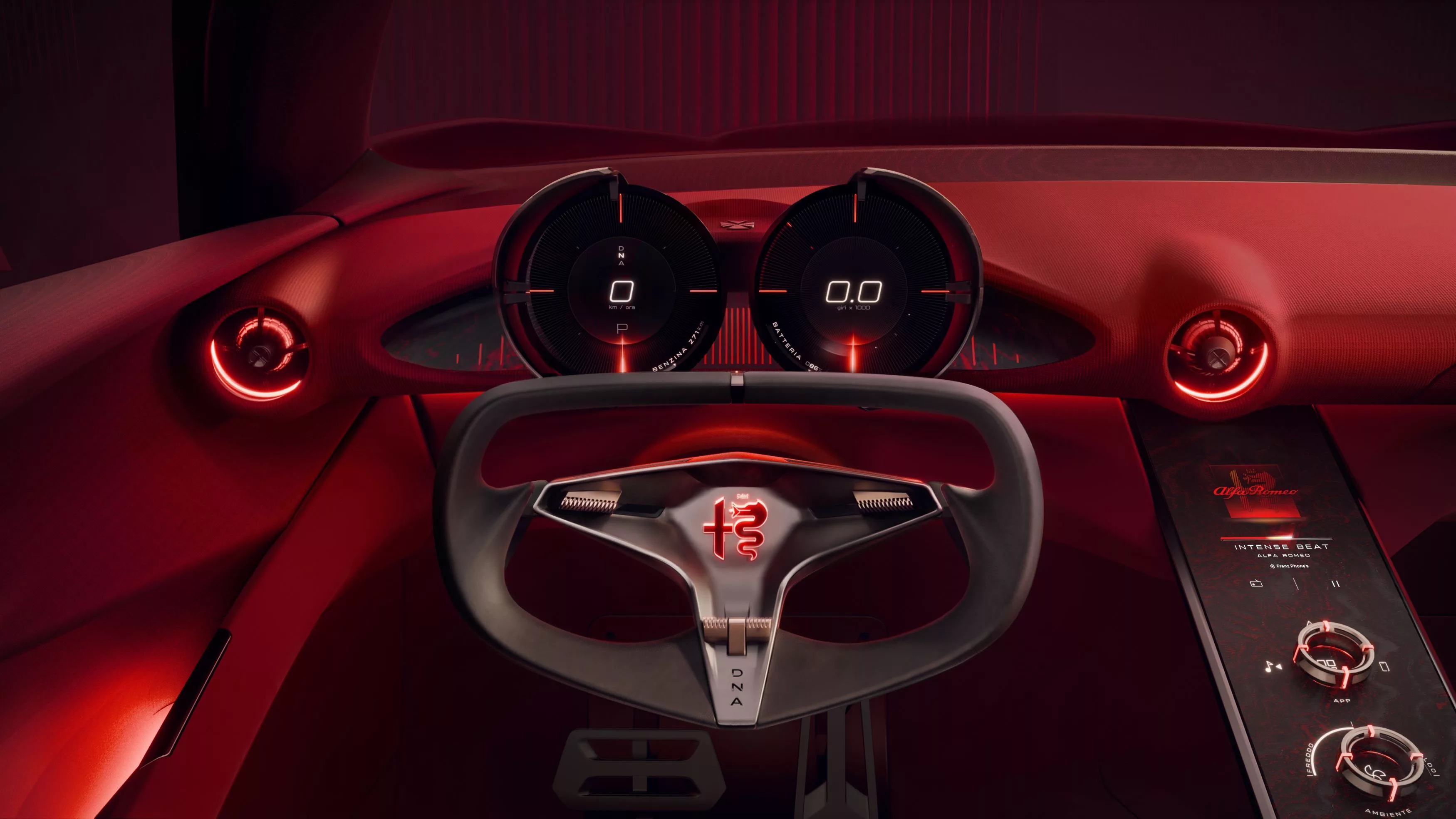
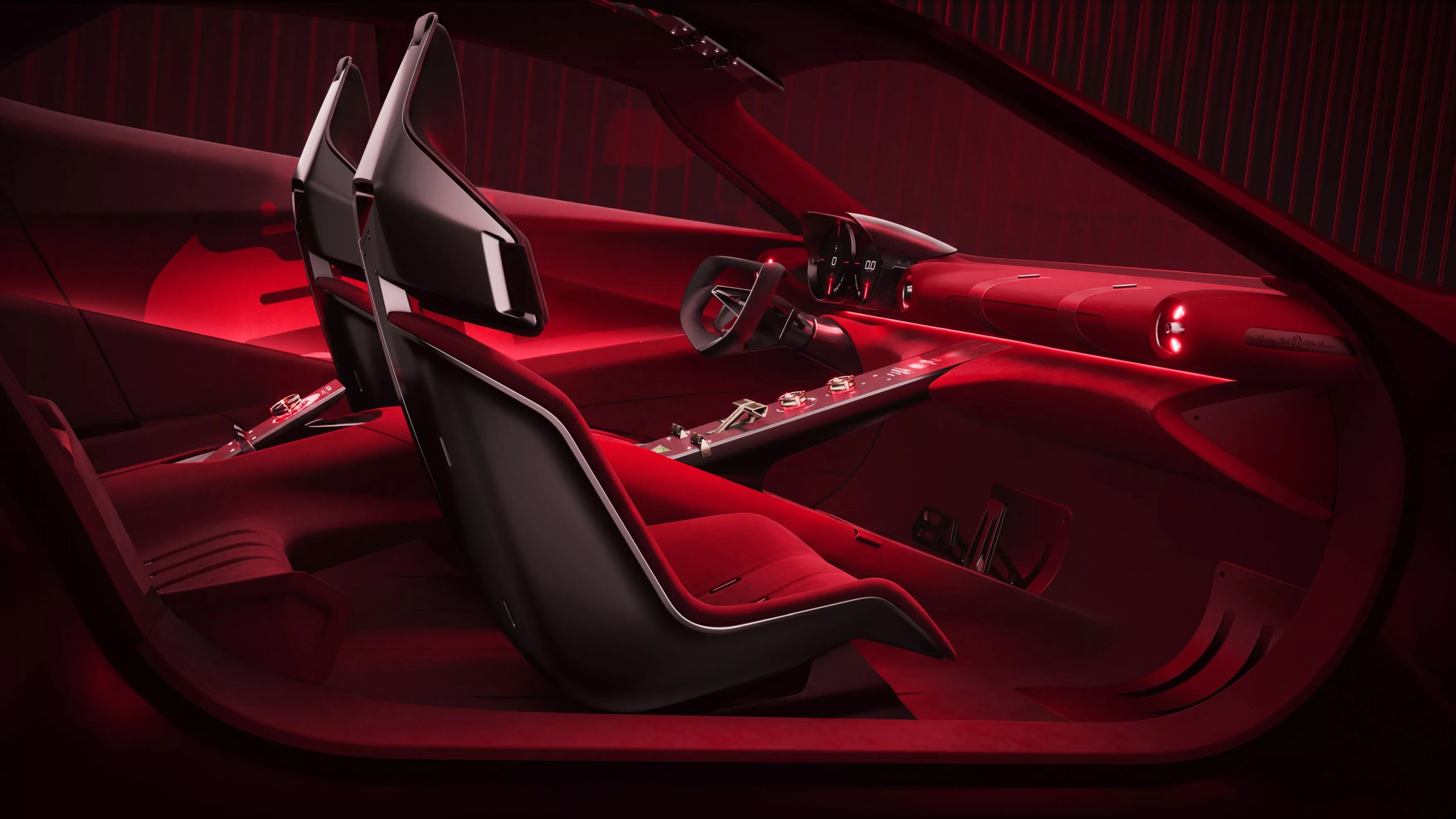
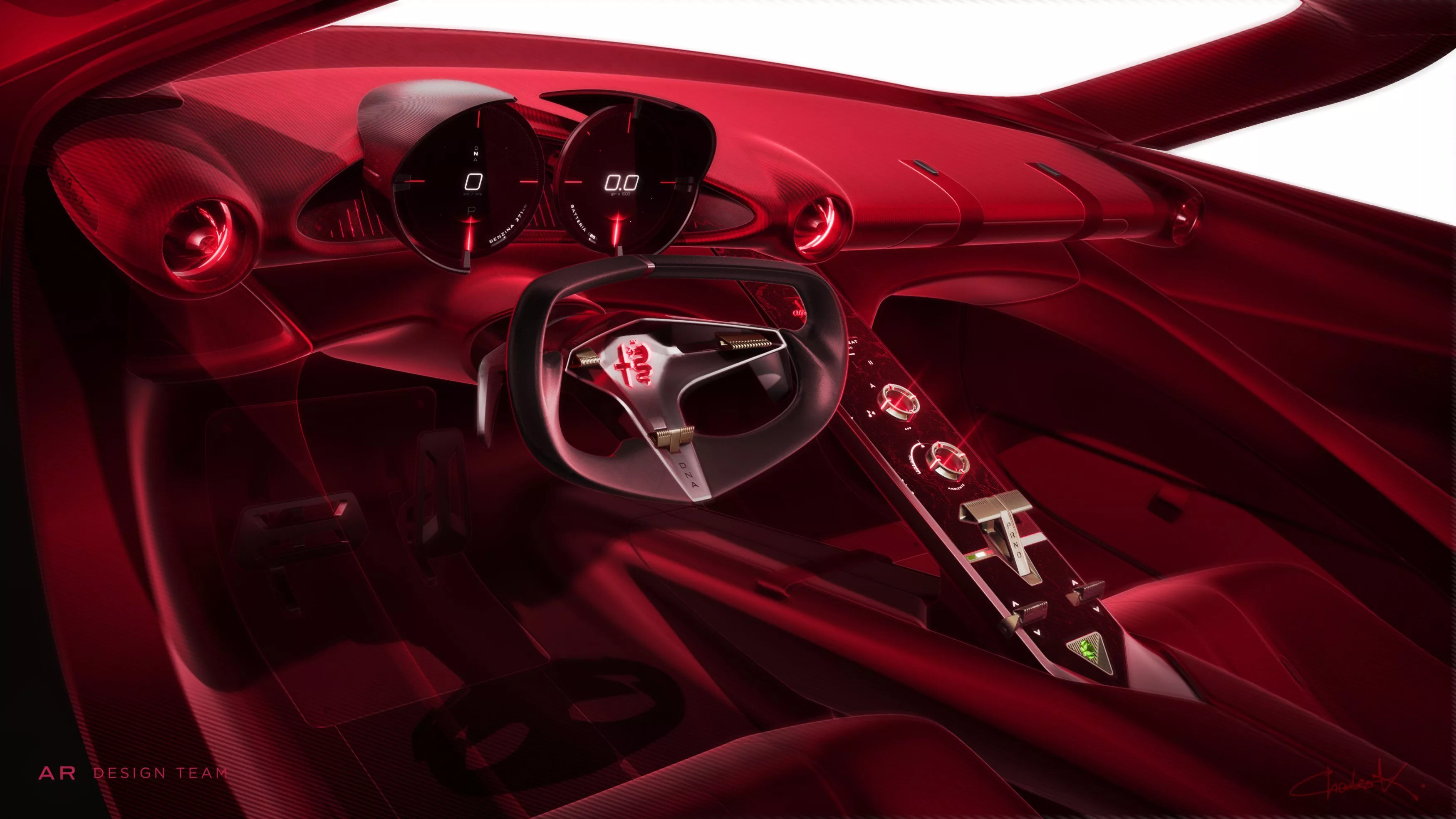
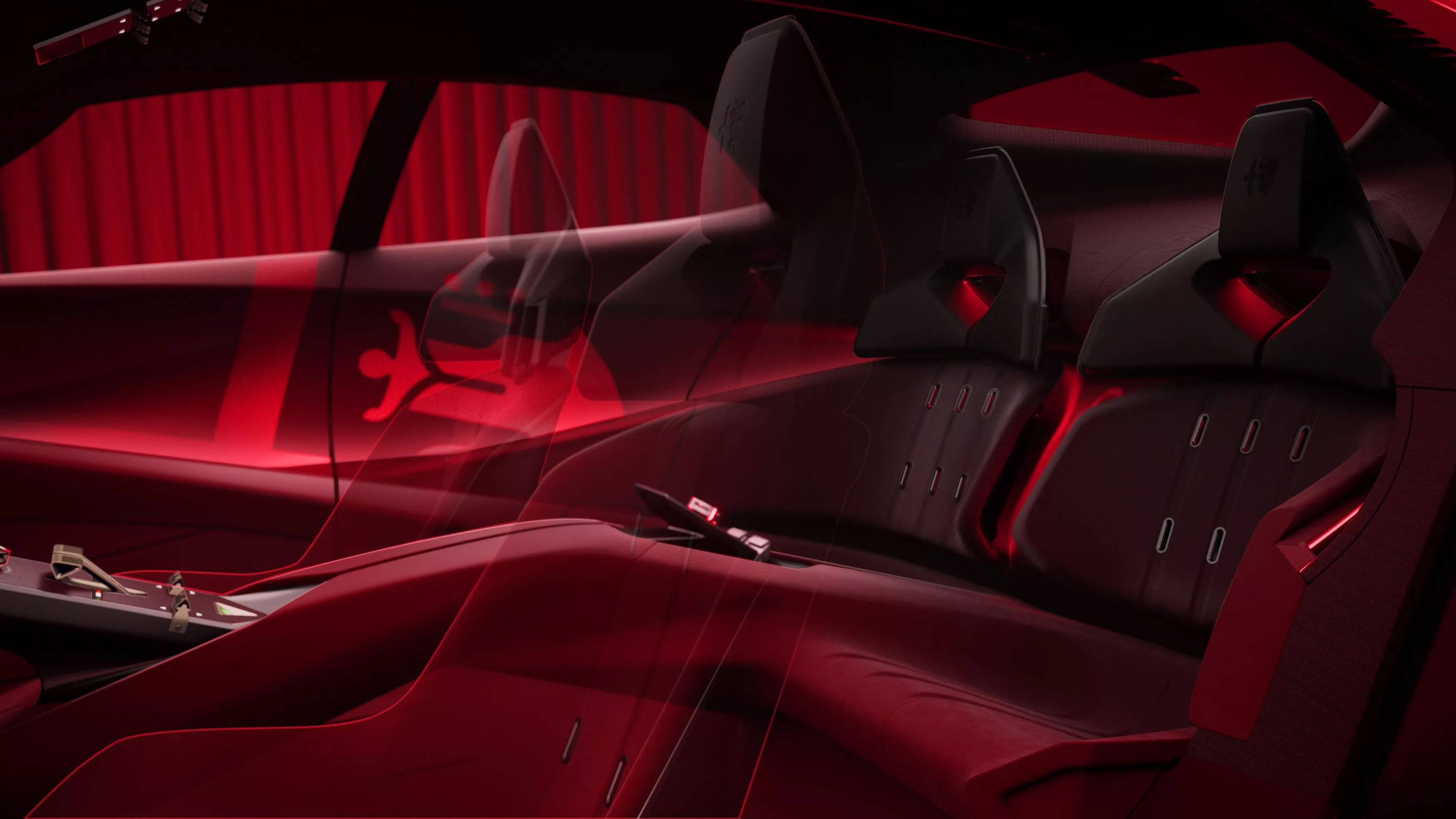
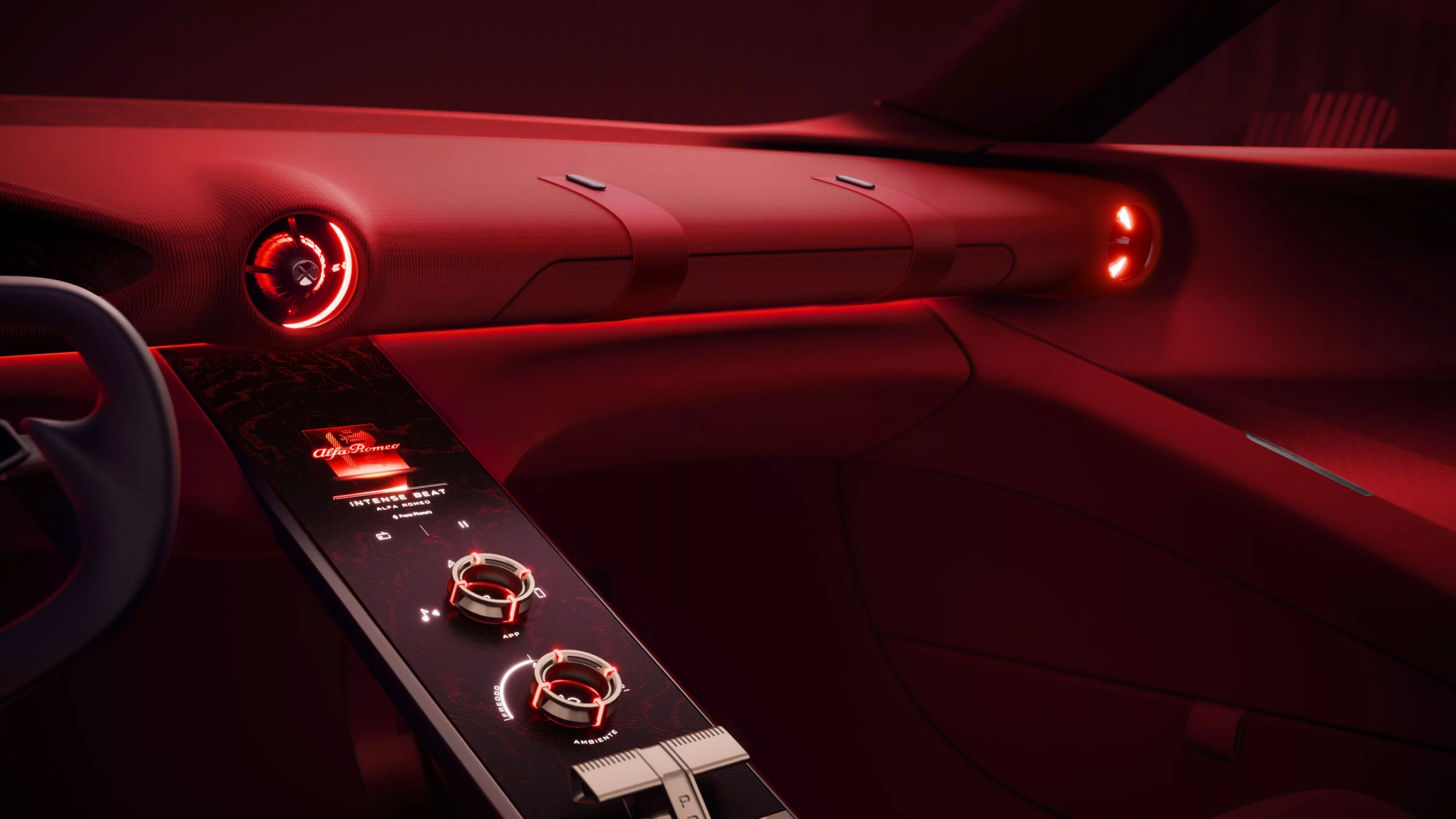
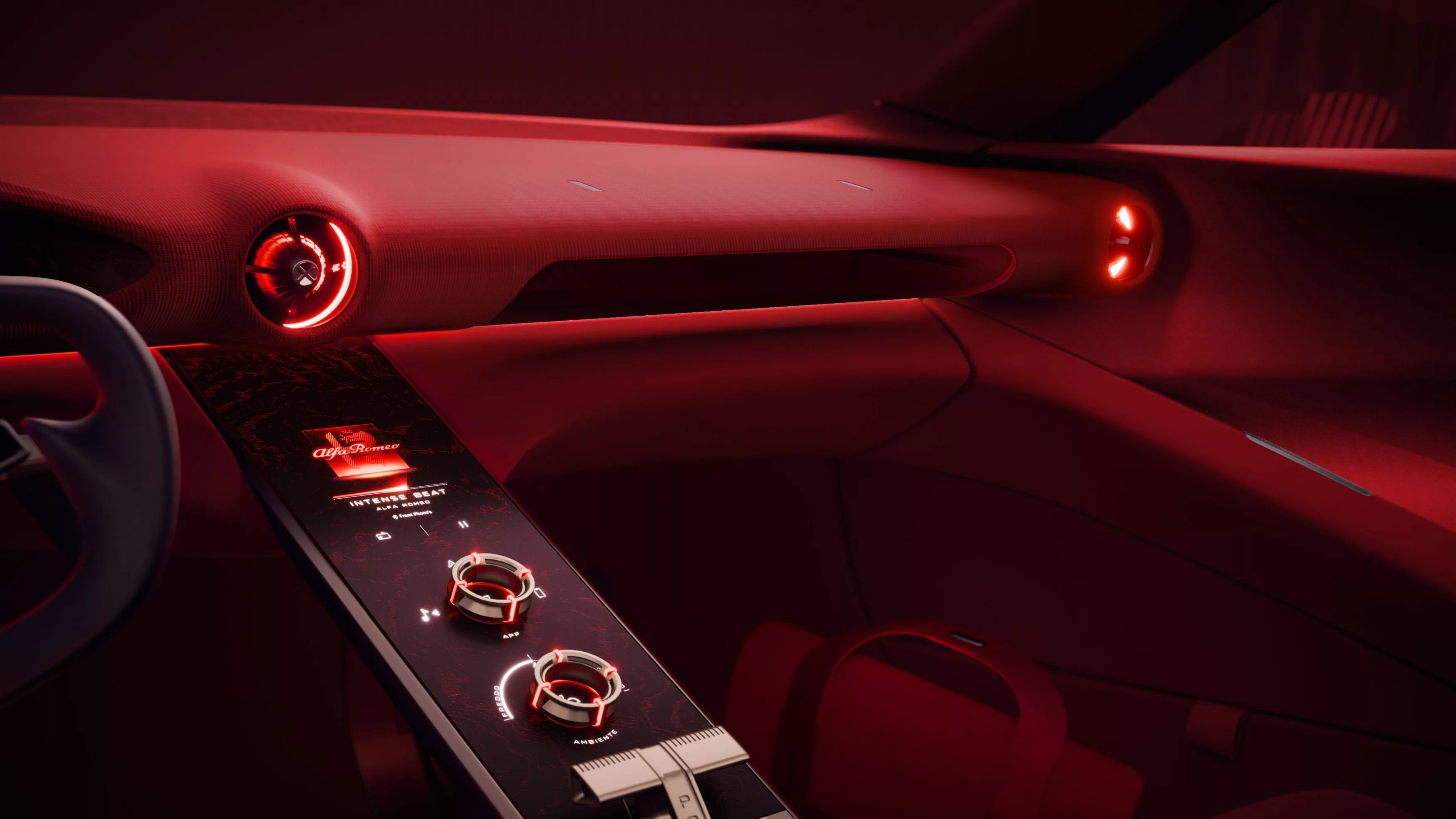
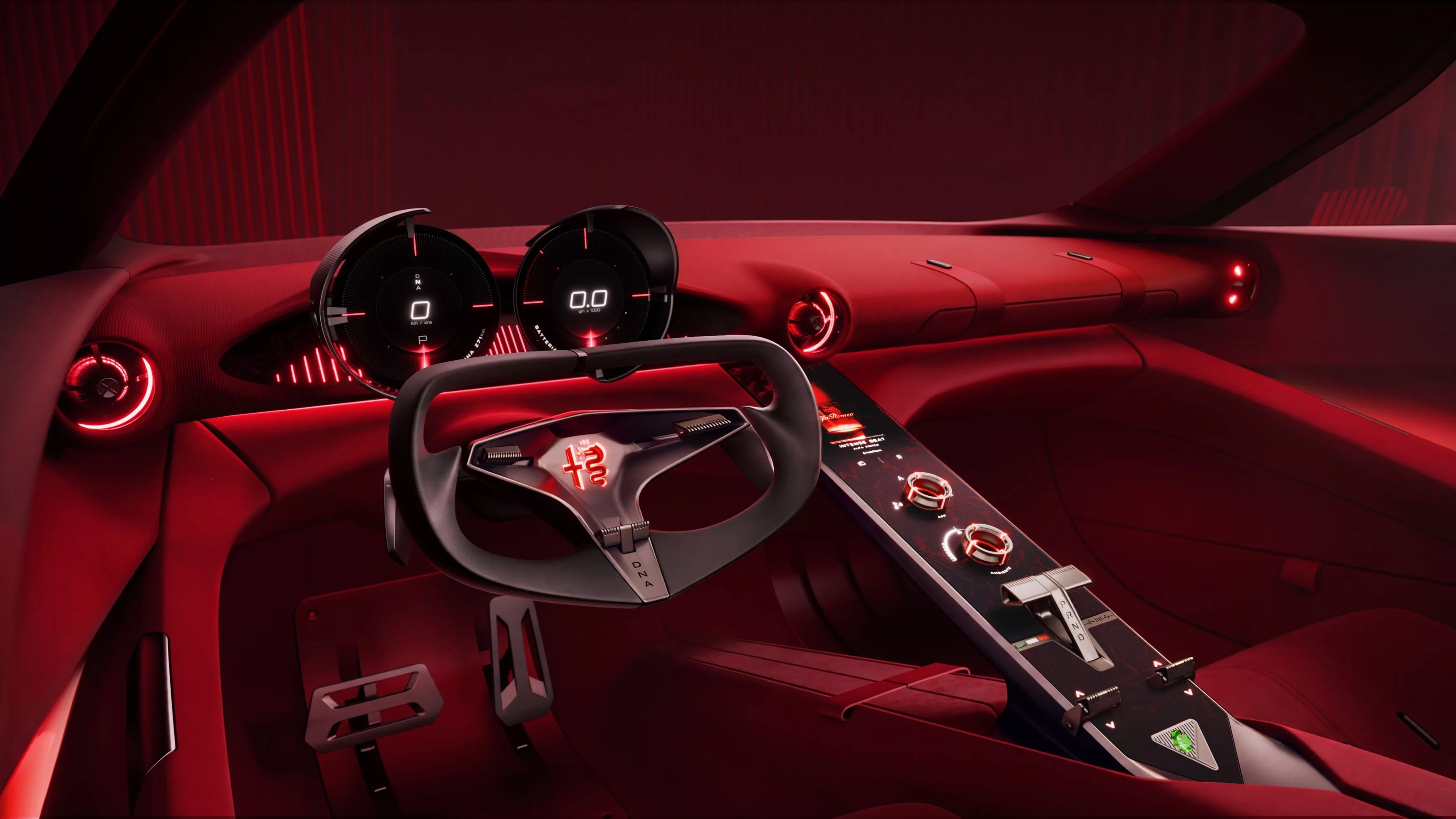
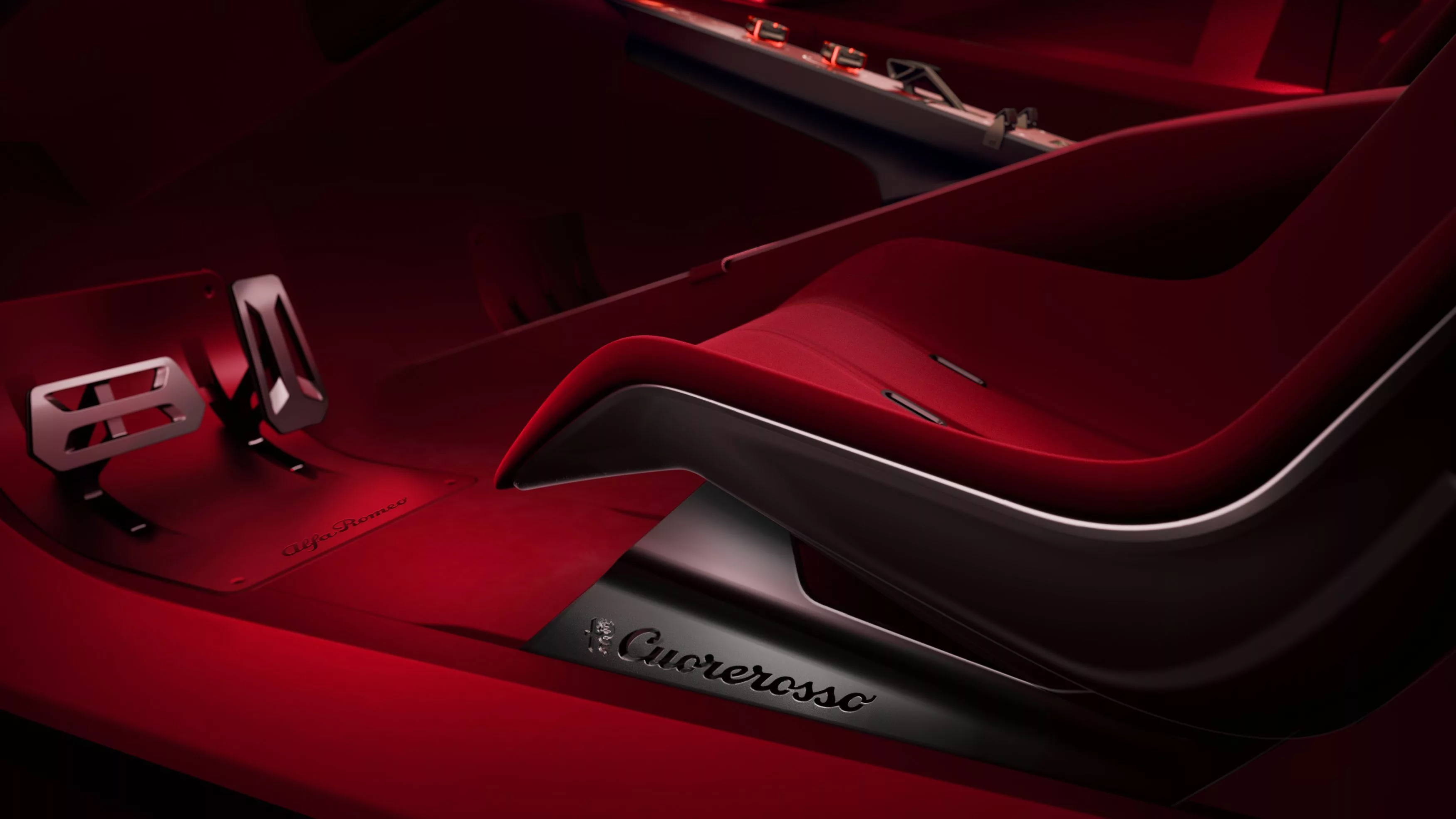
The Cuorerosso's cabin has four individual sports seats. The dashboard design draws inspiration from the legendary 1967 Alfa Romeo 33 Stradale.
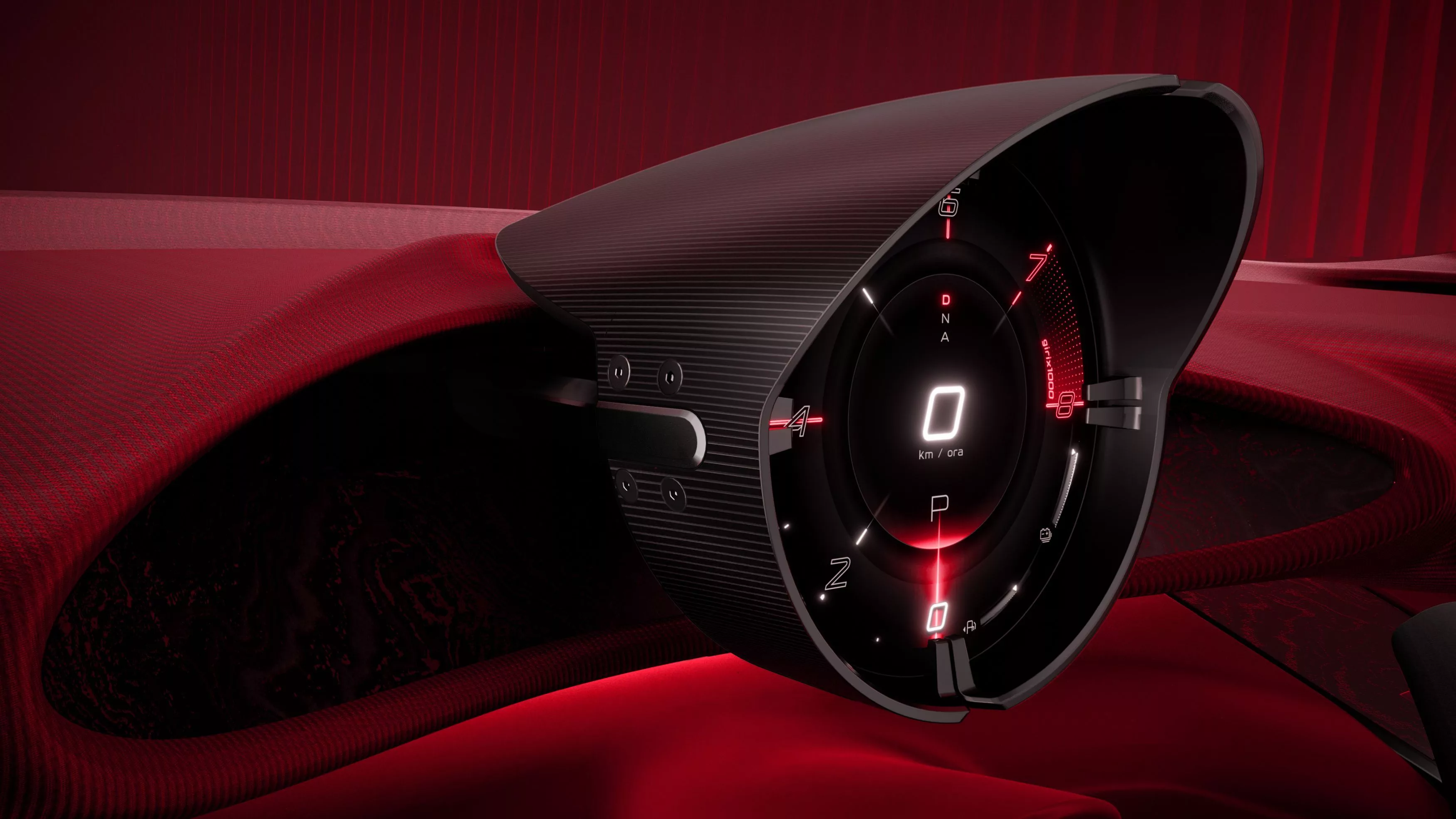
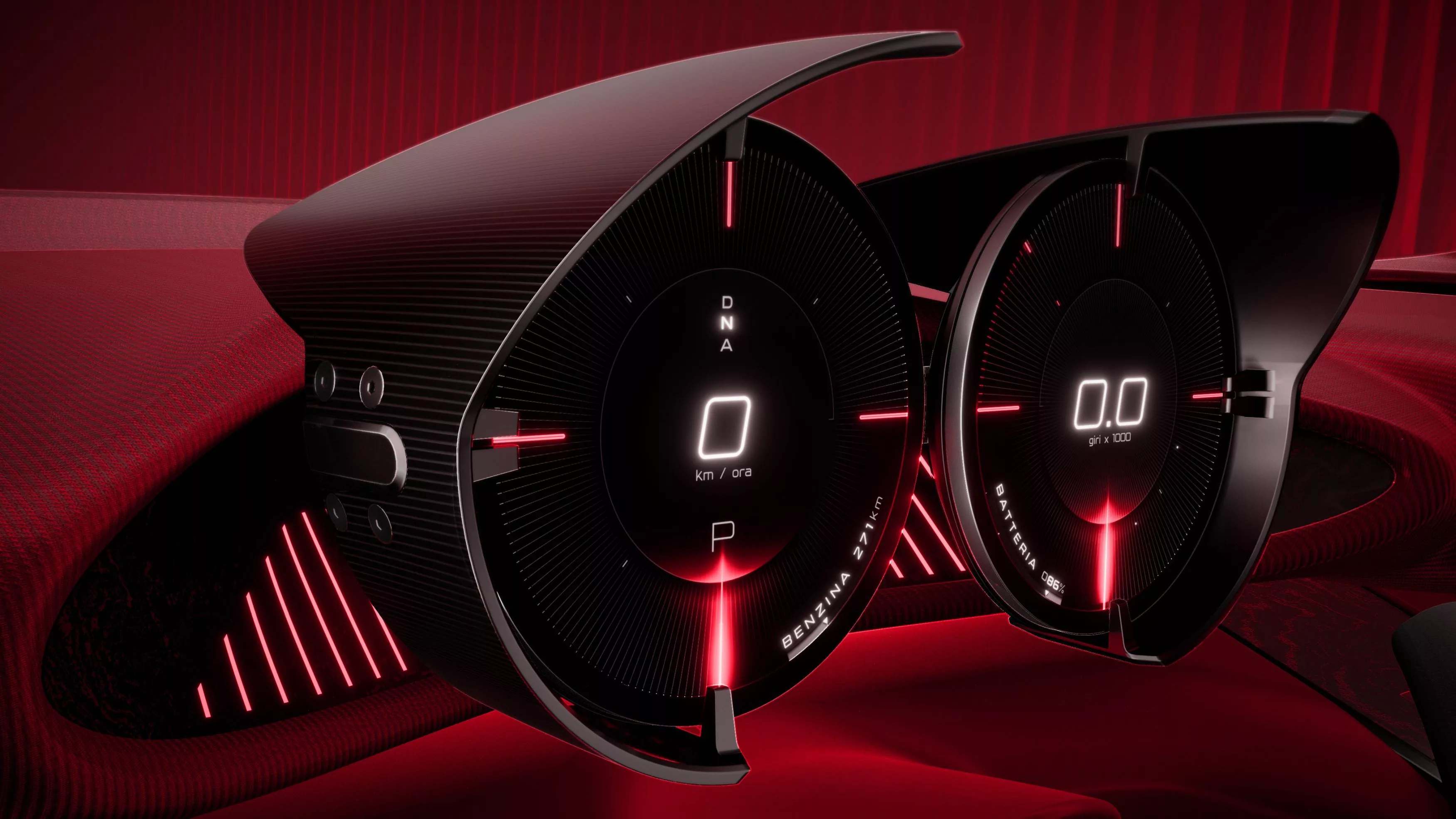
The “Cannocchiale Vivente” instrument panel deserves particular attention. Its two circular instrument clusters can merge into a single compact display using an electromechanical system, reducing information that could distract the driver.
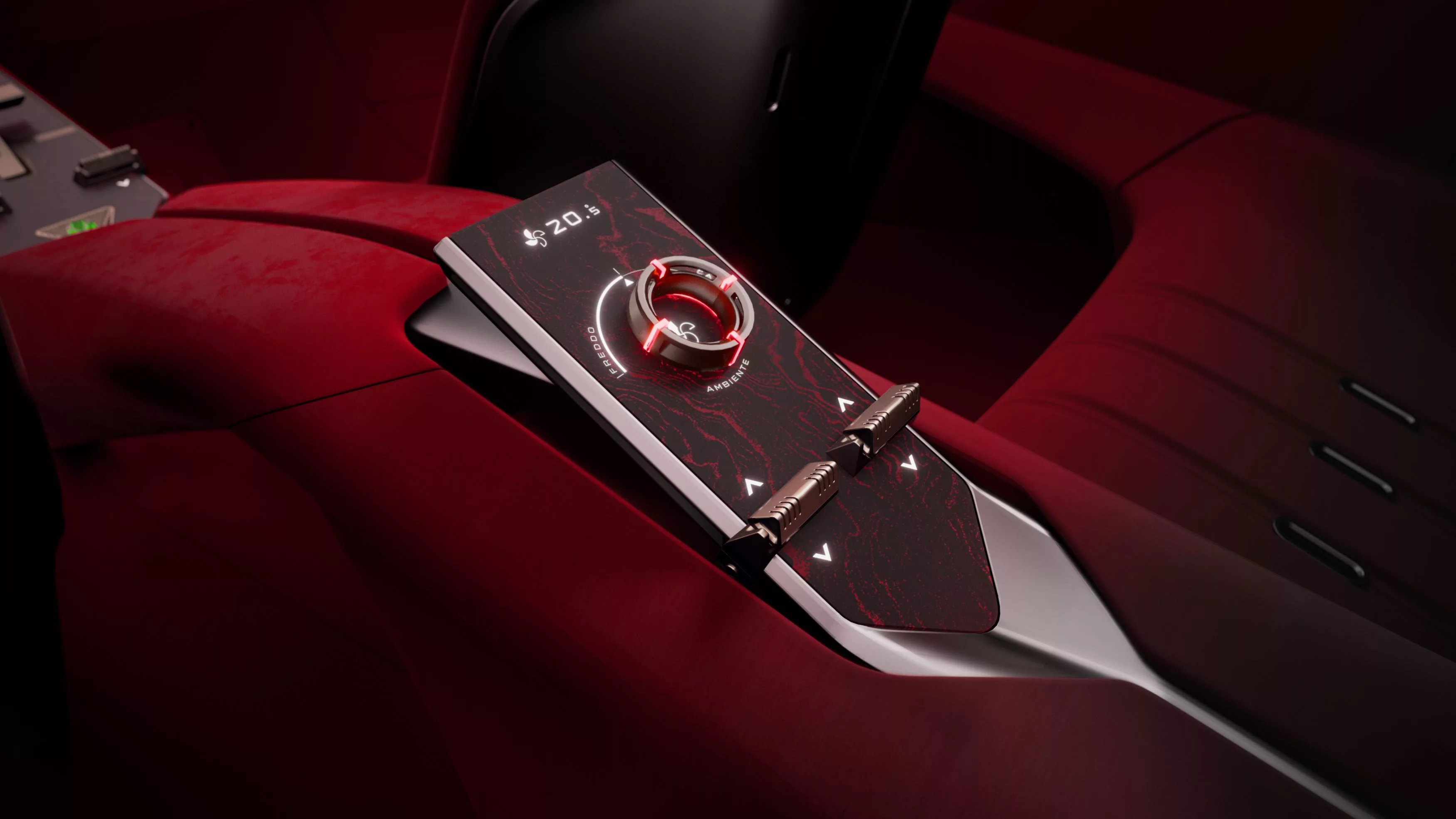
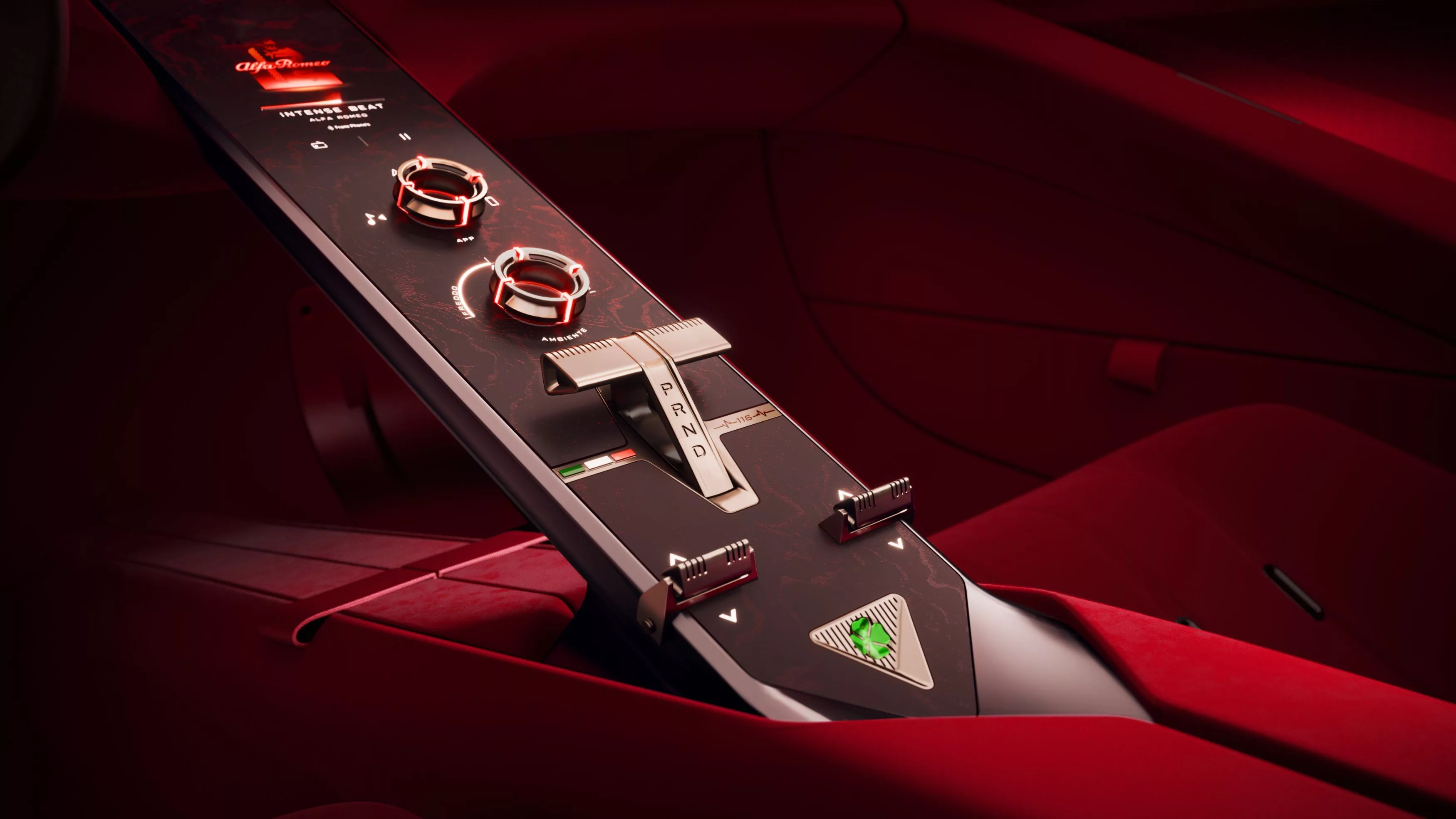
The centre console's “Magma Display” combines a touchscreen, a rotary control and physical controls. There are three driving modes: Cruise, Sport and Quadrifoglio.
Alfa Romeo's choice of materials includes Poltrona Frau leather, recycled carbon fibre and a technical fabric developed in collaboration with the Luna Rossa sailing team. The body's distinctive Liquid Ink Red paint changes shade from deep red to almost black depending on the angle of the light.
Cuorerosso points to Alfa Romeo's future, but production is uncertain
Although the concept's proportions suggest a possible next-generation Giulia or a new GTV, Alfa Romeo stresses that the Cuorerosso is not a preview of a specific production model.
Its role is to define the brand's future design language and technological direction. This primarily concerns vehicles up to 4.7 metres long, which could include sporty Quadrifoglio versions in the future.
For the European market, Alfa Romeo's decision to retain different powertrain options is significant. To compete with the BMW M3 and Mercedes-AMG sports models, the Italian manufacturer needs more than striking looks. It also needs convincing performance and technology that drivers enjoy using.
The Cuorerosso proves at least one thing: Alfa Romeo's designers have not lost their ability to create a car that makes passers-by stop. Now the engineers must show how much of that boldness will actually make it onto the road.


