
Alpine PS1 brings back hidden headlights and hints at an even pricier future for the brand
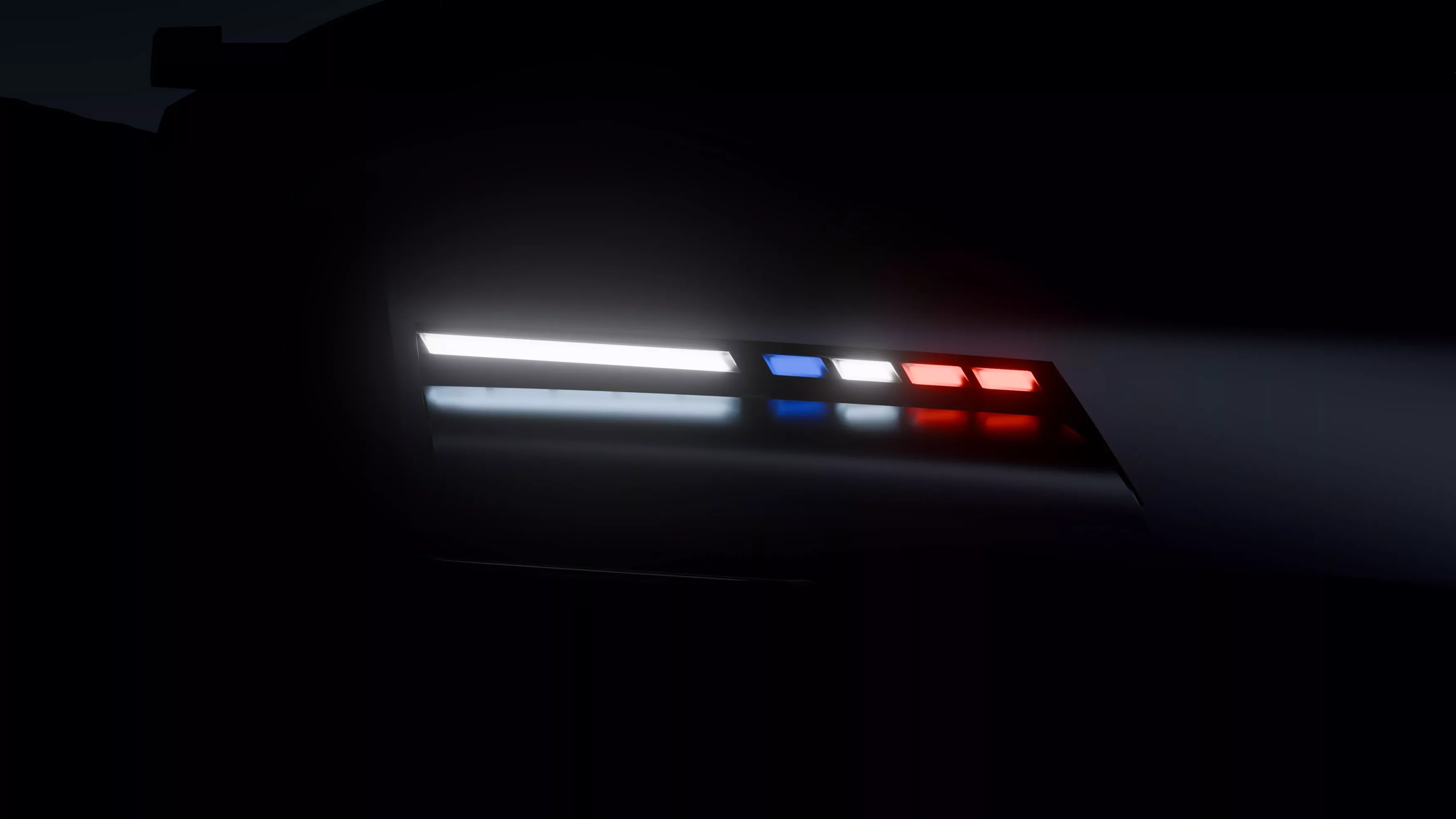
Alpine will unveil the PS1 concept car at the Paris Motor Show, which opens next week, and the first detail sends a fairly clear message: the French brand has no intention of merely building faster Renaults in the electric era. In the teaser, a front panel drops out of the way to reveal slim LED headlights and daytime running lights in the colours of the French tricolour.
The name PS1 stands for “Projet Spécial 1”, and the word “spécial” matters more here than the number. Alpine is dividing its future line-up into three pillars: the A290 and A390 represent more everyday sporting cars, the A110 remains the brand’s icon, and Special Projects is intended to offer more exclusive, more extensively personalised models. The PS1 provides the first concrete taste of that third direction. Alpine confirmed the concept’s Paris unveiling in its press release of 6 October.
Hidden headlights without the aerodynamic penalty of the 1980s
Alpine initially showed only the front of the PS1. The most striking feature is a moving body panel that conceals a slim lighting unit. The solution recalls the pop-up headlights of classic sports cars, but the mechanism works in reverse: rather than an entire headlight unit rising into view, a cover panel moves out of the way.
This is not merely a nostalgic trick. Traditional pop-up headlights disappeared partly because of pedestrian protection, structural complexity and aerodynamics. Modern, slim LED lighting makes it possible to achieve the same theatrical effect in a much more compact package.
The teaser also shows a lighting signature with blue, white and red accents. It is hardly an understated gesture from Alpine, but it works for a French sports car brand’s prototype at the Paris Motor Show.
The PS1 is not the next A110
Most importantly, the PS1 should not be confused with the third-generation A110. Alpine is also bringing a separate A110 Sculpture to Paris, showing the proportions and design direction of the next A110. The future A110 will use the new Alpine Performance Platform, or APP, and will be an all-electric sports car.
Technically, APP is the most interesting part of Alpine’s next decade. The aluminium-architecture platform has a target weight of around 1.5 tonnes, which is ambitious for a battery-electric sports car. Alpine uses two separate 800 V cell-to-pack battery packs, positioned at the front and rear. In developing the A110, the manufacturer is targeting a 40:60 front-to-rear weight distribution.
That is an important difference compared with the Porsche Taycan or most fast electric cars. Alpine’s primary aim is not to win on battery capacity or straight-line acceleration, but on weight, balance and handling. The current combustion-engined A110 built its entire reputation on the same principle.
By contrast, Alpine has so far revealed no power output, battery details, drivetrain layout or dimensions for the PS1. It would therefore be premature to declare it an APP-based electric car.
Is a new A310 emerging from hiding?
This is where the PS1 becomes particularly interesting. Autocar notes that the concept could hint at either a future four-seat Alpine GT or the exceptionally powerful flagship the brand is planning. One possible name has links to the historic A310, which Alpine produced from 1971 to 1984.
The A310 connection is not entirely unfounded. Alpine’s strategy, published by Renault Group, explicitly states that APP must accommodate a spider and a 2+2 body style as well as a coupé. There is therefore a technical foundation for a Porsche 911-style 2+2 sports car that is more practical than the A110.
However, Alpine itself has not confirmed that the PS1 previews an A310. For now, all that can be said with certainty is that the PS1 belongs to a more exclusive world than the brand’s regular line-up.
That may ultimately prove to be the concept’s most important characteristic. The A290 is intended to bring Alpine to more customers, the A390 takes the brand into the larger, more expensive electric car segment, and the next A110 will safeguard its sports car identity. Special Projects gives Alpine the opportunity to move further upmarket, where customers pay not just for performance, but for rarity and individuality.
Alpine must now prove that electric cars can be light
The timing is critical for Alpine. Production of the second-generation A110 ended in Dieppe in July 2026. A total of 28,701 examples were built from 2017, and the next A110 has an unusually difficult act to follow: the outgoing car became famous precisely because it weighed less than its rivals and did not try to win a horsepower numbers game.
At the same time, Alpine is growing its business rapidly. In 2025, the brand exceeded 10,000 annual registrations for the first time, reaching 10,970 cars. The A290 and A390 provide the necessary volume, but in the global sports car market, simply giving Renault Group technology more aggressive bodywork is not enough.
The PS1 appears to be an answer to precisely that problem. Hidden headlights may look like a designer’s plaything for now, but the concept’s real task is much harder: to prove that, alongside Porsche, Lotus and exotic brands moving towards electrification, Alpine can create something customers want for emotional reasons rather than a rational assessment of the price list.


