
Toyota and Isuzu’s new hydrogen bus offers over 300 km of range and refuels in ten minutes
 1/5
1/5
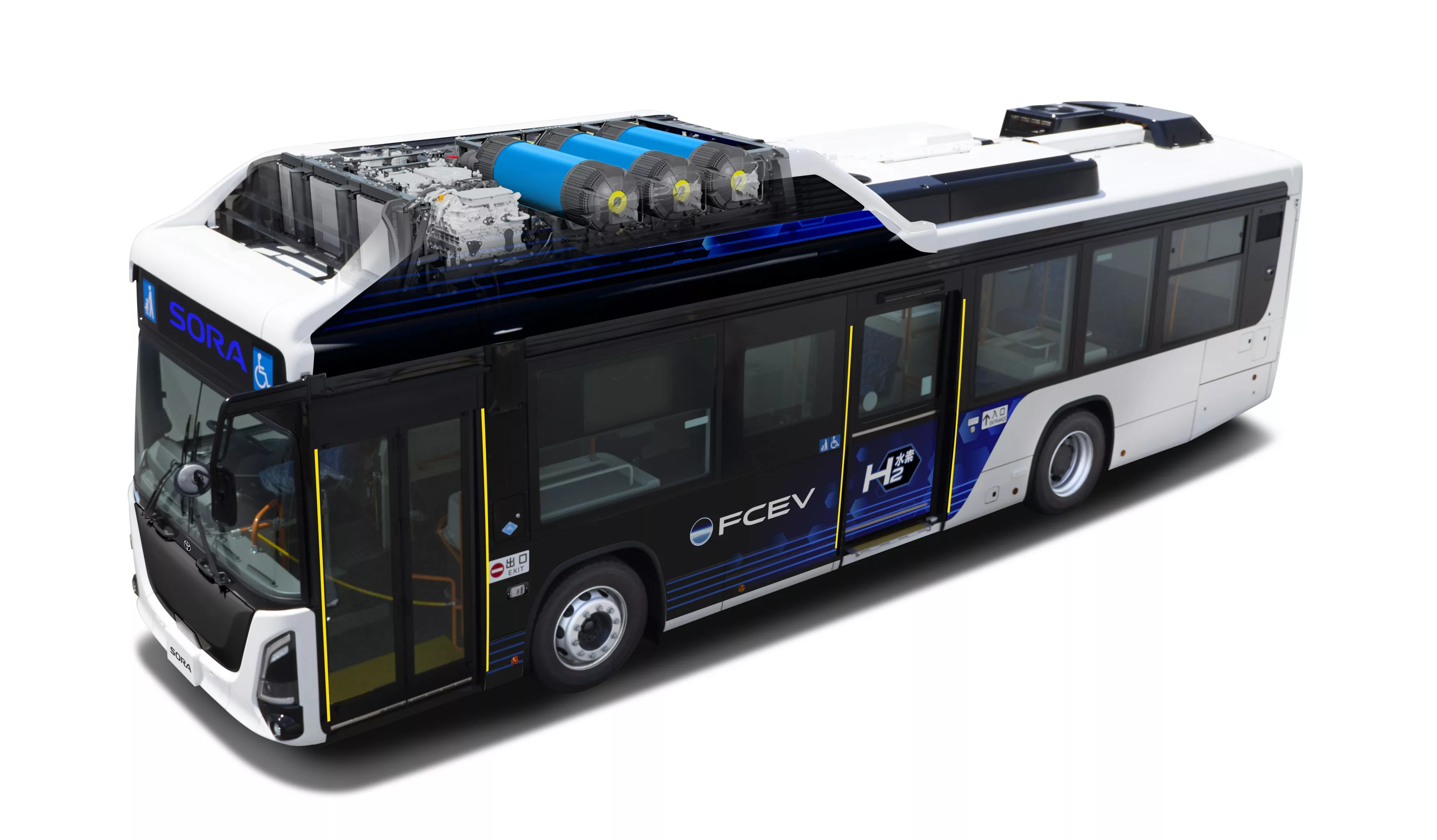
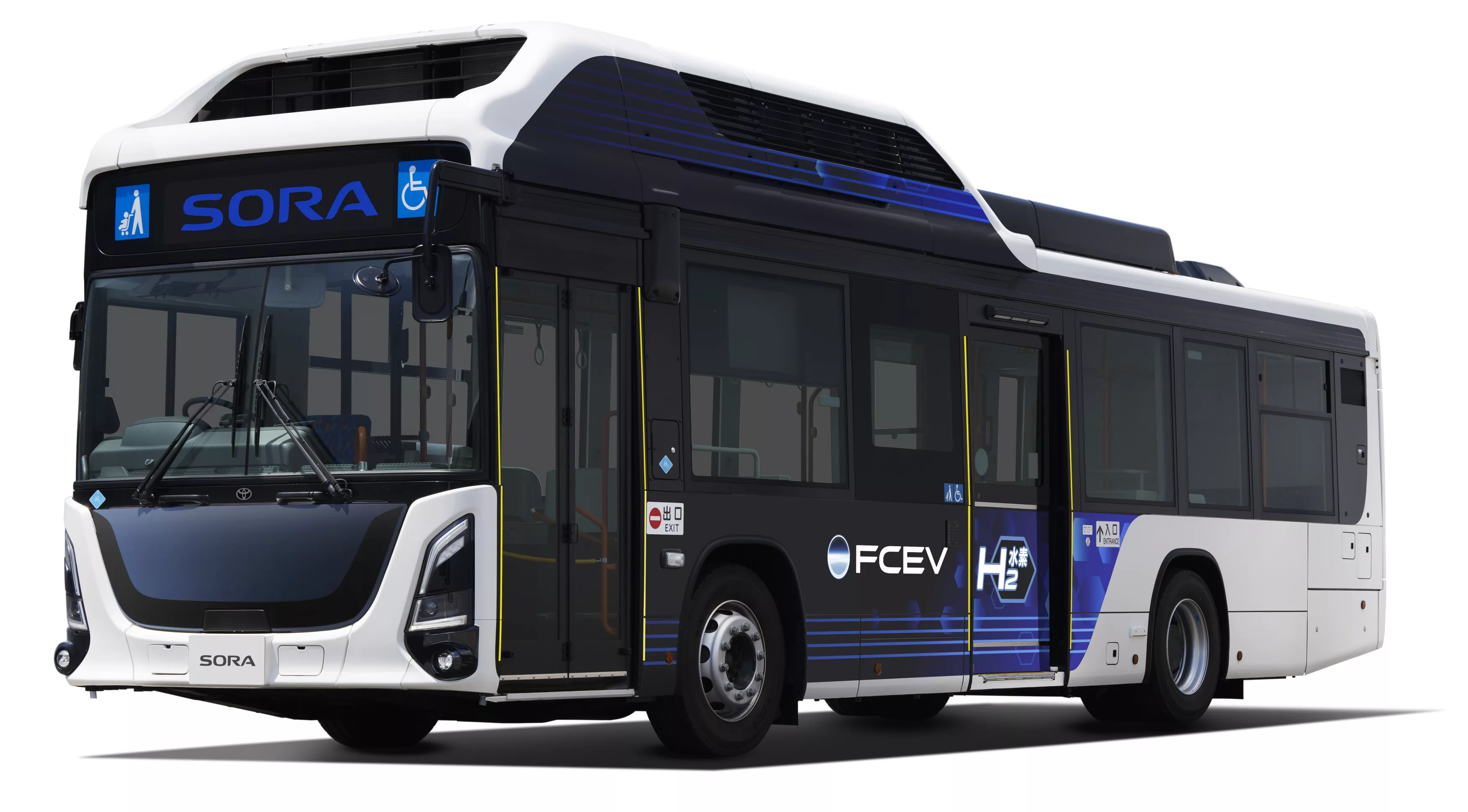
Toyota has launched the new-generation Sora hydrogen bus in Japan, developed jointly with Isuzu. The bus uses Isuzu’s battery-electric city bus platform and Toyota’s fuel cell system, travels more than 300 km on a full tank and can refill its hydrogen tanks in about ten minutes.
Two 110 kW electric motors
The new Sora uses a Toyota polymer electrolyte membrane fuel cell with a maximum output of 113 kW.
Two induction motors drive the wheels, each producing 110 kW. Combined output reaches 220 kW, with maximum torque of 970 Nm. A lithium-ion traction battery also stores energy recovered during braking.
Hydrogen is stored in three tanks at 70 MPa, or 700 bar, with a total capacity of 471 litres.
Less hydrogen, more range
Compared with the original Sora, Toyota has reduced total hydrogen tank capacity by about 20% while extending the range by approximately 100 km. The new model’s range exceeds 300 km. The manufacturer achieves this through more efficient integration of the fuel cell and the larger traction battery.
Using the conventional refuelling standard, filling the three tanks takes about ten minutes. A future fast-refuelling standard is expected to roughly halve that time.
For a city bus, this is hydrogen’s biggest practical advantage over a battery: the same vehicle can quickly return to service after a short refuelling stop.
The Isuzu platform reduces development costs
The Sora’s underpinnings were not designed specifically for a hydrogen bus. Isuzu and Hino developed a battery-electric city bus platform with a completely flat floor, and Toyota added its fuel cell system. Using the same basic structure for both battery and hydrogen versions allows components to be shared and production costs to be reduced.
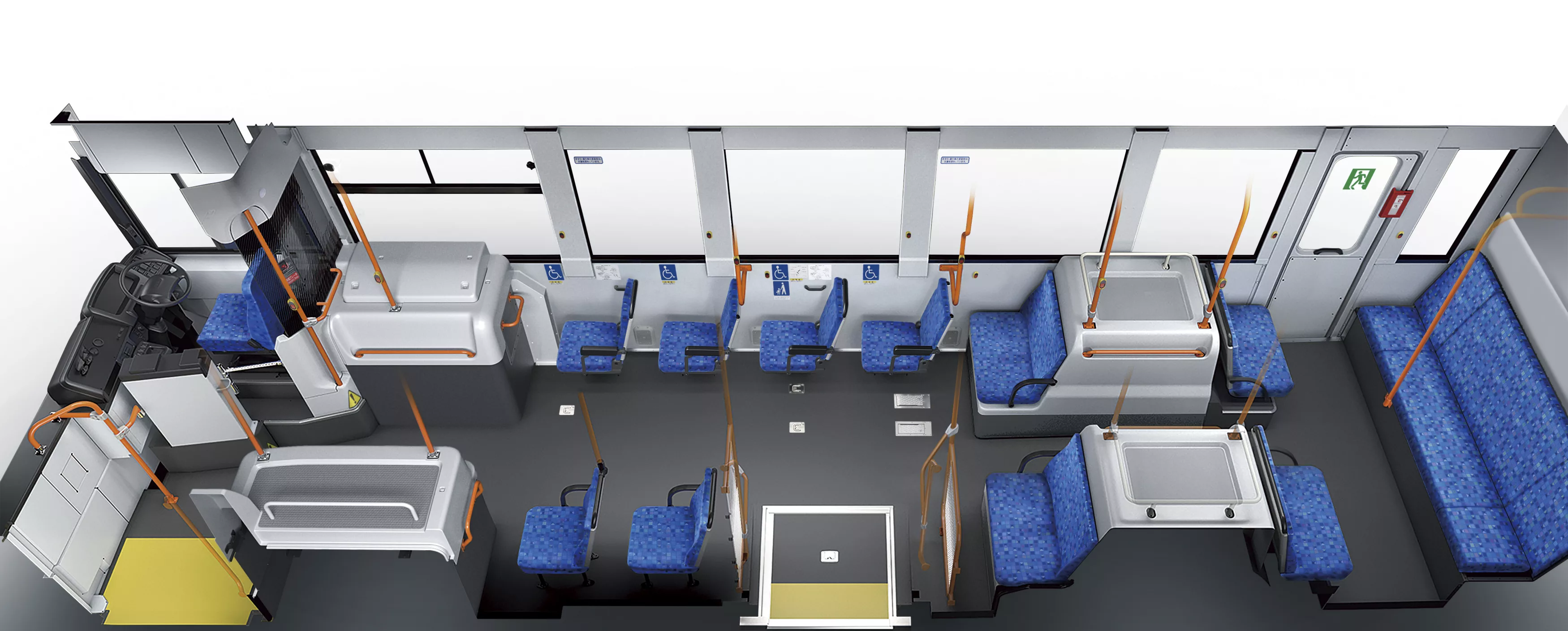
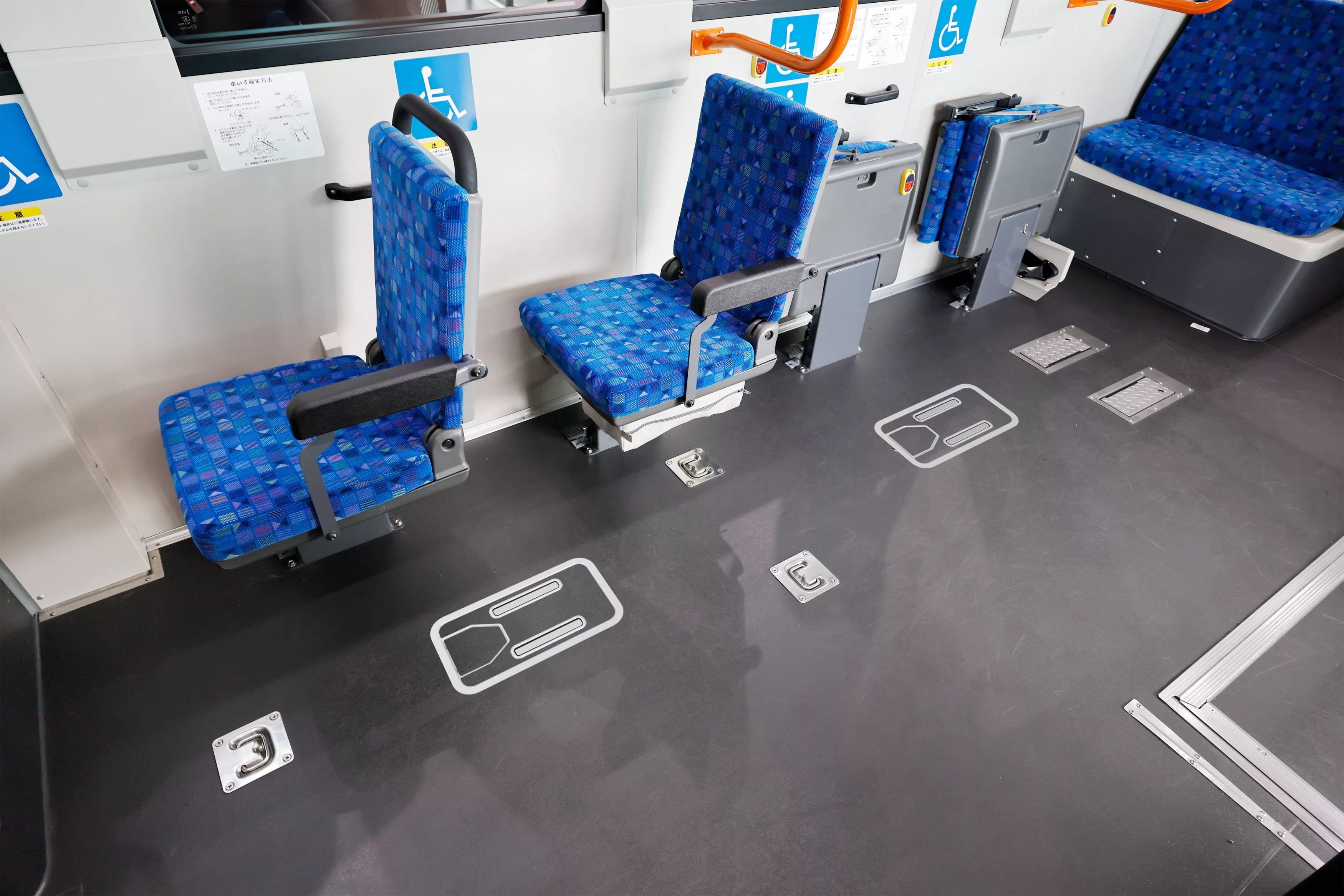
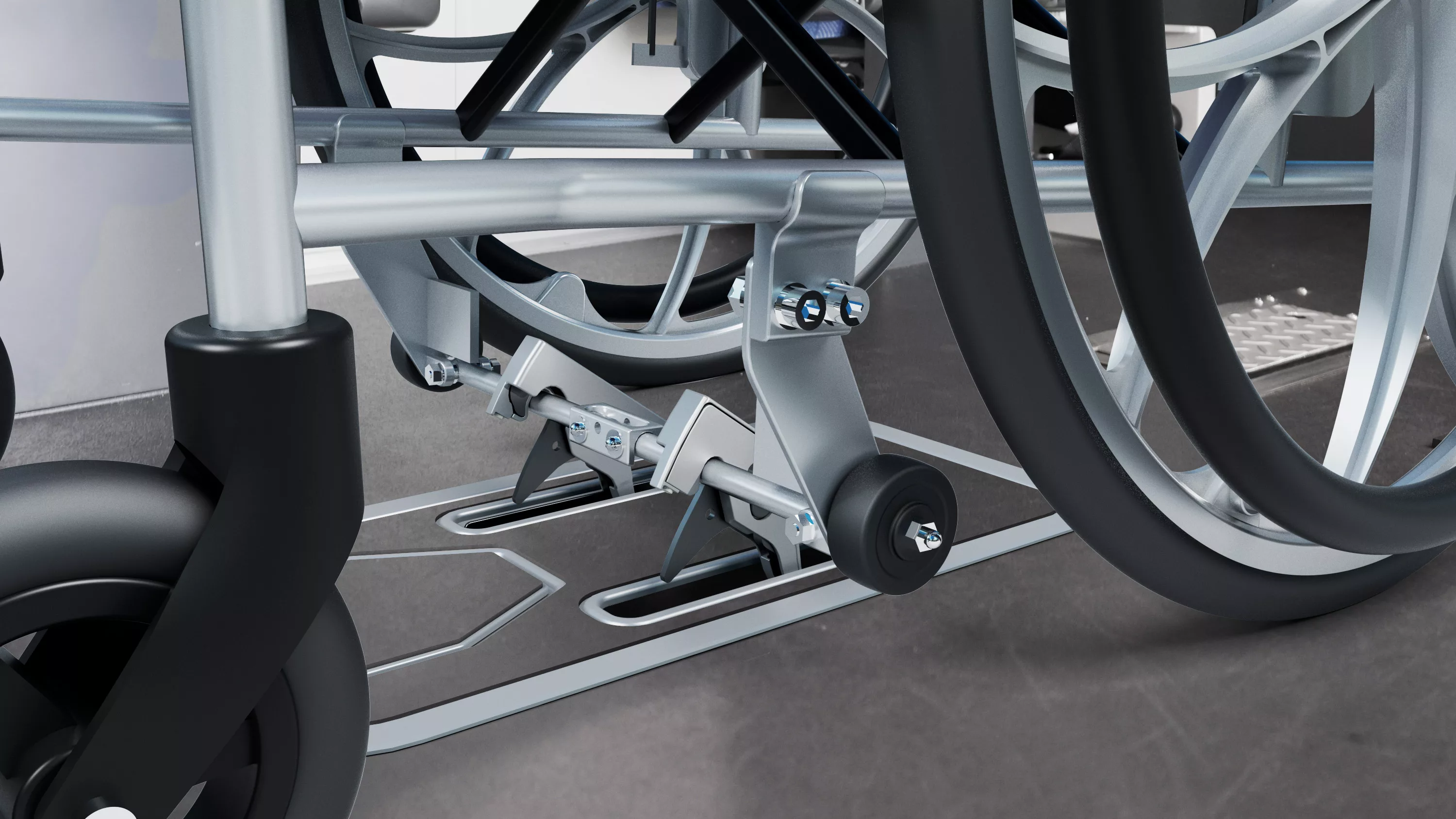
The bus is 10,545 mm long, 2,485 mm wide and 3,440 mm tall. The city version accommodates 70 people: 19 seated passengers, 50 standing passengers and one driver. The completely flat floor makes it easier to move around with a wheelchair or pushchair. A wheelchair securing system operated in a single action is also available as an option.
Hydrogen makes more sense in buses than in passenger cars
Battery-electric technology has established a clearly stronger position than hydrogen in passenger cars, but the picture is different in public transport.
A city bus follows a predetermined route, returns to a fixed depot and consumes a large amount of energy every day. This means a single hydrogen refuelling station can serve an entire fleet, without the need to spread an expensive refuelling network across the country.
However, energy efficiency remains hydrogen’s major drawback. Converting electricity into hydrogen, compressing and transporting it, and later converting it back into electricity creates greater losses than charging a battery directly. Whether buses such as the Sora make sense therefore depends primarily on local energy sources, the price of hydrogen and how intensively the buses are used.
Competition in Europe would be fierce
Europe’s city bus market is electrifying rapidly, and electric buses are already the main choice in many cities.
Hydrogen buses still have a place on long routes, in cold climates or with operators for whom long charging times and very large batteries make a battery-electric solution inconvenient.
Toyota’s new Sora is not currently intended for sale in Europe, but its architecture clearly shows where hydrogen technology is heading: rather than developing dedicated hydrogen platforms, manufacturers are seeking to use the same bodies, chassis and electric drivetrain components already found in battery-electric buses.
This is a much more realistic cost strategy than building an entirely separate hydrogen model.


