
Mercedes-Benz EQS drops the mechanical steering link and turns its wheels electrically
 1/3
1/3
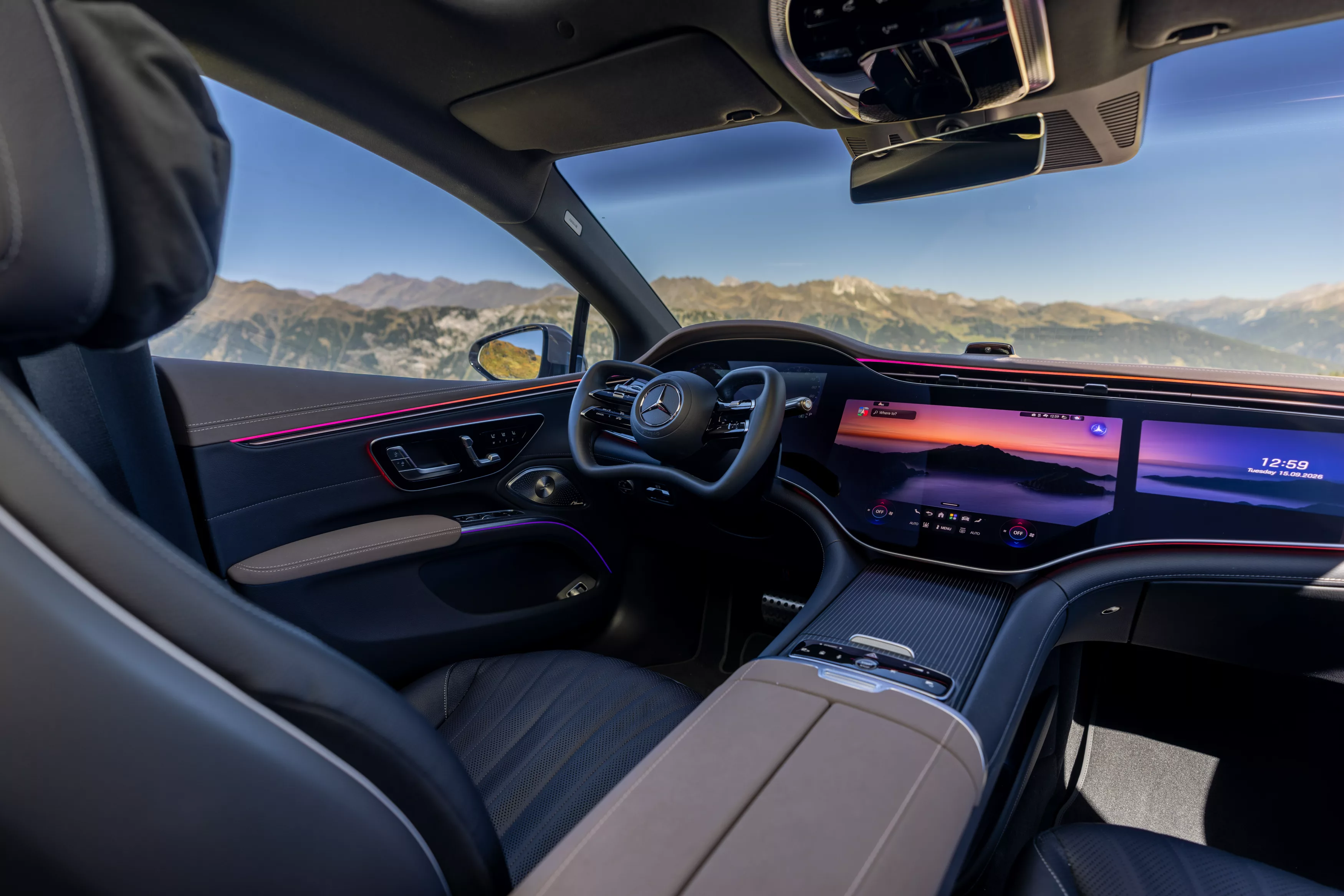
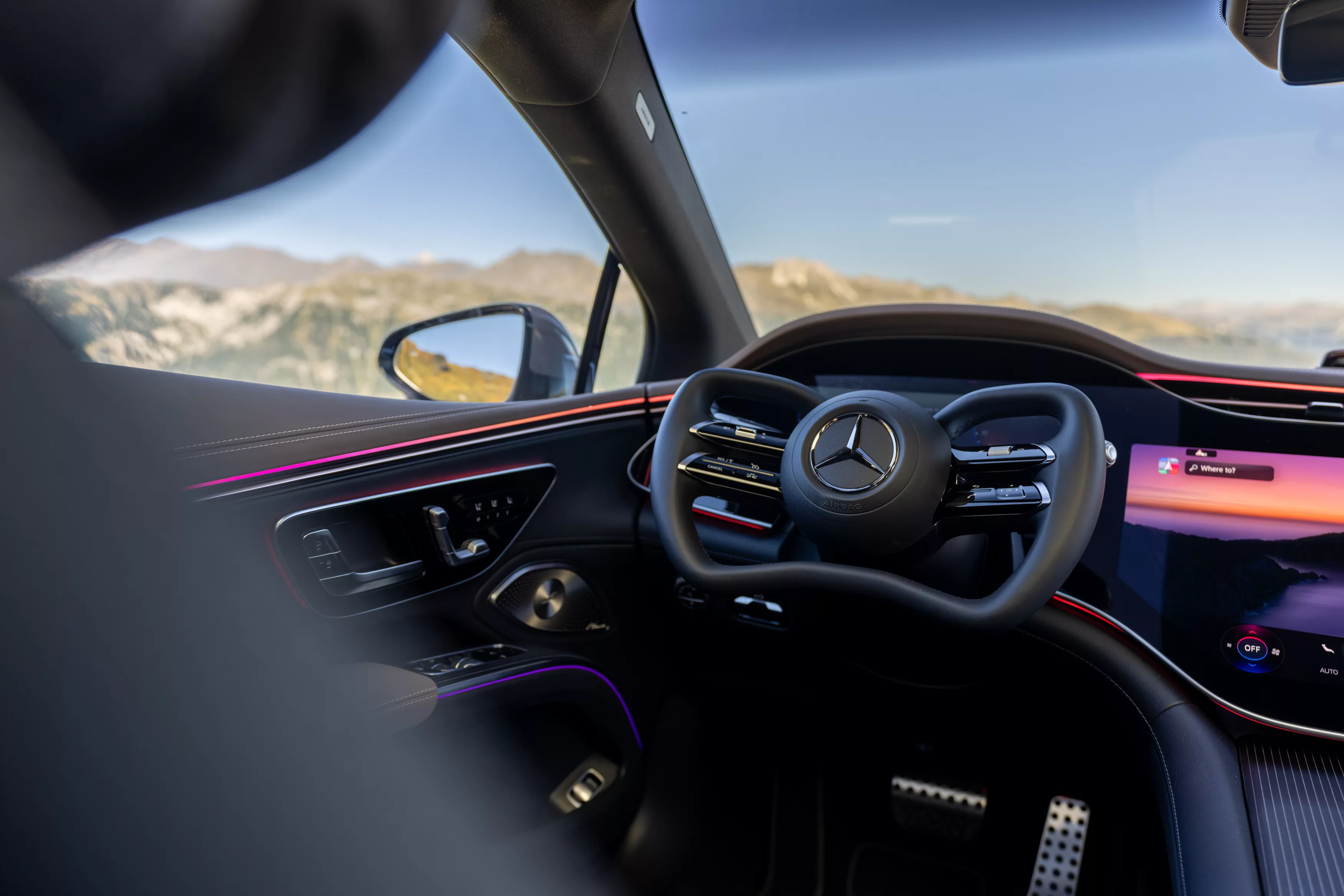
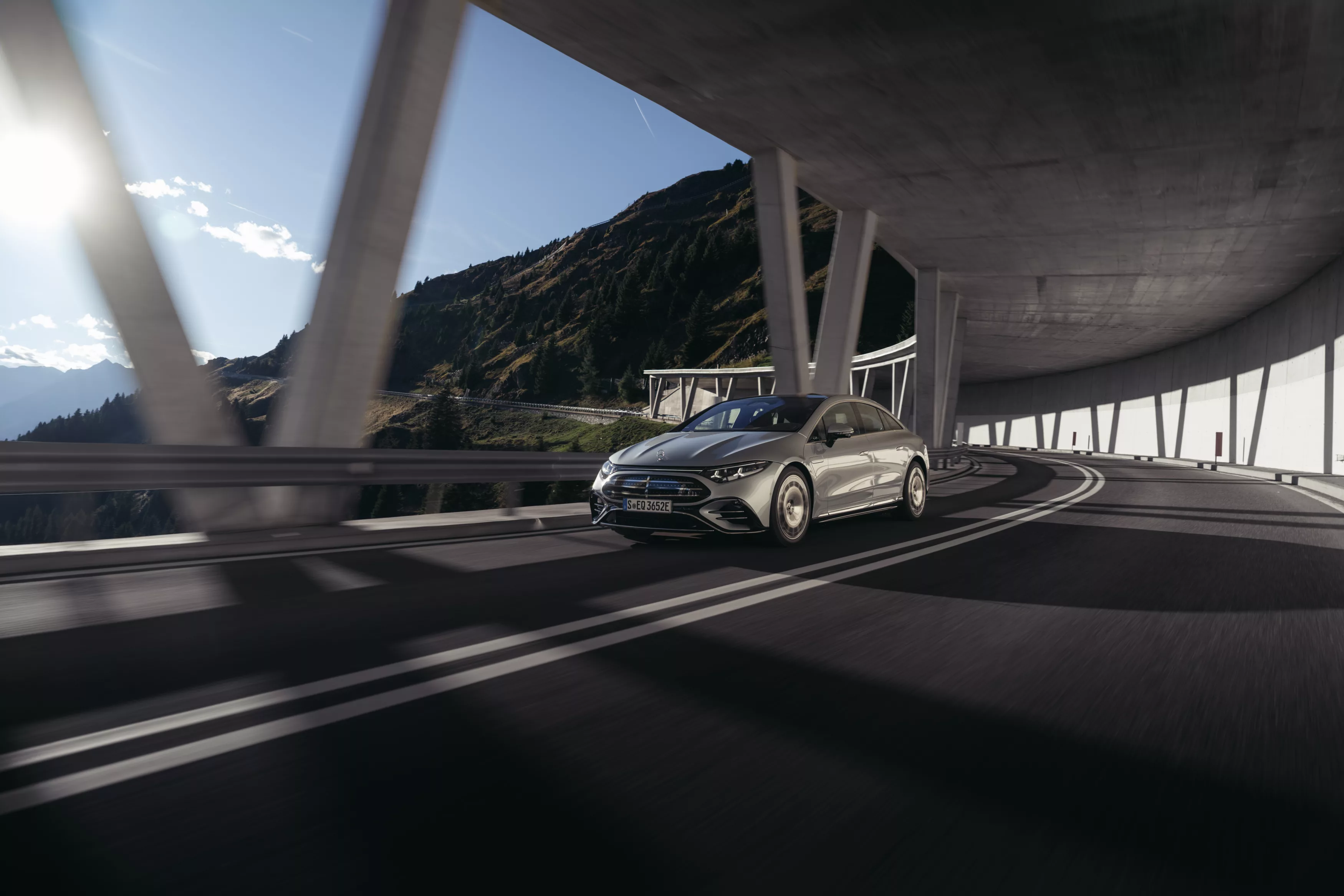
Mercedes-Benz now offers the updated EQS with a steering system in which the steering wheel and front wheels are no longer mechanically connected. The driver’s input is transmitted electrically, the electronics determine the appropriate steering ratio and an actuator turns the wheels to the required position. When parking, just 170 degrees of steering movement is enough to go from lock to lock.
This finally gives the flat, aircraft-style steering yoke a technical justification, rather than making it merely a designer’s whim. Mercedes-Benz charges €2,975 including VAT for the steer-by-wire system in Germany, with rear-wheel steering of up to 10 degrees included in the price. According to the manufacturer, the system can be ordered for the EQS in every market where the model is sold.
No more shaft between the steering wheel and front wheels
In a conventional car with electric power steering, a physical steering column still connects the steering wheel to the steering mechanism. The electric motor merely assists the force applied by the driver. Steer-by-wire severs that connection.
Sensors measure the steering wheel’s position and the force applied by the driver, control units process the input and electric actuators turn the front wheels. The resistance felt through the steering wheel is also generated electronically.
This gives engineers freedom that steering with a fixed mechanical ratio cannot offer. The steering ratio can change according to speed and driving conditions. The system can respond very quickly in a car park and more gently at high speeds.
In the EQS, 170 degrees is enough to move from one steering lock to the other. In practice, this means the driver does not need to reposition their hands or turn the steering wheel through several revolutions when parking. That is why a cut-down steering wheel actually works here. With a conventional steering mechanism requiring around two and a half to three turns, such a wheel would be more of a punishment than an innovation.
Electronics can simply filter out unwanted feedback
An even more interesting change concerns steering feel. In a mechanically connected system, forces generated by the tyres and road surface inevitably reach the steering wheel to at least some extent. Engineers can dampen them by tuning the power steering and chassis, but cannot freely choose which forces reach the driver. The EQS calculates tyre contact with the road surface from the restoring forces at the front wheels, then synthesises an appropriate resistance at the steering wheel. Unwanted impacts and vibration can be filtered out, while the build-up of load needed in corners can still be conveyed to the driver.
This is steer-by-wire’s greatest opportunity and also its greatest risk. Good calibration can deliver exceptionally clean, precise steering. Poor calibration turns the steering wheel into a video game controller.
The question is particularly pertinent for Mercedes, because the EQS is not a lightweight sports car. In a large luxury saloon like this, removing vibration is probably more important than transmitting every crack in the asphalt to the driver’s fingers.
Rear-wheel steering is an integral part of the system
On the EQS, steer-by-wire comes with rear-wheel steering of up to 10 degrees. At low speeds, the rear wheels turn in the opposite direction to the front wheels, effectively shortening the long car when manoeuvring. At high speeds, the rear wheels turn in the same direction as the front wheels to improve stability.
It is the collaboration between these two systems that allows Mercedes-Benz to change the car’s behaviour through software to a much greater extent than with a conventional steering mechanism.
This is no longer simply power steering. The car calculates in advance how far the front and rear wheels need to turn, and how much resistance the driver should feel through their hands at the same time.
But what happens if the computer fails?
This is the most obvious question surrounding steer-by-wire technology. Without a steering column, there is no metal shaft left through which the driver can physically turn the wheels if the electronics fail. Mercedes therefore uses a redundant architecture with independent signal paths. According to the manufacturer, the system completed more than a million test kilometres on test benches, test tracks and public roads before entering series production.
Mercedes goes even further with its fallback solution. Even if the primary steer-by-wire system fails completely, the car can influence its direction of travel through rear-wheel steering and by using ESP to brake individual wheels.
This does not mean the EQS becomes a car that can be driven normally using its rear wheels to steer. It is an emergency strategy intended to maintain lateral control of the car long enough to resolve the situation safely.
The airbag also had to be rethought
The flat steering yoke created an unexpectedly substantial engineering challenge.
The upper rim of a conventional steering wheel helps the airbag maintain the correct shape as it deploys. The EQS’s new steering yoke has no such support. Mercedes therefore designed a new internal support structure and folding pattern for the airbag, intended to bring it into a stable position on deployment without an upper steering wheel rim. At the same time, the driver gets a better view of the instrument display, while the smaller steering yoke leaves more room around their knees. Getting into the car also becomes easier.
These may seem like minor benefits, but they illustrate the wider impact of steer-by-wire technology. Without a physical shaft between the steering wheel and the wheels, the steering wheel’s shape and position no longer have to be chosen within the same mechanical constraints.
Mercedes is not the first
The EQS is the first production car from a German manufacturer to offer this kind of steer-by-wire solution, but the technology is no longer new globally.
Lexus introduced the updated RZ to the European market with steer-by-wire as early as autumn 2025. Its One Motion Grip also uses an open-top steering yoke instead of a conventional steering wheel and removes the physical connection between the steering wheel and front wheels. Toyota’s earlier development of the same technology showed how far the idea could go. One Motion Grip was designed to require just 150 degrees for the full steering movement.
Mercedes uses 170 degrees in the EQS. In numerical terms, then, the German solution is not the most aggressive, but Mercedes is bringing the technology much closer to the European luxury-car mainstream.
The EQS is almost too well suited to being a guinea pig
The updated EQS also gained an 800 V electrical architecture, new electric drive units developed by Mercedes-Benz itself, a two-speed transmission for the main drive and larger batteries with updated chemistry.
In this context, steer-by-wire is not simply another box to tick on the options list.
Mercedes is moving the EQS ever further away from the traditional car, in which the pedals and steering wheel control mechanical systems, and closer to a machine in which the driver’s commands first become data. Software then decides how the car can best carry them out.
In a sports car, such an idea would raise justified doubts among purists. In the EQS, the rationale is much stronger. If a luxury saloon more than five metres long can make a full turn in a car park with one small movement of the hands, filter out unnecessary vibration before it reaches those hands and become more composed on the open road at the same time, the technology has a genuine function.
Nor is €2,975 exactly an insurmountable obstacle in the EQS’s price bracket.
The more important question is how naturally Mercedes can calibrate the artificially generated steering feel. Removing the physical steering column was a complex engineering task. Convincing the driver that they will not miss it is the harder part.


