
BYD Shark earns five Euro NCAP stars, but crash test reveals a weakness
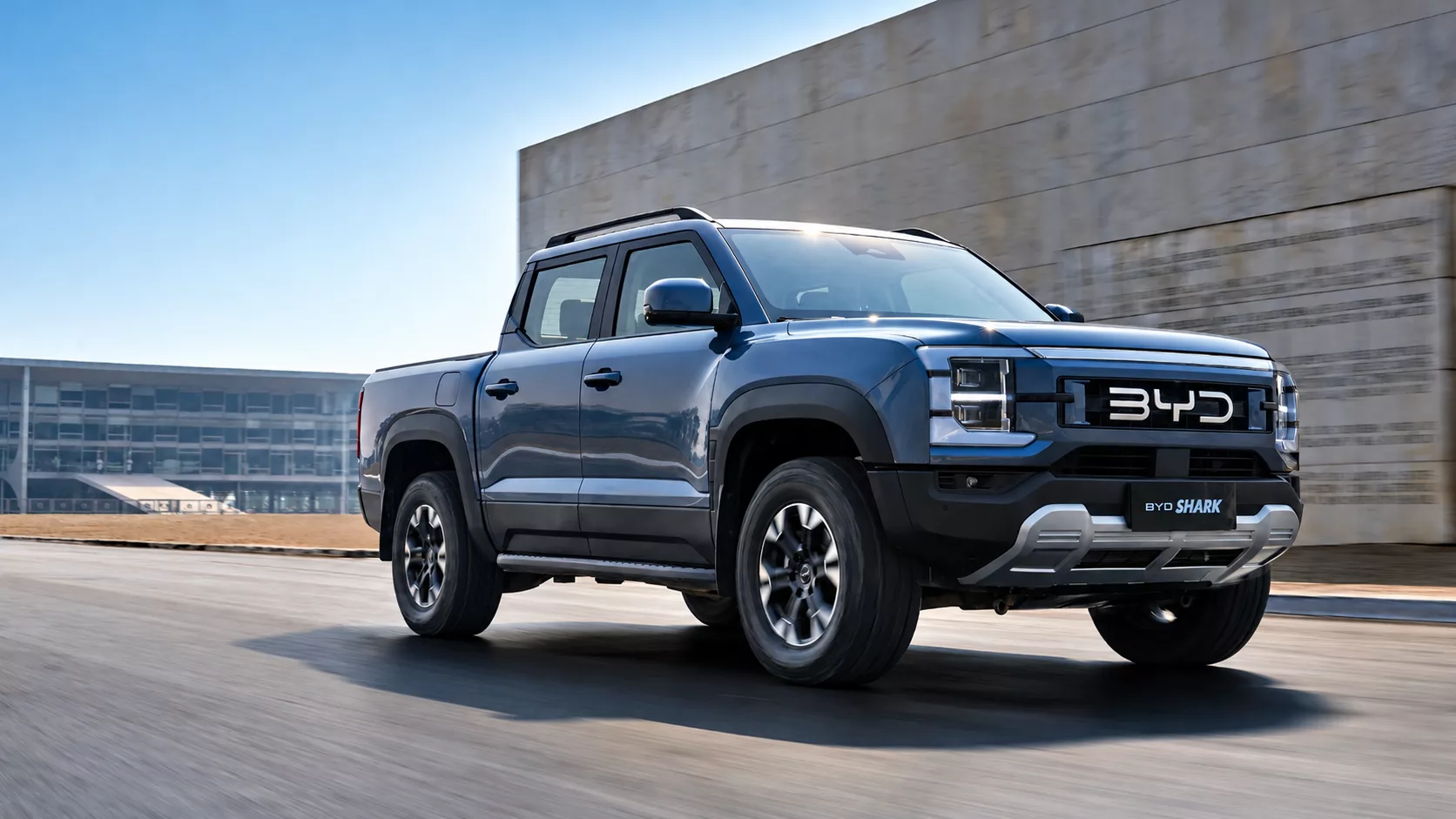
Chinese carmaker BYD’s Shark DMO plug-in hybrid pickup has earned the maximum five stars in Euro NCAP safety tests. It scored 82 per cent of the available points for adult occupant protection and 86 per cent for child occupant protection. The result is solid, but testing also exposed a typical drawback of a large, heavy pickup: it can pose a significant risk to other vehicles in a frontal collision.
Five stars does not mean a flawless result
The Euro NCAP results are based on tests conducted by Australia’s ANCAP in 2025, supplemented by additional checks by the European organisation.
The passenger compartment remained stable in the frontal crash test, while the body provided good occupant protection in the side impact test. The Shark also earned maximum points for protection against whiplash injuries in a rear-end collision.
Not everything was ideal, however. Euro NCAP judged the Shark to behave aggressively towards another vehicle in a frontal impact. This means that while its strong structure protects the pickup’s occupants, it can make a collision more severe for a smaller car.
Electronics help prevent accidents
The Shark’s autonomous emergency braking system performed well in detecting cyclists and motorcyclists. Lane-keeping assistance and a system that adjusts the vehicle’s speed according to traffic signs also contributed to its 87 per cent safety assist score. One notable child safety feature is a system that detects a child left in the cabin and warns the driver of the potential danger.
The five-star result provides further confirmation for BYD that the Chinese manufacturer can offer competitive safety standards in the larger commercial vehicle segment too.
321 kW and up to 90 kilometres on electric power
The Shark is far from a conventional diesel workhorse. Its DMO plug-in hybrid powertrain combines a 1.5-litre turbocharged petrol engine with two electric motors. The front motor develops 170 kW and 310 Nm, while the rear motor delivers 150 kW and 340 Nm. Total system output reaches 321 kW and 650 Nm. The large pickup accelerates from rest to 100 km/h in just 5.7 seconds. That is quicker than most traditional diesel pickups could hope to manage.
According to BYD, the 32.2 kWh Blade Battery provides an electric range of up to 90 kilometres. With a fully charged battery and a full fuel tank, the combined range reaches approximately 674 kilometres.
The battery sits within the ladder-frame structure, with the manufacturer using Cell-to-Chassis technology to secure it.
Diesel pickup competition awaits in Europe
The Shark DMO is already available to order in the UK. Prices start at £47,295 including VAT, equivalent to approximately €54,500.
In the European market, the Shark would compete primarily with the Ford Ranger, Toyota Hilux and Isuzu D-Max.
The plug-in hybrid’s advantage lies in the ability to make shorter journeys on electric power and use the vehicle’s battery to power external electrical equipment. However, acceleration and electric range alone do not determine a pickup’s real working capability. Payload, towing capacity and powertrain durability under sustained heavy loads are equally important.
The Shark’s five-star safety rating is a strong selling point for BYD, but with a large pickup, its safety for other road users also deserves attention. On precisely this point, Euro NCAP’s test showed that even modern hybrid technology cannot rewrite the laws of physics.


