
China’s rise as Germany’s largest car supplier exposes a new balance of power in Europe’s auto industry
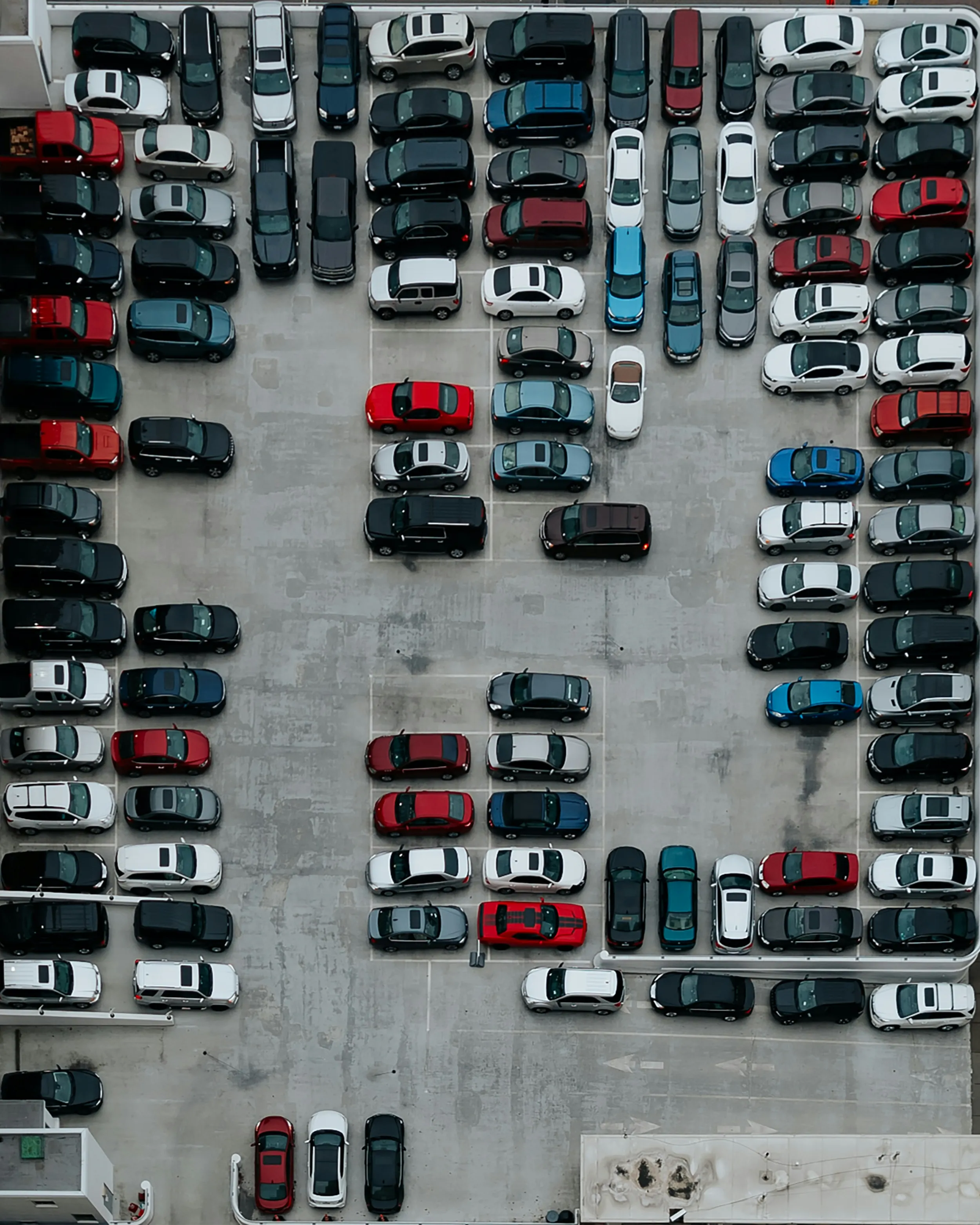
Germany imported around 175,000 passenger cars from China in the first seven months of 2026, making China the country’s largest foreign supplier of cars for the first time. Given the state of Germany’s auto industry, such a result would have seemed almost absurd just a year ago. China has now overtaken both the Czech Republic and Spain, while Germany’s own car production remains far below 2019 levels.
Imports of cars from China rose by around 120% year on year. At the same time, Germany received approximately 173,000 cars from the Czech Republic and 157,000 from Spain. Imports of electric cars and hybrids grew particularly rapidly.
These figures do not mean that Germans suddenly bought 175,000 BYDs, Xpengs or other Chinese brands. Import statistics show the country of production, not the home country of the car brand. Western automotive groups also manufacture cars in China.
The trend is far more important. Europe’s largest car market is growing again, electric-car sales are recovering very quickly, and foreign brands are gaining market share. At the same time, Germany itself is producing fewer cars than before the crisis years.
Germany’s car market is growing, but it is too early to speak of a recovery
In the first eight months of 2026, 1.965 million new passenger cars were registered in Germany, 5% more than a year earlier. At first glance, the market therefore appears fairly healthy. Compared with forecasts for 2027, however, the picture is considerably worse.
According to the VDA, after the first eight months Germany’s new-car market remained around 21% below the level of the most recent pre-pandemic year. Germany has therefore not returned to its previous volume of car sales, although this year’s growth at least suggests that the bottom has been left behind.
The difference between domestic and foreign brands is even more telling.
German brands, including their group brands, registered 1.326 million cars from January to August, up just 1% year on year. Foreign brands reached 638,833 cars, up 13%. The gap became particularly stark in August. Registrations of German brands fell 6% year on year, while those of foreign brands rose 21%. Germany’s market is not simply recovering. Its internal distribution is changing.
Electric cars made a comeback in Germany
As recently as 2024, Germany’s electric-car market looked rather bleak after the abrupt end of the state purchase subsidy. In 2026, the situation is different.
In the first eight months, 515,545 new battery-electric cars were registered, 53% more than a year earlier. Plug-in hybrids added 219,808 registrations, up 16%.
August was even stronger. Germany registered 68,930 new battery-electric cars in a single month, 75% more than a year earlier. Together with plug-in hybrids and hydrogen cars, electrified vehicles accounted for 44% of the total new passenger-car market.
For China, this is an almost ideal market shift.
Over the past decade, China’s auto industry has built its competitive advantage around batteries, electric drivetrains, power electronics, software and rapid model development. As European demand for electric cars recovers, China’s manufacturing capacity automatically becomes more important to Germany.
At the same time, it would be wrong to conclude that German manufacturers have already lost the electric-car race. According to the VDA, German manufacturers’ domestic orders for battery-electric cars rose 62% year on year in August and 64% over the first eight months as a whole.
Competition is simply intensifying at a time when the market itself is changing powertrains.
Germany produces less even as its domestic market grows
The most uncomfortable figure comes from the factories.
In the first eight months of 2026, 2.65 million passenger cars were manufactured in Germany, 4% fewer than a year earlier. Compared with the same period in 2019, output was 16% lower.
Exports fell 5% at the same time, to just over two million cars.
This creates a striking combination: Germany’s domestic market is growing by 5%, but German factories are producing 4% fewer cars. Some of the difference is explained by factory retooling and the timing of holidays, but the longer-term trend is more troubling. German car production has not recovered to pre-pandemic levels, and exports, on which the entire German automotive industry’s business model relied for decades, are under new pressure.
According to Destatis, Germany exported around two million new passenger cars from January to July, 4% fewer than a year earlier. Their export value reached €73.5 billion and fell by 8.9%.
Germany therefore remains a huge exporter of cars. The issue is not the disappearance of the industry, but a weakening of its competitive position.
China puts pressure on Germany from two directions
For Germany’s auto industry, what makes pressure from China particularly uncomfortable is that it works in both directions.
On the one hand, ever more cars are coming from China to Europe. On the other, German manufacturers’ position in the Chinese market has weakened.
Volkswagen’s China chief, Ralf Brandstätter, told Reuters this week that China’s passenger-car market could shrink by around 20% in 2026. Domestic car sales had fallen for 11 consecutive months by August, but Chinese car exports continued to grow.
This is a bad combination for Volkswagen, BMW and Mercedes-Benz.
For decades, China was one of the German auto industry’s most important growth engines. European engineering, German premium brands and China’s rapidly growing middle class formed an exceptionally profitable combination.
German manufacturers now compete in China with BYD, Geely, Xiaomi and a host of other local players whose model development is fast and whose electric-car software and digital features are often competitive.
At the same time, Chinese manufacturing capacity is moving in the opposite direction, towards Europe.
Tariffs did not stop Chinese cars
In 2024, the European Union imposed additional countervailing duties on battery-electric cars made in China. The idea was to offset the distortion of competition caused by Chinese state subsidies, in the European Commission’s assessment.
Market developments show that tariffs alone do not solve European manufacturers’ problem.
One reason is simple: the measures apply to battery-electric cars, but not in the same way to plug-in hybrids. Chinese manufacturers have responded by changing their model line-ups. In September, German Finance Minister Lars Klingbeil called on the European Union to tighten measures against hybrids imported from China as well.
Another response is to move production to Europe.
Chinese manufacturers are preparing or expanding European production to reduce the impact of tariffs and get closer to customers. GAC, for example, announced plans to increase its production capacity in Europe and launch 12 electric and hybrid models in France by 2030.
If a Chinese brand builds a car in Hungary, Spain or another EU country, the question of “European car or Chinese car?” quickly becomes as blurred as it is across the rest of the global auto industry.
A car imported from China is not necessarily a Chinese car
One further important distinction must be made when considering the record of 175,000 cars.
The country of production and the origin of the car brand are not the same thing.
China is the world’s largest automotive manufacturing country, and both local and international groups produce cars there. Germany’s import statistics therefore do not directly show the market share of Chinese car brands.
This is in fact the most interesting aspect of the story.
If China can become Germany’s largest car supplier even before Chinese brands are at the top of Germany’s sales charts, it shows how the country’s role in the global auto industry is changing. China is no longer simply the world’s largest car market. It has become an export-oriented manufacturing base.
Germany was Europe’s undisputed benchmark in that role for decades.
Now these two models are meeting in the same market.
Germany’s problem is not its ability to build cars
It would be easy to conclude that Chinese imports mean the inevitable decline of Germany’s auto industry. The figures do not show that yet.
Germany produced a record 1.67 million electrified passenger cars in 2025, 23% more than a year earlier. According to the VDA, this made Germany the world’s second-largest electric-car manufacturing country after China.
The technological base, suppliers, engineers and factories have not gone anywhere.
The problem is costs and speed.
The electric car reduces part of the German auto industry’s traditional historical advantage. Instead of the internal-combustion engine, gearbox and complex drivetrain, batteries, power electronics and software are growing in importance. These are precisely the areas in which Chinese manufacturers have invested at an enormous pace.
At the same time, Germany must bear Europe’s high energy, labour and regulatory costs.
As a result, the company that wins competition over the next decade will not necessarily be the one that can build the most technically sophisticated car. The winner may be the manufacturer that can bring a sufficiently good car to market faster and more cheaply.
The next battle in Germany’s car market will be in the mid-priced segment
In the premium segment, BMW, Mercedes-Benz and Porsche remain exceptionally strong brands. The sharpest competition may instead emerge in the mass market.
As the share of electric cars grows, Germany needs more and more models that do not cost €60,000 or €80,000.
That is where Volkswagen, Opel and Ford compete directly with BYD, MG, Leapmotor and other rapidly expanding rivals. Chinese manufacturers’ advantage is not just price. They can often bring new models to market more quickly and pack equipment into a cheaper car for which a European manufacturer charges extra.
European manufacturers can counter with strong dealer and service networks, well-known brands, local production and a customer base built up over decades.
Germany’s 2026 figures nevertheless show that this alone is no longer enough.
Registrations of foreign brands are growing faster than those of German brands, the electric-car market is expanding, and a record number of cars is arriving from China.
Germany has not lost, but the rules of the game have changed
The 175,000 cars imported from China are not a death knell for Germany’s auto industry. Germany still produces millions of cars, exports most of them and ranks among the world’s most important electric-car manufacturing countries.
The record matters for another reason.
Just 10 years ago, automotive trade flows between Germany and China primarily meant German technology, cars and expertise moving to China’s rapidly growing market. Now an ever larger flow of cars is moving in the opposite direction.
At the same time, Germany must electrify its domestic market, keep its factories competitive, defend its export position and compete with companies for which the electric car is not a transition from old technology to new, but a starting point.
China’s rise as Germany’s largest car supplier is therefore most interesting not as an import record.
It is a sign that the centre of gravity of the global auto industry has already shifted.


