
Škoda now generates more profit for Volkswagen than Porsche
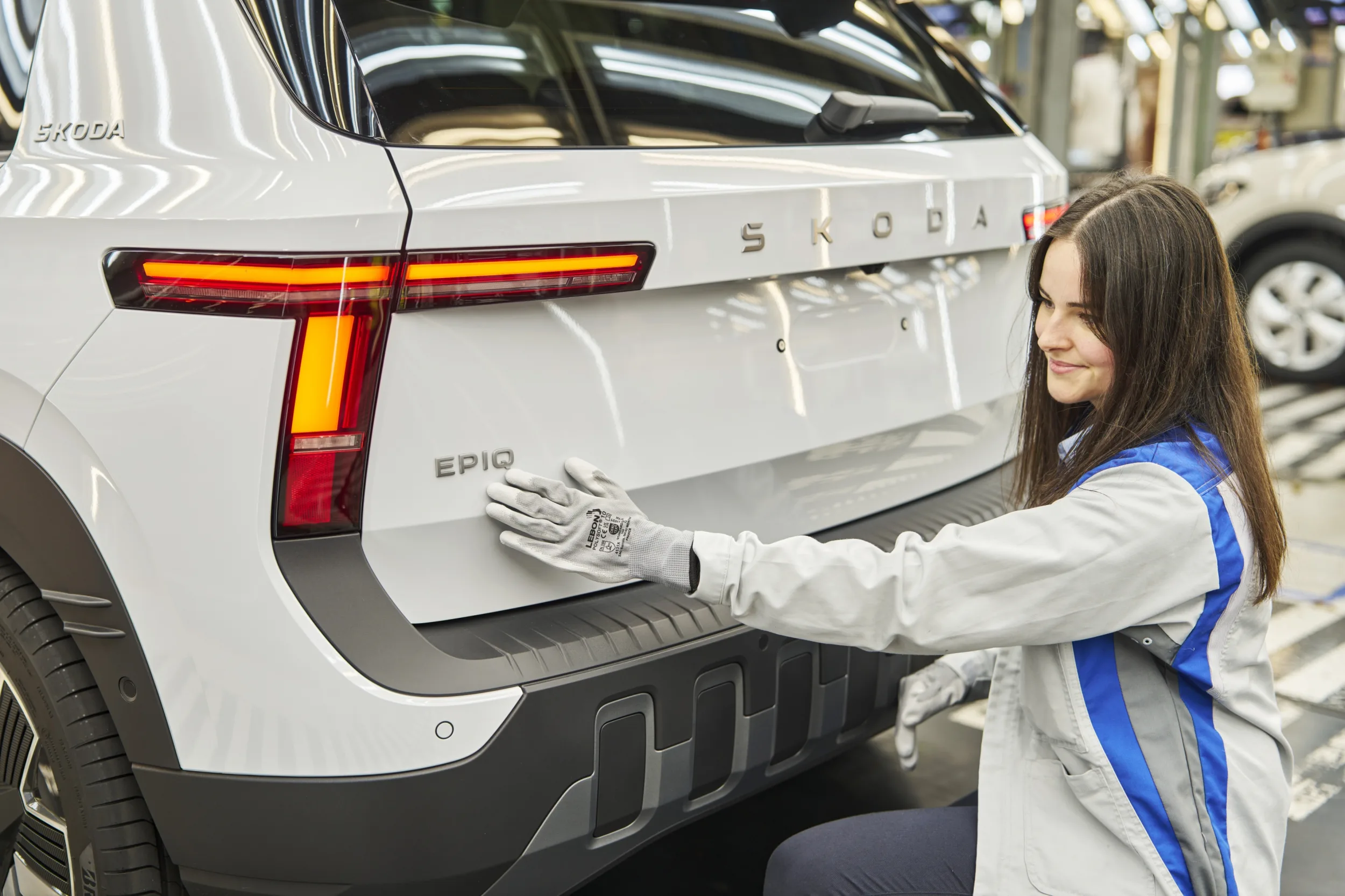
The balance of power between Škoda and Porsche within the Volkswagen Group has shifted in a way that would have been difficult to imagine just a few years ago. In 2025, the Czech carmaker generated €2.50 billion in operating profit, while Porsche made just €413 million. The margin is even more telling: Škoda maintained 8.3%, while Porsche fell from 14.1% to 1.1%. The lower-priced brand has not merely overtaken Porsche; it generated more than six times as much operating profit.
Reuters first drew attention to this shift in the balance of power. Volkswagen’s own financial results, along with reports from Škoda and Porsche, confirm that this is not an accounting curiosity. Škoda is now one of the group’s strongest cash generators, while Porsche is paying a steep price for poorly timed electrification, weakness in China, US tariffs and the overhaul of its product plan.
Škoda’s records are driven by the mass market
Škoda’s revenue rose by 8.3% to a record €30.1 billion in 2025, while operating profit increased by 8.6% to €2.50 billion. The company delivered 1,043,900 cars to customers, 12.7% more than a year earlier and above one million for the first time in six years.
Even more important is where Škoda earns its money. In Europe, the brand ranked third by sales volume in 2025, with 840,295 registrations representing growth of 9.6%. Electric vehicles and plug-in hybrids already accounted for 25.7% of Škoda’s deliveries in Europe. The Elroq helped the brand reach fourth place among electric-car manufacturers in Europe.
Škoda’s result is therefore not simply the product of a final strong cycle for combustion-engined Octavia, Kodiaq and Kamiq models. The company is able to transition to electric vehicles without burning through its profitability in the process. That is what currently sets it apart from Porsche.
Škoda’s advantage also stems from its cost base. Shared platforms, components and development work within Volkswagen Group Core give the brand economies of scale, while its model range extends from relatively affordable cars to higher trim levels of the Kodiaq and Superb. This makes it possible to earn a healthy margin in the mass market without charging Porsche-level prices.
Just €413 million remained of Porsche’s €5.6 billion
The contrast at Porsche is stark. The company generated €5.64 billion in operating profit in 2024, but just €413 million remained in 2025. Revenue fell from €40.08 billion to €36.27 billion, while the number of cars delivered to customers declined by 10.1% to 279,449. Its operating margin collapsed from 14.1% to 1.1%.
According to Porsche’s own figures, extraordinary costs absorbed around €3.9 billion. Of this, approximately €2.4 billion went on revising its product strategy and adjusting the company’s volume, around €700 million on battery-related activities, and another approximately €700 million on the impact of US tariffs.
The problem is not limited to one-off costs. Porsche’s car sales fell by 15% in 2025 to 265,663 vehicles. Taycan sales plunged by 40.2% and Cayenne sales by 23.4%. As a positive exception, 911 sales increased by 2.9% to 52,208 cars. The Macan remained the largest model line with 79,769 vehicles, of which the electric Macan accounted for 40,995.
This illustrates Porsche’s dilemma quite clearly. The 911 demonstrates that demand remains for the brand’s strongest traditional product, but the models associated with higher volumes and electrification have not been able to maintain the same profitability.
Volkswagen is also paying for Porsche’s problems
Porsche’s difficulties do not remain within the walls of Porsche AG. Volkswagen’s operating profit fell from €19.1 billion to €8.9 billion in 2025, while the group’s operating margin declined from 5.9% to 2.8%. Volkswagen cited Porsche’s revised product plan and asset impairment as significant reasons.
In its 2025 report, Volkswagen recognised a €2.7 billion impairment related to Porsche. Reuters reported in September 2026 that Volkswagen wrote down the value of its 75% stake in Porsche by a further €6 billion.
Porsche expects to restore its operating margin to 5.5–7.5% in 2026 and is targeting 10–15% in the medium term. First-half results point to at least a partial recovery: Volkswagen’s Sport Luxury group generated €1.21 billion in operating profit and achieved an 8.0% margin.
Škoda, meanwhile, did not stand still. In the first half of 2026, deliveries rose by 9.1% to 555,700 cars, revenue increased to €16.0 billion and operating profit reached €1.37 billion. The margin even improved slightly, to 8.5%. By then, Škoda had become Europe’s second-largest car brand by sales volume.
The old hierarchy of Europe’s car industry no longer holds
The comparison between Škoda’s and Porsche’s results says more about Volkswagen than simply which brand made more money in a single year. For European carmakers, the decisive factors now are the ability to share development costs, keep production costs low and sell electric vehicles at prices customers are actually willing to pay.
Škoda is an uncomfortably good fit for this environment. It uses Volkswagen’s technical arsenal but has a lower cost base, and its customers do not expect a technological showcase from every new model generation. At the same time, the Elroq, Enyaq and the new Epiq and Peaq are pushing the brand ever deeper into the electric-car market. By the end of the first half of 2026, the Epiq and Peaq had already received more than 30,000 orders.
Porsche faces a much more complex equation. It cannot retreat from electrification, but the brand’s profitability depends on high prices, exclusivity and its product mix. Weakness in China’s luxury-car market and US tariffs therefore hit Porsche harder than Škoda, whose centre of gravity remains in Europe and whose growth opportunities extend to India and Southeast Asia.
For Volkswagen, the situation is ironic. For years, Porsche was the group’s profit machine, with margins that mass-market brands could only admire from afar. Today, the financial lesson comes from Mladá Boleslav: a good platform, controlled costs and correctly priced cars can be more valuable in a difficult market than a gleaming badge on the bonnet.


