
EU considers curbs on Chinese hybrid imports as EV tariffs shift the problem elsewhere
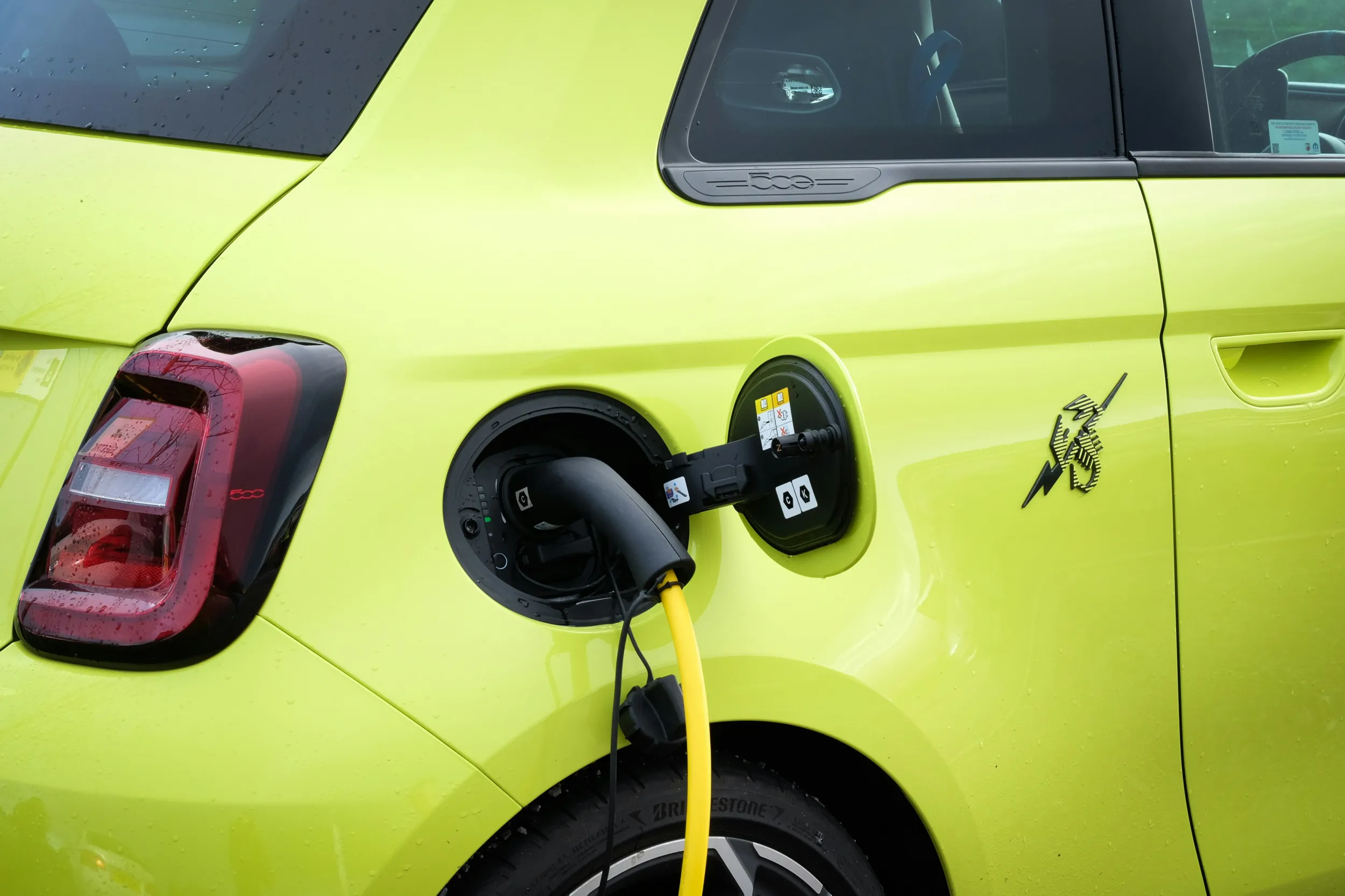
The European Union is considering temporary restrictions on hybrid cars arriving from China, as plug-in hybrid imports began rising rapidly after additional tariffs were imposed on Chinese electric cars. No final decision has been made: the potential safeguard measure under discussion could limit import volumes and impose higher tariffs on cars exceeding that limit.
For Europe, the problem is fairly clear. The countervailing duties imposed in 2024 apply to fully electric cars made in China, but plug-in hybrids were excluded. Chinese manufacturers responded entirely rationally, sending more and more models to the European market that combine an internal combustion engine with a large battery and an electric drive system.
Over the past year, imports of plug-in hybrids from China into the European Union rose by 86 per cent, according to Reuters. Imports of fully electric cars rose by 40 per cent over the same period.
This means Europe's protective tariffs did not halt the influx of Chinese cars. They simply changed the technology manufacturers use to enter the market.
The EU first sought a voluntary agreement
According to the Financial Times, the European Union asked China to voluntarily limit exports of hybrid cars. Beijing refused.
The European Commission then began considering a unilateral temporary safeguard measure. One option discussed is a system under which imports would remain subject to normal conditions up to a certain volume, with high tariffs applying to cars exceeding that threshold.
The European Commission has not yet officially confirmed any potential import quota, tariff rate or date for the measure to take effect.
It is therefore inaccurate to say that the European Union is “banning Chinese hybrids”. What is under discussion is a temporary trade defence measure whose final form could still change significantly.
Why did EV tariffs create a problem with hybrids?
In late 2024, the European Commission imposed additional countervailing duties on battery-electric cars made in China for five years.
BYD received an additional duty of 17.0 per cent, Geely 18.8 per cent and SAIC 35.3 per cent. The rate for cars produced at Tesla's Chinese factory was set at 7.8 per cent, while the average rate for other cooperating manufacturers was 20.7 per cent. These duties are added to the EU's standard import tariff.
The duties were based on a European Commission investigation which found that Chinese electric car manufacturers gained a competitive advantage from state subsidies.
Plug-in hybrids, however, were excluded from that investigation.
This created a regulatory difference: the same manufacturer could bring a fully electric SUV to the European market with a substantially higher tariff burden, but a plug-in hybrid with a petrol engine and a large traction battery without the same countervailing duty.
The automotive industry is quick to identify such differences.
BYD's European range illustrates this particularly well. The Seal U DM-i, for example, combines a petrol engine, an electric drive system and a battery of at least 18.3 kWh, allowing it to cover tens of kilometres on electric power, depending on the version. In essence, such a car offers much of the electric car driving experience but falls into a different category under trade law.
Chinese cars no longer account for a marginal share
In 2025, the European Union imported more than one million passenger cars from China. Their value reached €13.7 billion.
Cars made in China accounted for 7 per cent of all new car sales in the European Union and 20 per cent of battery-electric car sales.
At the same time, automotive trade between Europe and China is highly unbalanced. In 2025, the European Union exported 161,514 new vehicles to China worth €8.5 billion, but imported more than 1.1 million vehicles from China worth €15.1 billion.
Across all trade, the EU's deficit with China reached around €360 billion in 2025. Goods arriving from China were worth €571 billion.
Cars account for only part of this, but they are a particularly sensitive area politically because Europe's automotive industry employs millions of people directly and indirectly.
Hybrids are precisely the segment growing in Europe right now
Chinese manufacturers' hybrid strategy reached the European market at a very favourable moment. In the first eight months of 2026, conventional hybrids accounted for 36.6 per cent of new car registrations in the EU. Battery-electric cars accounted for 21.7 per cent and plug-in hybrids for 10 per cent.
This means European buyers have not abandoned electrification, but a very large proportion of customers do not yet want to depend solely on charging.
Chinese manufacturers have responded with plug-in hybrids featuring large batteries and long electric ranges. Models such as the BYD Seal U DM-i or the newer Seal 6 DM-i allow everyday journeys to be made on electric power while retaining an internal combustion engine for long trips. BYD claims an urban electric range of up to 140 km and a combined range of up to 1505 km for the Seal 6 DM-i, depending on the version.
For European manufacturers, this is an uncomfortable combination: Chinese manufacturers are competing simultaneously on price, battery, electric range and equipment in a segment where demand is growing.
Targeting a temporary restriction solely at China is not straightforward
This is where the potential measure becomes legally complicated.
The European Union's general import safeguard regulation allows temporary safeguard measures to be imposed when imports grow so rapidly that they cause or threaten to cause serious injury to EU producers.
A temporary measure can last a maximum of 200 days, and a preliminary investigation must show clear evidence of serious injury or the threat of it. A safeguard measure can take the form of a higher tariff.
An important distinction from the countervailing duties on electric cars is that a safeguard measure does not directly address unfair subsidies. Its rationale is a sharp increase in import volumes.
Because of WTO rules, such a measure cannot always be readily targeted solely at China. According to the Financial Times, a potential safeguard measure on hybrids could therefore unintentionally affect cars arriving from Japan, South Korea or the United Kingdom, for example.
This is a major problem for the European Commission. Toyota, Lexus, Hyundai and Kia sell large volumes of hybrids in Europe, and some of those cars arrive from outside the European Union.
An instrument intended to restrict China must not result in Europe also penalising its close trading partners.
Why did China refuse to limit exports?
Beijing has little economic reason to voluntarily apply the brakes.
China's domestic market faces intense price competition, production capacity is extensive, and exports help factories maintain volumes. Europe, meanwhile, is one of the world's largest and wealthiest car markets.
Chinese manufacturers also have a strong cost advantage in batteries, electric motors and the supply chain.
BYD, Geely, SAIC and Chery no longer regard Europe as a niche market. According to Reuters, in the first four months of 2026, BYD reached a 2.2 per cent share of registrations across Europe, the United Kingdom and EFTA, Chery reached 2 per cent and SAIC 2.4 per cent.
Several of them are also preparing for production in Europe. This will reduce the impact of tariff policy in the future.
If BYD produces a car in Hungary or Chery in Spain, it is no longer a car imported from China, even if the brand's owner and much of its technology come from China.
Restrictions could instead accelerate the arrival of more factories in Europe
This is the most important side effect of the potential safeguard measure.
High import tariffs may not force Chinese manufacturers out of the European market. They may encourage them to manufacture here.
BYD is already establishing a European production network, and Chery is preparing to manufacture in Spain. SAIC is also exploring opportunities to establish a European production base.
This could produce a paradoxical outcome for European industrial policy.
In the short term, tariffs protect Volkswagen, Stellantis, Renault and other European manufacturers from price pressure from Chinese imports.
Over the longer term, the same measures could bring BYD, Chery and other Chinese manufacturers inside the European Union, where they would compete as local producers.
In that case, at least some tariff protection would disappear, but Europe would gain factories, jobs and a local supply chain in return.
The measure buys European manufacturers time, not a solution
Restricting Chinese hybrids could reduce price pressure on European manufacturers, but it does not solve the competitive problem.
The fundamental problem facing Europe's automotive industry is not just imports. Chinese manufacturers develop new models faster, use vertically integrated battery technology and can often offer a larger battery and more extensive standard equipment for the same money.
ACEA also acknowledges that Asia now produces more than 60 per cent of the world's vehicles, while the European Union's share has fallen below 15 per cent.
A protective tariff can give a European manufacturer two or three years of breathing space. It does not make its batteries cheaper, software development faster or factories more efficient.
If that time is not used to reduce production costs and develop more competitive cars, the next safeguard measure will simply become another way of postponing the next problem.
For buyers, restrictions are likely to mean higher prices
For consumers, the most straightforward effect of trade protection is a higher price.
If an importer has to pay an additional tariff, it has three choices: absorb the cost from its own margin, share it with the manufacturer or raise the car's price.
Chinese manufacturers' margins and cost advantage may allow them to absorb some of the tariff. This has already happened with electric cars, as Chinese brands have not disappeared from the European market despite the additional duties.
For plug-in hybrids, potential volume restrictions would be more complicated. If imports of further cars became sharply more expensive once a particular quota was filled, manufacturers would probably begin favouring higher-margin models.
This could reduce the availability of cheaper Chinese cars in Europe in particular.
The real conflict extends far beyond cars
Hybrid cars are just one part of the broader trade dispute between the EU and China.
European Trade Commissioner Maroš Šefčovič is holding talks in Beijing at a time when the EU's trade deficit with China averages more than €1 billion a day. Europe is demanding better access to the Chinese market and less export pressure in sectors such as cars, machinery, chemicals and textiles.
At the same time, France and Germany are pressing the European Commission to develop faster tools for responding to market distortions. Their proposal includes the possibility of restricting access to the EU market for countries whose actions harm European industry.
The dispute over hybrids is therefore not just about BYD or MG.
The European Union is trying to decide how open its internal market can remain when China's industrial policy creates very large production capacity while Europe's own industry is losing global market share.
What should we watch next?
The most important moment will come on 15–16 October, when European Union leaders discuss trade relations with China in Brussels. Šefčovič's talks in Beijing are expected to provide the political starting point for those discussions.
There are currently three most likely paths forward.
The EU and China reach a last-minute compromise, for example through export-volume limits or minimum prices. The European Commission launches formal safeguard proceedings concerning hybrid car imports. Negotiations continue, but direct restrictions are delayed while Europe prepares a broader trade defence instrument.
One thing is already clear, however: the 2024 electric car tariffs did not end the automotive trade conflict between Europe and China. They shifted it to the next powertrain category.
And if Europe now puts up a barrier to plug-in hybrids as well, Chinese manufacturers will probably move to the next step: factories in Europe.


