
Honda Racing brings racing technology to road cars
 1/11


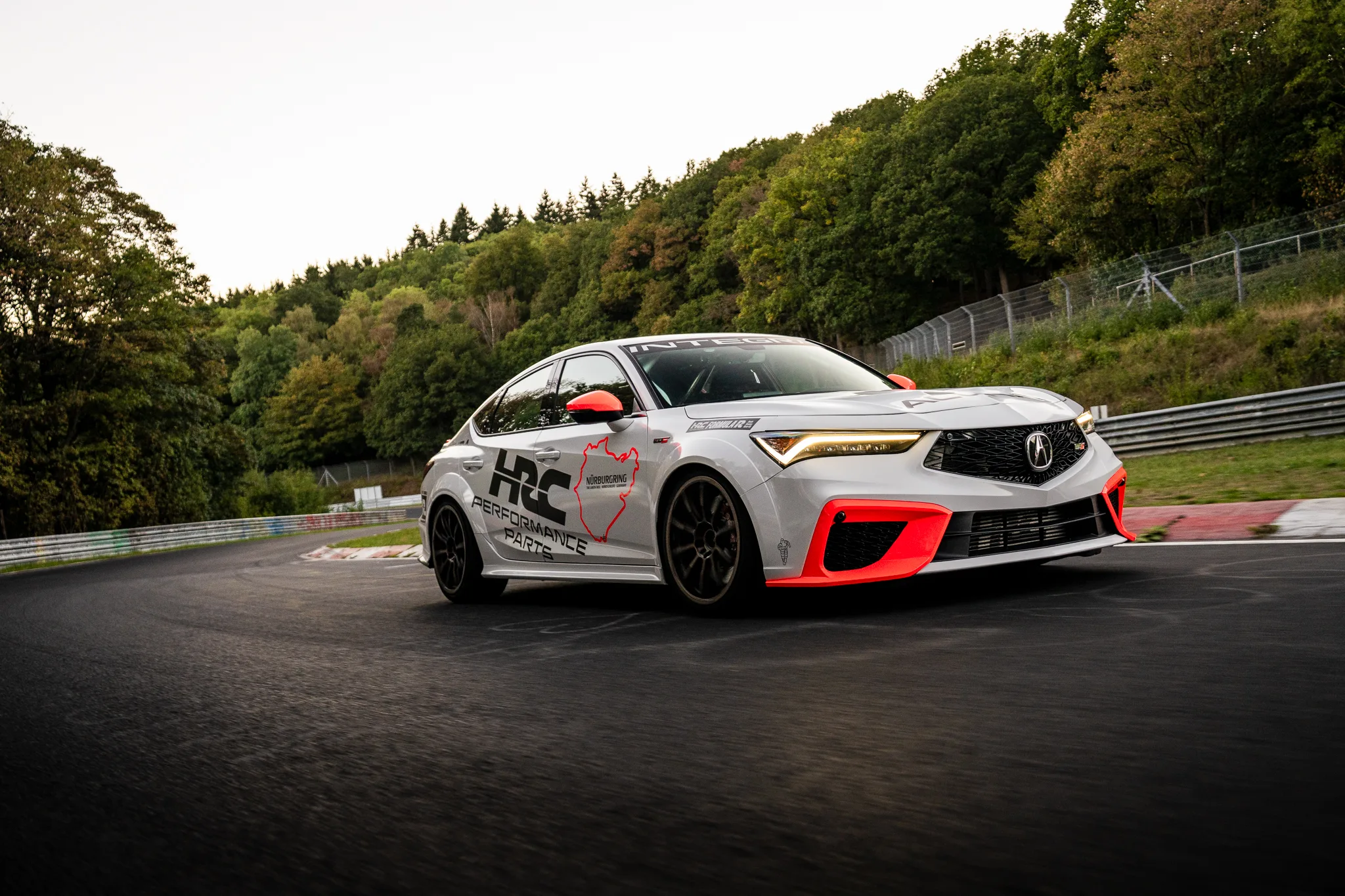
Honda Racing Corporation (HRC) is entering retail sales of official performance parts for the first time in its history. Owners of the Civic Type R, Acura Integra Type S, Honda Passport and Honda Pilot will be the first to benefit from technology developed in racing. The range includes lightweight forged wheels and sports exhaust systems, with more substantial suspension and brake upgrades to follow.
Civic Type R gets lighter, wider wheels
The company will unveil its new HRC Performance Parts range at the SEMA automotive show in Las Vegas on 3–6 November. Sales will begin in March 2027 through Honda and Acura dealerships and Honda's DreamShop online store. The most performance-focused product is a 19-inch forged aluminium wheel developed by HRC in collaboration with Italian company 2elle-engineering. The same manufacturer supplies wheels for the Acura ARX-06 race car. The new wheel is 254 mm wide and weighs just 9.43 kg. Compared with the Civic Type R's factory wheel, that represents a saving of approximately 2.5 kg per wheel. Across all four wheels, unsprung mass is reduced by nearly 10 kg.
Lower unsprung mass helps the suspension respond more quickly to bumps and improves tyre contact with the road. The revised wheel dimensions also affect track width and handling.
HRC offers the wheels in grey and bronze finishes. The latter recalls Honda's historic RA272 Formula 1 car.
SUVs get stronger wheels and more ground clearance
HRC has developed 18-inch forged wheels for the Honda Passport and Pilot in collaboration with Titan 7. The manufacturer uses 6061 aluminium alloy and 10,000 tonnes of forging pressure. The new wheels have a load capacity approximately 100 kg higher per wheel than the factory wheels. This provides an additional margin of strength, particularly when driving off-road.
An even more practical upgrade is the stainless-steel exhaust system developed with Borla. Designed for the 3.5-litre V6 engine, the system improves exhaust flow by up to 6 per cent and increases ground clearance by up to 48 mm. Borla's Polyphonic Harmonizer emphasises the engine's natural sound, while noise-suppression technology reduces intrusive drone at steady motorway speeds.
The exhaust system fits the Passport from the 2026 model year onwards and the Pilot from the 2023 model year onwards. It can be installed using the factory mounting points.
Brembo brakes and sports suspension are next
HRC's plans extend beyond cosmetic upgrades. Prototypes of adjustable coilovers, camber-adjustable top mounts, six-piston Brembo brakes and a short-shift mechanism will also be unveiled at SEMA.
These components indicate the direction of HRC's development programme. The aim is to offer parts based on racing experience that improve a car's actual driving characteristics, rather than just its appearance.
The new components will undergo extensive durability and performance testing, including at the Nürburgring.
European enthusiasts will have to wait for now
HRC Performance Parts is currently focused on North America. Honda has yet to announce European sales plans or pricing.
The Civic Type R wheels and forthcoming suspension components would be of greatest interest in the European market. The Passport and Pilot, by contrast, are SUVs aimed primarily at the American market.
Honda's move puts HRC in more direct competition with performance parts programmes such as BMW M Performance and Toyota GR Parts. The distinction lies in HRC's strong racing heritage, which the company now wants to draw on more directly to improve production cars.
Price will nevertheless determine its success. If HRC can offer performance comparable to that of independent aftermarket manufacturers and factory-level quality at a reasonable premium, the new range could prove very popular among Honda enthusiasts.


