
Renault and Geely’s new 2.0-litre turbo engine works in water up to 1.1 metres deep
 1/2
1/2
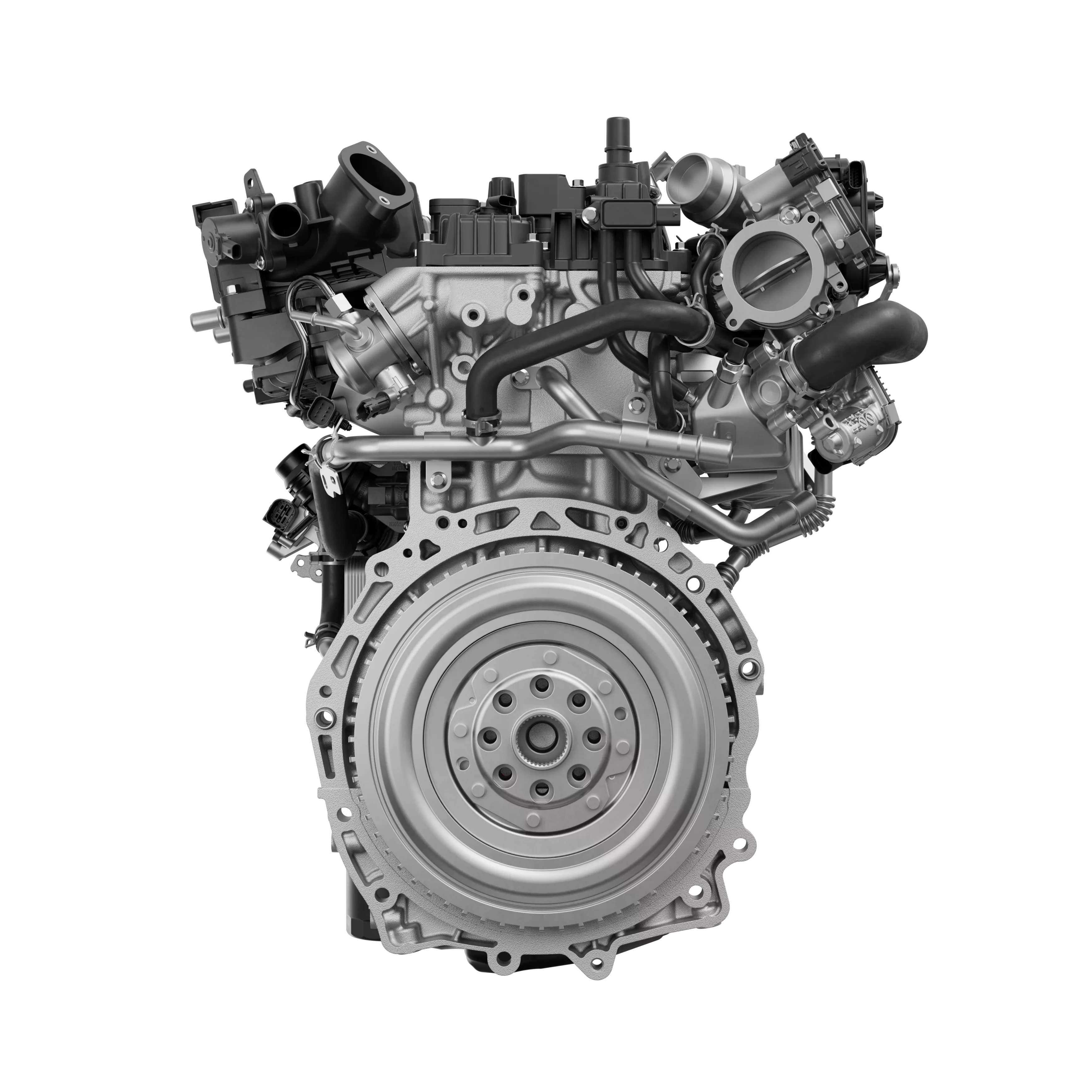
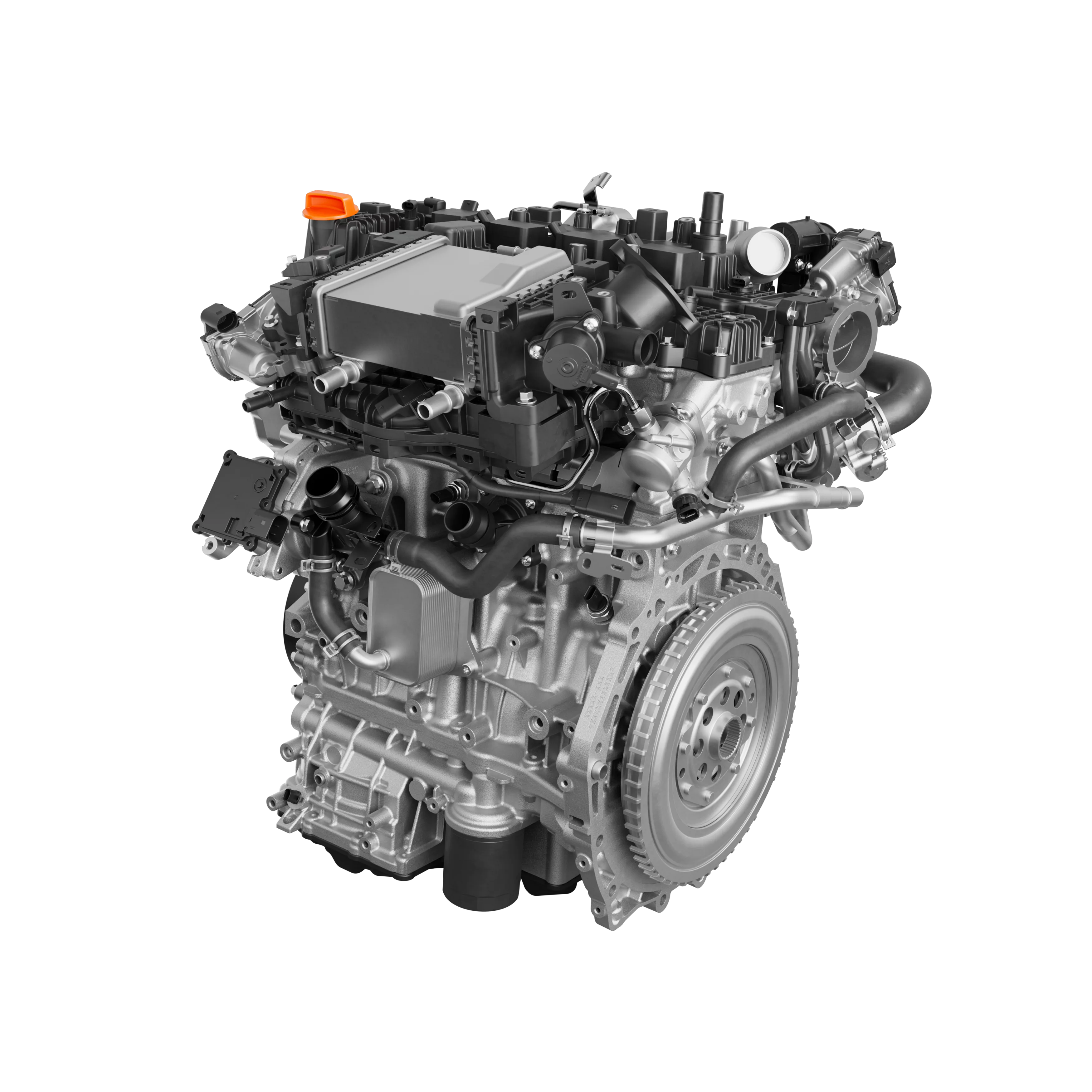
Horse Powertrain has unveiled the B20 petrol engine, whose headline feature is neither its 185 kW output nor its 380 Nm of torque. Designed for hybrids, the powertrain meets the IPX8 waterproof rating and can operate in water up to 1.1 metres deep. Even more noteworthy is its 48.4% thermal efficiency, showing that Renault and Geely’s joint powertrain company has no intention of retiring the combustion engine anytime soon.
Horse Powertrain revealed the technical details of the B20 on 8 September. According to the company, it developed the powertrain primarily for hybrid SUVs and pick-up trucks with more serious off-road capability. The B20 is suitable for conventional hybrids, plug-in hybrids and range-extender electric powertrains.
Water can rise to 1.1 metres
For a conventional SUV, the permitted wading depth refers to the vehicle’s overall ability to drive through water. The engine itself does not need to operate underwater, as the air intake is positioned sufficiently high and sensitive electrical systems are protected from water.
Horse took a different approach with the B20. The engine meets the IPX8 waterproof rating, and the manufacturer says it can operate in water up to 1.1 metres deep. The engine construction is sealed, its electrical components and sensors can withstand submersion, and the connection between the engine and transmission uses separate sealing. When it detects water ingress, the control unit changes throttle response and can limit output to maintain stable operation.
This figure does require some context. For example, the Land Rover Defender has an official maximum wading depth of 900 millimetres, while the Jeep Wrangler’s is approximately 760 millimetres. The B20 engine’s 1,100-millimetre figure does not automatically mean that a vehicle equipped with the same engine could drive through water of the same depth. In addition to the engine, a vehicle’s wading capability is determined by its battery, electronics, transmission, vents, cabin sealing and a range of other components.
In other words, Horse has not invented a submarine. However, the company has addressed one potential weak point of a hybrid off-roader in a rather robust way.
185 kW and 380 Nm are only the beginning
The B20 is a 2.0-litre four-cylinder turbocharged petrol engine using direct injection and the Miller cycle. Depending on the version, it produces between 140 and 185 kW and 300 to 380 Nm. The engine weighs around 130 kg.
Horse says the engine can maintain stable output even on a 100% gradient. The term may sound like a vertical wall, but a 100% gradient actually means gaining one metre in height for every metre travelled horizontally, or a 45-degree slope.
In such conditions, heat becomes an issue alongside lubrication and fuel delivery. The B20 therefore uses an active dual-circuit cooling system designed to keep temperatures under control even under prolonged heavy loads.
48.4% is actually more important than operating underwater
“An engine that works underwater” may win in marketing terms, but from an engineering perspective, the B20’s more compelling figure is its 48.4% thermal efficiency. Horse achieves this through the Miller cycle, direct injection, a special piston design and intake ports that generate strong air swirl.
At 48.4%, the engine can, under ideal operating conditions, convert almost half of the fuel’s chemical energy into mechanical work. That is an exceptionally high figure for a passenger-car petrol engine.
This is where hybrid powertrains come in. The electric motor and battery make it possible to operate the combustion engine more frequently within its most efficient range. Such an engine is particularly well suited to a range-extender system, where the petrol engine can run at a relatively constant load and engine speed while the electric motor drives the wheels.
Horse is therefore not trying to build another all-purpose 2.0-litre turbo engine. The B20 is a combustion engine designed from the outset with an electrified powertrain in mind.
The first customer is the Geely Galaxy Cruiser 700
The B20 is not merely a technology demonstrator built for a motor show stand. Horse already showed the engine at the 2026 Beijing motor show, and Geely uses it in the Galaxy Cruiser 700 plug-in hybrid for the Chinese market alongside Horse's three-speed 3DHT230 hybrid transmission.
There is a small irony here, too. According to Auto Express, the Galaxy Cruiser 700 itself has a wading depth of 800 mm, meaning the B20 engine can theoretically withstand water 300 mm deeper than the first vehicle in which it is fitted.
This is not an engineering waste. Rather, it gives Horse scope to use the same powertrain in even more capable models in the future.
For Europe, the B20 is strategically more important than it first appears
Horse Powertrain operates in Europe, China and the Americas, employs more than 19,000 people, and has 18 factories and five development centres. Its customers include Renault Group, Geely Auto, Volvo Cars, Nissan, Mitsubishi Motors and Proton.
The B20 should therefore be viewed more broadly than as an engine for Geely’s extreme off-roader. In the coming years, European carmakers will need efficient combustion engines primarily for hybrids, where electrification reduces fuel consumption without requiring a huge traction battery. Horse is seeking to position itself as one of the major independent powertrain suppliers for this transition.


