
Jeep recalls 328,381 Grand Cherokees again after two previous attempts failed to solve suspension issue
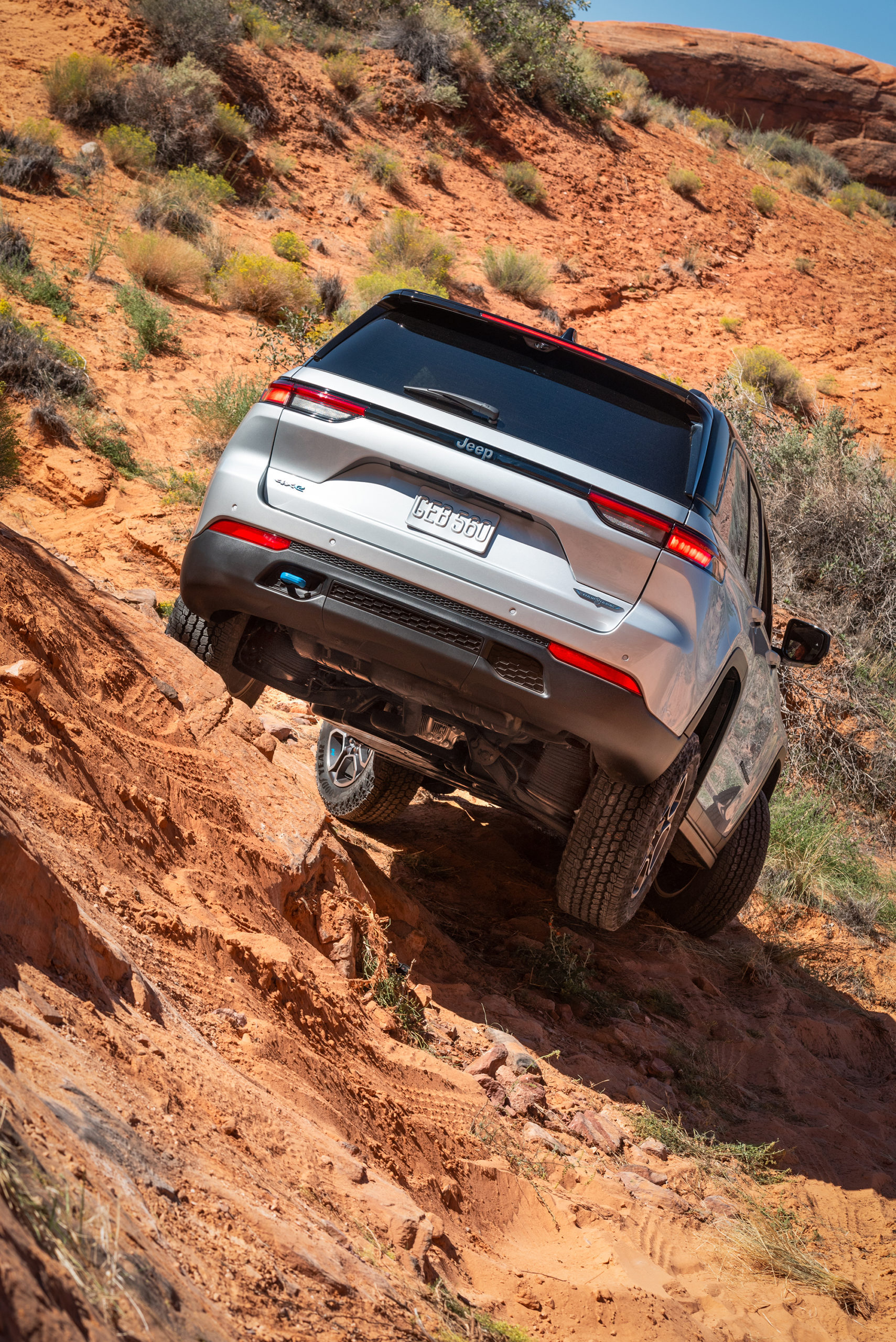
Jeep must recall 328,381 Grand Cherokee SUVs in the US again because a rear suspension coil spring could detach from the vehicle while driving. The more troubling detail is the age of the problem: FCA has already run two previous campaigns for the same defect, and the new recall also includes vehicles whose owners had the earlier repair completed. This time, dealers will replace the lower spring isolators.
The US National Highway Traffic Safety Administration, NHTSA, has registered the new campaign under number 26V562. According to FCA documents, it affects 2021-2023 Jeep Grand Cherokee L models, as well as 2022-2023 Grand Cherokee and Grand Cherokee 4xe models. In total, the defect could be present in 328,381 vehicles.
This is not merely a matter of suspension noise. An incorrectly installed rear coil spring could come out of position and detach from the vehicle while driving. A metal spring falling onto the road poses a risk both to the Jeep driver and other road users, increasing the risk of a crash.
The first repair did not end the problem
The story began in June 2023, when FCA launched campaign 23V413, designated 64A by the manufacturer. Even then, the reason was essentially the same: the Grand Cherokee's rear coil springs may not have been installed correctly and could detach while driving.
That should have been the end of it. It was not.
In September 2025, NHTSA contacted FCA after identifying 20 complaints involving vehicles in which the spring issue occurred after repairs carried out under campaign 64A. FCA found a further 70 potential similar cases in its own data. The manufacturer opened an internal investigation in November 2025 and had identified 284 potential warranty cases by January 2026. FCA said at the time that it was not aware of any crashes or injuries associated with the issue.
A new campaign, 26V051, followed in January. It has now emerged that this was not enough either. Campaign 26V562, announced in September, replaces both the 2023 23V413 and 2026 26V051 campaigns. The most important sentence in the NHTSA information is telling: vehicles repaired previously also require a new repair.
This time, the lower spring isolator will be replaced
FCA's new solution focuses on the rear coil spring's lower isolator. Dealers will replace the parts free of charge, and the manufacturer's campaign designation is 89D.
The isolator is not simply a piece of rubber that improves comfort. It sits between the spring and its mounting surface, helping to keep the spring correctly positioned. If the spring is not seated in the suspension as the engineers intended, suspension movement and load can gradually shift it out of place.
FCA is now aware of at least 406 warranty claims potentially related to the problem. However, the company has not identified any crashes or injuries related to this defect.
FCA will send owners an initial notification from 29 September. As the parts needed for the final repair will not immediately be available at all dealers, the company will send a second letter when repairs can actually begin. VINs related to the campaign will become searchable in the NHTSA database on 9 September.
A third attempt makes this a quality issue
328,381 vehicles is a large recall in itself, but the more important number in this story is three.
A recall is not in itself unusual in the automotive industry. In a complex machine, a defect may only emerge after hundreds of thousands of vehicles have entered real-world traffic, and acknowledging and fixing a safety issue is exactly what is expected from a manufacturer.
The situation becomes much more uncomfortable when the official repair does not eliminate the problem. In the Grand Cherokee's case, owners identified the same fault after the first campaign, and the new solution now replaces two earlier recalls.
This is especially painful for Jeep because the Grand Cherokee is not the brand's inexpensive entry-level model. It is a large SUV that is very important in the US market, and its buyers expect not only off-road capability but also solid build quality. A rear spring that can leave the vehicle while driving does not fit either expectation particularly well.
European Grand Cherokees are in a different situation
For the European market, the news requires an important clarification. The NHTSA campaign concerns vehicles sold in the US, and European owners should not assume solely from the model year that their Grand Cherokee is automatically included in the same campaign.
In Europe, sales of the current-generation Grand Cherokee have focused primarily on the 4xe plug-in hybrid, while the US line-up has included considerably more powertrains and configurations. The scope of the recall depends on the individual vehicle's production date, specification and VIN.
In the US, owners can check their vehicle directly in the NHTSA recall database. For a European vehicle, it is worth contacting a local Jeep dealer with the VIN, as the US campaign number does not in itself prove that a European vehicle is included.
The Grand Cherokee issue is not spring complexity, but repair effectiveness
Technically, this is not the most exotic failure in a modern vehicle. It is not a 400-volt hybrid system, complex driver assistance system or software that is failing, but one of the fundamental components of a traditional suspension system.
That is precisely why the case reflects particularly badly. FCA identified the problem in 2023, repaired the vehicles, subsequently received reports of continuing failures, ran a second campaign and must now inspect hundreds of thousands of vehicles for a third time.
There is at least one clear positive: according to FCA, the problem has not so far caused any known crashes or injuries. The real measure of the new campaign, however, will not be repairing 328,381 vehicles, but whether 89D ultimately remains the final number in this Grand Cherokee spring story.


