
Steering wheel developed with Toyota can argue with drivers and explain its decisions
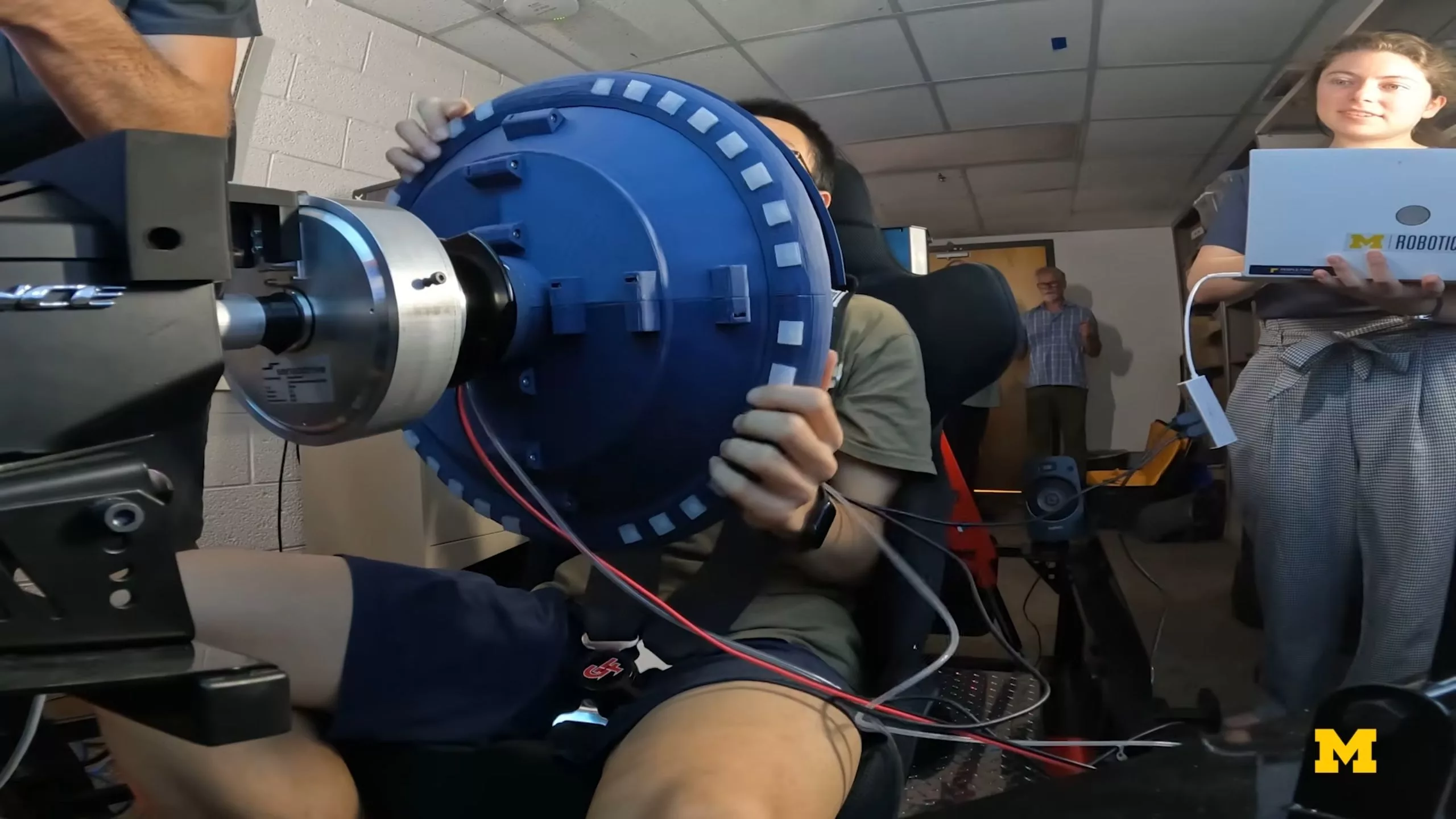
Engineers at the University of Michigan have worked with Toyota to develop a steering wheel that communicates with drivers through inflatable cushions. The unusual design signals manoeuvres planned by the driver assistance system and lets drivers agree or object. Initial tests showed smoother driving, less braking and fewer conflicts between drivers and the automated system.
A steering wheel that signals its intentions
The steering wheel developed jointly by the University of Michigan and the Toyota Research Institute uses two touch-sensitive areas at the ten and two o’clock positions.
When the semi-automated driving system intends to turn left, air chambers on the left side of the steering wheel inflate. Drivers can feel the system’s intention through their hands before the manoeuvre begins.
If drivers disagree with the decision, they can squeeze the inflated chambers. This signals to the system that they want to take a different path. If the automated system considers the original manoeuvre safer, the air chambers begin to pulse to explain its preference to the driver. The same design can also warn of obstacles.
Unlike a conventional vibrating steering wheel, the system does more than issue warnings: it creates a two-way communication channel between the driver and the electronics.
According to a University of Michigan study published on 1 October, this communication helps reduce situations in which the driver and the automated steering system try to steer the car in different directions at the same time.
Tests showed better cooperation
The researchers tested the prototype in a driving simulator, where participants had to negotiate various bends and respond to obstacles that appeared unexpectedly.
Compared with conventional warning systems, drivers followed a more precise driving line, used the brakes less and intervened less often in the automated system’s actions. They also rated the driving experience as less demanding and stressful.
The effect on trust proved particularly interesting. When the automated system made a mistake, two-way communication helped restore the driver’s trust more quickly. However, the researchers also observed the opposite risk: successful cooperation made some participants too trusting of the electronics.
This is an important shortcoming, because a driver assistance system does not become infallible simply because it can explain its intentions better.
Will steering wheels with inflatable cushions reach production cars?
For now, the design exists only as a research prototype. The research team has patented the technology under US patent US12227190B2 and is seeking partners to develop it further.
In the European car market, such a design could primarily complement Level 2 driver assistance systems, which combine adaptive cruise control with active lane keeping. These systems still require drivers to remain attentive at all times and ready to take over.
Practical deployment will nevertheless require more thorough testing. Engineers must prove that the air chambers work reliably in real traffic, when drivers are wearing gloves and using different steering wheel grips. The additional mechanism must also not interfere with airbag operation or normal use of the steering wheel.
The automotive industry has spent years trying to make driver assistance systems smarter. The Michigan researchers are approaching the problem from another angle: sometimes what is needed is not more intelligent automation, but better communication between people and machines.


