
Renault E-Space revives the spirit of the 1984 Espace and offers an alternative to SUVs
 1/11
1/11
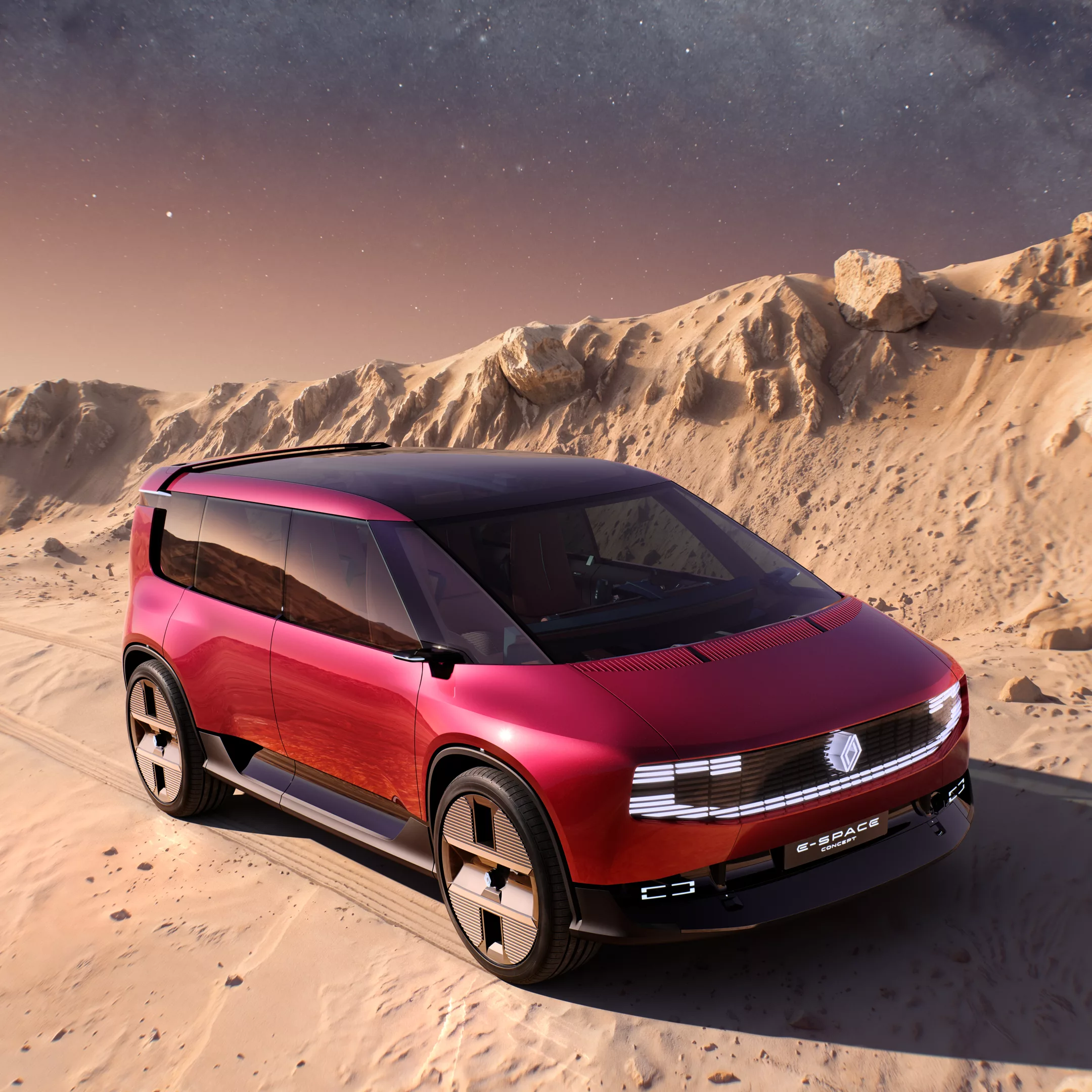
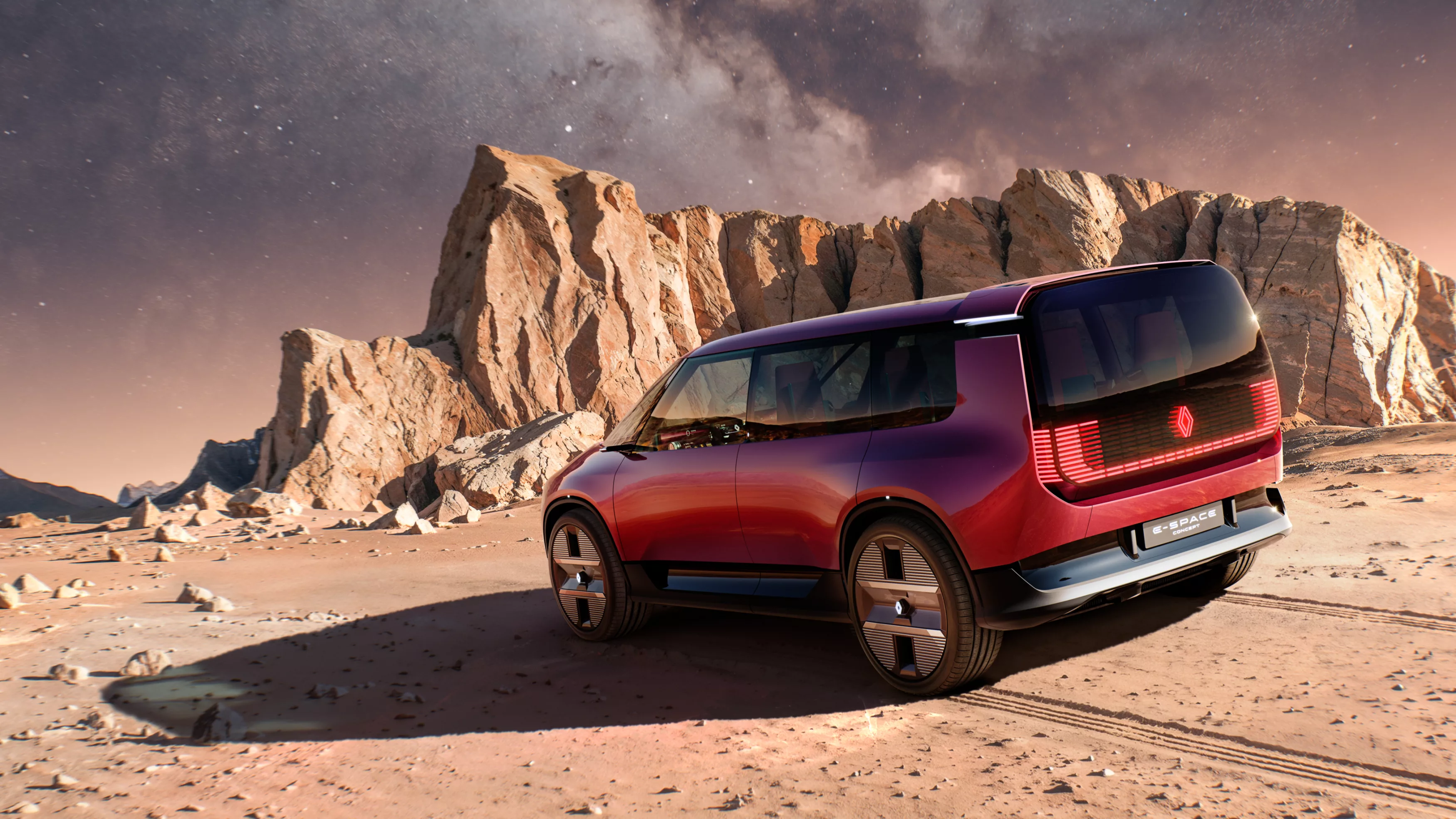
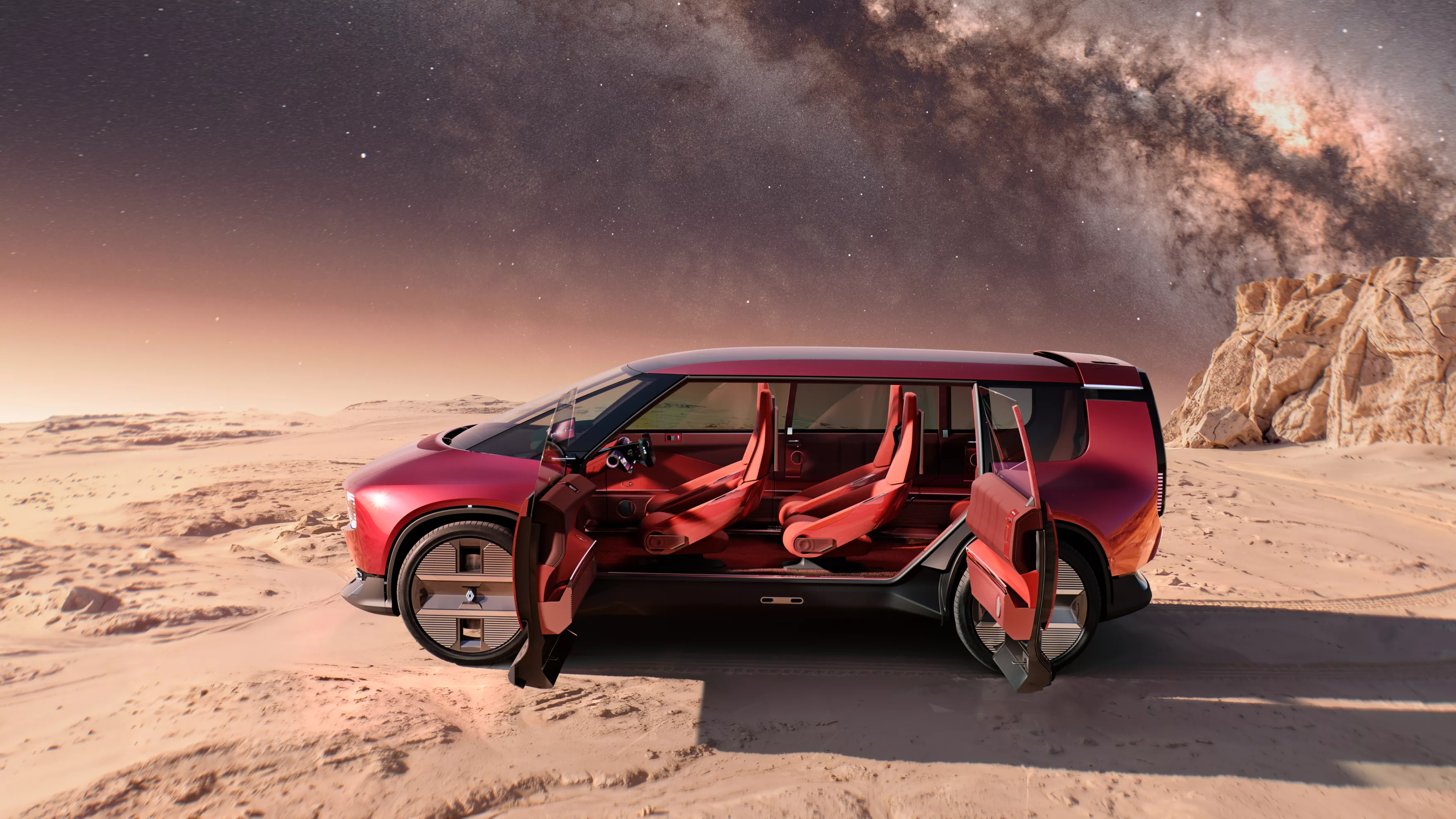
Renault has chosen to revisit a time when a family car's greatest asset was its spacious cabin, rather than high ground clearance. Unveiled at the Paris Motor Show, the electric E-Space Concept takes inspiration from the legendary 1984 Espace, offering six individual seats, swivelling seats and an exceptionally spacious passenger compartment with a glass roof. The French carmaker shows that an MPV can offer a credible alternative to an SUV in the electric era.
The classic Espace returns in futuristic form
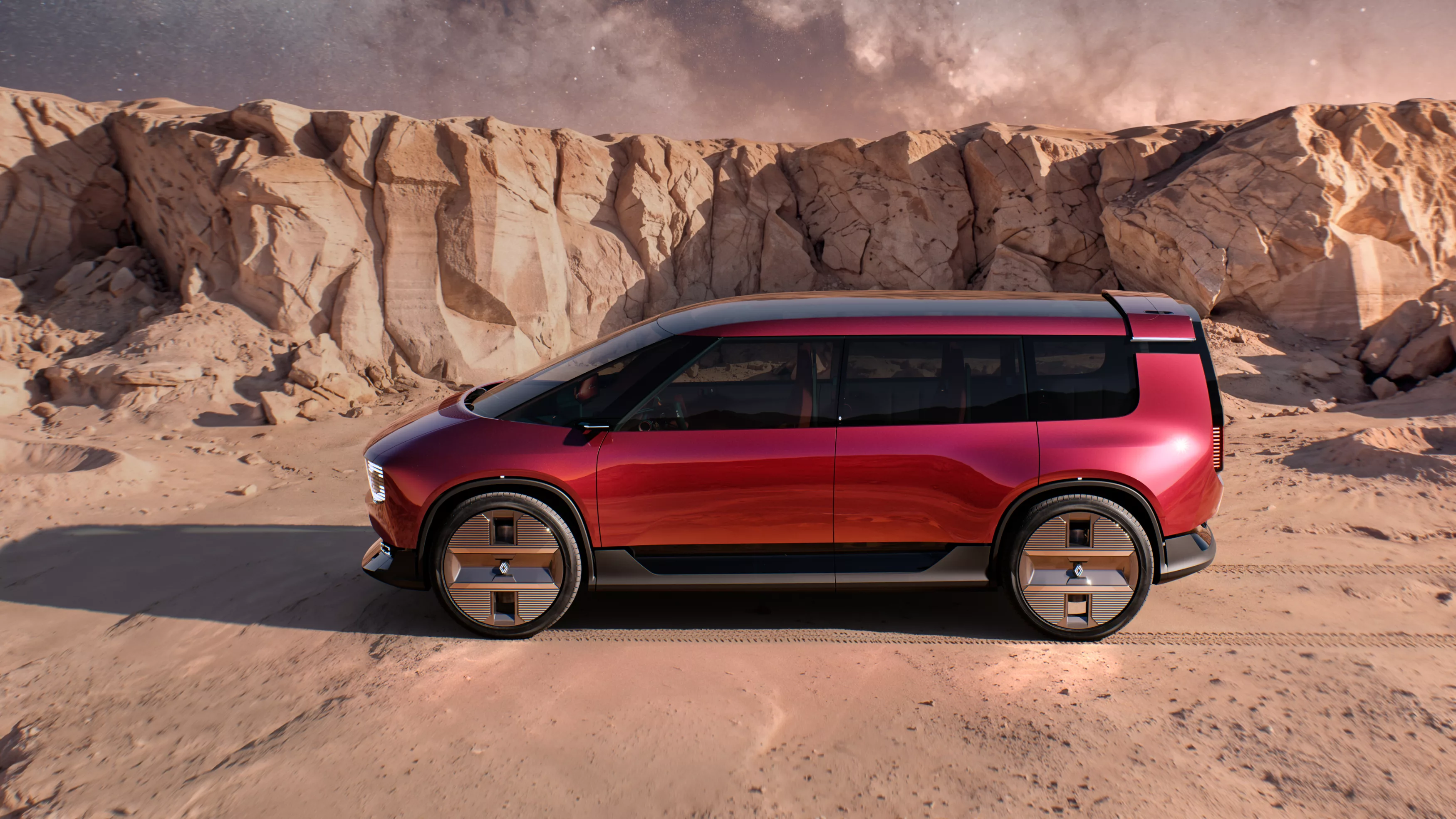
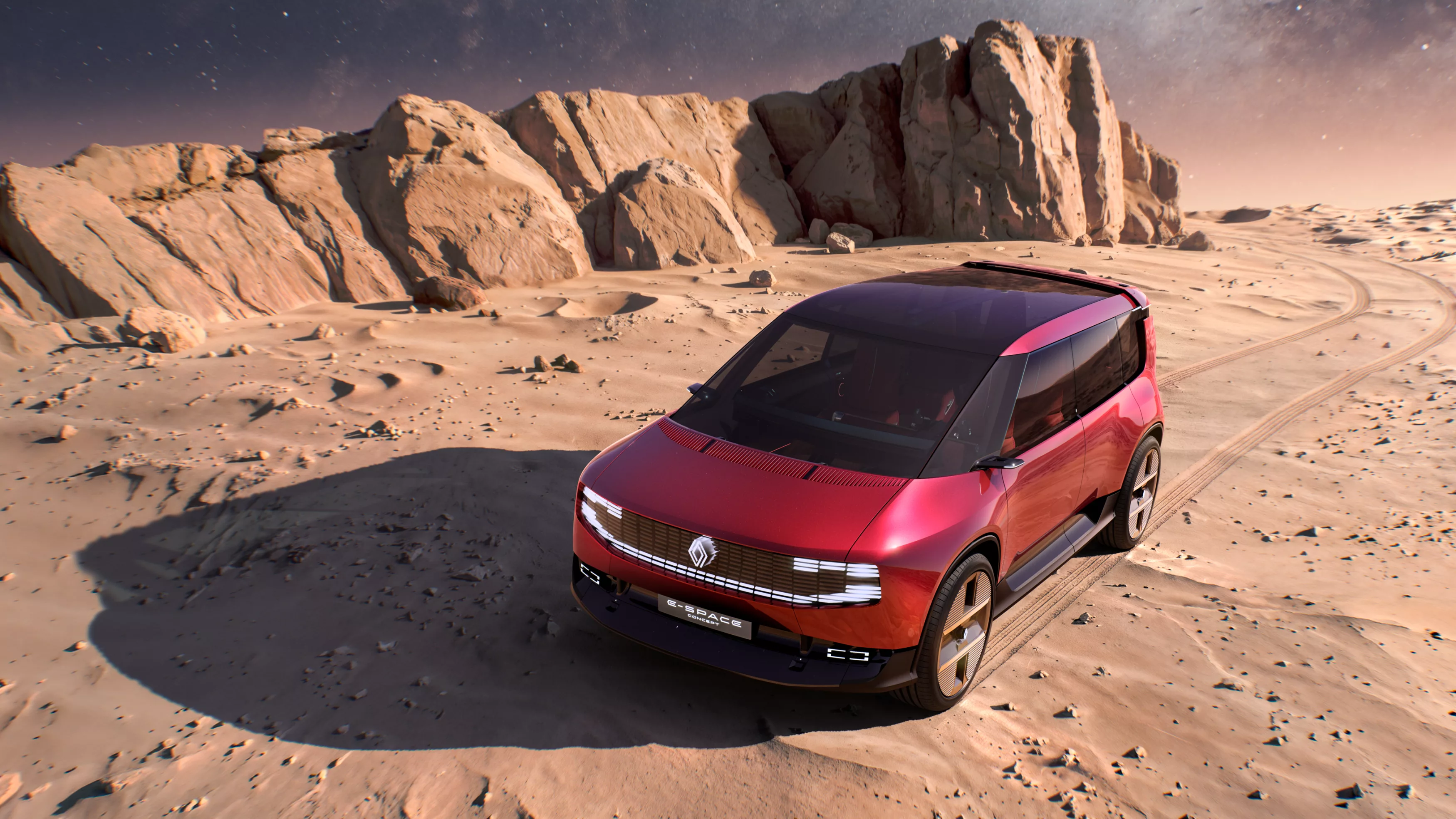
The Renault E-Space Concept measures 4700 mm long, 2020 mm wide and 1670 mm high. While its dimensions are contemporary, its body proportions deliberately recall the first-generation Espace.
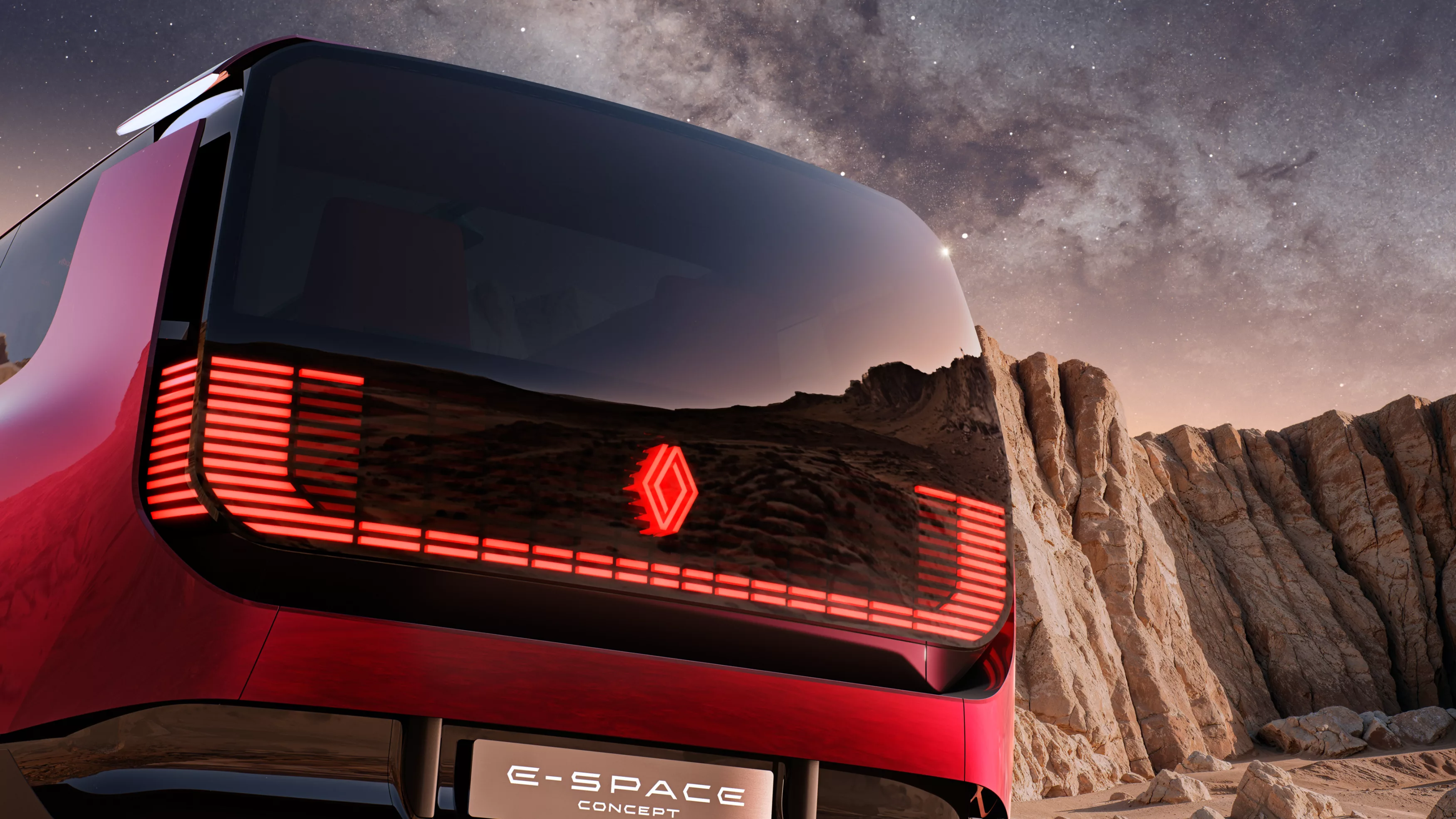
Short overhangs, a low window line and a windscreen that flows almost seamlessly into the bonnet give the one-box body a streamlined shape. A U-shaped lighting signature links the front and rear, while an illuminated Renault emblem in the centre of the front grille appears to float in mid-air.
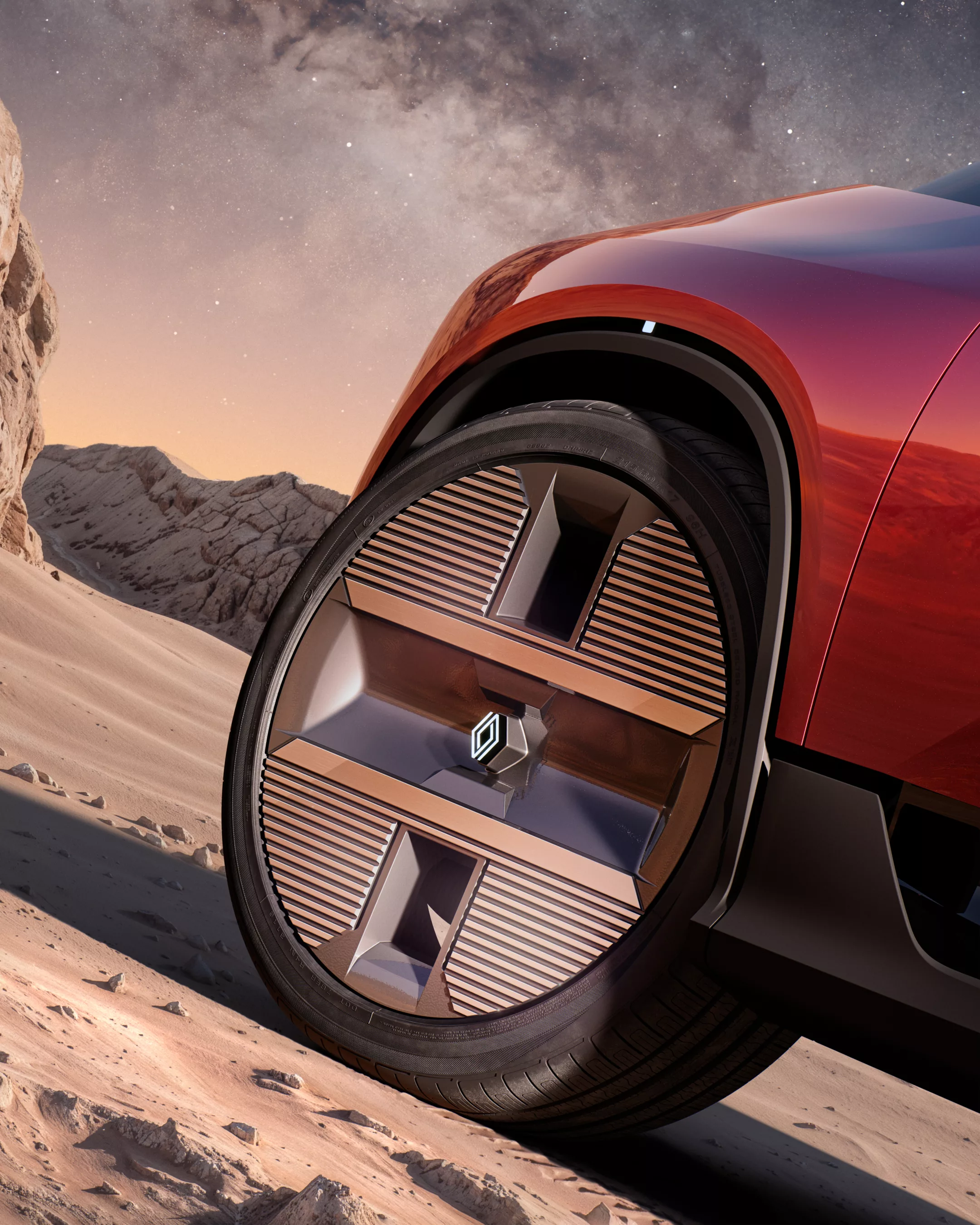
The 23-inch wheels sit at the corners of the body, leaving most of the car's length available for the passenger compartment. An active front spoiler improves aerodynamics by lowering closer to the road at higher speeds.
According to official information published by Renault on 12 October, the E-Space Concept grew out of a desire to revive the original Espace's central idea: a car should, above all, serve the people inside it.
Six seats and a cabin that becomes a living room
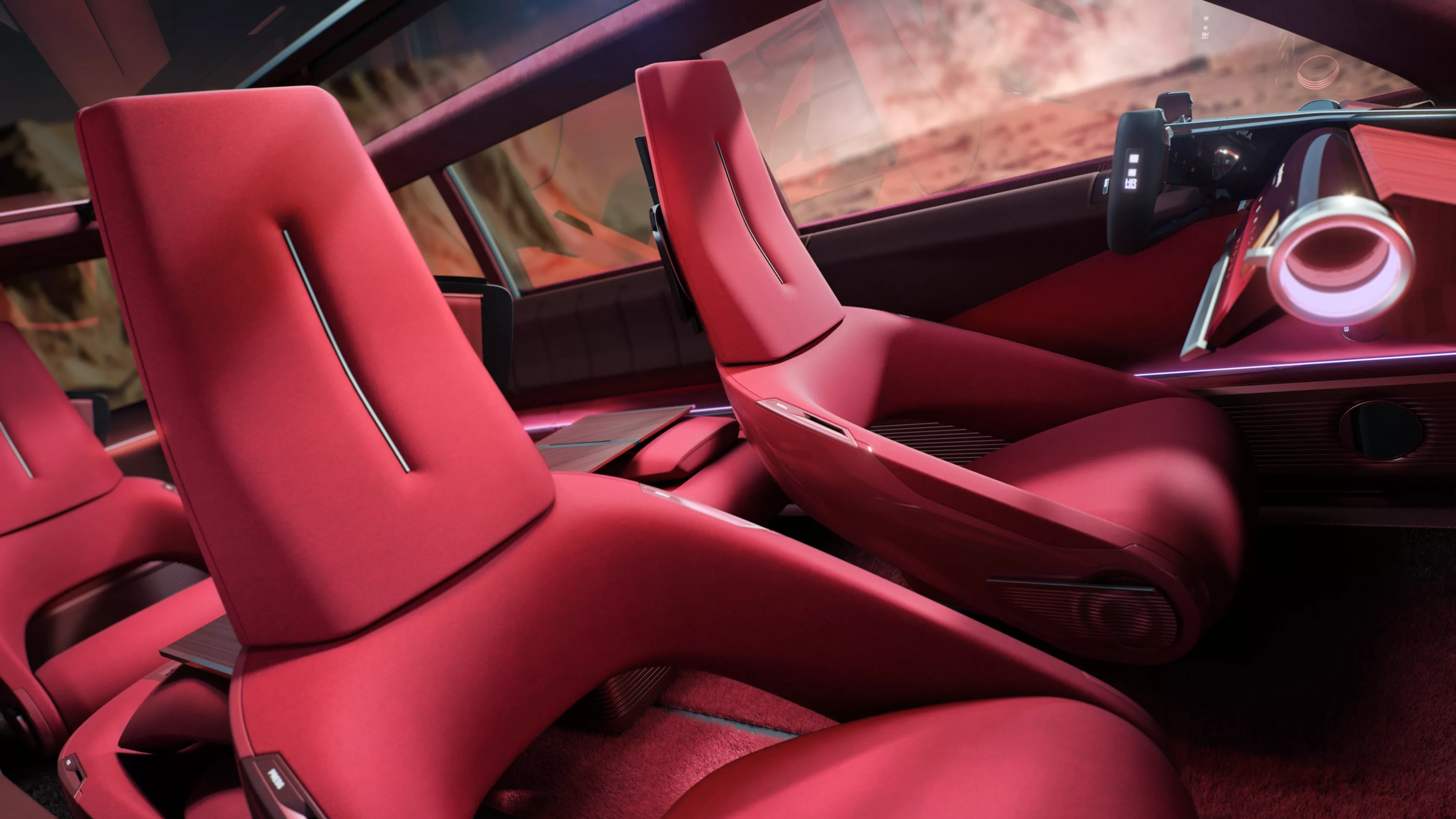
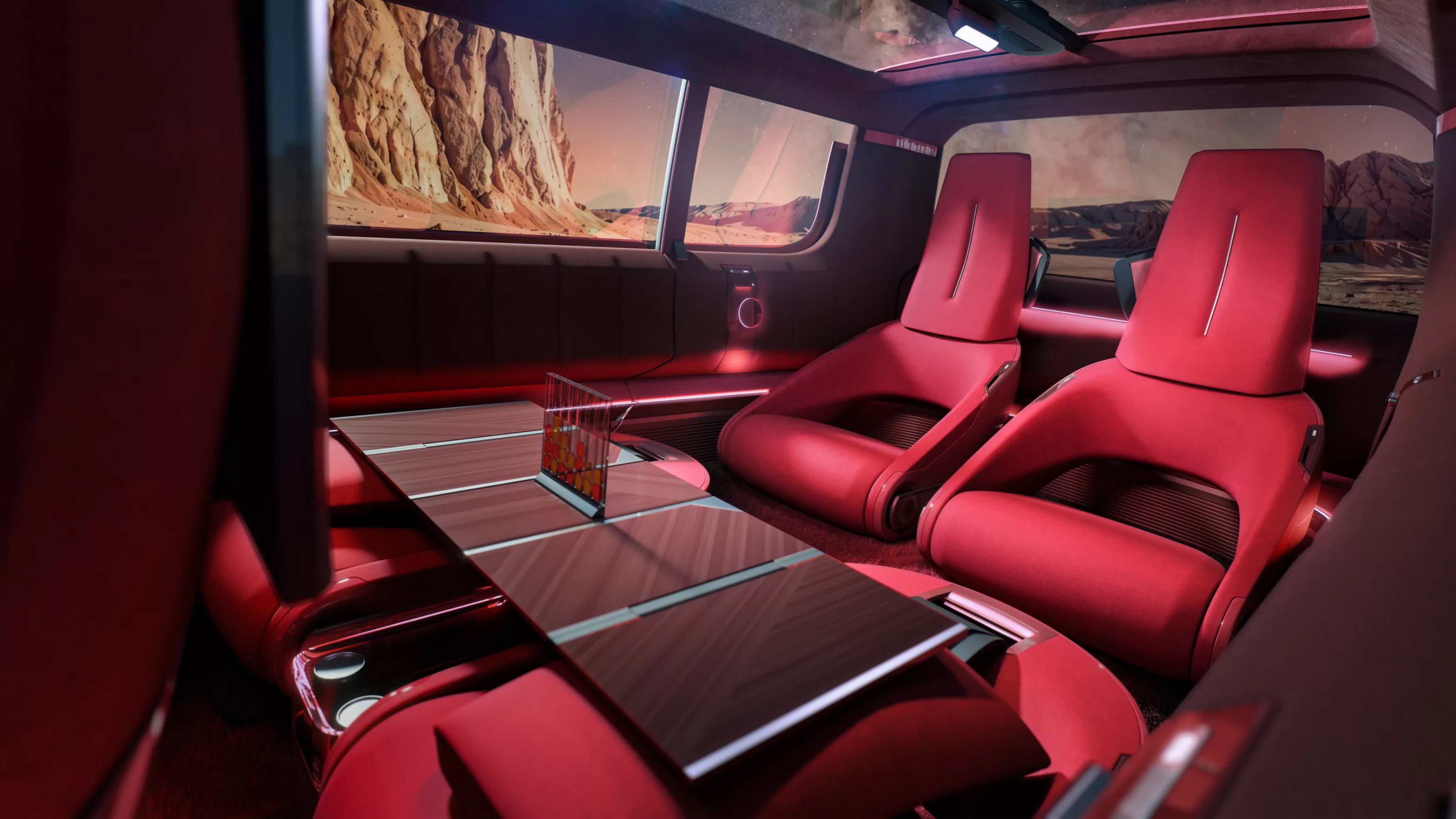
The E-Space's most intriguing features are inside. A body without B-pillars and rear-hinged rear doors provide access to a spacious cabin, where six individual seats are arranged in three rows on a completely flat floor.
The second-row seats swivel through 180 degrees, allowing passengers to face those in the third row. In the four-seat configuration, the middle seats can be folded down to form a large table.
A dedicated module moves within the centre console, with room for an air purifier, a small fridge, game controllers and a board game. The front seatbacks house 12.3-inch screens.
The glass roof and exceptionally low window line fill the cabin with light. Renault uses various shades of red, wool carpets and natural materials in the interior. The decorative trim even incorporates dyed straw.
This approach recalls the original Espace, whose removable seats and exceptional use of space changed perceptions of the family car in the 1980s.
A new panoramic display is also coming to production cars
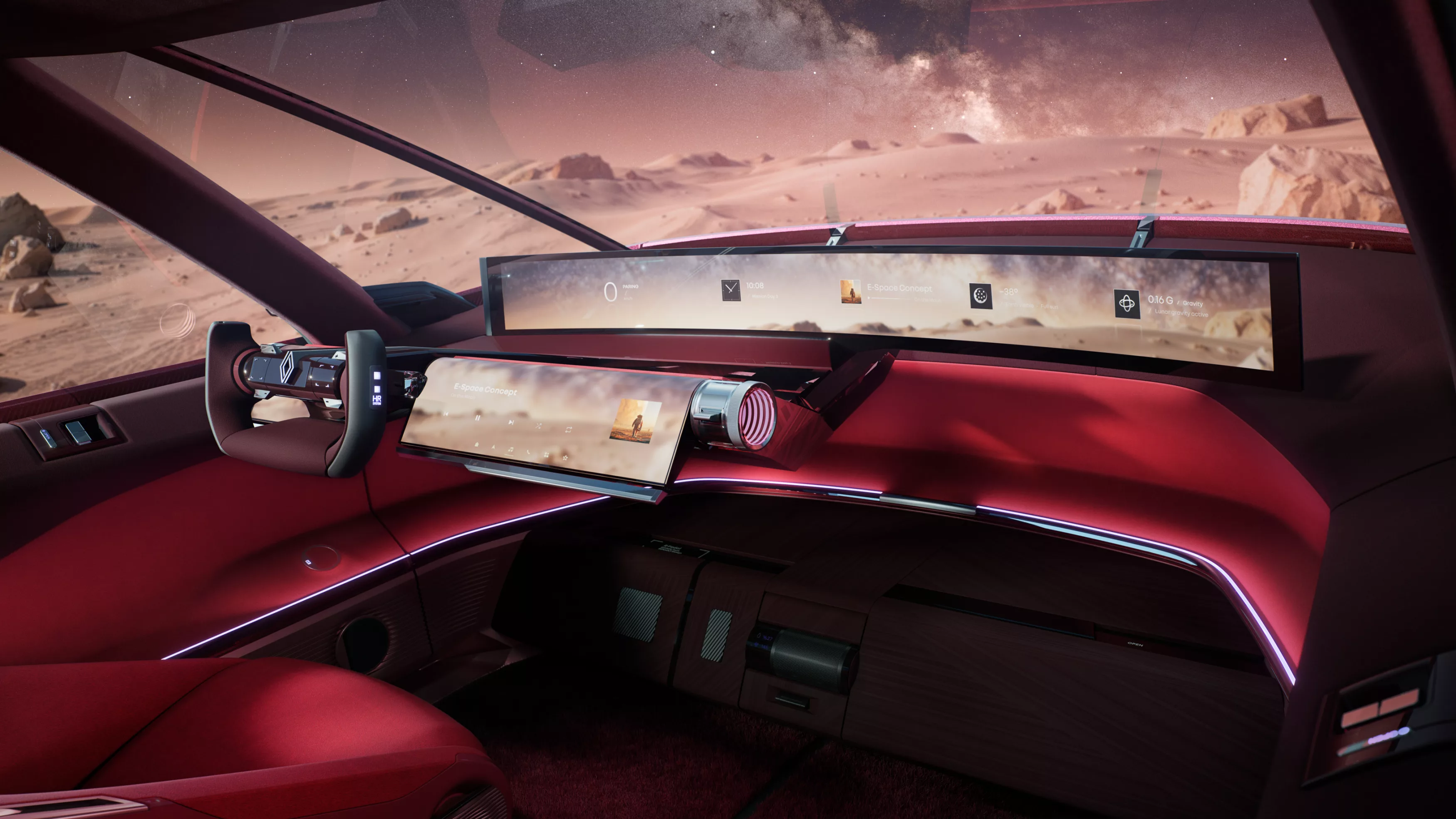
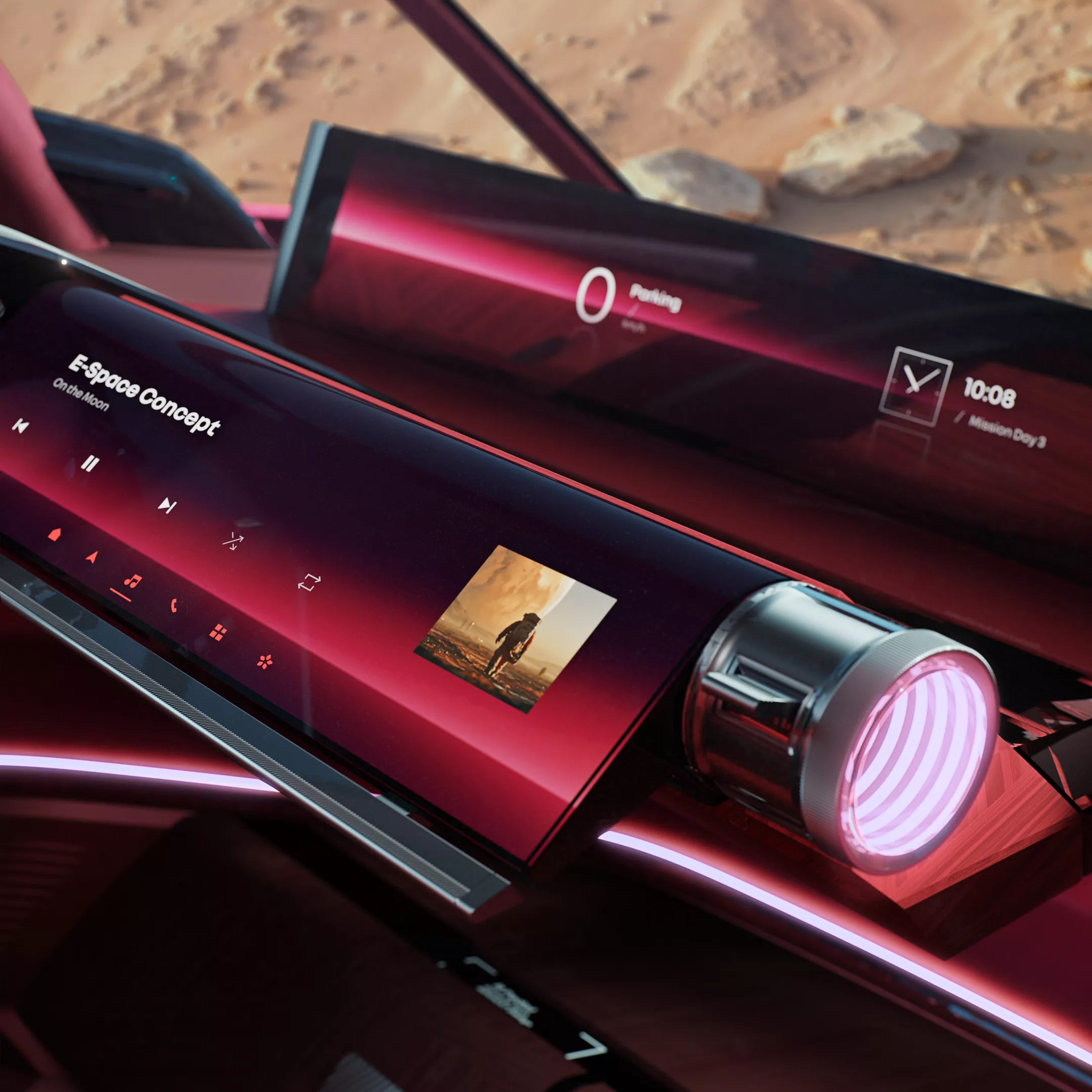
In place of a conventional dashboard, the E-Space Concept features a curved OpenR Panorama display measuring 1130 mm wide and 110 mm high. It stretches from one A-pillar to the other and replaces the traditional instrument cluster.
The display itself is not touch-sensitive. Its functions are controlled by a system operated through two swivelling touchscreens positioned around the steering column.
The compact steering wheel uses steer-by-wire technology, so there is no conventional mechanical connection between the steering wheel and the front wheels.
Unlike many concept-car features, OpenR Panorama technology already has a definite future. Renault confirms that the next-generation Scenic and Rafale will be the first to receive it.
The electric E-Space remains a concept car for now
The E-Space Concept uses an all-electric powertrain, but Renault has not disclosed motor output, battery capacity, charging speed or range.
Nor does the concept's unveiling mean the current Espace is being replaced. Renault confirms that it is a test bed for the design and technology of future family cars, rather than a precursor to a specific production model.
The E-Space nevertheless deserves attention in the European market. The current Espace has become an SUV, while traditional MPVs have almost disappeared from passenger-car line-ups.
An electric powertrain gives this body style a new opportunity. A compact drive unit and a battery housed in the floor make it possible to create a spacious cabin without a tall body or the proportions typical of an SUV.
The E-Space's greatest achievement is not its futuristic technology, but its reminder that a practical family car need not be an SUV. If Renault can eventually bring the concept car's use of space into series production, the concept born in 1984 could once again prove surprisingly relevant.


