
Škoda Octavia gets its first full hybrid, with fuel consumption of 4.3 l/100 km
 1/3
1/3
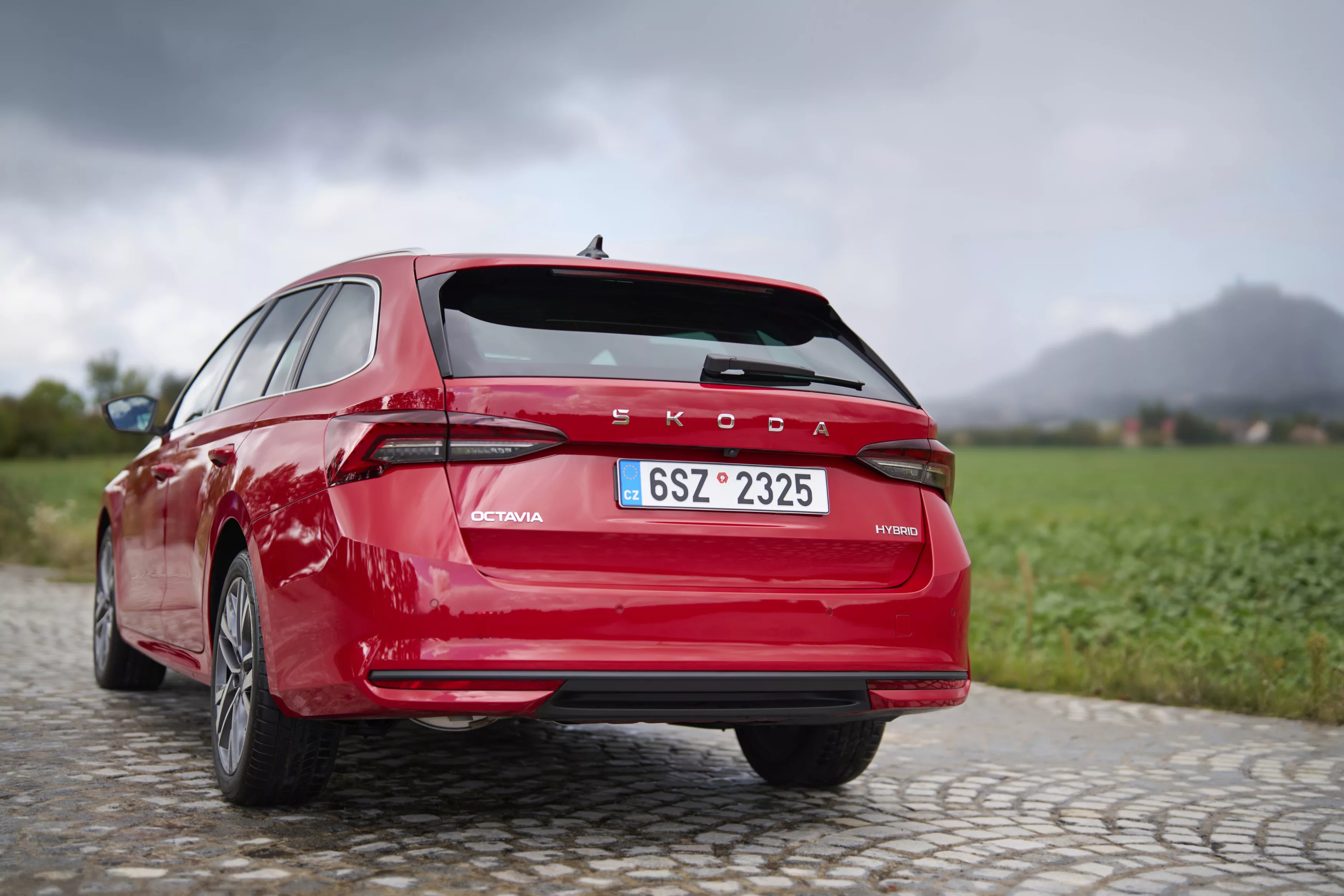
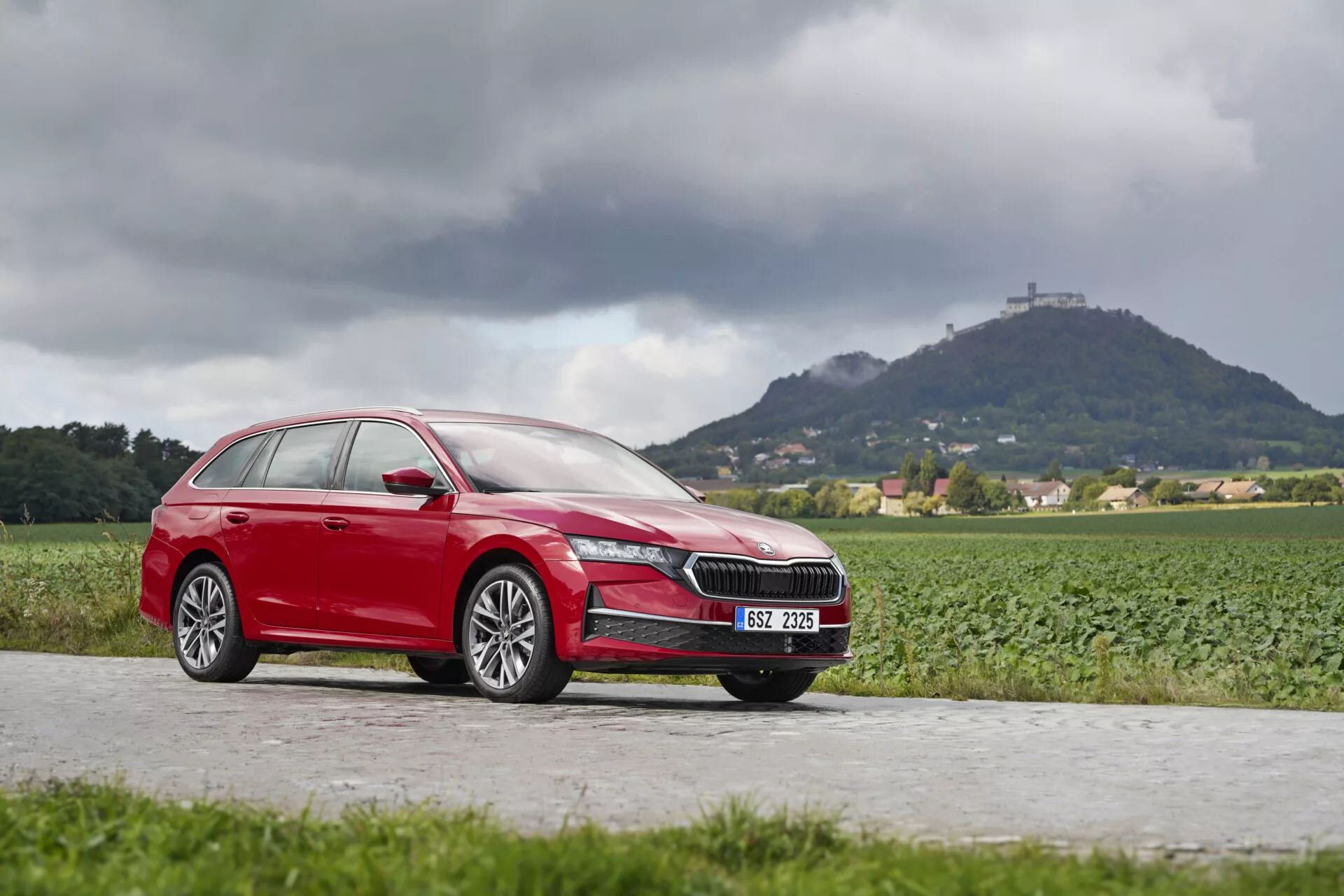
The Škoda Octavia is getting a full-hybrid powertrain for the first time, capable of covering short distances on electric power alone without external charging. The new system comes in two power outputs, 100 and 125 kW, with official WLTP fuel consumption starting at 4.3 l/100 km.
At speeds up to 60 km/h, the Octavia often operates like an electric car
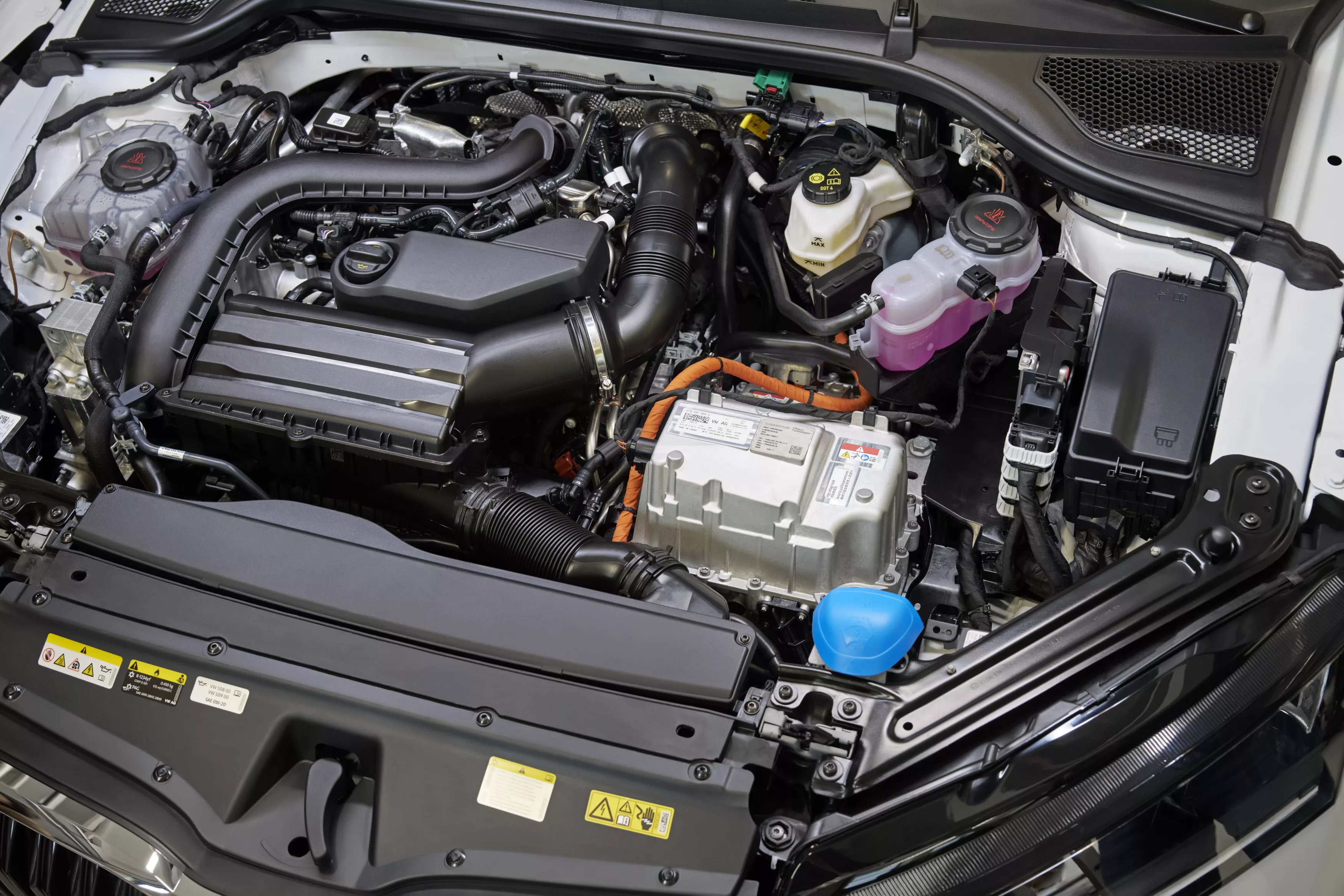
The new powertrain comprises a 1.5-litre TSI evo2 petrol engine, two electric motors, a single-speed automatic transmission and a 1.6 kWh NMC battery.
The smaller, 110 kW electric motor works mainly as a generator and starts the petrol engine. The 125 kW traction motor drives the front wheels and recovers energy under braking.
At speeds up to around 60 km/h, the system favours series-hybrid mode. In this mode, the petrol engine does not drive the wheels directly but, when needed, produces electricity for the electric motor via the generator. At higher speeds, a clutch connects the petrol engine directly to the front wheels through a single fixed gear ratio.
This arrangement is similar in principle to Honda's e system, in which the combustion engine spends much of its time in urban driving generating electricity and is connected directly to the wheels at higher speeds. The Honda Civic e has WLTP fuel consumption starting at 4.7 l/100 km and develops 135 kW.
Up to around two kilometres on electric power
The Octavia automatically keeps its 1.6 kWh battery's state of charge between 40 and 90 per cent. In all-electric mode, its range is around two kilometres.
That figure is not large, nor does it need to be. The aim of a full hybrid is not to drive tens of kilometres on electric power, but to use a small battery for acceleration in urban driving, to store energy recovered under braking and to keep the petrol engine operating as efficiently as possible.
No external charging is needed.
Two power outputs, the same electric components
The base model uses a 96 kW 1.5 TSI engine and has a system output of 100 kW. The more powerful version's petrol engine develops 110 kW, with total system output reaching 125 kW.
The electric motors and battery are the same in both versions. Top speed is electronically limited to 180 km/h.
Škoda has therefore not turned the full hybrid into a sports version. Its main selling point is lower fuel consumption, particularly in urban and mixed driving.
The hybrid takes up boot space
The packaging of the battery and hybrid components entails one fairly noticeable compromise.
The liftback's boot holds 460 litres, rising to 1400 litres with the seats folded. The corresponding figures for the Combi are 485 and 1540 litres. Neither a spare wheel nor a height-adjustable boot floor can be ordered for the hybrid. Lowered sports suspension and the rough-road package are also unavailable.
Boot space has always been one of the standard Octavia's greatest strengths, so this is where the trade-off for the additional hybrid technology is most apparent.
4.3 l/100 km makes the Octavia a direct competitor to Toyota and Honda
With the full hybrid, Škoda enters a segment that Toyota has dominated for years and in which Honda uses a technically quite similar series-parallel hybrid system.
The Octavia's advantage is its choice of body styles. The new powertrain will be available in both the liftback and the Combi, giving Škoda a strong selling point on practicality in the European market. Full-hybrid estates are not exactly plentiful in this price bracket.
The first cars are expected to reach customers in December 2026.


