
Škoda could retire the Superb and cover two classes with one model
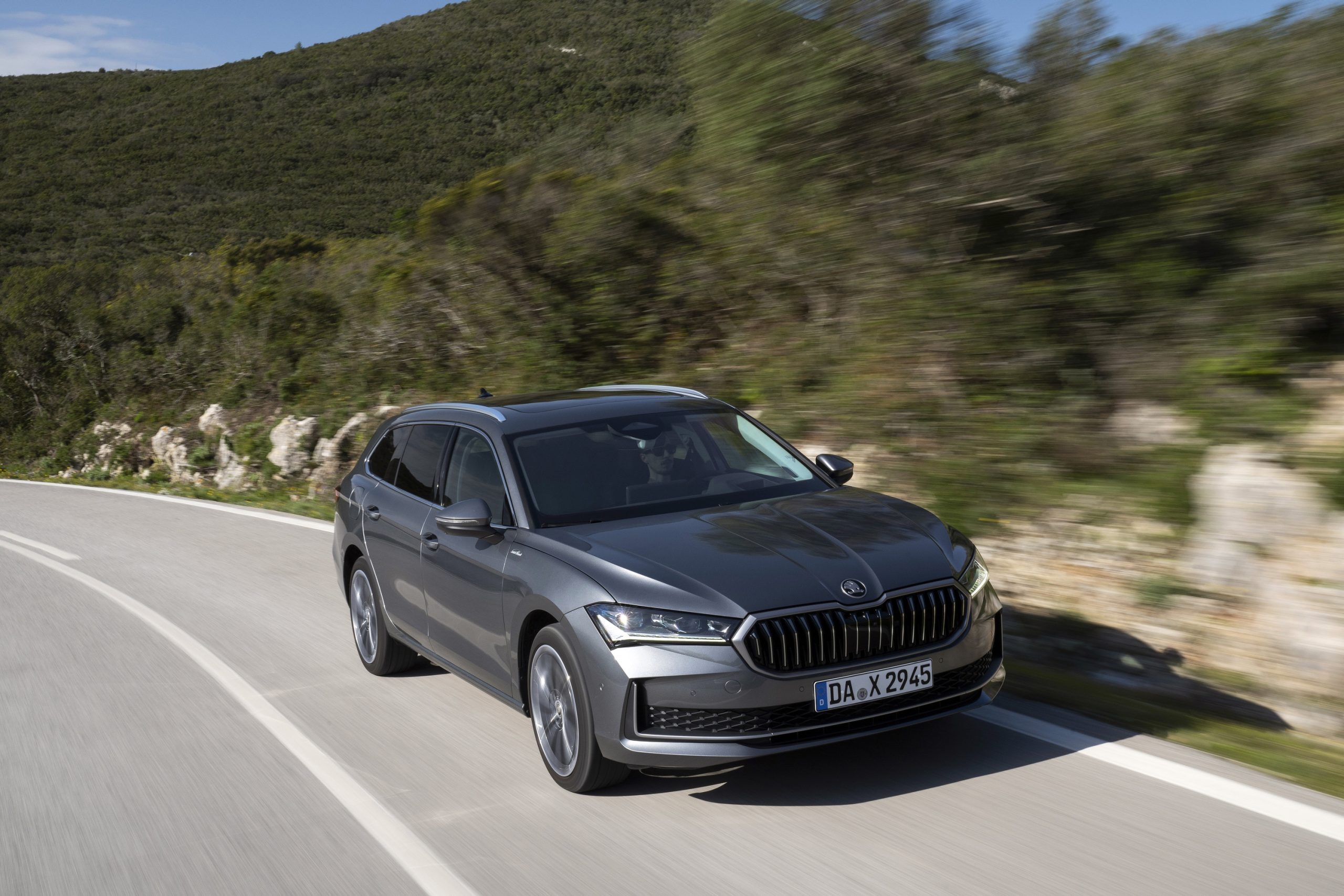
The Škoda Superb could be consigned to history after the current generation. The Czech manufacturer is considering trimming its line-up and is exploring whether a single car could meet the future needs of both Octavia and Superb customers. No final decision has been made, but the direction is significant: even for one of Europe’s most successful estate-car makers, maintaining two closely positioned model ranges is becoming increasingly difficult to justify.
Škoda CEO Klaus Zellmer told Autocar that the company is assessing the structure of its future model line-up against the backdrop of Volkswagen Group’s broader cost-cutting programme. The group wants to reduce the number of models across its brands by around half by 2035, increasing production volumes for the remaining models and reducing complexity.
In such a situation, the Superb quite logically comes under scrutiny. The market for saloons, liftbacks and estate cars is not growing, and Škoda already sells two models, the Octavia and Superb, whose roles partly overlap.
Vision O could replace both the Octavia and Superb
Škoda unveiled the Vision O concept car in 2025 as an initial preview of the next-generation electric Octavia. Its role has now become more interesting.
According to Autocar, Škoda is considering whether the production version of the Vision O could eventually serve both Octavia and Superb buyers. The concept car already sits dimensionally between the two current models, while Volkswagen Group’s new SSP architecture gives Škoda sufficient flexibility to increase the car’s size towards Superb dimensions.
Zellmer did not confirm a date for the end of the Superb or say that a decision had been made. His message was essentially more pragmatic: Škoda must decide whether it will be worthwhile to serve two shrinking market segments with two separate models in future, or whether one well-conceived model can do the same job.
This is not merely a tidying-up exercise for model names. The Octavia is one of the pillars of Škoda’s European sales, while the Superb is the flagship of the brand’s internal-combustion-engine model range. Combining the two would mean a fairly fundamental reshaping of the established model hierarchy.
The Superb is too successful for its disappearance to be a minor matter
The Superb’s modern history began in 2001, and Škoda has produced more than 1.6 million cars over four generations. The current fourth generation entered production at the end of 2023 and is built alongside the Volkswagen Passat in Bratislava.
It is precisely the Superb’s strength that makes a potential withdrawal noteworthy. This is not a niche model that has languished for years and that nobody remembers any more. The Superb is one of the few remaining large, mainstream-priced family and business cars in Europe, and in estate form it offers the space that rivals often require an SUV to match.
According to Škoda’s own figures, around 650,000 Superb Combi models have been sold since 2008. Together with the Octavia Combi, the two models have helped Škoda maintain its leading position in Europe’s estate-car segment since 2016.
Therefore, the Superb’s potential disappearance is not evidence that the model is poor. Rather, it shows how strongly electrification, the popularity of SUVs and development costs are reshaping the economic logic of the European automotive industry.
The EV transition is not following Škoda’s original plan
The situation is made more complex by slower-than-expected growth in demand for electric cars. Zellmer told Autocar that while the ultimate goal is an electric model line-up, the actual pace of the transition remains unclear. As a result, Škoda could instead extend the lifespan of its current internal-combustion-engine cars.
This directly concerns the Octavia as well as smaller models. The current Fabia, Scala and Kamiq could remain in production into the 2030s. According to Zellmer, Škoda will ultimately need an electric Fabia successor, as the brand must retain a relatively affordable entry-level model, but the project is still at the planning stage.
Škoda thus faces a rather uncomfortable equation. Giving up internal-combustion-engine models too early could leave money on the table, while developing too many parallel models erodes profitability in the electric era.
Volkswagen Group’s answer is to reduce the number of models and share more components.
Vision O may not remain an electric car only
The production version of the Vision O is expected to use Volkswagen Group’s SSP platform and reach the market at the start of the next decade. Škoda originally saw it primarily as an electric car, but the manufacturer is now exploring other options as well.
One of these is an electric powertrain with a range extender. In such a solution, electric motors drive the car, while the internal-combustion engine mainly generates electrical energy. The SSP architecture allows Volkswagen Group to use such powertrains, and Škoda has not ruled out this option for the production Vision O.
There is a certain logic to this in the European market. A large estate often serves long-distance drivers, for whom charging speed, motorway consumption and the density of the charging network affect the ownership experience more than they do for urban drivers. Škoda can therefore retain the electric core concept while offering a transitional solution for customers for whom a pure electric car is not yet suitable.
The Superb name may disappear, but not its role
The most important thing is to distinguish between a model name and market position, but the Vision O shows that the manufacturer still considers this body style important. What may change instead is the way Škoda divides up the market. In place of two closely positioned models, the Octavia and Superb, there could be a single model with a broader remit, with cheaper versions serving today’s Octavia customer and more expensive versions targeting Superb buyers.
The economic logic is simple. One architecture, one body structure and greater production volumes mean lower cost per car. At the same time, Škoda must avoid a situation in which cost savings create a compromise that is no longer affordable enough to be an Octavia or prestigious enough to replace the Superb.


