
Battery shortage forces Stellantis to halt production as buyers seek long-range EVs
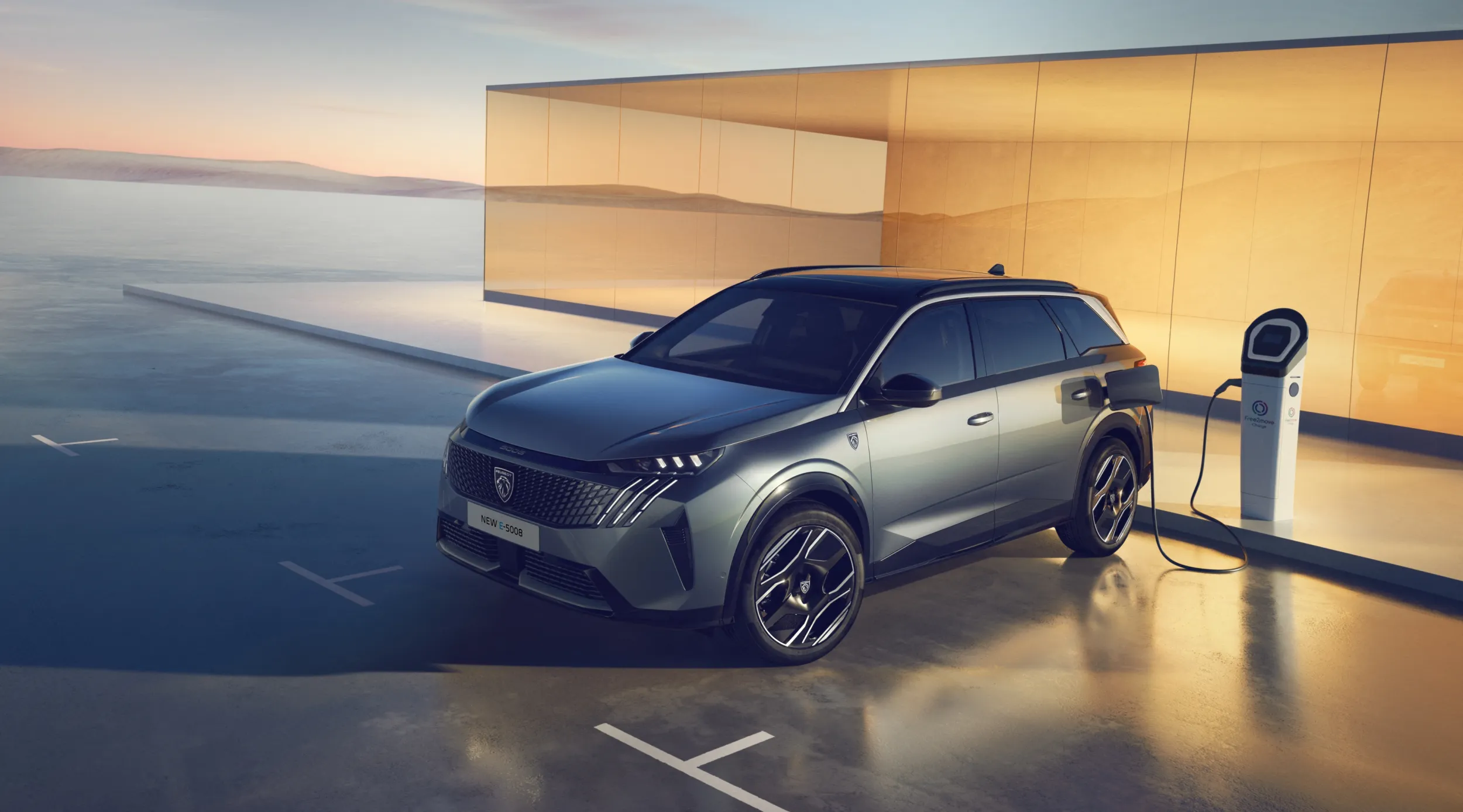
Stellantis must temporarily halt production at two French car plants in October for a reason the European car industry would probably have envied just a few years ago: demand for long-range electric cars exceeds the supply of batteries they need. The shortage particularly affects the Peugeot E-3008 and E-5008, as well as electric versions of the Citroën C5 Aircross.
According to information from Stellantis reported by Reuters, production at the Sochaux plant will stop from 23 to 30 October, while the Rennes plant will halt production from 22 to 30 October. The group wants to align production volumes with available batteries and actual demand. The picture is nevertheless more complicated than simply saying that too many electric cars are being sold.
Buyers want a large battery
Stellantis’s problem centres on long-range versions. According to the group, demand for these, particularly among fleet buyers, has been stronger than forecast. That means Stellantis cannot simply replace an unavailable large-battery E-3008 with a smaller-battery car. The customer has already chosen a configuration and wants range above all.
The Peugeot E-3008 Long Range illustrates the reason well. Its 97 kWh battery delivers a WLTP range of up to 700 km on a single charge. The standard E-3008 has a 73 kWh battery. The large battery makes electric cars built on the STLA Medium platform substantially more capable long-distance vehicles. At the same time, producing each Long Range model requires more battery cells.
If customers prefer these particular cars, sufficient production capacity for smaller-battery versions does not help the factory.
Stellantis’s own battery partner cannot keep pace
The batteries come from Automotive Cells Company, or ACC, whose shareholders include Stellantis, Mercedes-Benz and TotalEnergies subsidiary Saft. ACC produces cells at its Billy-Berclau Douvrin plant in northern France. However, production has not ramped up as quickly as Stellantis’s model range requires.
The problem is particularly acute for large-battery electric cars on the STLA Medium platform. The Peugeot E-3008 and E-5008, Opel Grandland Electric and other Stellantis group models share these underpinnings.
ACC’s European plans were originally much larger. Alongside France, the company planned major battery factories in Germany and Italy, but abandoned the Kaiserslautern and Termoli projects in 2026 to focus on developing production in France.
The current situation exposes the downside of that decision rather starkly. Stellantis has electric cars and customers who want their more expensive, large-battery versions, but Europe’s own battery production cannot deliver the necessary volumes quickly enough.
Halting a factory may be cheaper than building the wrong cars
Sochaux builds the Peugeot 3008 and 5008, while Rennes produces the Citroën C5 Aircross. All are offered with several powertrain options.
In theory, Stellantis could continue producing versions for which sufficient components are available. In practice, that would create another problem: configurations that the market does not demand at the same rate would begin to accumulate on factory premises.
In the car industry, an unsold vehicle also costs money. Capital is tied up in stock, the manufacturer has to offer discounts and dealer inventories grow. Stellantis therefore prefers to stop the production line for a few days rather than build cars simply to keep the factory running.
It is a rather clear-eyed capitalist solution.
Not all French shutdowns are caused by battery shortages
Stellantis is also adjusting production at its Mulhouse and Poissy plants in October, but these pauses should not be lumped together with demand for large-battery electric cars. The Mulhouse plant will halt production from 15 to 30 October. At Poissy, the pause will run from 19 to 23 October. Adjustments to production volumes and inventories play a role in these cases.
The battery shortage directly affects Sochaux and Rennes. The other shutdowns meanwhile reveal another side of the European car market: demand is far from uniform across models and powertrains.
700 km is becoming an important threshold
Stellantis’s problem offers a fairly good indication of where the European electric car market is heading.
For the first wave of electric cars, a WLTP range of 300–400 km was often enough. That still works very well for urban driving and everyday commuting, but buyers of large family cars or primary fleet vehicles increasingly expect something different. The E-3008 Long Range’s figure of up to 700 km takes the electric SUV into territory where planning charging stops loses much of its importance.
This is where Stellantis’s European models begin to compete not only with Volkswagen, Škoda, BMW and Mercedes-Benz, but increasingly fiercely with Chinese manufacturers too. BYD, Xpeng and others are simultaneously pushing prices down and battery capacity, charging power and equipment levels up. European manufacturers therefore have little room to tell customers to take a 500 km version instead of a 700 km car because the right battery is not ready yet.
Stellantis’s problem is both good and bad news
Having demand is undoubtedly a better problem for Stellantis than electric cars piling up on factory premises. This is particularly important at a time when European carmakers have spent years warning about uncertainty in electric car demand. At the same time, the situation exposes one of the European electric car industry’s strategic weaknesses.
A car may be designed in France, use Stellantis’s own platform and be built in a European factory, yet insufficient production capacity for its most important and expensive component can still bring an entire assembly line to a halt.
Making the situation even more uncomfortable is the fact that ACC is not some unrelated external supplier. Stellantis itself is among its shareholders. A good platform and long range are therefore no longer enough to compete in the electric car market. The winner is the manufacturer that can also build these cars quickly enough.
For now, Stellantis customers want the 97 kWh battery faster than Europe can produce it.


