
Subaru E-Outback: the boxer engine is gone, but is Subaru’s spirit still there?
 1/21


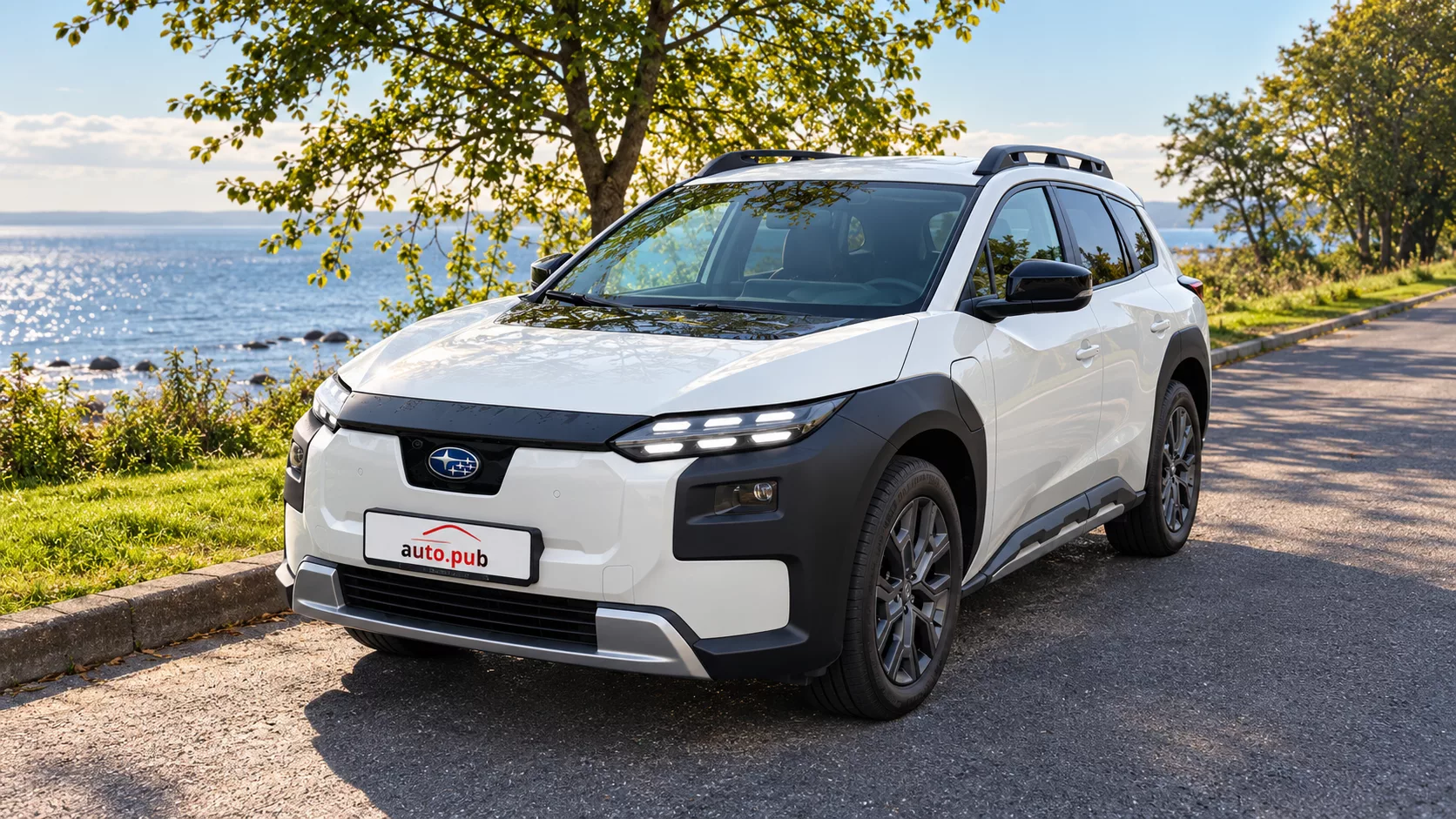
The very existence of the Subaru E-Outback, a 381 hp electric all-wheel-drive estate, feels almost defiant in today’s car industry. Rather than build yet another electric SUV with a low roof and a coupé-like rear end, Subaru has taken the original Outback idea and added a large boot, 211 mm of ground clearance and twin-motor power. The result raises a question: can Subaru’s familiar, workhorse practicality survive in a world where you have to think about the charging curve instead of the fuel tank?
The electric Outback is not the old Outback with a new motor
Subaru has always stood somewhat apart in the European car market. While other manufacturers tried at all costs to create an SUV that appealed to everyone, Subaru offered boxer engines, permanent all-wheel drive, practical body styles and fairly understated looks. Its cars did not necessarily win beauty contests for dashboard displays, but they suited people who wanted to get home along back roads even in November.
The Outback embodied that approach particularly well. The model was born in 1995 as a raised, all-wheel-drive version of the Legacy estate. Back then, not every family car had to resemble a smaller off-roader. Subaru gave a conventional estate more ground clearance, protective plastic cladding and a capable drivetrain, finding buyers who did not see car-like comfort and off-road ability as mutually exclusive. Others followed later, but the Outback established its niche early.
The 2026 E-Outback continues that idea in electric form in Europe. It should not be seen simply as a new generation of the existing petrol model with batteries substituted for its engine. The EV uses the e-Subaru Global Platform developed jointly by Subaru and Toyota, and its direct technical relative is the Toyota bZ4X Touring. The E-Outback is built at the Gunma Yajima plant in Japan. That is also where the first Outback was made. Perhaps it is no more than a factory location, but in terms of the brand’s history, it brings things neatly full circle.
The model family’s relationship with Toyota should not alarm anyone. Developing a modern electric car is expensive enough that even independently minded brands sometimes have to share a calculator. The more important question is whether Subaru has managed to give the shared underpinnings its own character. The technical recipe at least suggests so: in Europe, the E-Outback is offered only with two drive motors and all-wheel drive, unlike some single-axle-drive variants in the same family. That is a more expensive way to build an entry-level version, but an Outback without all-wheel drive would be as odd as a hiking jacket afraid of rain.
Exterior
Exterior: an estate unashamed of its purpose
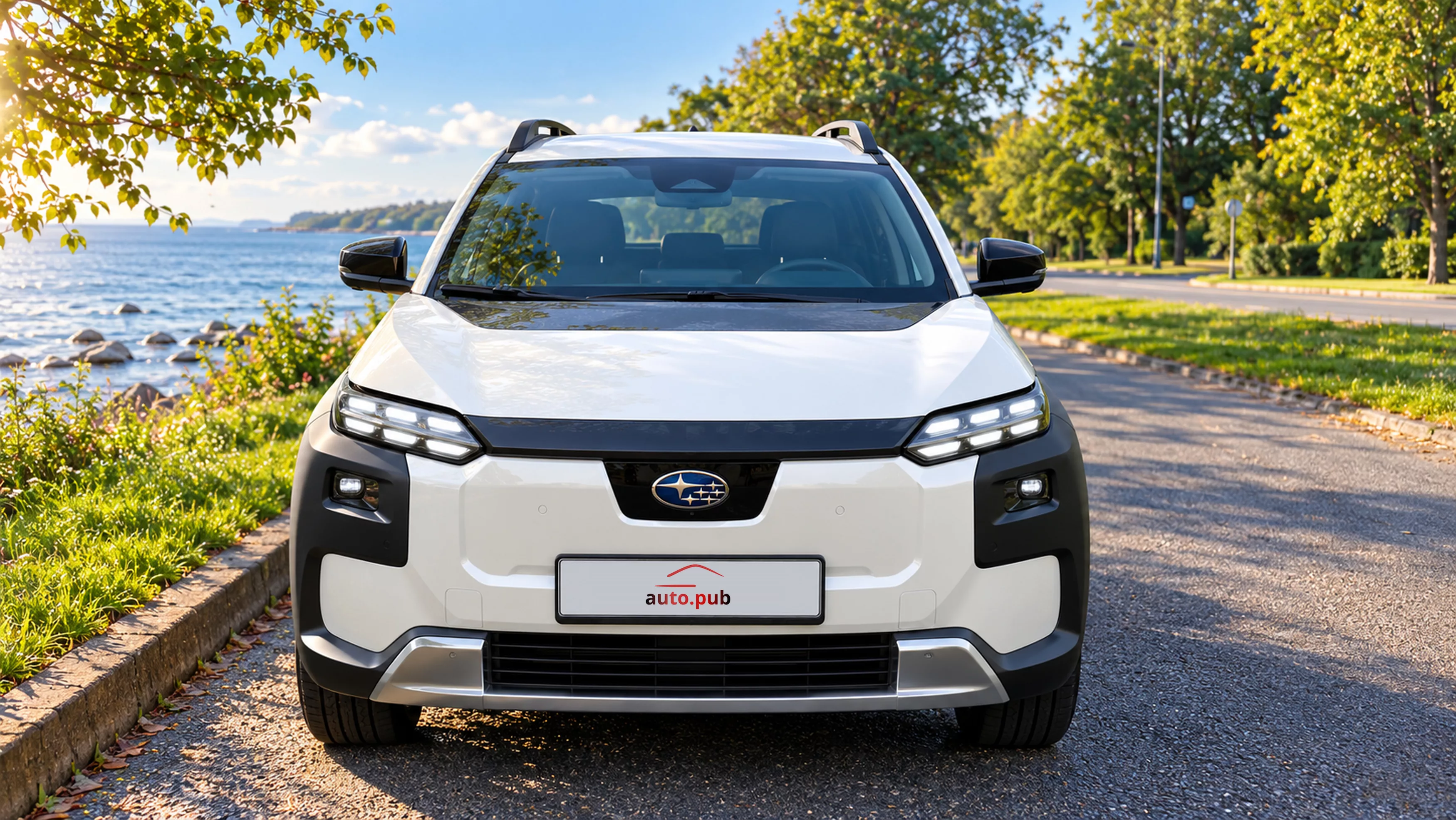
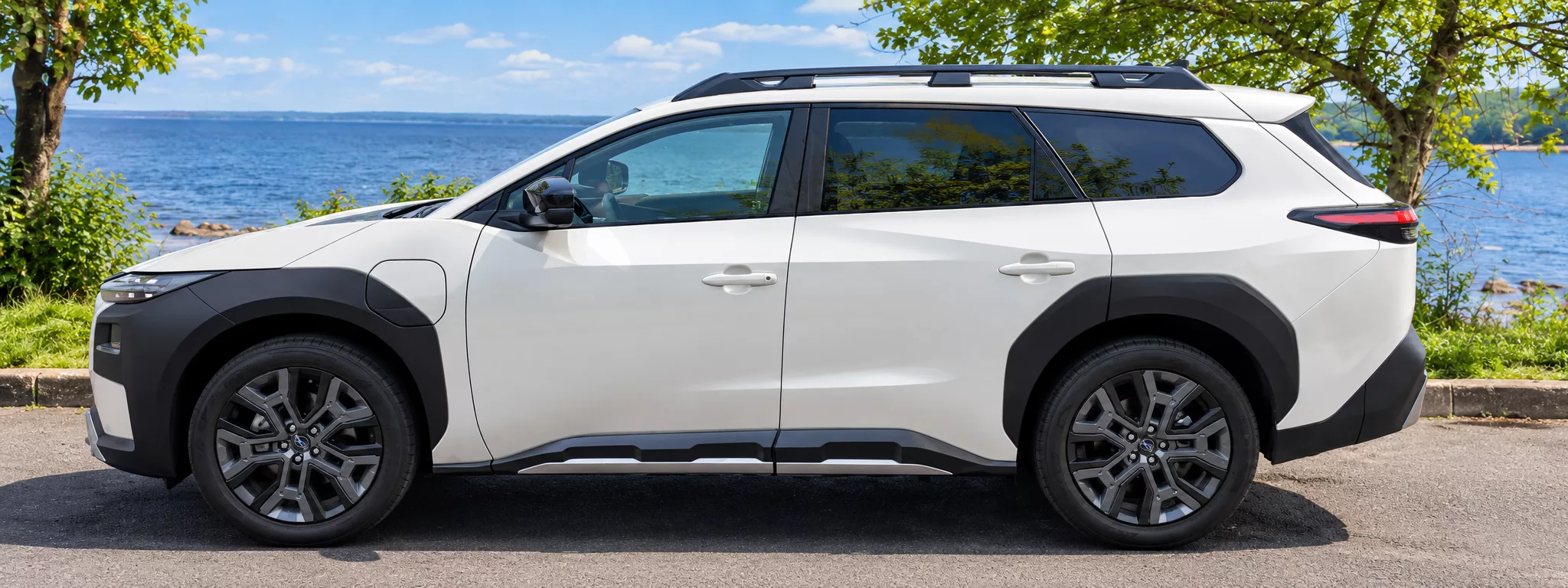
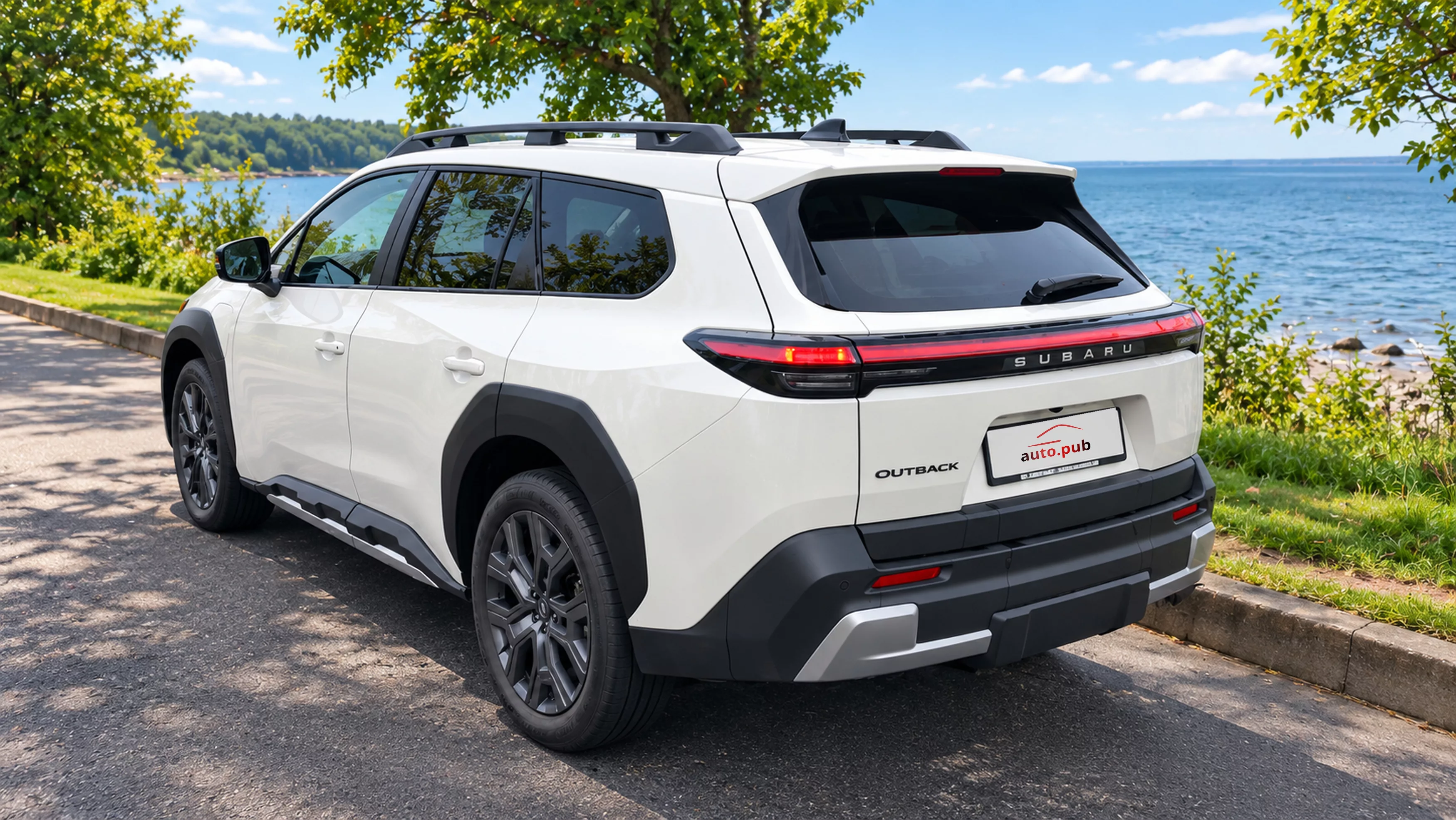
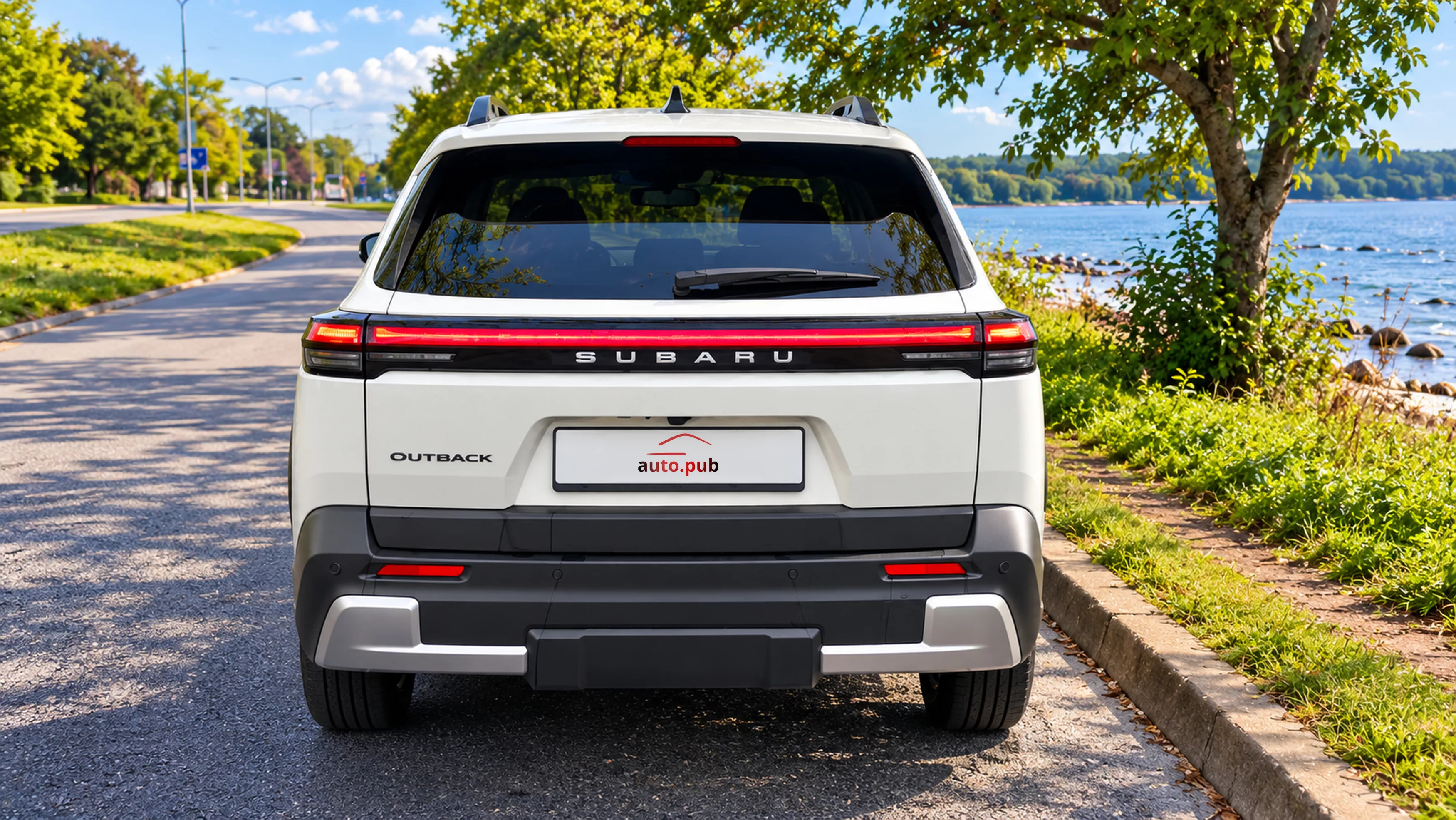
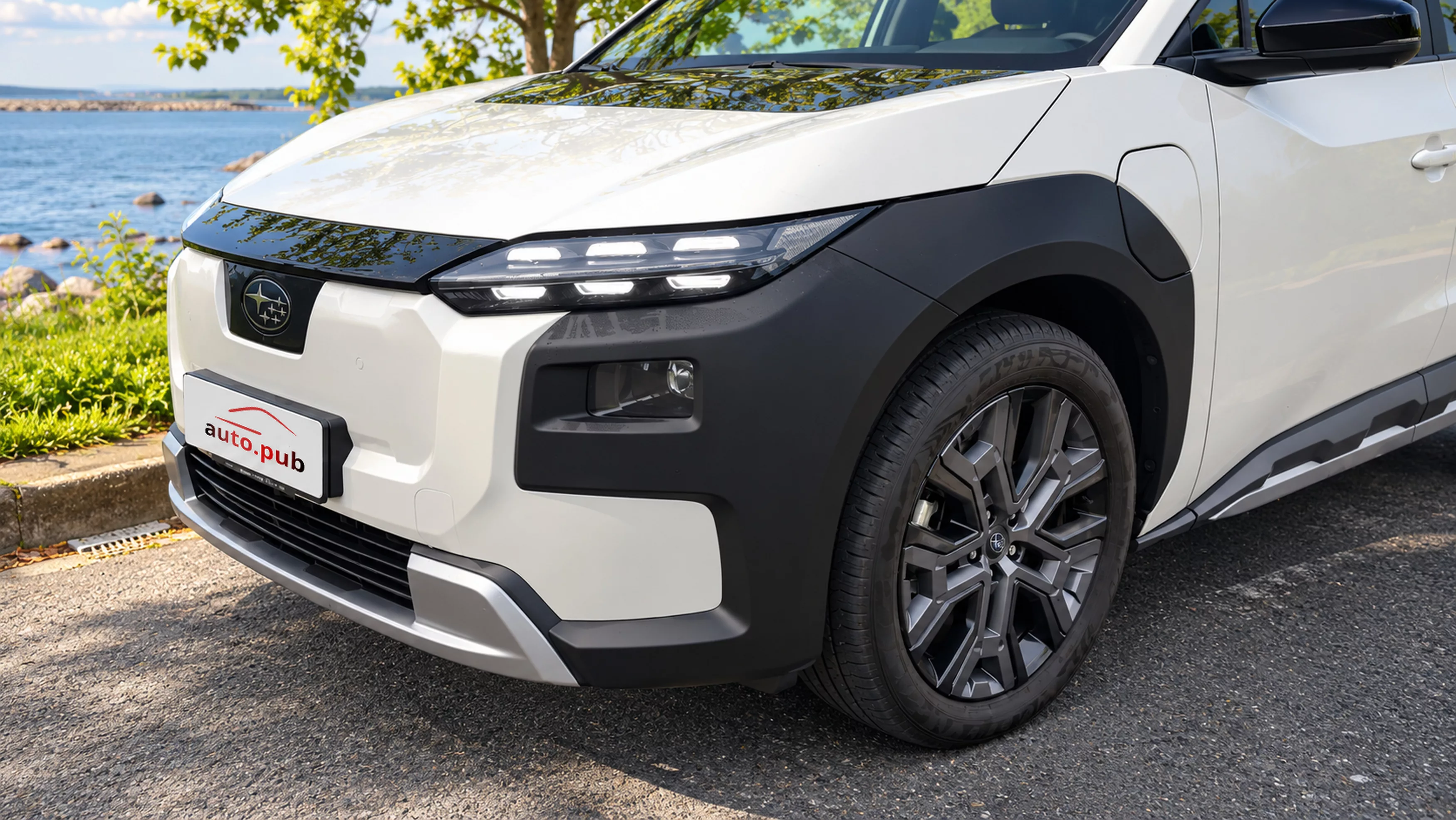
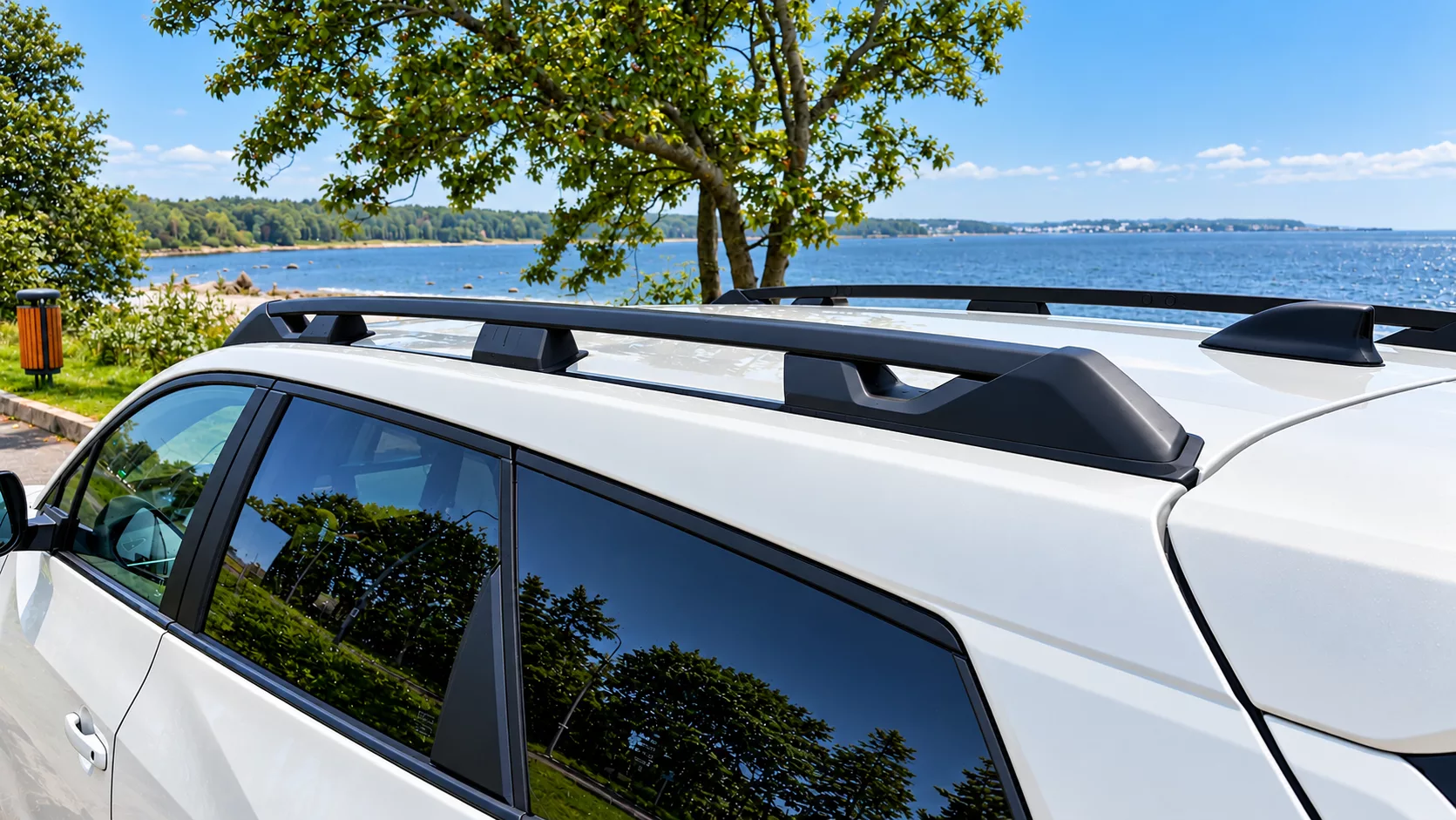
The E-Outback’s proportions are old-fashioned in a sensible way. Its long roof does not begin to slope down before the rear door, there is still a useful amount of glass, and the rear end is square enough to accommodate something other than a designer’s conscience. At the same time, this is not a low-slung, traditional estate. The raised body, chunky black wheelarch cladding and substantial roof rails place it firmly in crossover territory.
It measures 4845 mm long, 1860 mm wide and 1675 mm tall, with a 2850 mm wheelbase. Those dimensions tell us two things at once. First, the Subaru offers plenty of space for a family. Second, this is not a car you can blithely slip into any space in a tight multi-storey car park. Including the mirrors, it is 2118 mm wide, and when manoeuvring, it pays to watch your surroundings rather than the animation on the screen.
Ground clearance is 211 mm. The body has not simply been raised to provide a higher seating position: sufficient clearance helps keep the underbody panels and battery pack away from ruts, snowbanks and rocks. Even so, one number does not make a car a true off-roader. Its ability is also limited by body overhangs, tyre grip and how sharply the ground falls away over a crest. The E-Outback has an approach angle of 17.6 degrees, a departure angle of 20.2 degrees and a breakover angle of 18.2 degrees. Those are better suited to a challenging forest track than rock crawling.
The 18-inch wheels with 235/60 R18 tyres suit the E-Outback’s character better than the more glamorous 20-inch wheels. Taller sidewalls provide an extra buffer against sharp edges and leave less reason to worry about wheel damage on gravel. Larger wheels may look more impressive, but that counts for little when the road is rippled with ridges of snow. The manufacturer’s own WLTP figures also show that specifications with larger wheels lose tens of kilometres of range. The first buying recommendation is therefore simple: do not pay extra to give your electric car less usable range.
Interior
Cabin: the Toyota connection shows, as does Subaru’s practicality
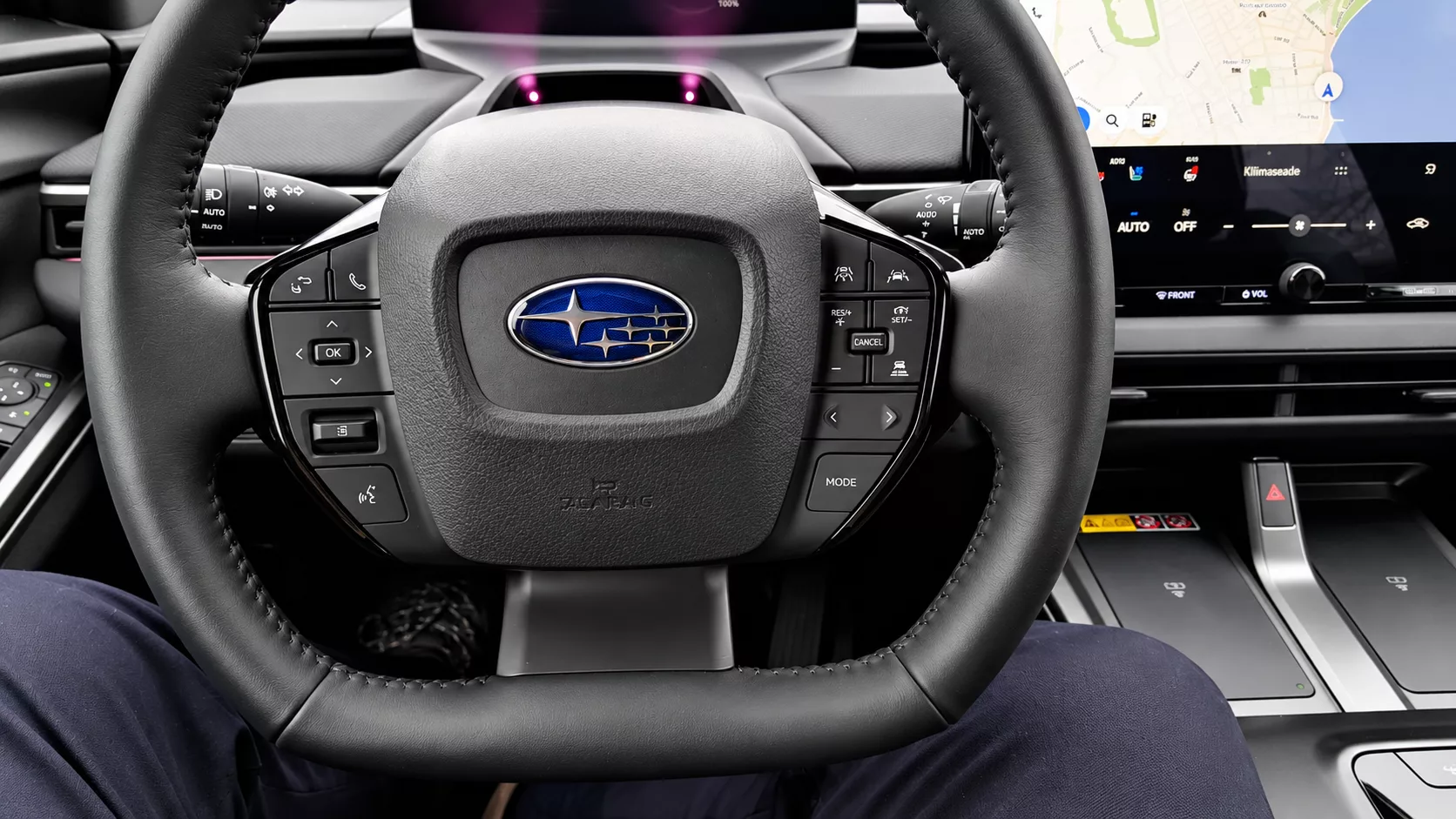
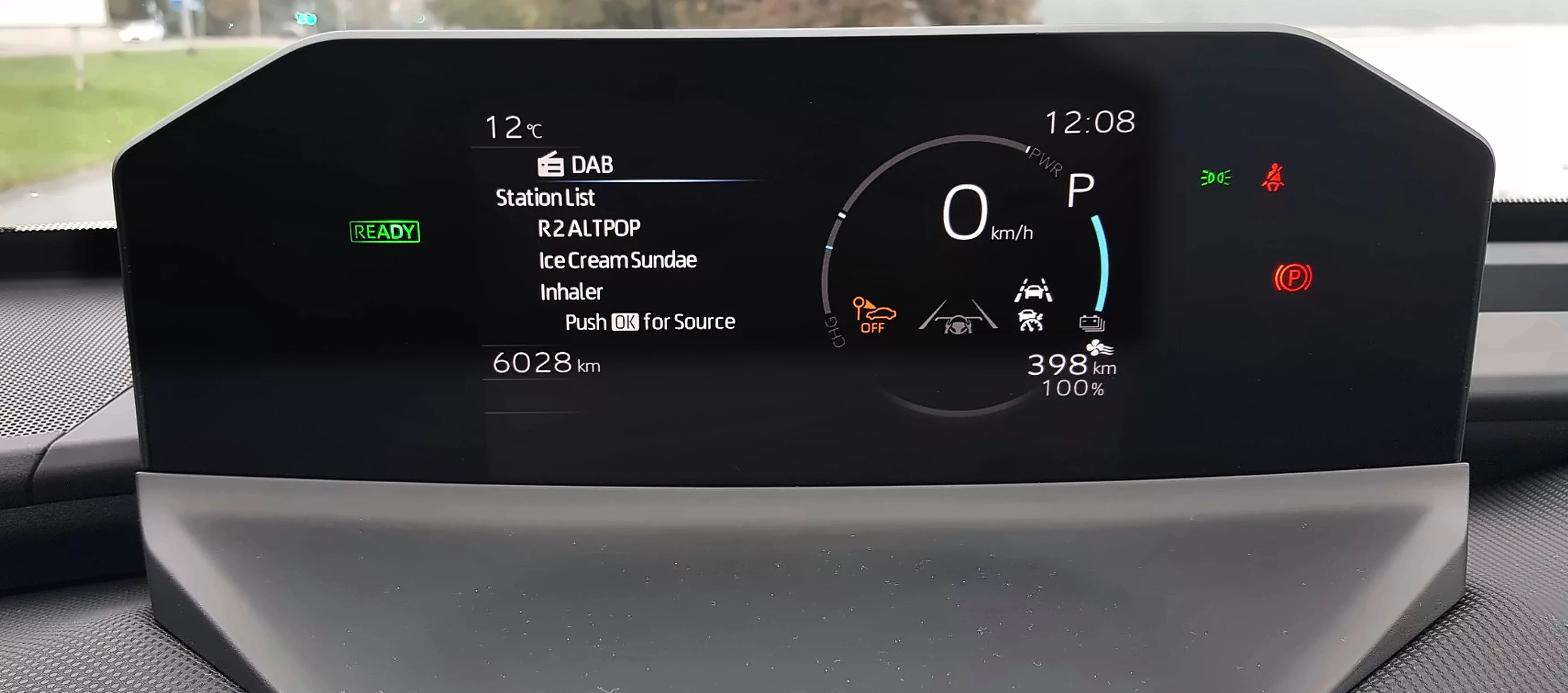
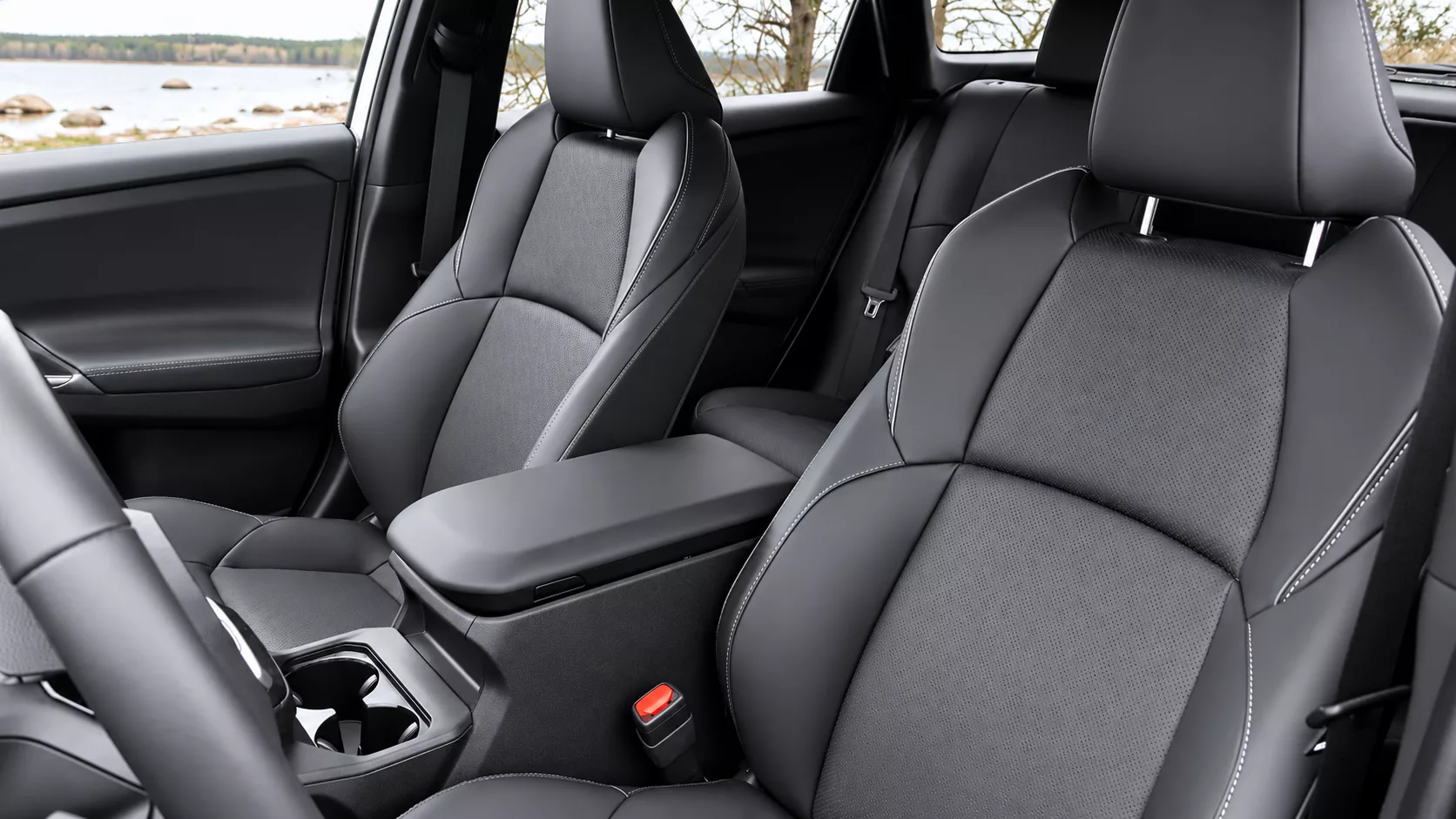
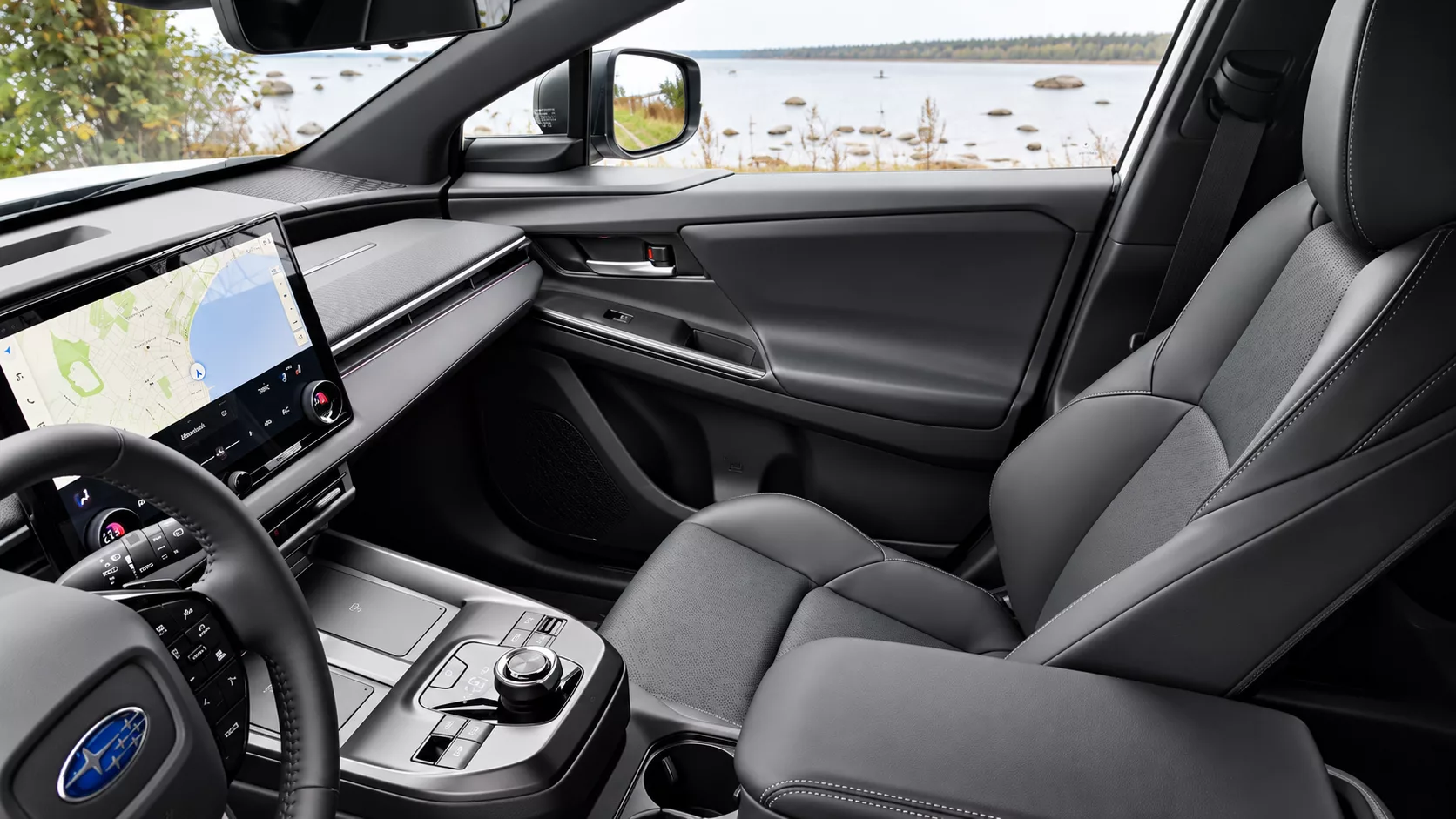
Open the door and it is clear that Subaru has not started with a clean sheet. The wide centre console, small steering wheel flattened at the top and bottom, and instrument panel positioned near the top of the dashboard recall its electric Toyota relatives. That is not necessarily a drawback, but it requires some adjustment from the driver. A driving position cannot be judged solely by seat softness or steering-wheel thickness. If the wheel obscures some of the instruments, or the driver has to sit unnaturally high to see them, the design has missed its mark.
The rest of the cabin is more workmanlike than luxurious. The materials appear to have been chosen with durability and cleaning in mind. Alongside soft surfaces and synthetic-leather seats are harder plastics and simple switches. Some buyers will find it a little too ordinary at this price level. Others will appreciate not having to worry that a wet jacket, muddy gloves or children’s shoes will ruin surroundings resembling a pale-coloured hotel suite.
The front seats offer electric adjustment and driver’s lumbar support. The Limited already includes heated front and rear seats, a heated steering wheel and dual-zone climate control as standard. In a Nordic climate, those are more sensible benefits than another screen animation. On a cold morning, it does not matter whether a menu icon depicts perfect snowfall. What matters is that the steering wheel warms up and the windows clear quickly.
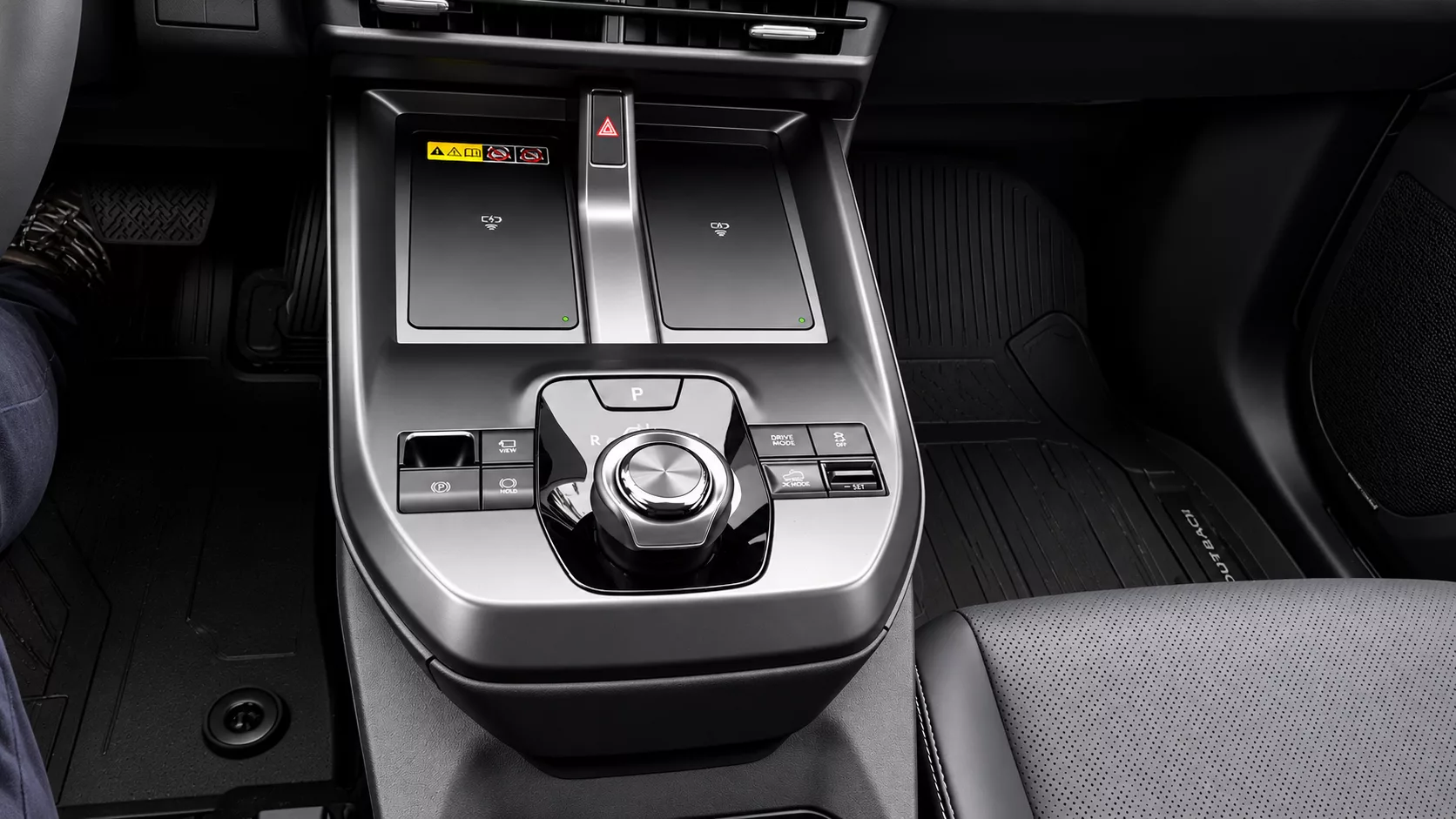
There is one curious omission, however: no conventional glovebox in front of the passenger. You could call that bold design if nobody had ever wanted to keep an owner’s manual, paper towels or a small torch in their car. The centre console and doors can hold smaller items, but a missing enclosed storage compartment remains missing even if the manufacturer offers two wireless phone chargers instead.
What matters more than the screen is how little you need to touch it
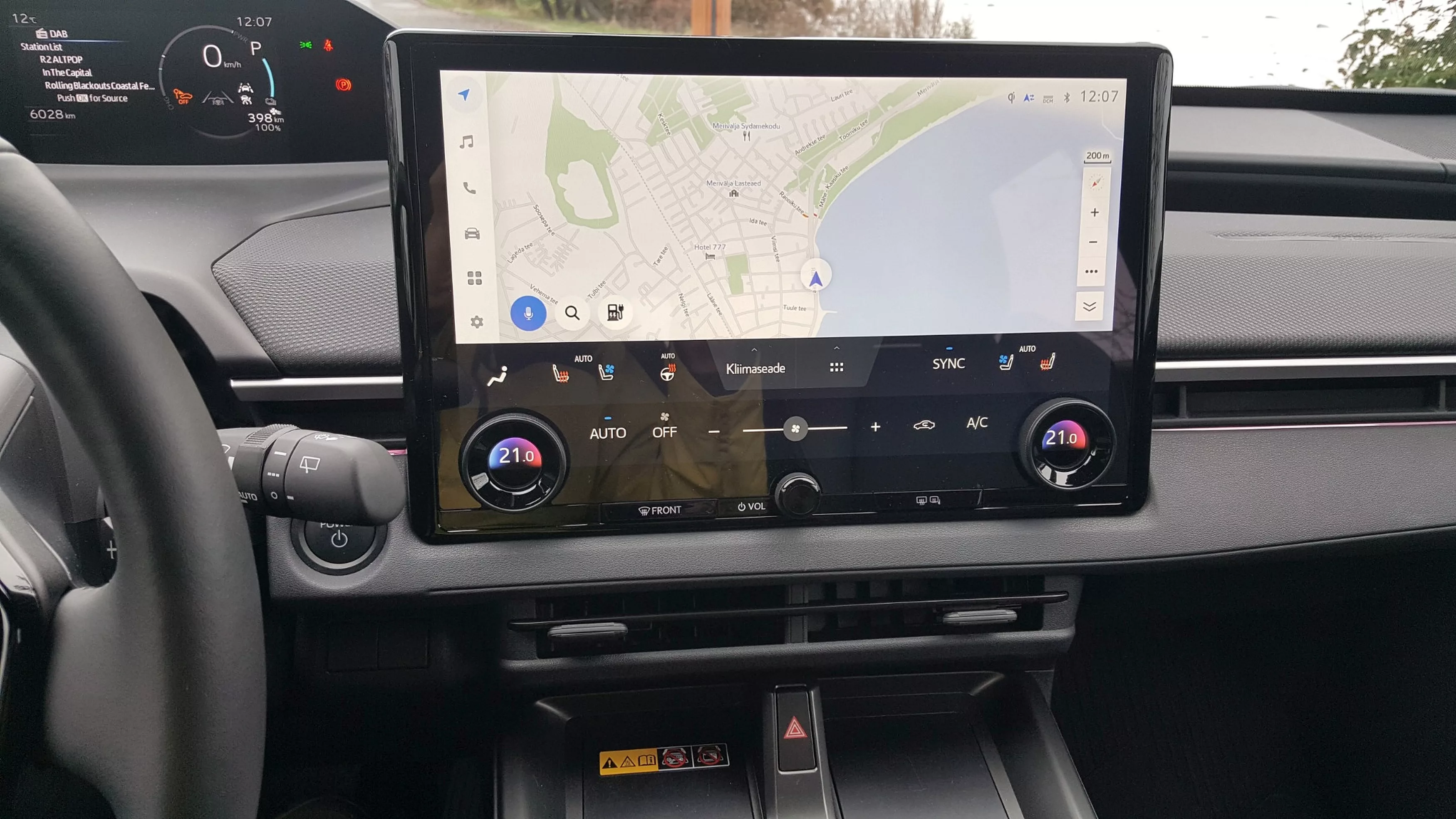
The 14-inch infotainment system at the top of the centre console looks contemporary and can display plenty of information at once. The car has wireless Apple CarPlay and Android Auto, two wireless phone-charging pads in the front and USB-C ports for rear passengers too. This arrangement keeps phone cables under control, but only if the phone actually stays on its charging pad and the system does not start limiting performance because of heat. A screen’s diagonal measurement tells you nothing about such practical matters.
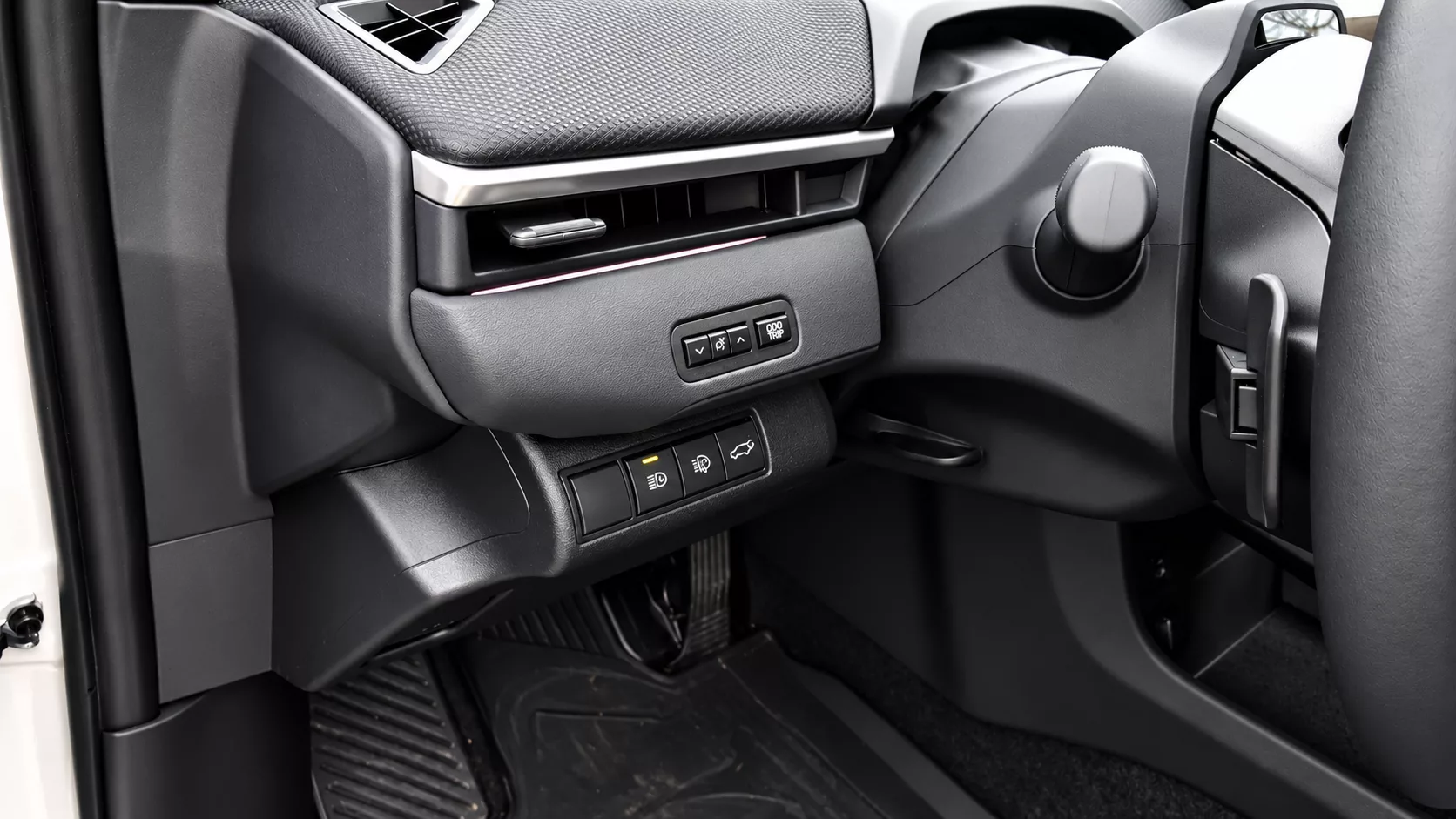
Subaru has retained physical buttons for several important functions, along with some permanent control areas on the screen. That shows more common sense than an approach requiring two submenus even to clear the windscreen quickly. Unfortunately, some climate-control functions still rely on the touchscreen. And the more commands you enter on the screen, the less time you have to watch what is happening beyond the glass. Good usability does not come from software being able to do a great deal. It comes from the driver having to think as little as possible about where to find things.
The navigation can plan charging stops and prepare the battery pack for rapid charging. In an electric car, that is already an important part of the powertrain rather than a peripheral convenience app. If the system selects a suitable charger and starts preheating at the right time, the driver saves real time at the next stop. But if it recommends a succession of short stops or ignores the driver’s preferences, the driver has to rework the route.
There is room in the back, but the battery changes the seating position
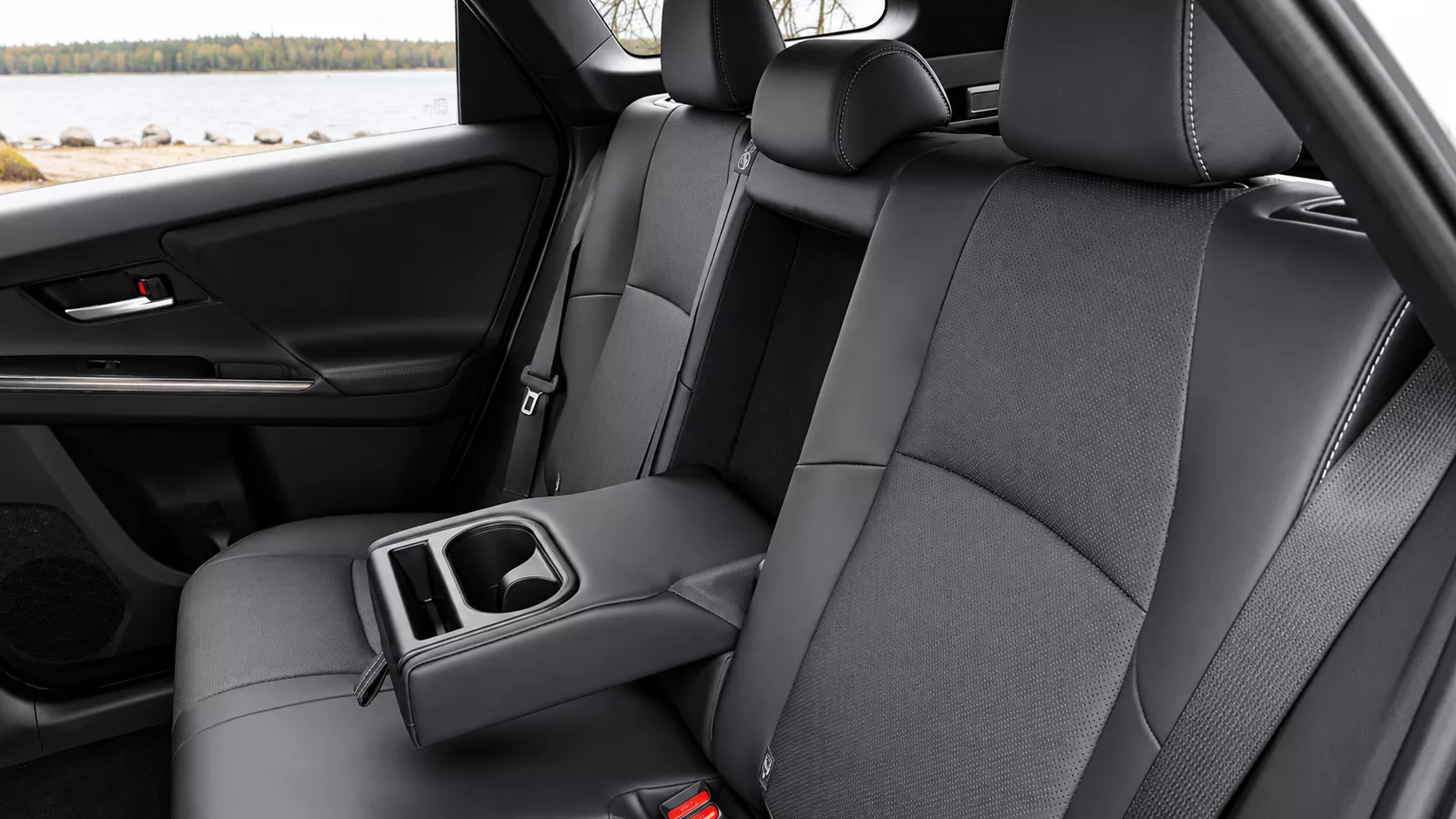
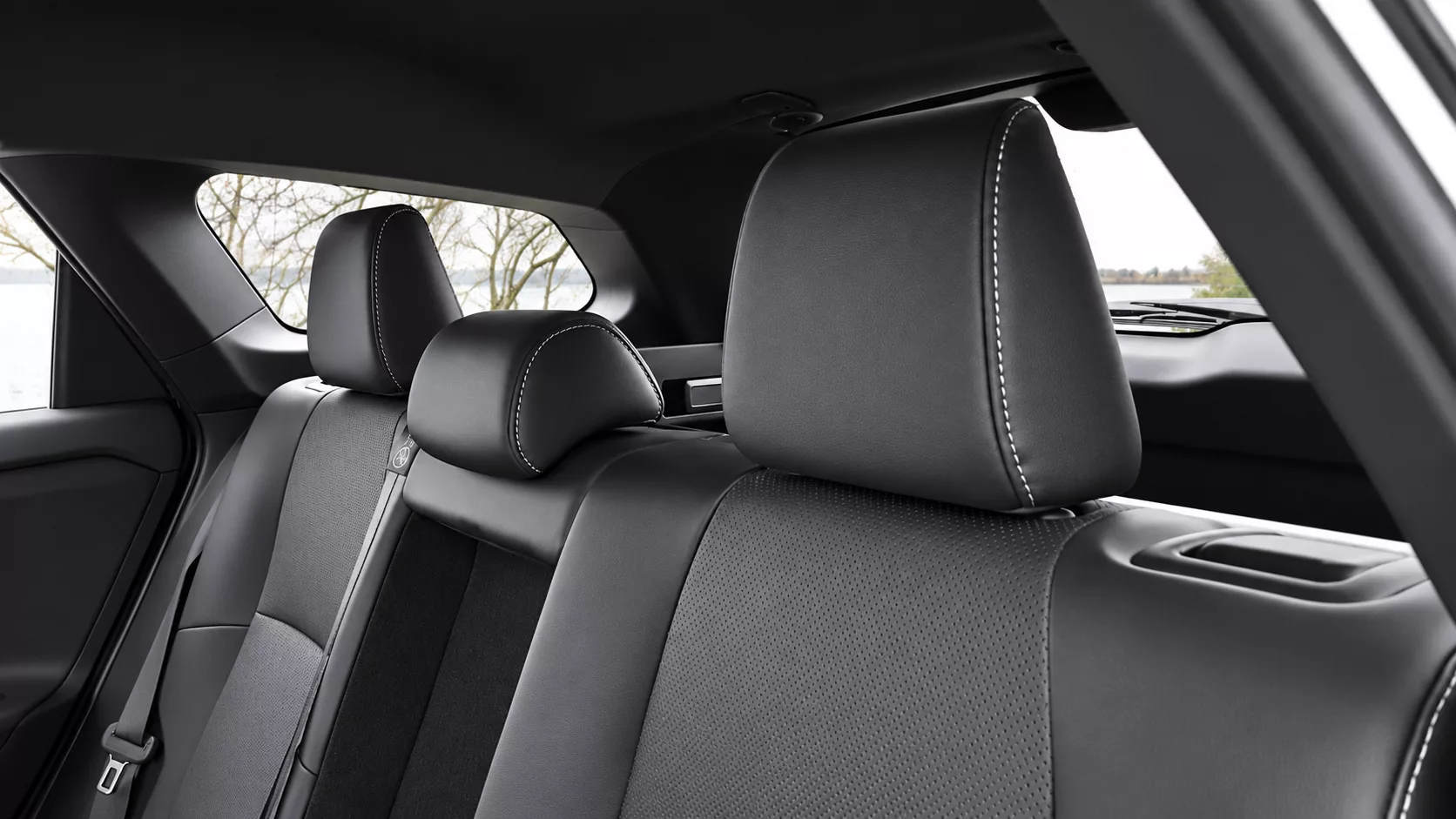
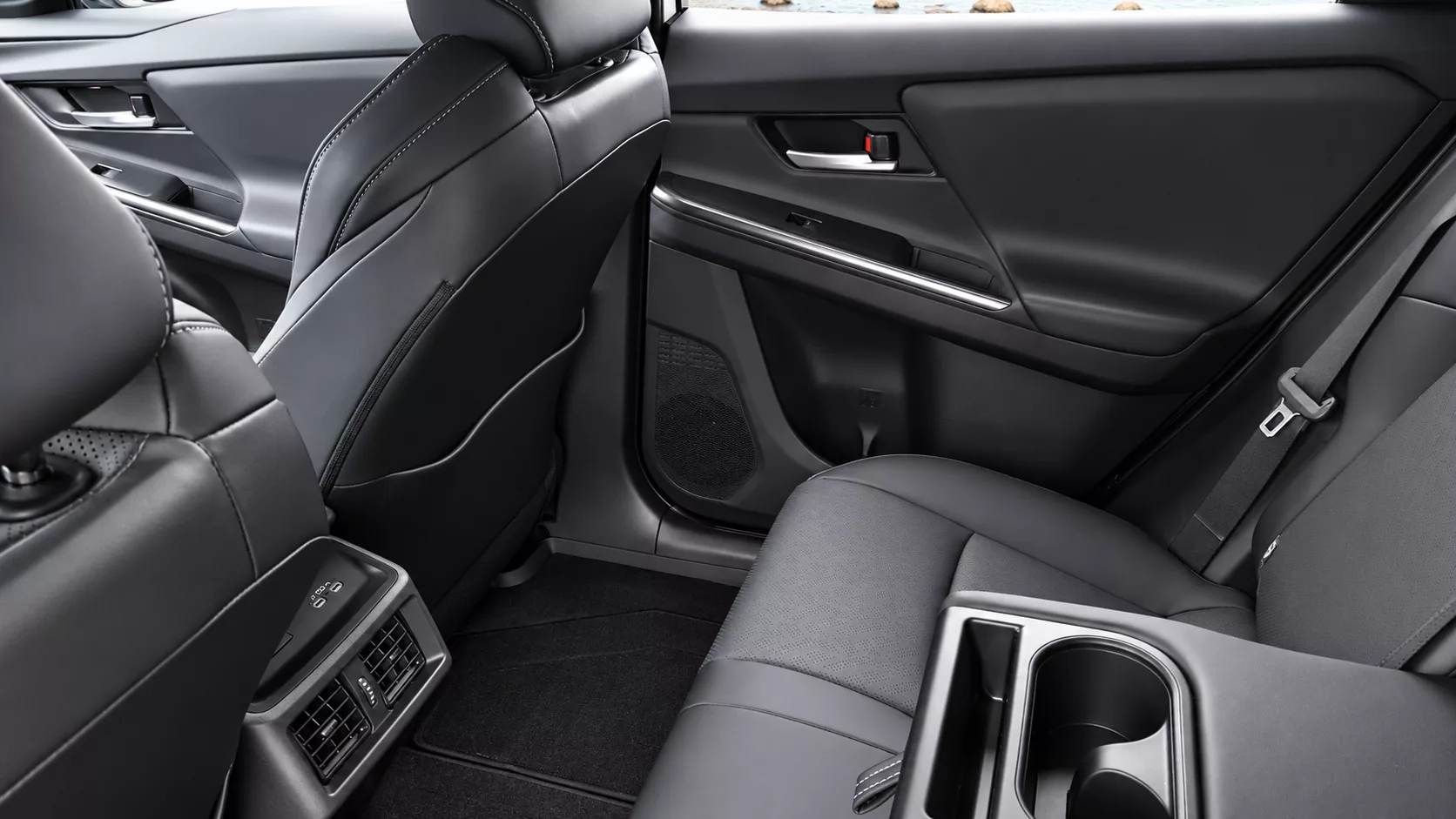
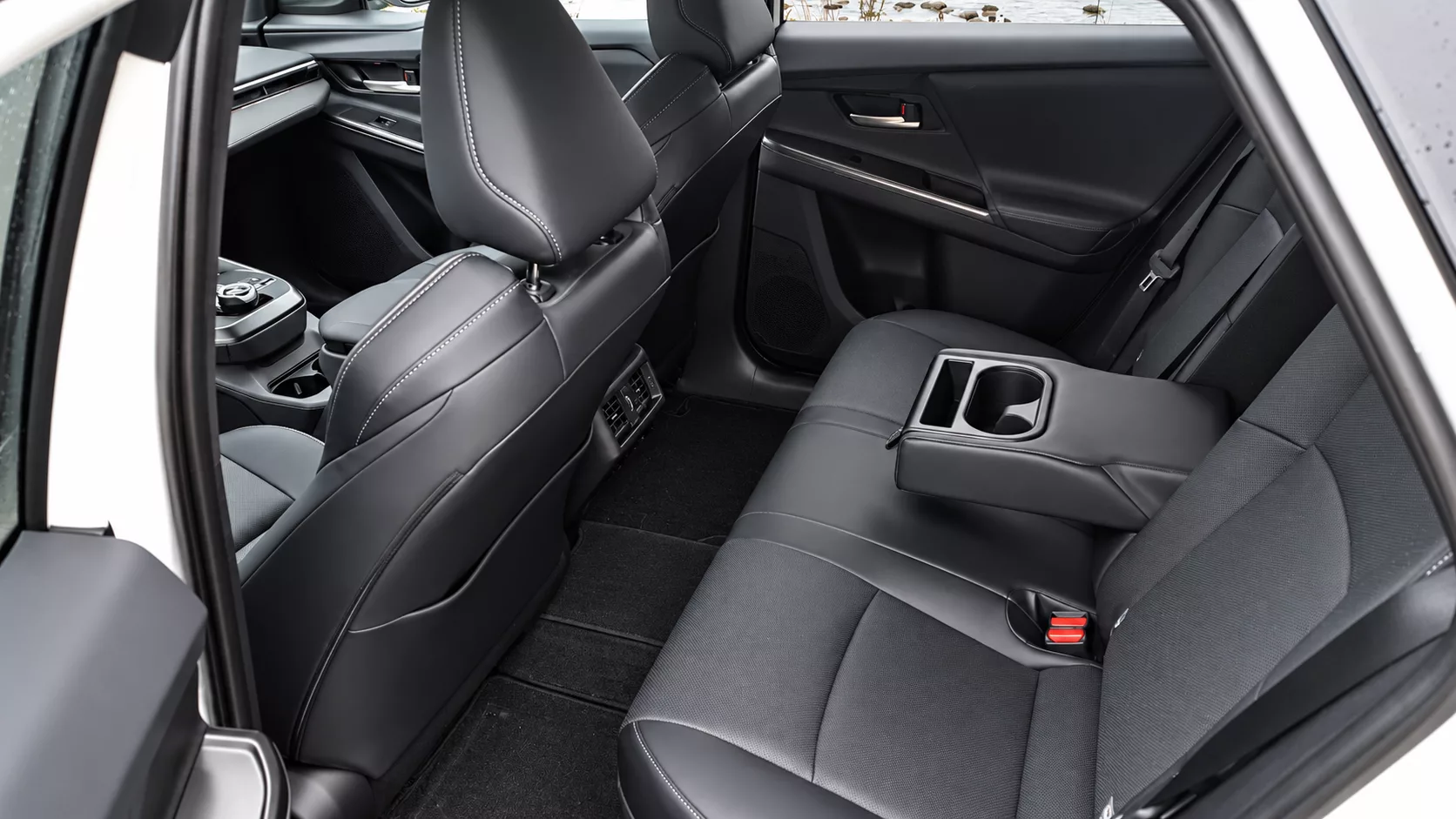
The 2850 mm wheelbase provides decent rear legroom. Four adults can travel comfortably in the E-Outback, and the fifth seat is not merely a marketing tick-box, though it is not a full-fledged seat either. Rear passengers need not necessarily press their knees against the front seatbacks. The door opening and relatively upright body make access easier than in a coupé-like electric car whose rear seat can sometimes require you literally to fold yourself up.
A high floor is an unavoidable feature of the electric platform. The battery pack sits beneath the passenger compartment, and the rear seat is positioned fairly low relative to it. Taller occupants may find their knees higher than usual. There is sufficient legroom, but seating comfort does not depend only on the number of centimetres between your knees and the front seat. On long journeys, the low cushion may offer less thigh support than the broad cabin initially suggests.
The rear backrest reclines to two positions and splits 60:40. ISOFIX child seats can be attached to the outer positions, while rear passengers have separate air vents and heated seat cushions. These are all family-car features likely to see more use than the full potential of the 381 hp powertrain.
Boot: this time, practicality is not just for the publicity photos
The boot is one of the E-Outback’s most convincing features. The specifications list its capacity as 609 litres with the adjustable floor raised and 633 litres with it lowered. These are VDA measurements. Those figures are large enough that a family holiday need not begin with negotiations over luggage space. Two large suitcases, smaller bags and everyday items fit without complicated calculations.
More important than an impressive litre figure is the shape of the space. The roof does not slope sharply down over the rear seats, the tailgate reveals a large opening, and the boot is 1094 mm long up to the rear seatbacks. Fold those down and the load length extends to 1905 mm. That allows long sports equipment or smaller pieces of furniture to be carried, or, with a suitable arrangement, a temporary sleeping space to be made inside the car. Everything naturally depends on the item’s width and the front-seat positions, but this is a real possibility rather than merely a press-photo illusion.
With the rear seats folded, capacity increases to as much as 1718 litres when loaded to the roof. That does not mean an object of any shape will automatically fit, but the car’s practical touring potential is obvious. Subaru has retained one of the Outback’s most important qualities here: the back of the car is genuinely intended to carry things. That feels refreshing at a time when the boot shapes of many crossovers seem to have been designed around the tail-lights first and luggage second.
Motors and driving dynamics
Two drive motors and 381 hp: more than just an acceleration figure
The E-Outback has a permanent-magnet synchronous drive motor at both the front and rear. Each is individually rated at a maximum of 167 kW and 268 Nm of torque. Official combined system output is 280 kW, or 381 hp. You cannot simply add the motor figures together and claim the car has 334 kW. Battery and power-electronics limitations mean the two motors do not deliver their maximum rated outputs simultaneously.
Drive reaches the front and rear wheels through separate reduction gears. There is no conventional automatic gearbox with gear changes, nor a propshaft linking the front and rear axles. This allows power distribution to be controlled rapidly by electronics. One electric motor does not have to wait for a complex mechanical connection to bring in the other axle, and stability control can work more closely with the powertrain.
According to Subaru, the car accelerates from zero to 100 km/h in 4.5 seconds and reaches a top speed of 180 km/h. For a family estate, that is an almost comically powerful performance. Yet rapid straight-line acceleration does not make it a sports car. Sporting ability ultimately depends on steering feedback, brake modulation, body control and the ability to tackle successive corners without making the driver or passengers want to get out at the next stop.
The best quality of electric all-wheel drive is not an abrupt show of force but smooth, predictable responses. The car can respond immediately to the accelerator, yet the power does not arrive with an excessively frantic punch. Everyday overtaking becomes easy, and the car does not feel underpowered when loaded.
All-wheel drive: the symmetry is now in the software, not the propshaft
Subaru still uses the Symmetrical All-Wheel Drive name. The traditional boxer-engine and longitudinal drivetrain architecture is gone, but the importance of four driven wheels has not changed. The electric motors control traction at the front and rear axles according to grip and driving mode. No twin-shaft connection is needed. The purpose of all-wheel drive remains the same: the car should keep moving even when the road surface decides to challenge the driver’s optimism.
The E-Outback has dual-mode X-MODE. Snow/Dirt helps on snowy and gravel roads, while Deep Snow/Mud is intended for deeper snow and softer ground. The electronics adjust motor response, permitted wheelspin and brake intervention. Hill-descent assistance and Grip Control, which can maintain a low speed over tougher terrain, add to the package. This takes some tasks off the driver’s hands, but it cannot make an unsuitable tyre good or overcome the physical limits between tyre and ground.
Suspension: comfort before sporting pretensions
The front axle uses MacPherson struts, with independent double-wishbone suspension at the rear. That is a more sophisticated rear arrangement than the torsion beam used by many cheaper crossovers, although the design alone does not guarantee good ride comfort. The interaction between springs, dampers, bushes, tyres and body rigidity is just as important. Subaru’s engineers were not aiming to build a stiff cornering toy, but a car equally capable of handling undulating main roads and potholes on gravel tracks.
Broadly, they have succeeded. The impression is of a car that does not jolt its occupants over every small sharp edge, but does not allow the body to wallow endlessly either.
The brake pedal and energy recovery: one-pedal driving falls short
Braking in an electric car involves more than friction brakes. The motors can return some energy to the battery during deceleration, and conventional and regenerative braking must work smoothly together. The E-Outback offers five levels of energy recovery, selected using paddles behind the steering wheel. This lets the driver choose how much the car slows when the accelerator is released.
It deserves praise for allowing adjustment without browsing menus on the central screen. The downside is that even the strongest regeneration does not bring the car to a complete stop. Subaru describes one-pedal driving in some equipment literature, but the brake pedal is still needed for the final few metres. Coming to a complete stop would be convenient in city driving, especially for drivers accustomed to it in another EV.
Batteries and charging
Battery and range: 526 km is not an all-weather promise
The E-Outback uses a lithium-ion battery pack with a gross capacity of 74.7 kWh. Nominal voltage is 391 V, and the pack contains 104 cells. This is an approximately 400-volt architecture, not the 800-volt system found in newer electric cars. In the manufacturer’s published specifications, gross battery capacity must be distinguished from usable capacity; the 74.7 kWh figure should not be taken, without qualification, as the total energy available for driving.
According to the manufacturer’s WLTP calculation, the car can travel up to 526 km and has an official combined consumption figure of 15.3 kWh/100 km. Both figures depend on the test cycle, tyres, temperature and equipment. It is also worth remembering that electricity metered at a charging station may include charging losses that the car’s trip computer does not display in the same way. An energy-consumption figure on the screen therefore does not automatically translate into the same amount on the electricity bill.
Actual consumption in everyday use came to 17 kWh/100 km. These results are not particularly exemplary, but they also show that the vehicle’s size and all-wheel drive do not in themselves push energy consumption to an unreasonable level.
These measurements cannot yet be used to derive winter range. Outside temperature, the battery’s initial temperature, heating settings, winter tyres and driving speed all have a strong influence. It is therefore sensible to treat 526 kilometres as a comparison benchmark, not a guarantee that a main-road journey in near-freezing weather will always end at the same destination with the same reserve.
Charging: 150 kW is no record; 28 minutes matters more
The headline rapid-charging figure is 150 kW. That will not win Subaru the EV technology race, but peak power alone does not describe the charging experience. The first few minutes, battery temperature and how long the car can sustain high power matter more together than a briefly achieved maximum. Subaru promises a 10–80% charge in around 28 minutes. Even an electric car can charge poorly if the battery is cold and the driver has not prepared it.
Battery preheating is included and starts when a suitable charging station is selected on the route, or manually. Together with the heat pump, this makes the E-Outback a car designed for winter, at least technically. Under certain conditions, a heat pump reduces the energy needed to heat the cabin compared with resistance heating alone, but it does not turn freezing weather into free heat. Preheating also consumes energy to improve charging later. That is a sensible trade-off when a rapid charger is used as part of a long journey.
For AC charging, the equipment needs clarifying: the onboard charger is rated at 11 kW. With a three-phase home charging installation, the battery fills in roughly one night. According to the local equipment specification, a 22 kW AC charger is included with the higher Touring+ trim. Its appeal is most apparent at a suitable public AC station, where the car need not stand for half a day. At home, 11 kW is often quite sufficient, and if the electrical installation cannot support it, a higher-rated onboard charger will not increase the supply’s capacity.
Trailers, roof tents and genuinely useful equipment
Subaru has given the E-Outback a braked towing capacity of 1500 kg. The unbraked trailer limit is 750 kg, and the permitted towball load is 150 kg. Those figures suit a smaller caravan, boat trailer or trailer carrying tools. They do not turn the car into a heavy hauler, but they make it much more versatile for work and leisure than an electric vehicle whose manufacturer permits a towbar only for a bicycle carrier.
The roof can carry up to 80 kg while driving and up to 317 kg when stationary. The latter figure matters to roof-tent users, because the occupants’ weight must be added to that of the tent itself. The limits of the specific tent and carriers must still be observed.
Safety equipment
Safety: plenty of technology, but the driver is still on duty
Subaru uses a driver-assistance suite called Safety Sense in the E-Outback. It includes adaptive cruise control, automatic emergency braking, lane-keeping and lane-centring assistance, blind-spot monitoring and cross-traffic alerts in several directions. Driver-attention monitoring and a function to stop the vehicle if necessary are also included. Cameras help both in traffic and off-road, where not every rock may be visible beyond the high bonnet.
The E-Outback has an official five-star Euro NCAP rating. It scored 89% for adult occupant protection, 85% for child occupant protection, 80% for vulnerable road user protection and 79% for safety assistance. The assessment used test results from the technically related Toyota bZ4X and checked their applicability to the Subaru model. The E-Outback can therefore be credited with the official rating, but it would be incorrect to claim that every crash scenario was tested using a Subaru body.
Summary and verdict
Rivals: whose keys should you ask for before buying?
The closest rival is the Toyota bZ4X Touring. It is not merely a car in the same segment, but the E-Outback’s technical relative. Similar dimensions, battery technology and powertrain make comparison inevitable. Subaru’s advantage in Europe is a more clearly defined model positioning: the entire E-Outback range has all-wheel drive.
The Škoda Enyaq is a much more conventional choice. It offers a spacious cabin, a strong reputation as a family car and well-considered everyday features. Subaru counters with greater ground clearance and off-road-focused X-MODE. If the car spends its life mainly on suburban streets and major roads, the E-Outback’s off-road advantage over the Enyaq needs an honest justification for the buyer. If journeys frequently lead onto forest tracks, that advantage becomes much more tangible.
The Tesla Model Y is another reference point thanks to its software and spaciousness. The Subaru is more convincing for buyers who prefer more separate controls, a more traditional cabin feel and explicitly off-road-focused assistance systems. Tesla’s technological ecosystem, by contrast, may be simpler for those who make frequent long road trips and value integrated charging-stop planning. Neither approach is universally right.
What does the buyer get for the money?
Price is important in any car-buying decision, but with the E-Outback it is also worth looking at what the cheaper trim already includes. Many competitors require more options to obtain all-wheel drive, decent lights, heated rear seats or a 360-degree camera.
The most basic version brings two drive motors, X-MODE, 18-inch wheels, a heat pump, battery preheating, a powered tailgate, cameras, seat and steering-wheel heating, and a large central screen. The main omissions are some more luxurious comforts, such as ventilated front seats, a driver’s seat with memory and a Harman Kardon sound system. Its 11 kW onboard charger is also slower than the top trim’s 22 kW unit. All of that has practical significance, but none of the missing extras reduces the car’s all-wheel-drive capability or basic boot capacity.
Subaru offers a five-year or 100,000 km new-vehicle warranty. It also advertises the servicing-dependent Subaru Safe programme for electric cars, which can extend to ten years or 200,000 kilometres. The longer programme should not, however, be interpreted as a standard factory warranty independent of servicing requirements. When buying an electric car, the conditions covering battery condition, warranty repairs and service history should be read separately.
Pros and cons
Pros
A genuinely useful estate body. A 633-litre boot, large tailgate and long load floor.
Capable electric all-wheel drive. Two drive motors and X-MODE help on more challenging surfaces.
211 mm of ground clearance. Forest tracks, deeper snow and more rutted gravel are less daunting than they would be in a low-slung car.
A powerful but composed powertrain. System output of 280 kW provides reserves without constant sporting pretensions.
Comfortable suspension. European driving impressions praise its absorption of undulations and bumps.
Generous Limited standard equipment. A winter package, heat pump, battery preheating and 360-degree camera are included even at entry level.
Decent charging performance. A 10–80% charge in around 28 minutes is useful, though not a class record.
Practical load-carrying capabilities. A 1500 kg braked towing capacity and a static roof-load rating suitable for a roof tent.
Cons
150 kW DC charging trails the technology leaders. There are faster-charging electric cars for long journeys.
A tall body and substantial weight. The steering may be accurate, but physics does not disappear in corners.
Unusual instrument positioning. The small steering wheel will not automatically suit every driver.
No glovebox or front boot. Everyday storage could be better thought through.
No true one-pedal driving. Regenerative braking does not bring the car to a complete stop.
The charging-stop planner needs refinement. Good hardware does not always compensate for less-than-optimal route logic.
No ski hatch or more flexible rear seat. A car intended for winter sports could be more inventive here.
No 22 kW AC charger in the Limited. This may make public AC charging less convenient.
Final verdict: Subaru has stayed true to itself where it matters
But the Outback has never been about topping every column in a comparison table. Its value comes from the way its qualities work together. A large boot, comfortable suspension, capable all-wheel drive, high ground clearance, useful roof and towing load allowances, and a powerful yet measured powertrain form a combination that is not overly common on the market. It is particularly welcome that Subaru has not sacrificed practicality for the fashionable silhouette of a coupé-SUV.
The E-Outback is best suited to someone who wants an electric car but still uses their vehicle as an all-purpose tool. They drive in town and on the motorway, carry equipment, venture onto forest tracks and value all-wheel drive more than having the biggest screen in the cabin. For this buyer, an electric powertrain is simply a new way to do the same job.
So the E-Outback is no caricature of an electric Outback. The boxer engine is gone and the traditional all-wheel-drive system now lives in the electronics, but the estate body, capable off-road performance and need to be useful beyond perfectly paved roads remain. Subaru has lost one of its best-known technical hallmarks, yet managed to retain something more important: a reason to buy this particular car.


