
Peugeot 408: dramatic looks, common sense behind the wheel
 1/20


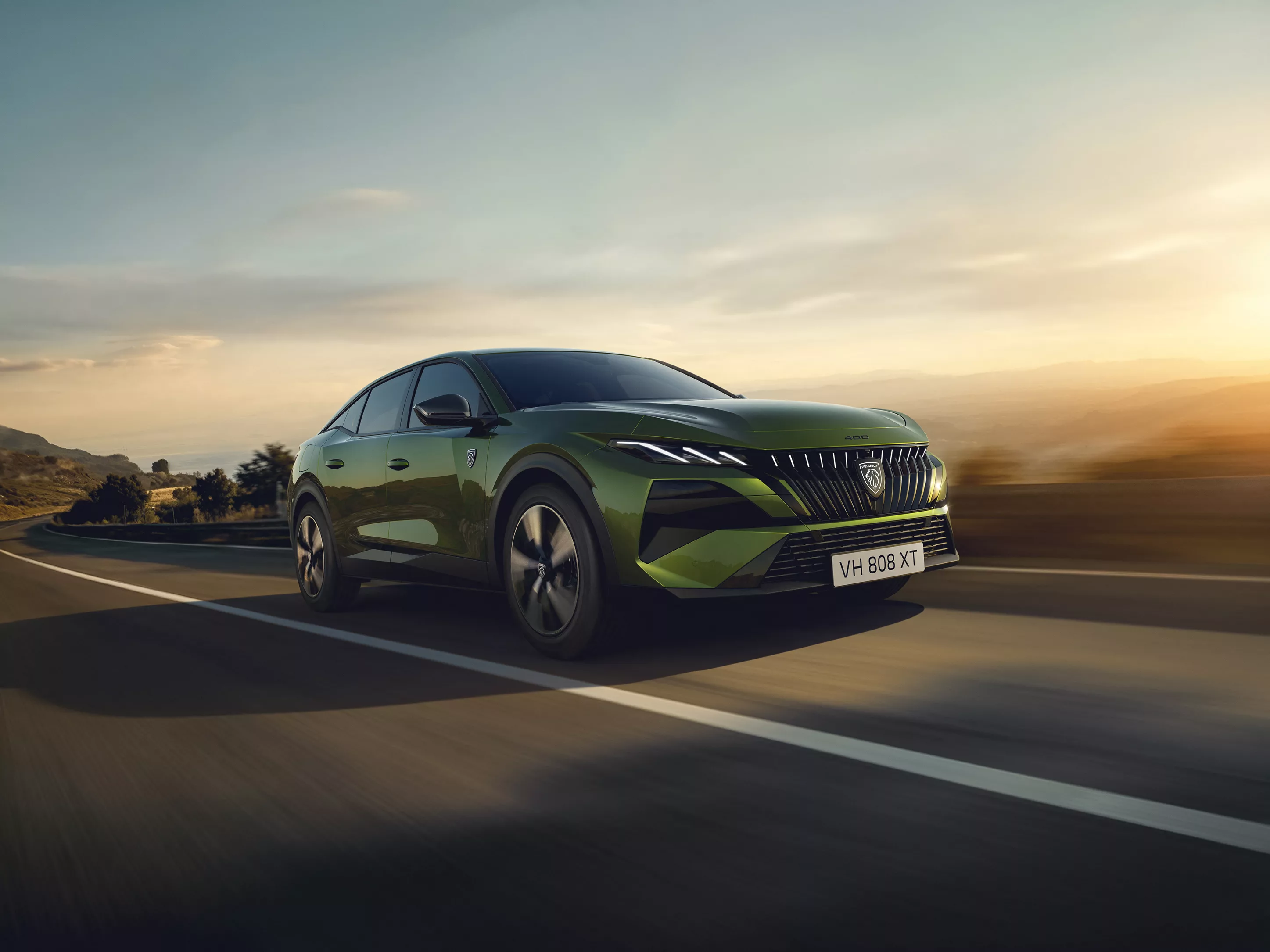
The Peugeot 408’s looks promise more than its 145 hp hybrid powertrain necessarily wants to deliver. A low roofline, long body and sharp lighting details suggest a coupé, but the 536-litre boot, economical powertrain and spacious rear seat belong to a much more practical world. That contrast is precisely what makes the model, updated in 2026, interesting: can striking design be a natural part of a sensible family car, rather than merely a substitute for expensive optional extras?
Peugeot’s distinctive answer to the SUV era
The car industry has reached a point where identifying many models means first checking the name on the tailgate. SUVs with increasingly uniform proportions fill showrooms and sales charts, but leave designers relatively little room to manoeuvre. The Peugeot 408 takes the opposite approach. Almost 4.7 metres long, with a low roof and a large tailgate, it is a car that does not readily fit into any familiar category.
For Peugeot, there is a substantive reason for such a car to exist. The large 508 has left the range, while the 308 and 308 SW fulfil the role of conventional compact cars. The 3008 and 5008 are clearly SUVs. The 408 gives buyers the option of a large, practical passenger car without necessarily having to buy a tall box. It is not a huge niche, but that is precisely why the model need not look like everything else on the road.
The first 408 was unveiled in 2022. It uses Stellantis’s EMP2 V3 platform, with relatives including the Peugeot 308. Sharing a monocoque architecture and technical underpinnings does not make them the same car, however: the 408 received a longer wheelbase, its own body and a different purpose. It is built at the Mulhouse plant in France.
The update unveiled at the start of this year did not introduce a new generation. Peugeot redesigned the front end, revised the lighting signatures, added interior trim options and updated the digital systems. The visual change is noticeable, while the fundamentals underpinning its driving characteristics remain unchanged. Importantly, the engine range no longer includes a petrol-only version without electrical assistance. The Hybrid 145 reviewed here is now the reasonably priced entry point to the 408 range.
Exterior
Looks: uncompromising design, not uncompromising engineering
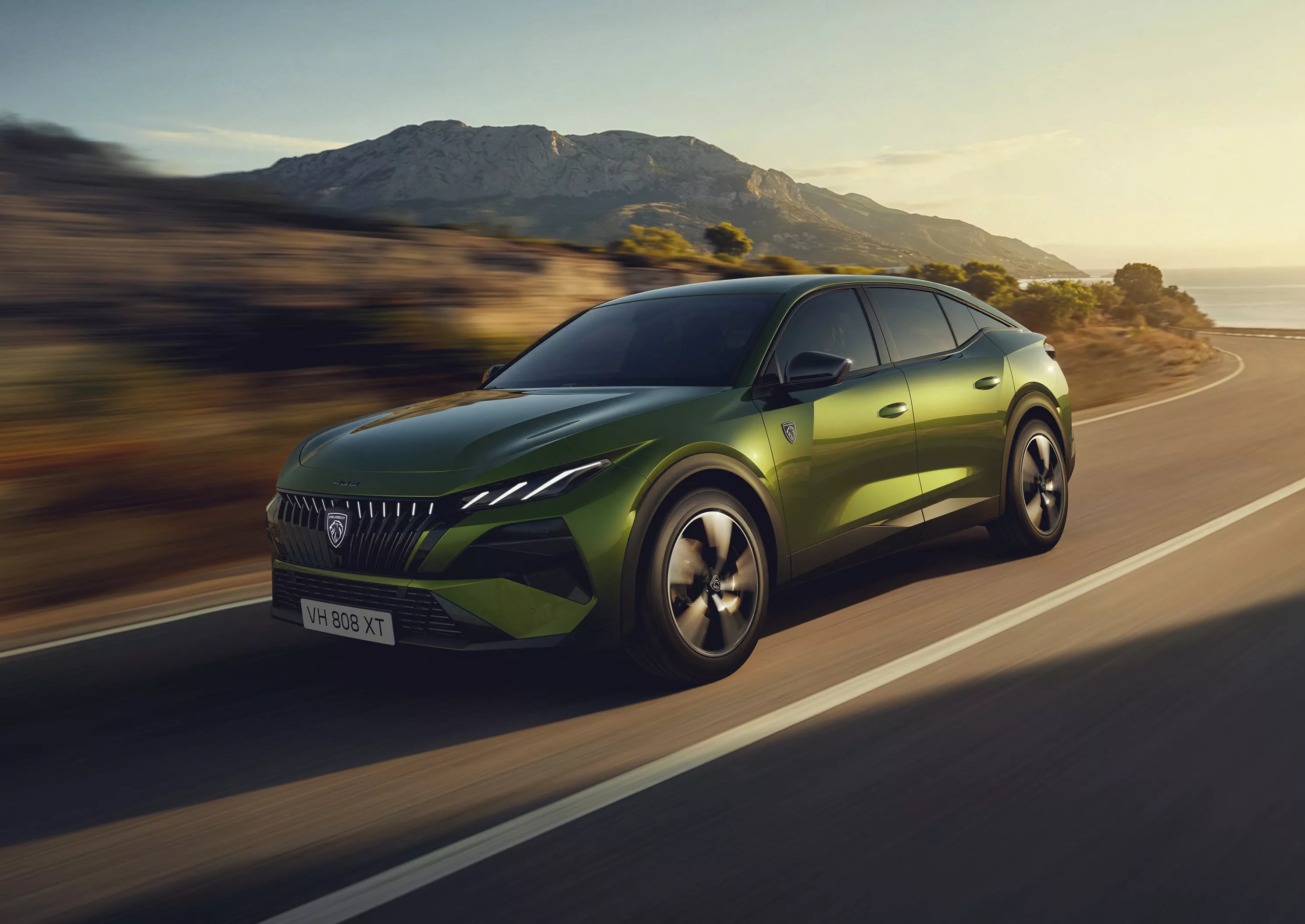
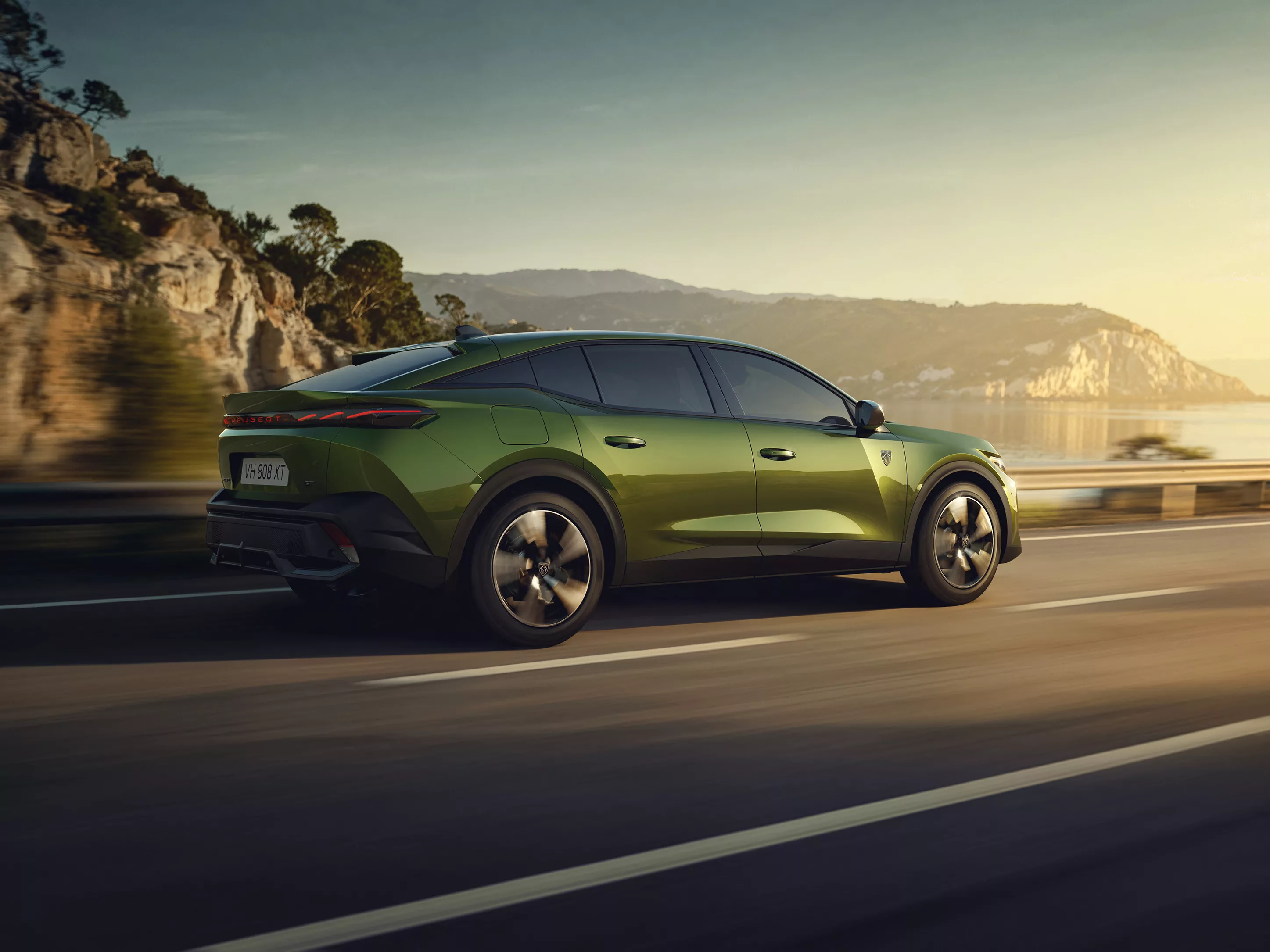
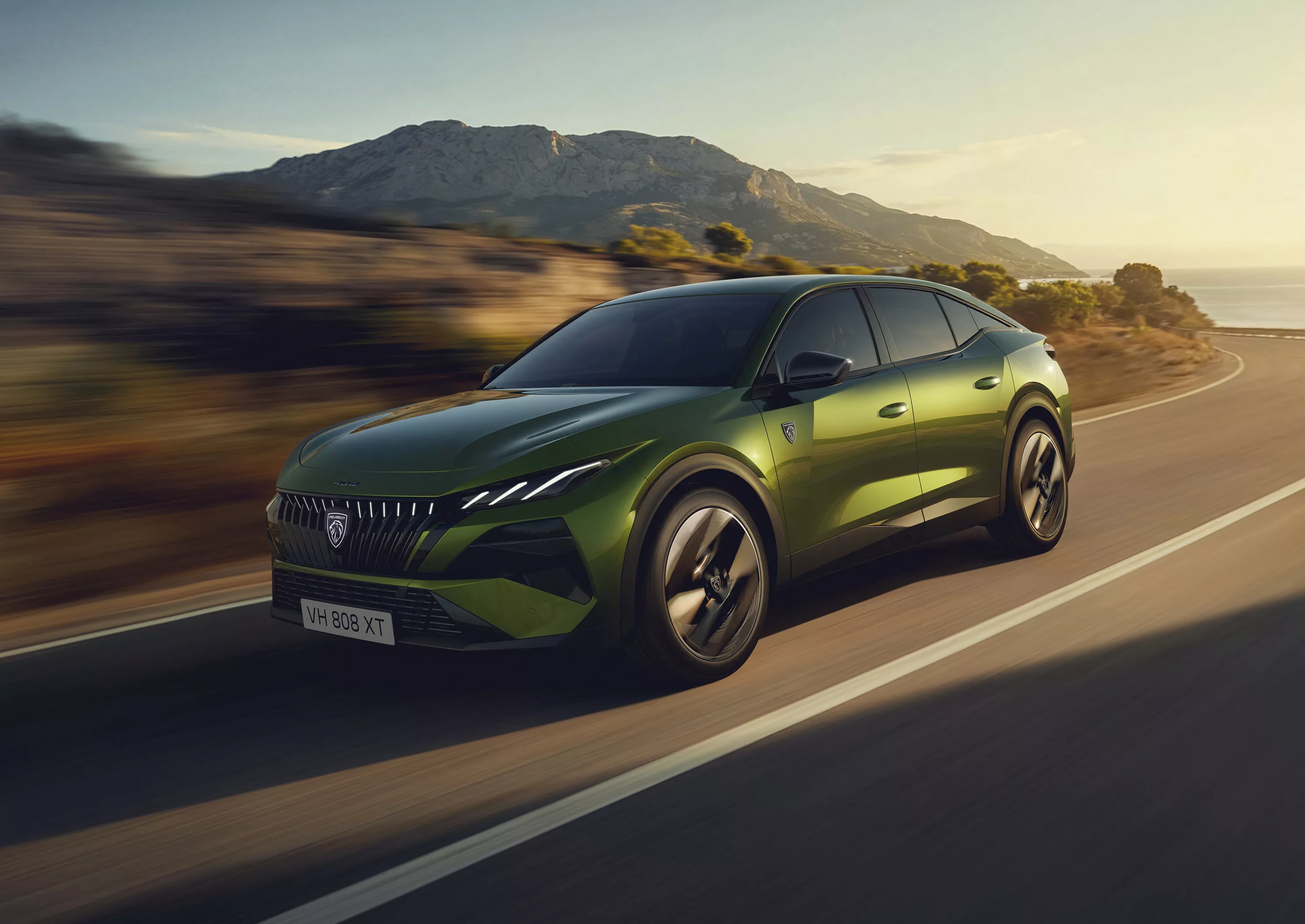
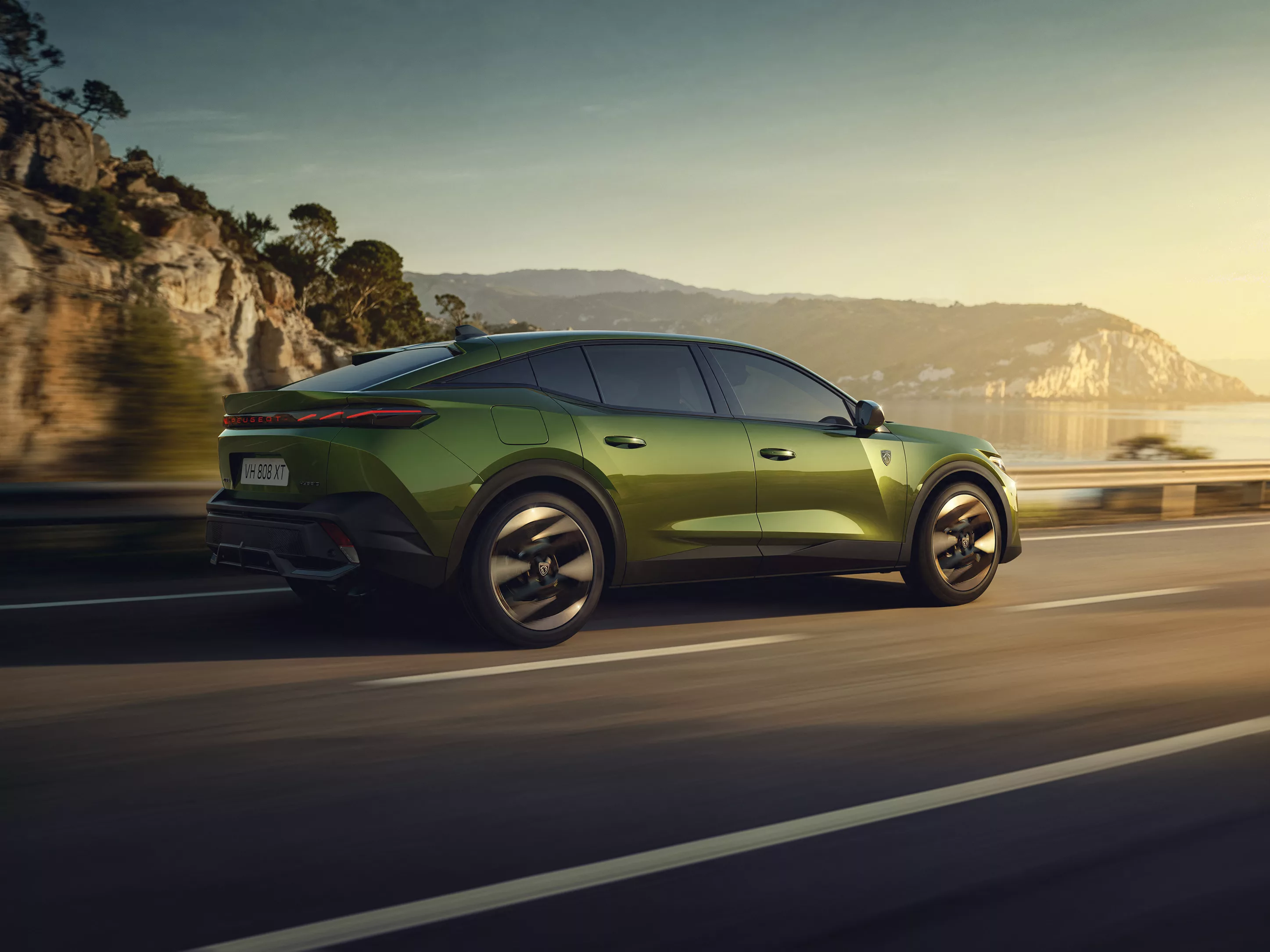
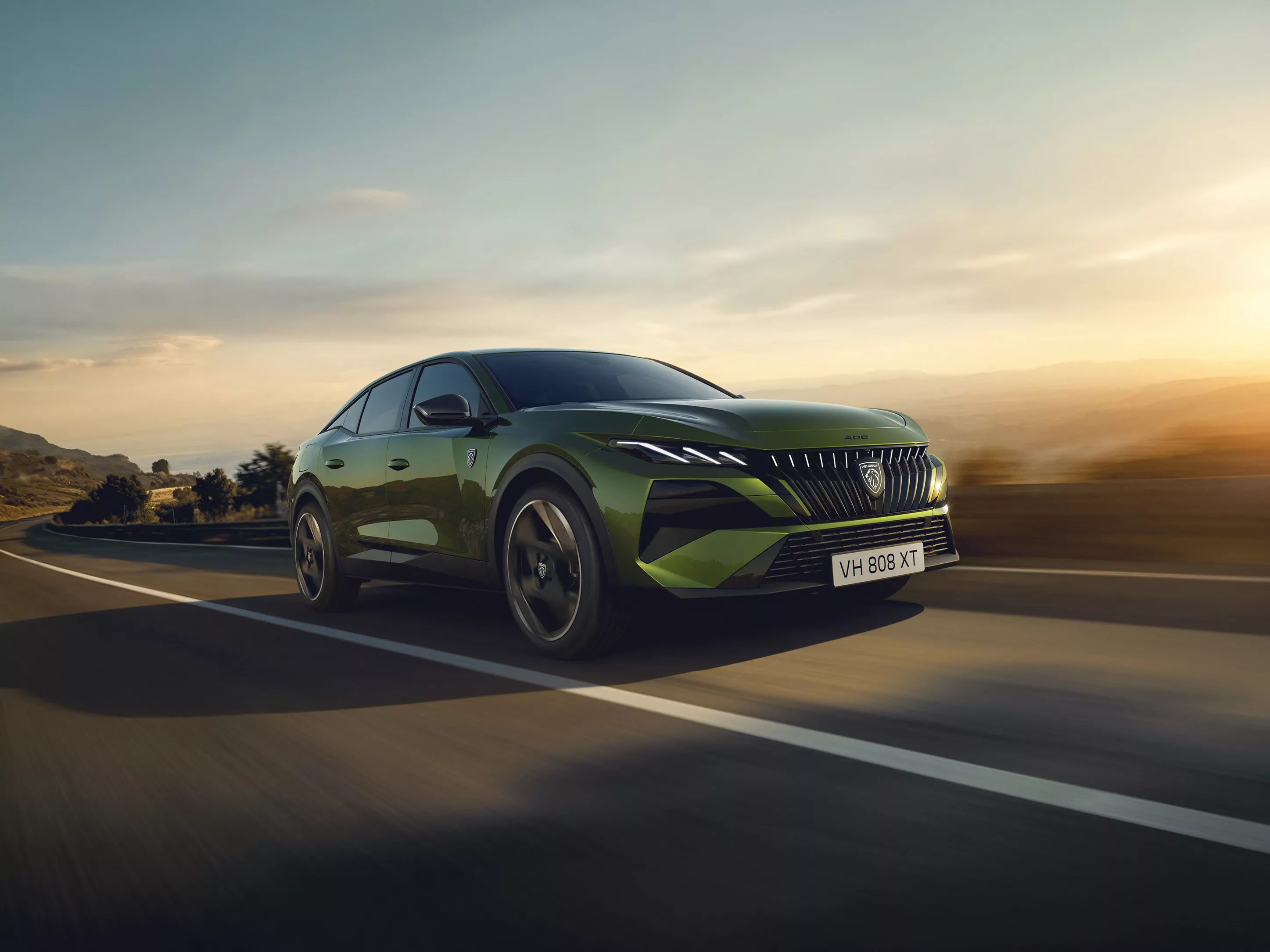
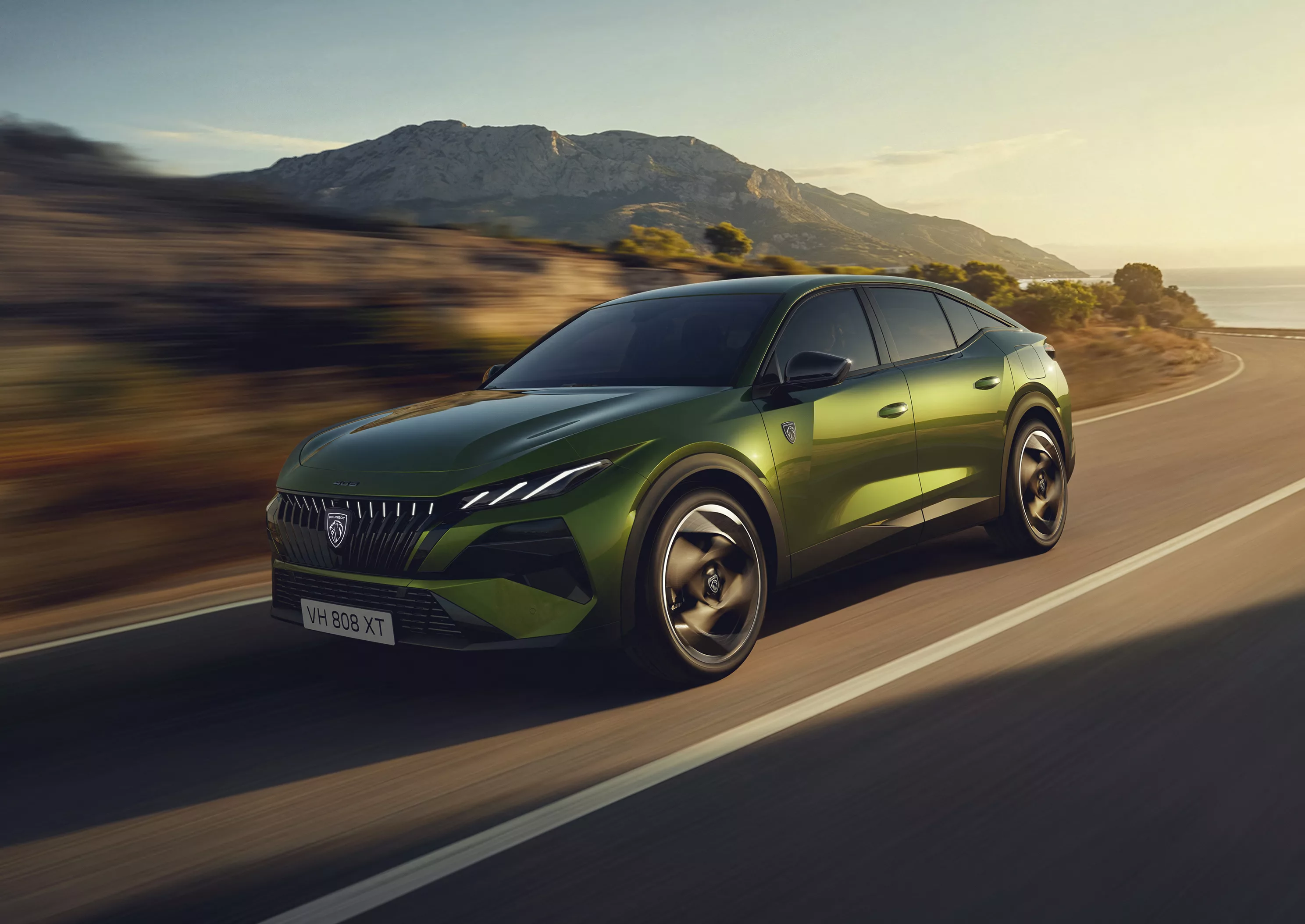
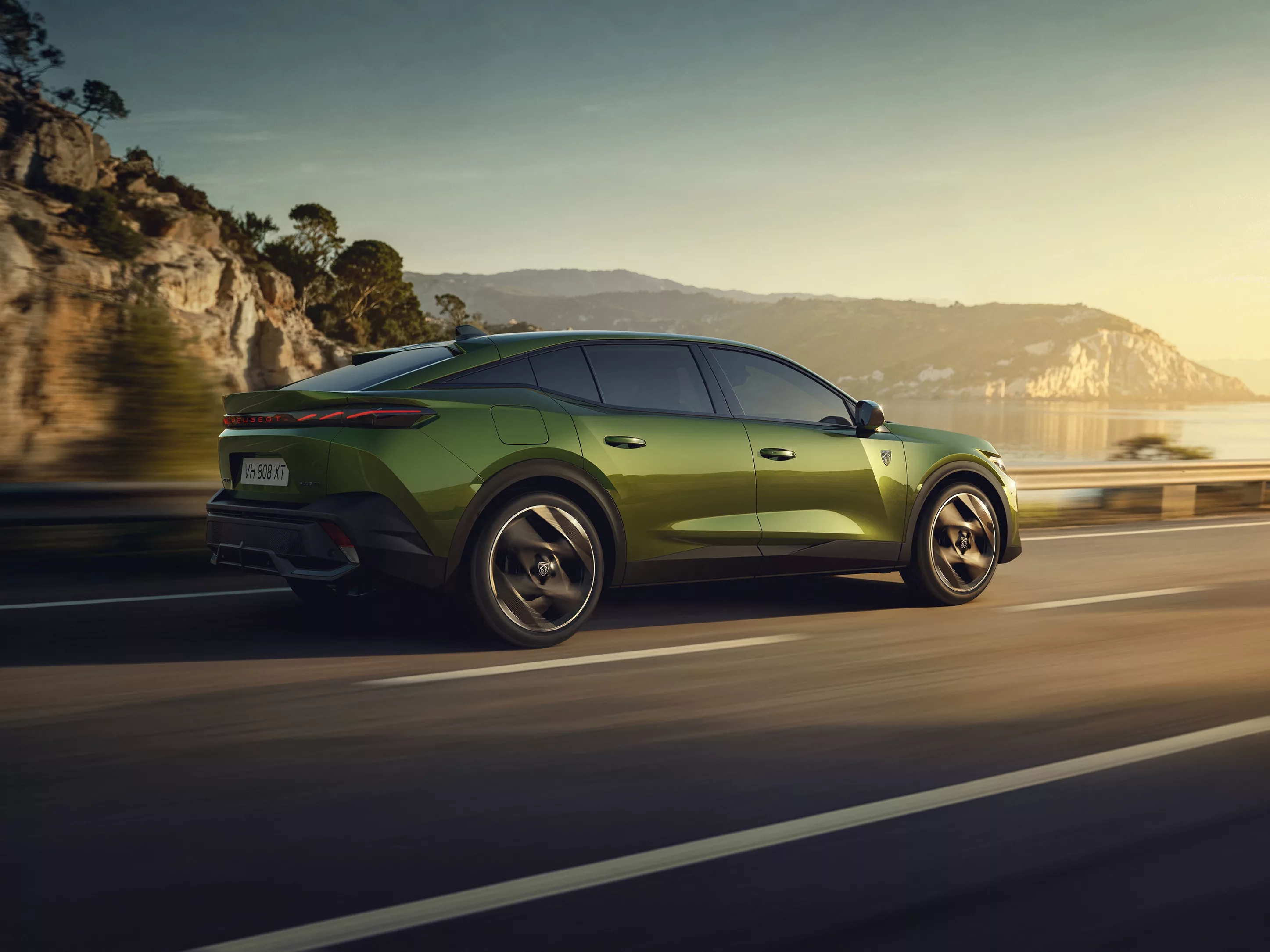
The 408’s greatest design success lies in its proportions. A long bonnet, relatively low roof, high waistline and steeply sloping rear create a silhouette that needs neither contrived spoilers nor garish colours to rescue it. The body measures 4687 mm long, 1848 mm wide and 1485 mm high. The wheelbase stretches to 2787 mm. These are more than catalogue figures: they explain why the car looks longer and lower than its closest relatives might lead you to expect.
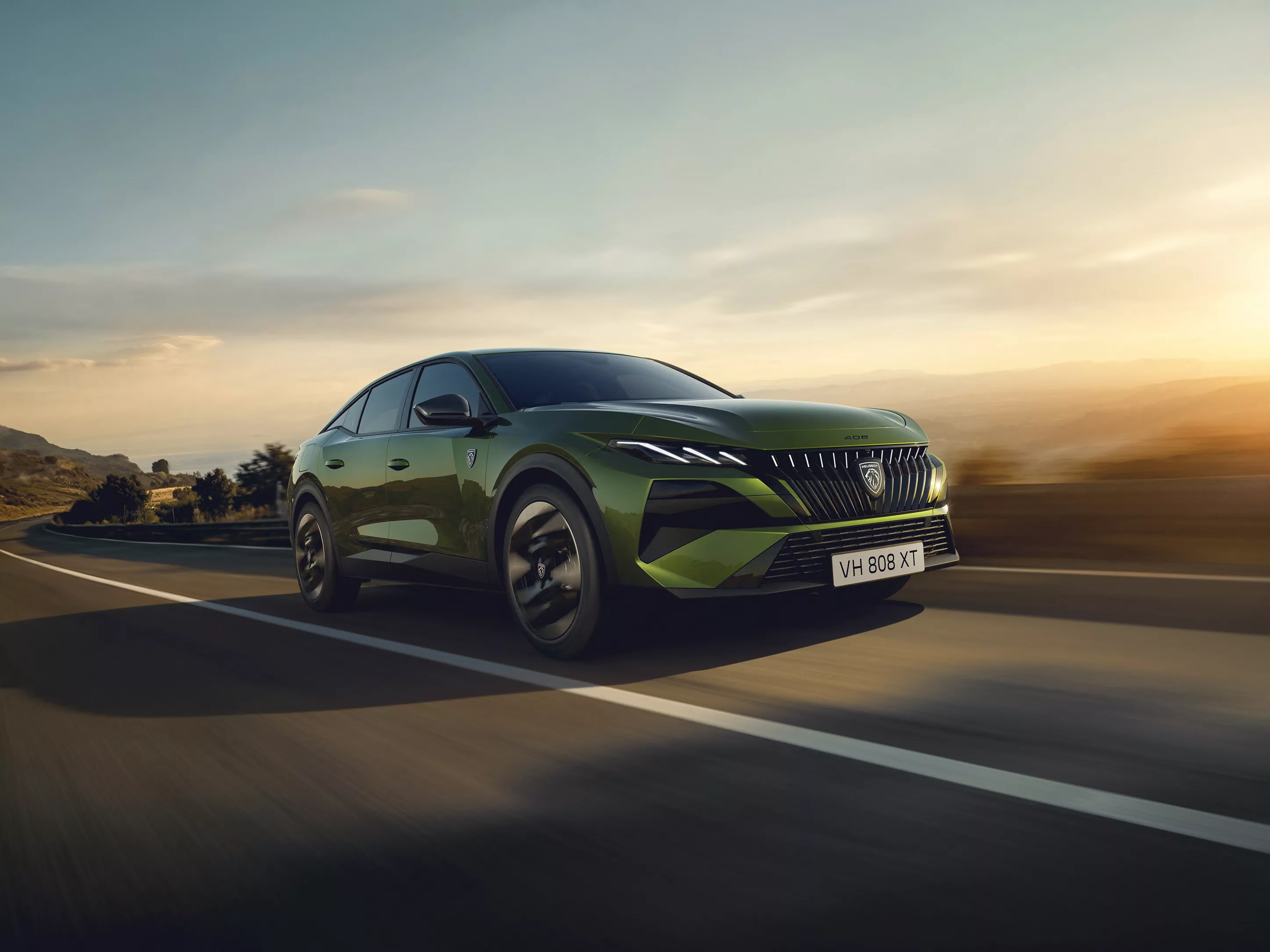
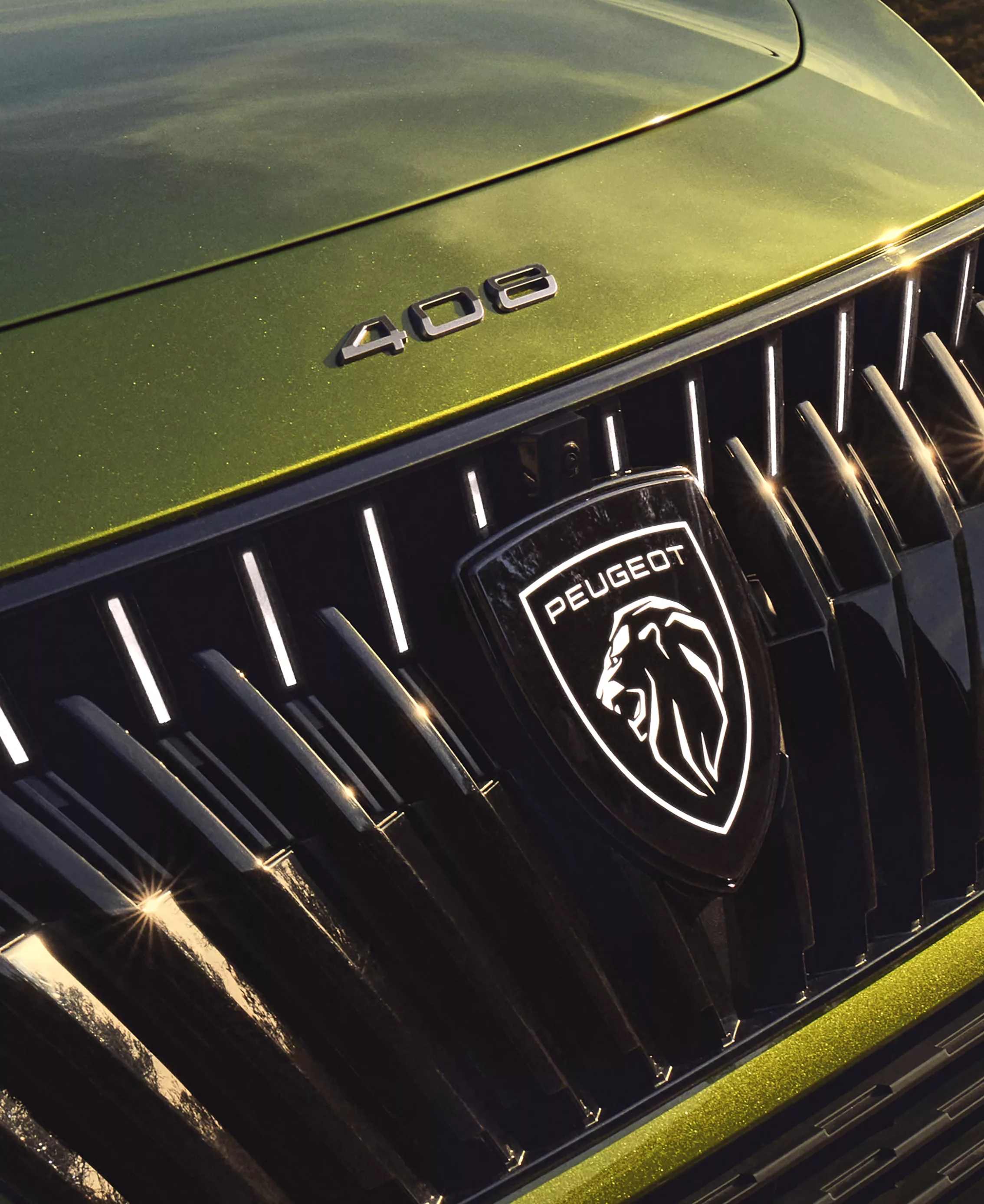
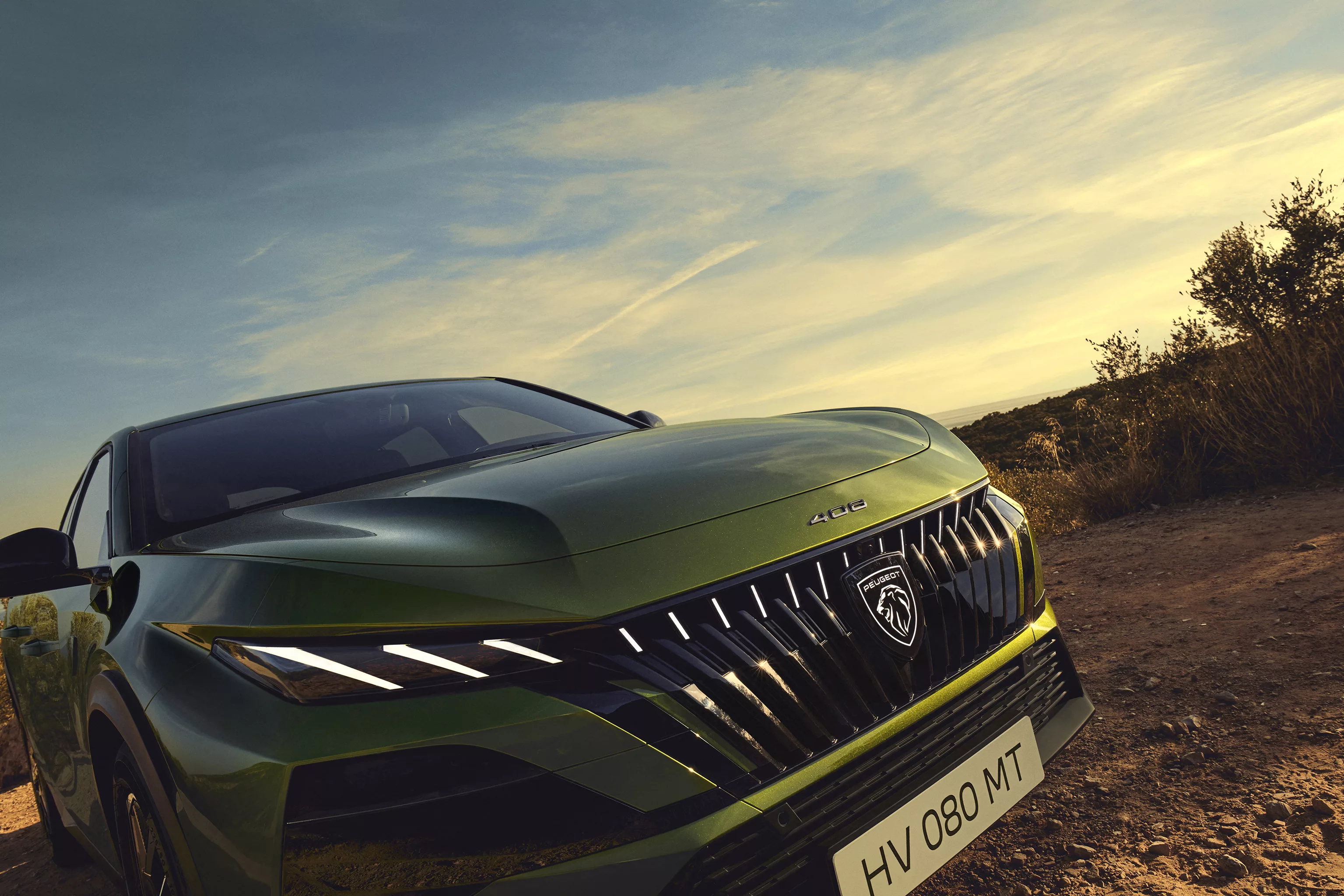
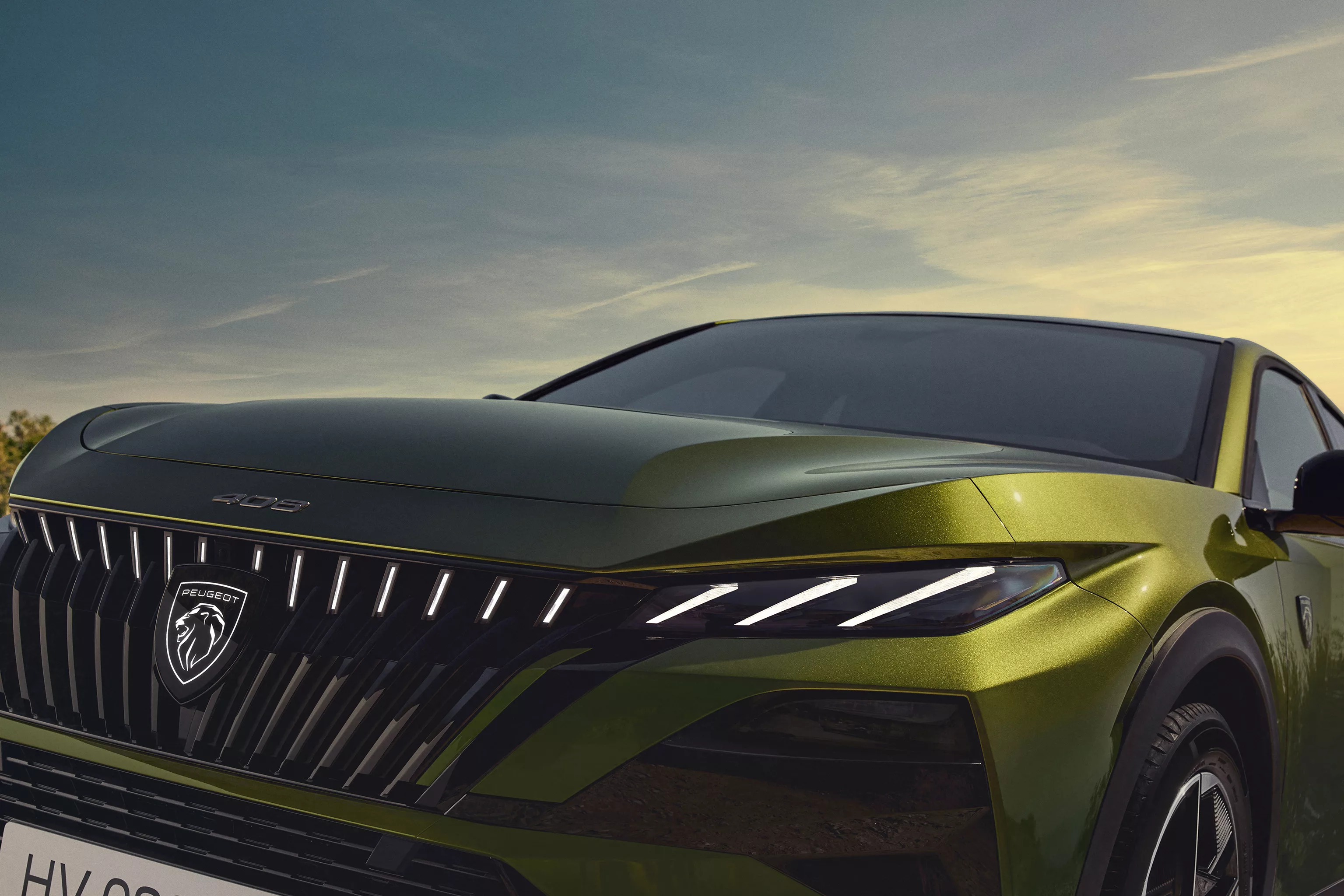
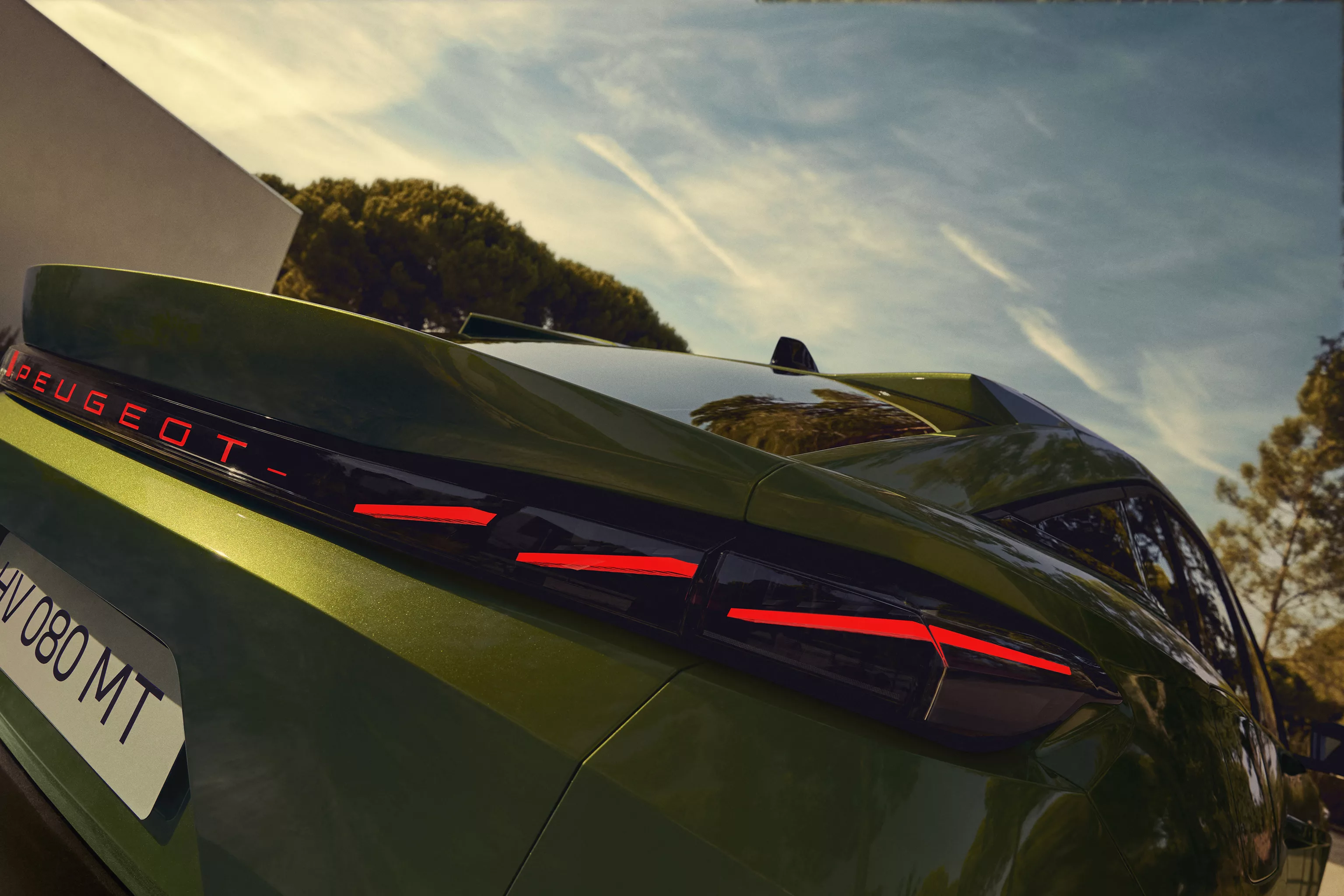
The updated front end features the now-familiar three-claw motif. The daytime running lights form narrow strips of light, the headlights themselves sit lower in the bumper, and the grille plays with gloss and matt surfaces. GT trim adds an illuminated badge and Matrix LED headlights. There is now illuminated PEUGEOT lettering at the rear, too. Its practical effect is limited to visibility and recognition, but at least drivers following in the dark know which brand’s design department has been working overtime.
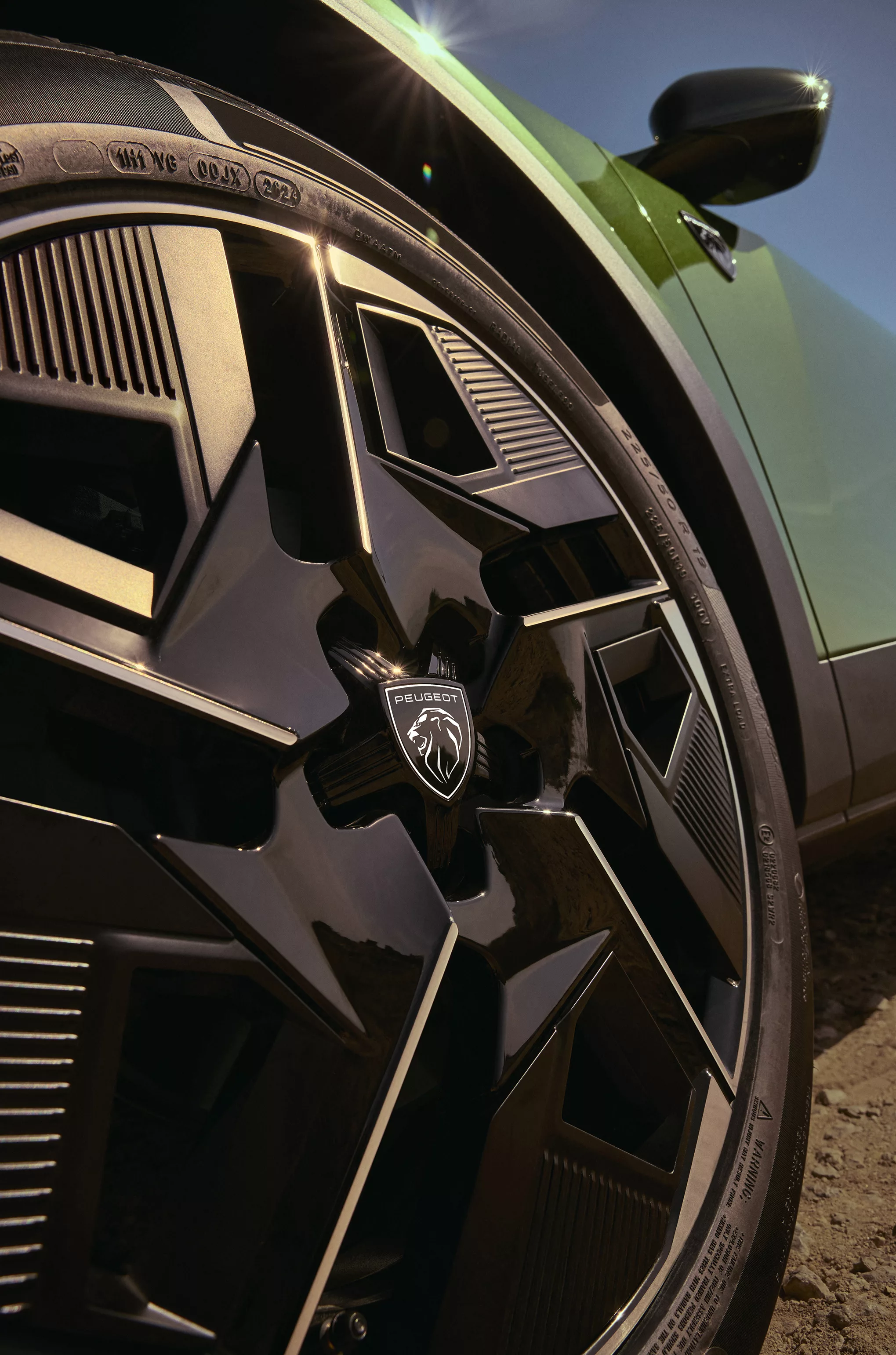
Wheels are one area where buyers might do well to think less about looks and more about engineering. The Hybrid 145 uses 17- or 19-inch wheels, depending on trim. GT is associated with the 19-inch option, which fills the large arches more effectively. Larger wheels do not provide sportiness for free, however: the tyre sidewalls are shallower, leaving less rubber to cushion impacts. If your daily route is full of patches, manhole covers and sharp-edged bumps, the more modest wheel size could be the wiser purchase.
The design also has less photogenic consequences. The rear screen is shallow and sloping, the rear side windows relatively narrow and the rear pillars substantial. Rearward visibility is worse than in a conservatively styled estate. More surprising still is the absence of a rear wiper. Aerodynamics can be given a chance to keep the glass clean, but wet autumns, salty winters and muddy back roads have little regard for a designer’s intentions. The camera and parking sensors help with manoeuvring, but a clean rear window remains a good invention.
Interior
Cabin: small steering wheel, big personality
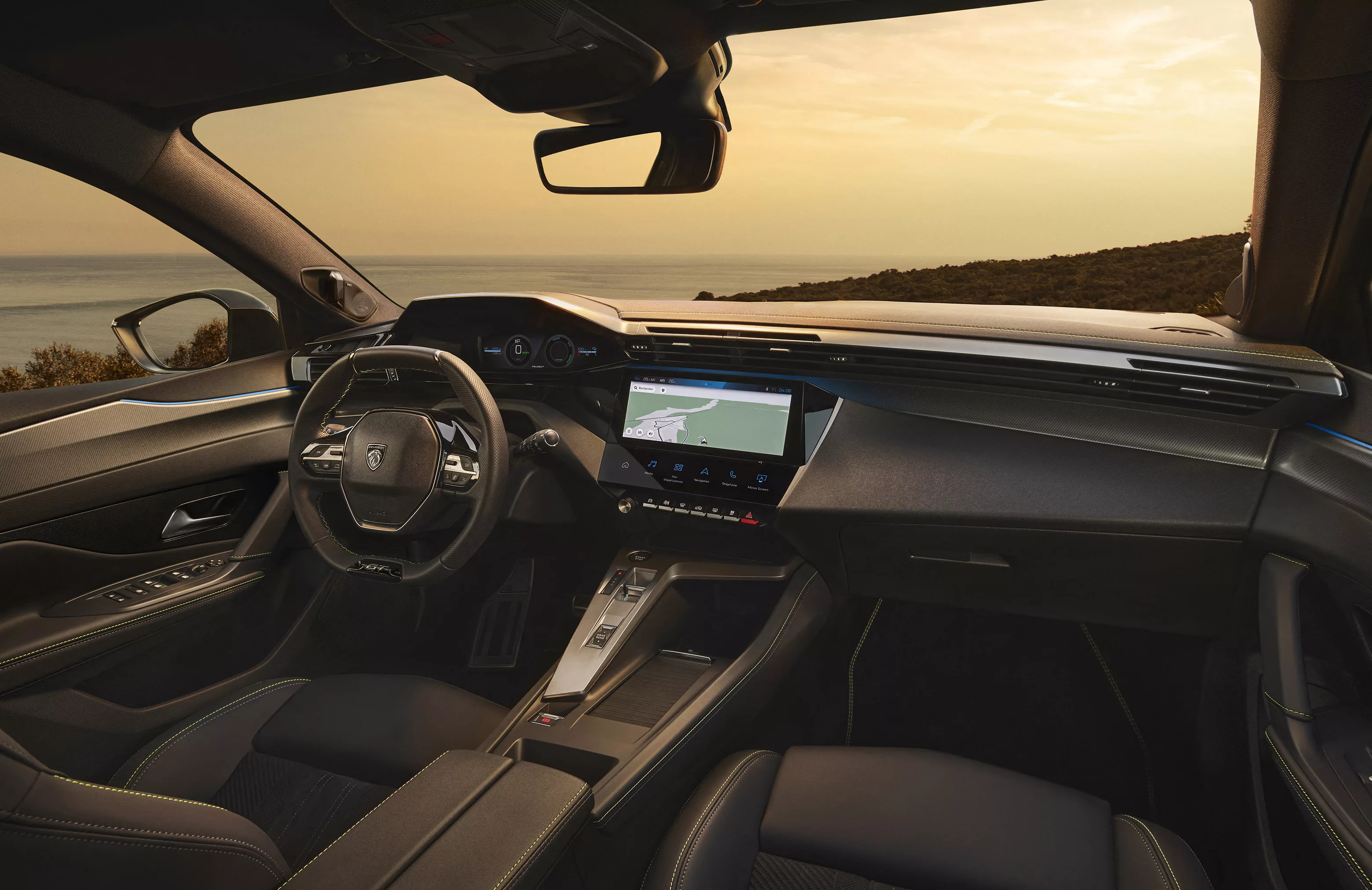
Open the door and the 408 does not suddenly become an ordinary Peugeot. The dashboard is layered, the centre console high, and the driving position built around the i-Cockpit concept. The small steering wheel sits lower than usual, with the instrument display above it. Peugeot has refined this idea for years, but it is not an ergonomic solution that suits everyone. Some drivers find a suitable position immediately; others must choose between having the wheel at the right height and seeing every instrument.
A major strength of the interior design is the variety of materials and surfaces. Quality-looking fabrics, softer touchpoints, metallic-looking details and Alcantara on higher trims give the cabin more character than simply enlarging a screen would. But appearance must be distinguished from years of use: gloss-black surfaces show fingerprints, the high centre console takes up knee room, and fancy stitching does not make hard plastic soft.
Peugeot’s approach to seats is more convincing. Options include AGR-certified ergonomic front seats, with electric adjustment, heating and massage on higher trims. The AGR label indicates an independent assessment of ergonomic design, but does not promise that every back will be happy after a long journey. Adequate thigh support, a broad adjustment range and the ability to sit without stretching your arms to the wheel as though doing morning exercises matter more. The front seats are indeed one of the 408’s strongest features.
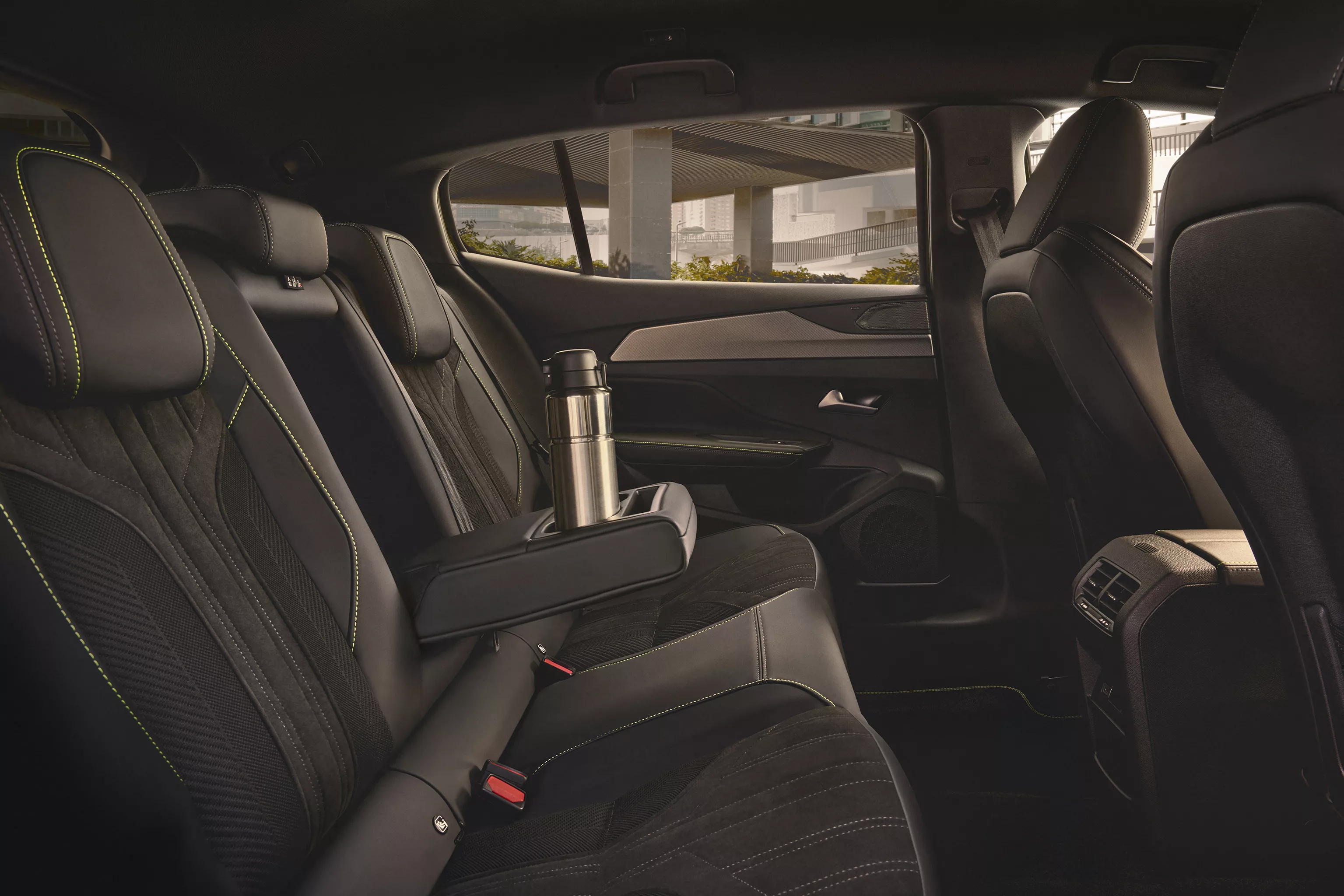
There is a reasonable amount of storage. The centre tunnel accommodates drinks, smaller items and a phone, with additional space beneath the armrest. This is not, however, an electric car with an open floor and room for an entire backpack beneath the console. The deep centre tunnel reinforces the passenger-car feel but limits lateral legroom. The shape of the door pockets and the location of the phone while driving matter more than the total storage capacity advertised by the manufacturer.
Screens are no substitute for intuitive controls
The instrument display and central screen both measure 10 inches. Higher trims use a three-dimensional, layered instrument display, while configurable i-Toggles shortcuts sit beneath the central screen. In theory, it is a clever system: frequently used functions can be brought within a single touch. In practice, the result depends on what the driver needs to do while navigation, phone or music information is on display.
Peugeot retains some physical switches, including for important quick-access functions. That is better than a completely buttonless dashboard, but changing the climate-control temperature still requires the touchscreen. Here, the fashionable cabin becomes a hostage to its own looks. If the driver has to search through on-screen menus because the windscreen is misting up or the cabin is too hot, an expensive-looking display does not solve the problem.
The menu structure also takes some getting used to, and touchscreen responses are not always the quickest in the class. There are, of course, positives too: the image is clear and the system generally runs smoothly. A good infotainment system should reduce the time spent looking away from the road, rather than merely display lots of icons.
Wireless Apple CarPlay and Android Auto help avoid being tied to the manufacturer’s own apps. USB-C connections and, depending on trim, wireless phone charging are sensible equipment for an everyday family car. Navigation, connected services and voice-command capabilities depend on the particular package, and some online services may require a subscription after a free period. This is increasingly common in new cars: you buy the vehicle, but a service package later determines your long-term access to some functions.
The rear seat proves it is more than a styling exercise
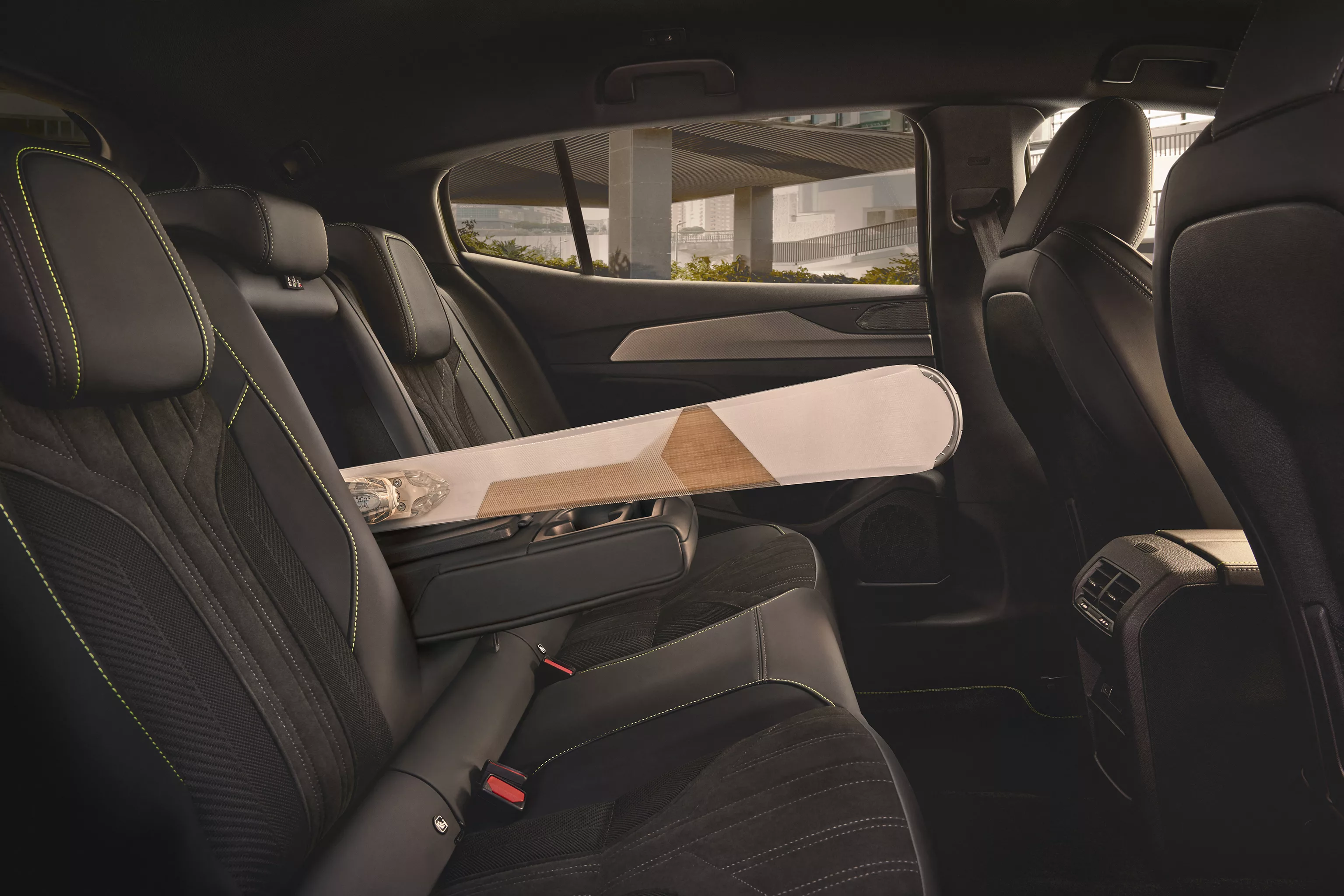
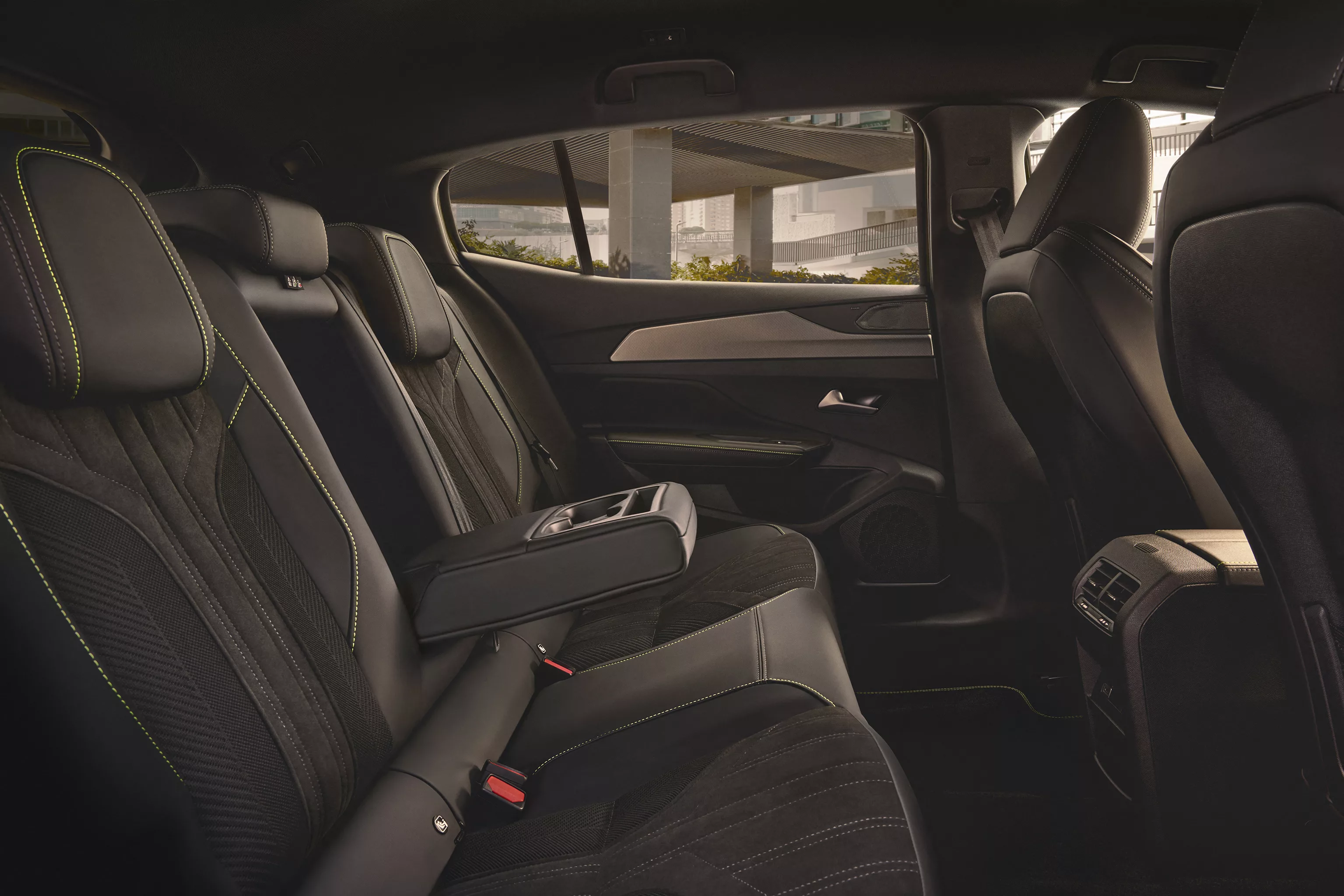
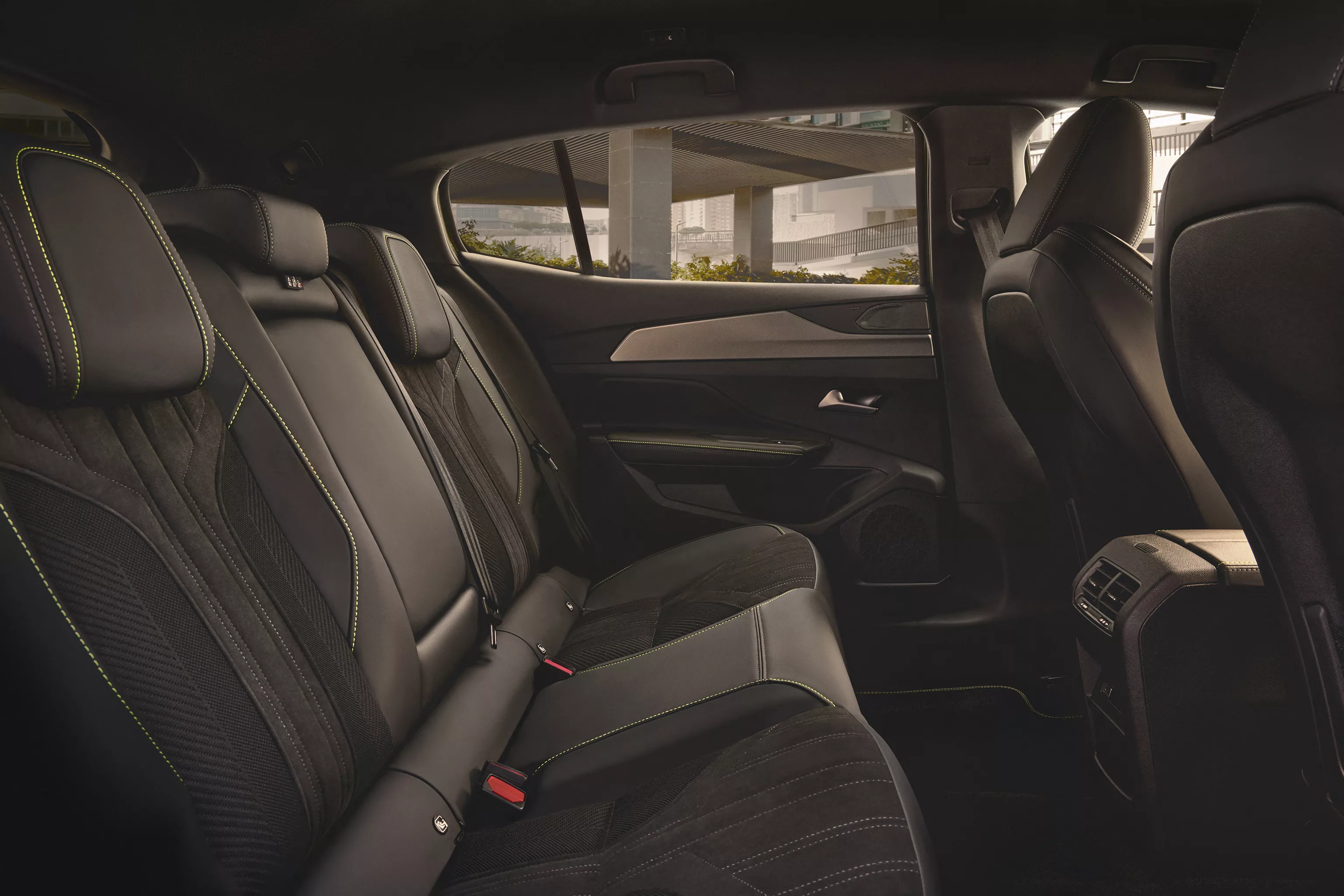
The 408’s most pleasant surprise is not its illuminated logo but its rear-seat space. The wheelbase provides generous knee room, and an adult of average height can sit in the back without the front seatbacks pressing against their lower legs.
The roofline does impose limits, however. The low rear section means very tall passengers need to consider headroom. Getting into the back is also less natural than in an SUV with a tall door opening. You need to bend down when lifting a child into a safety seat, and before buying, it is worth checking both the door opening and the front seat’s adjustment space when fitting a large rear-facing child seat. There are two ISOFIX mounting positions on the outer rear seats, not three fully fledged child-seat positions.
The boot is one of the Hybrid 145’s strongest selling points. With the standard audio system, it holds 536 litres, rising to 1611 litres with the rear seats folded. The whole rear section opens as a large hatch, making loading easier than in a saloon with a separate small boot lid. This is more than a measurement: for a pushchair, suitcase or folding bicycle, a large opening often matters more than the last few dozen litres of theoretical capacity.
Bear in mind, though, that the Focal audio system claims some of the boot space. Top specification does not necessarily mean maximum practicality. Nor do the folded rear seats create a completely level floor, while the low roof limits the loading of tall objects. If carrying a washing machine is the main objective, an estate is still an estate. But everyday shopping, holiday luggage and a pushchair demand no particular sacrifices to the styling here.
Engine and driving characteristics
A small petrol engine with more technology behind it
At the heart of this Hybrid 145 is an HN09-coded 1199 cm³ three-cylinder turbocharged petrol engine. It develops 100 kW, or 136 hp, and 230 Nm of torque. An electric motor operates inside the gearbox housing, with a maximum instantaneous output listed at 21 kW in the manufacturer’s technical specifications. Combined system output is 107 kW, or 145 hp. These figures relate to one another only under the operating conditions defined by the manufacturer; the peak outputs of the combustion engine and electric motor must not simply be added together.
The 6.3 kW figure for the electric component in the registration data is not the same as the manufacturer’s published instantaneous peak of 21 kW. Nor does it mean the car’s system output is 106.3 kW. Hybrid documentation uses differently defined power figures for different purposes. For buyers assessing performance, the relevant figure is the manufacturer’s confirmed 107 kW system output, but the 6.3 kW entry in this particular vehicle’s documents should not be relabelled without knowing its precise measurement definition.
The hybrid system operates on a 48-volt electrical circuit and uses a small lithium-ion battery pack. Its usable energy capacity is 0.43 kWh, with a total capacity of 0.88 kWh. Those numbers are so small that anyone accustomed to electric cars might mistake them for a misprint. In fact, the aim is not to store enough energy to cover tens of kilometres. The battery assists with pulling away, brief electric running, acceleration and recovering braking energy.
This is a non-off-vehicle-charging hybrid electric vehicle, or NOVC-HEV. There is nowhere to plug in a cable, and looking for a charging rate or an electric WLTP range will not yield a meaningful answer. Energy reaches the battery through regenerative braking and, when needed, operation of the petrol engine. Put simply for buyers: the car needs visits to a filling station, but not a charging station. Electrical assistance is a tool for comfort and fuel economy, not an alternative source of long-distance propulsion.
Peugeot says the car can run electrically for up to half the driving time in town. The key word is “time”. This is not a promise that half the distance travelled will be covered without petrol. In urban traffic, the car may stop, creep forward and accelerate repeatedly; these are precisely the situations in which the small electric motor is most useful. At sustained high road speeds, the petrol engine still does most of the work.
An important technical change from earlier Peugeot three-cylinder petrol engines is the HN09’s chain-driven timing system. Problems with the oil-immersed timing belts in older 1.2-litre PureTech engines have prompted justified caution. A chain removes that particular design weakness, but does not automatically prove that the new engine will be trouble-free in the long term. Its true durability will emerge over years and kilometres. Observing service intervals and using the correct lubricant have become no less important.
Six-speed dual-clutch gearbox: a better idea than execution
In theory, this is a convincing combination. The electric motor helps cover the small turbo engine’s delay at low revs, the dual-clutch gearbox selects an appropriate ratio, and the electronics decide when to switch off the engine. In everyday use, such complexity brings one major requirement: all the components must work well together. If the petrol engine starts, the clutch engages and a gear change takes place simultaneously, the driver may feel a slight jolt or an unexpected delay.
With calm, moderate accelerator inputs, progress is generally pleasant, and the electric motor adds sharpness at the start of acceleration. A sudden full-throttle demand can leave the gearbox briefly searching for the right ratio, however, while the three-cylinder petrol engine becomes clearly audible. This is not a technical disaster, but a limit to its refinement that is more noticeable in a car with such a confident exterior.
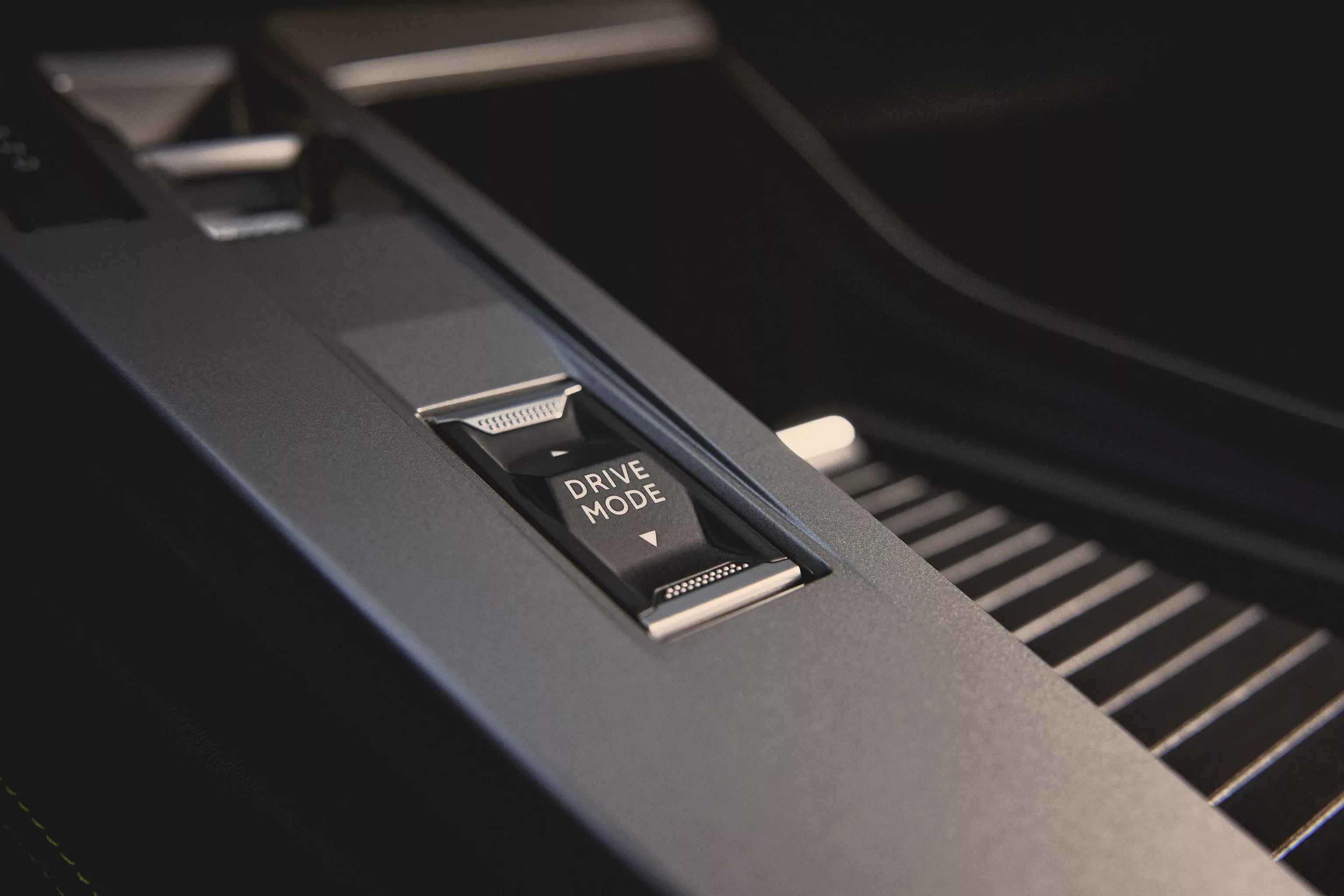
The steering-wheel paddles suit the car’s character, but independent tests suggest they are not always particularly useful: the response between a driver’s command and the actual gear change may not be as immediate as in a sporty dual-clutch car. Sport mode mainly sharpens accelerator response and adds steering weight. It does not rewrite the laws of physics. It makes more sense to let the hybrid get on with its work most of the time and use the available power when it is genuinely needed.
According to the manufacturer, 0–100 km/h takes 9.4 seconds. That is unremarkable for something with four-door coupé looks, but sufficient for an ordinary family car. More important is the 80–120 km/h time of 6.5 seconds, as this better describes overtaking performance than a standing start. Bear in mind, though, that hybrid battery charge, load and gearbox decisions affect the perceived response. This version has a top speed of 207 km/h, but that figure has effectively no everyday relevance and, in the interests of retaining a driving licence, was left untested.
Fuel consumption: where the hybrid starts to justify its price
The manufacturer’s combined WLTP consumption figure for the Hybrid 145 is 5.1 l/100 km. That is a credible starting point, not a guaranteed result. Moderate urban driving and relaxed open-road journeys suit the small hybrid well; faster roads and heavier loads increase consumption. In general, an average of roughly 6.0 l/100 km is a reasonable expectation, with less on gentler stretches and considerably more on faster ones.
Winter cold starts, cabin heating, short trips and studless winter tyres can raise consumption. On longer summer journeys at a steady speed, the modest engine and relatively low body help keep it under control. Expect the least magic during prolonged high-speed driving: opportunities for hybrid regeneration are limited, and aerodynamic drag increases rapidly with speed.
When comparing full hybrids with 48-volt systems, it is important to understand what you are paying for. A more capable full hybrid of the kind offered by Toyota can drive electrically in a wider range of situations and operates its powertrain differently. The Peugeot system’s strengths are its compact design and more modest weight penalty. It provides worthwhile savings without a large battery, charging socket or substantial loss of luggage space. The 408 is not pursuing the ultimate hybrid economy record, and there is no reason to credit it with one.
Chassis: a small steering wheel does not make the suspension sporty
The technical layout is straightforward: MacPherson struts at the front and a torsion beam at the rear. The Hybrid 145 does not get multi-link rear suspension. That does not automatically mean poor handling. A torsion beam is compact, relatively simple and leaves room for the boot structure, but vertical movement at one rear wheel can affect the other more than with an independent multi-link arrangement. The difference becomes especially apparent over successive uneven bumps affecting opposite sides.
At low speeds, the 408 sometimes responds stiffly to small, sharp bumps, which can also be audible. As speed rises, the suspension works more convincingly on smoother roads, keeping body movements calm. This is an important distinction: a car can be comfortable on a long journey without feeling soft and silky on every cobbled street. Versions with large wheels certainly require allowance for the reduced flexibility of their tyre sidewalls.
In corners, the relatively low body helps avoid the excessive roll associated with SUVs. Peugeot’s small steering wheel makes the initial front-end response feel subjectively sharp, but ultimately front-tyre grip and the movement of the car’s mass determine cornering speed. As loads increase, conventional front-wheel-drive understeer arrives: the nose wants to run towards the outside of the bend. This is neither unexpected nor necessarily dangerous; it is a reminder that the aim is secure road manners, not lap times.
The Hybrid 145’s unladen weight is 1463 kg in the manufacturer’s basic technical specifications. Its mass in running order, including the additional load conventionally allowed for, is 1538 kg. Equipment increases that further, but broadly speaking this is a reasonable level in today’s electrified car industry. Lower weight helps with braking, tyre loads and fuel consumption. The car is no featherweight sports coupé, but neither does it carry the large battery pack of a plug-in hybrid or electric car.
The hybrid uses 304 mm front and 268 mm rear brake discs. The small electric motor helps turn some deceleration back into stored energy, but under heavier braking the friction brakes naturally do the work. Blending the two braking methods smoothly is a measure of a hybrid’s quality. Independent tests have included criticism of pedal feel. That is worth taking seriously, because brakes must be predictable even when a driver is moving very slowly in town or wants precise control over coming to a stop.
Speed, noise and genuine long-distance comfort
Cabin noise is not a matter of a single characteristic. Tyre noise depends on the road surface and tyre choice, wind noise on body and window sealing, and engine noise on accelerator position. The laminated front side windows on GT and GT Exclusive versions help reduce external noise. They will not silence the three-cylinder engine when the gearbox has sent it to high revs, but they do make the environment more pleasant at a steady speed.
Nor should towing ability be judged by appearances. The manufacturer permits the Hybrid 145 to tow a braked trailer of up to 1300 kg and an unbraked trailer of up to 750 kg, provided the particular car’s documents confirm this. That is sufficient for many household and leisure tasks, but with a large, heavily laden trailer, the 1.2-litre engine and front-wheel drive are close to their logical limits. Steep climbs, wet ground and a fully loaded car demand more consideration than simply reading the factory’s permitted weight.
Safety systems
Safety electronics: plenty of help, but no immunity
The updated 408’s equipment includes automatic emergency braking, traffic-sign recognition, lane-keeping assistance, driver-attention monitoring and adaptive cruise control. Depending on trim, it adds blind-spot monitoring, rear cross-traffic alert, a 360-degree camera system and Drive Assist Plus with lane-centring assistance. These systems can be genuinely useful in demanding urban traffic and on long road journeys.
Euro NCAP awarded the Peugeot 408 four stars in 2022. Adult occupant protection scored 76%, child occupant protection 84%, vulnerable road-user protection 78% and safety assistance 65%. The rating was based largely on tests of the 308 from the same platform family, supplemented by additional checks for the 408. It was not a separate crash test of the updated 2026 Hybrid 145, so it would be wrong to say that the current model has received a fresh four-star rating.
Four stars are no disgrace, but they do not justify claims of class-leading crash safety. Among other things, Euro NCAP highlighted weaknesses in driver chest protection in a particular frontal collision and shortcomings in assistance-system performance. Families with children should pay attention to the test results rather than reassure themselves that the car has plenty of electronics and a modern lighting signature. Ultimately, safety depends on the body structure, restraint and safety systems, and how effectively they work.
Summary and verdict
Which rivals should the 408 fear?
The 408’s body style makes it difficult to assemble a straightforward line-up of rivals. The Cupra Formentor also offers assertive exterior styling, but is fundamentally more compact and closer to an SUV. Cupra emphasises a sporty, driver-focused impression; Peugeot relies on its long body, rear-seat space and lower silhouette. If driver engagement and compact exterior dimensions are the priorities, the Cupra is worth a look. If you need an adult-friendly rear row and a large tailgate, the 408 becomes more appealing.
The Toyota C-HR Hybrid makes a very different compromise. It is a distinctive, strongly hybrid-focused crossover whose powertrain efficiency and established operating logic are strong arguments in its favour. At the same time, the Toyota’s rear seat and boot are more limited. It better suits buyers who put urban fuel economy and straightforward hybrid operation first. The Peugeot wins on space and long-distance comfort, but cannot promote its 48-volt system as offering equally capable electric driving.
The Renault Arkana E-Tech appeals to a similar buyer: a coupé-like silhouette, an economical hybrid and an approach firmly rooted in practicality. Renault’s hybrid transmission has a different architecture and can make more active use of electric propulsion in town. The 408 counters with a longer wheelbase and a more car-like seating position. For those seeking a comfortable, stylish passenger car, Peugeot’s solution has the more mature touring-car character; if slow urban traffic is the main use, the Renault hybrid is certainly worth trying alongside it.
Perhaps the most meaningful alternative comes from a less dramatic group, however. The Škoda Octavia or Toyota Corolla Touring Sports offer in estate form what Peugeot packages in distinctive styling: rear-seat room, a large boot and moderate fuel consumption. An estate’s square rear end makes better use of space, and rear-window visibility generally involves less drama. The Peugeot’s strength is not absolute practicality, but combining practicality with looks that do not force buyers into yet another dull box.
Price, equipment and what is really worth paying for
The Peugeot 408 GT Hybrid 145 is offered from roughly €35,000. At this price level, buyers are consciously paying for the whole car: looks, cabin quality, technology, space and reasonable running costs. There is no point spending that amount purely for 145 hp, because power is available more cheaply elsewhere. Peugeot must earn its price in other areas.
The GT Hybrid 145 is a balanced choice within the range. Its exterior design gets the lighting and wheels it deserves, the cabin receives a sufficient dose of character, and the driver gets the necessary equipment. The potential comfort compromise of 19-inch wheels remains, but at least there is no need to order a more powerful, more expensive powertrain for the sake of design. If the car is used every day and charging is unavailable, the hybrid is the simplest route into a 408.
New Peugeots are offered with warranty cover of up to eight years or 160,000 km. Buyers should still read the programme’s precise contract, because the standard warranty and extended cover may not be the same thing, and conditions may require adherence to the service schedule. This is especially relevant to the HN09 engine. Chain drive is an important technical advance over the old wet belt, but no warranty advertisement replaces a proper service history and an understanding of the extent of cover.
When assessing total costs, it is worth considering the ownership period. Moderate fuel consumption saves money at every fill-up, but tyres for larger wheels, insurance, servicing and depreciation can have more impact on the budget than a few tenths of a litre per 100 kilometres. If most journeys are urban, more capable full hybrids may cost less in fuel. If more driving takes place on open roads and the 408’s comfortable cabin and size are valued, Peugeot’s offering becomes considerably more convincing.
Pros and cons
Pros
Distinctive proportions and successful 2026 lighting signatures.
Very good rear knee room considering the low roof.
A 536-litre boot and a practical large tailgate.
An economical hybrid powertrain that requires no external charging.
Comfortable front seats and extensive ergonomic features on higher trims.
Precise-feeling changes of direction and composed open-road progress.
A strong combination of lighting, seats and driver assistance in GT trim.
Cons
Three-cylinder engine noise and occasional gearbox indecision.
The suspension can react stiffly to sharp bumps at low speeds.
The i-Cockpit steering-wheel and instrument layout does not suit everyone.
Climate-control temperature adjustment relies on the touchscreen.
Limited rearward visibility and no rear wiper.
Large wheels can reduce comfort on poor road surfaces.
Four Euro NCAP stars and a middling safety-assistance score.
Sporty looks are not matched by equally sporty acceleration.
Final verdict: can the marriage of style and sense last?
The Peugeot 408 Hybrid 145’s value does not lie in any single technical marvel. It is not the most powerful, most economical or most spacious car available for similar money. Its strength is the complete package: a long, low body, a genuinely usable rear seat, a large boot, a decent cabin and a sufficiently powerful hybrid powertrain that does not require the driver to change charging habits. The car looks as though it wants to argue with the entire motor industry, yet behaves mostly like a sensible family car.
The greatest risk of disappointment lies in buyers’ expectations. If the 408 is chosen solely for its eye-catching profile, its 9.4-second acceleration, gearbox hesitation and three-cylinder soundtrack may feel underwhelming. But if the aim is a passenger car with a good rear seat and boot that does not look like another SUV, the powertrain proves appropriately restrained instead. Economy and everyday ease of use outweigh the absence of independent multi-link rear suspension.
The Hybrid 145 is best recommended to drivers who mix urban and open-road journeys, value distinctive looks and do not want to deal with charging a plug-in hybrid. It suits families who need a comfortable rear seat and a large boot but do not require the generous door opening of a tall SUV. It is not recommended for anyone whose top priorities are maximum performance, completely intuitive controls, an entirely soft ride or the easiest possible rearward visibility.
Overall, the Peugeot 408 Hybrid 145 is a better family car than its dramatic looks suggest, but a more ordinary car than those same looks would have you believe. You do not need to consider yourself a design fanatic to buy one. It is enough not to want to pay for practicality with dull looks.


