
Tesla is developing laser windshield cleaning, but wipers are not being retired just yet
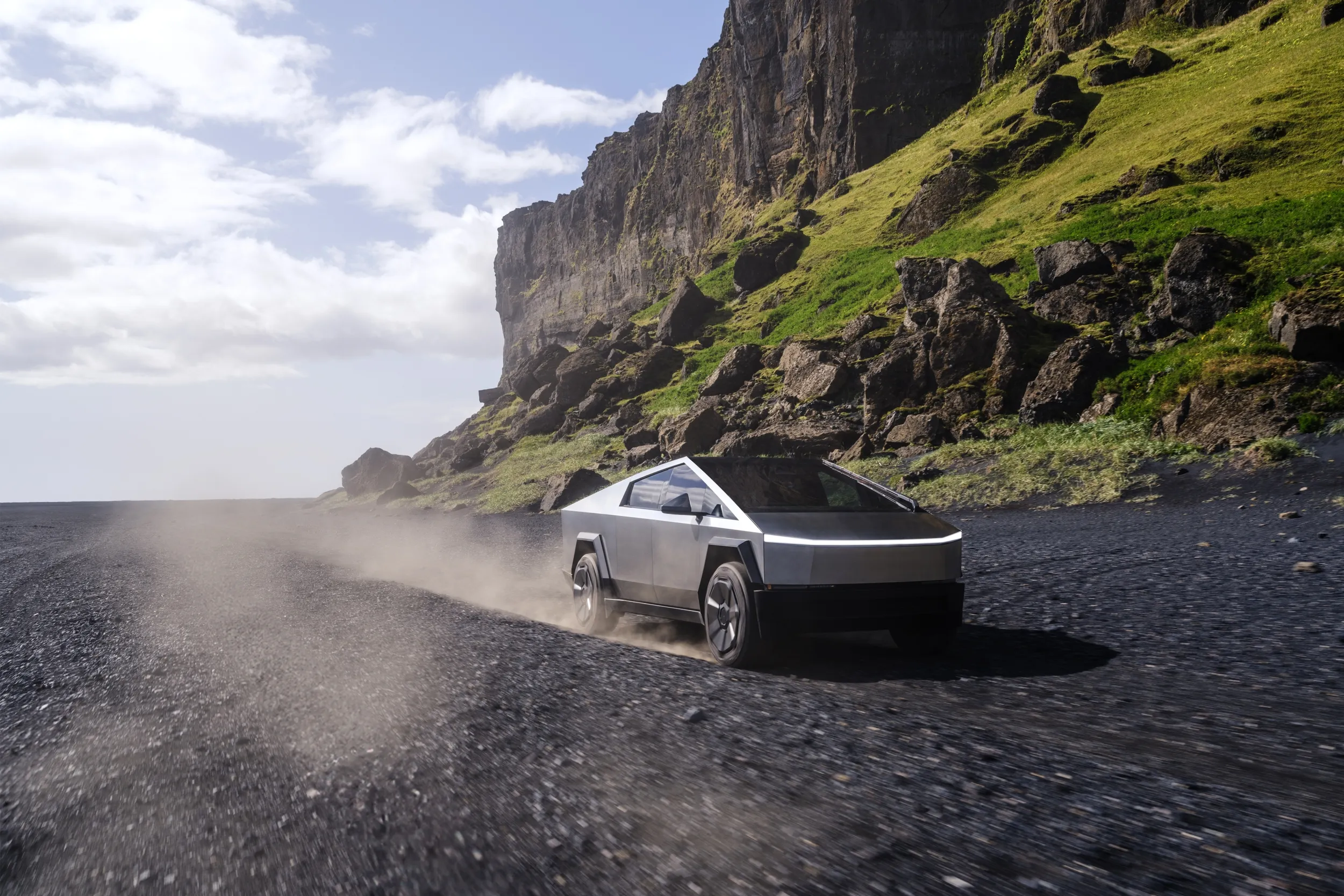
Tesla is continuing to patent a long-standing idea of replacing at least part of conventional windshield cleaning with lasers. The system would detect dirt on the glass and direct short laser pulses at it to remove, for example, insect remains and other debris without a wiper blade or washer fluid.
It may sound like a solution for the Cybertruck’s enormous wiper, but Tesla has not got that far yet. This is a patent, and the company has not confirmed its introduction on any production vehicle.
Cameras detect dirt, the laser removes it
The system described by Tesla combines dirt detection, optics, a laser and a control unit. It first identifies the area of the glass that requires cleaning and then calibrates the laser pulse accordingly.
The most important aspect concerns the laser’s penetration depth. The control unit must limit the pulse so that the energy affects dirt on the surface but does not penetrate the glass. Tesla envisages using the solution on both automotive glass and photovoltaic panels.
The latest patent application, US 2026/0257648 A1, was filed on 23 January and published on 3 September 2026. It continues the same patent family whose roots date back to 2018.
The idea is far from new
An earlier application for the same technology was filed in 2021, and US patent US12589715B2 was granted on 31 March 2026. Its priority date goes back to 16 May 2018.
The new document therefore suggests that Tesla is continuing to protect and develop its intellectual property, rather than that a vehicle with laser cleaning is about to enter production.
Clean glass is critical for an autonomous vehicle
The laser solution could potentially have greater value than simply eliminating a conventional wiper. Camera-based driver-assistance systems need a consistently clear field of view, and mud, insects or other dirt can limit a camera’s ability to function.
Tesla’s current maintenance manual also clearly shows how far the laser solution is from series production at present. The company still instructs owners to clean the glass in front of the front camera with glass cleaner and to inspect and clean conventional wipers.
In theory, a laser could offer contactless, highly precisely targeted cleaning specifically within the field of view of sensors. In a European winter, however, a much more difficult question arises: how would the system cope with heavy snow, ice, salt water and a layer of mud? The existence of a patent does not yet prove that a laser could replace a conventional wiper in all real-world situations.
A patent is not a production plan
The automotive industry constantly patents technologies, many of which never make it onto a production vehicle. Tesla’s laser cleaning currently falls squarely into that category.
Technically, the idea is interesting, particularly for cleaning cameras and other optical sensors. As a complete replacement for wipers, however, the laser would have to solve a far more unpleasant problem than a single insect on a windshield.
Against Nordic slush, the old rubber blade remains a tough competitor for now.


