
Volkswagen ID. Polo hits the sweet spot as sub-€25,000 EV sells out for 10 months
 1/36
1/36 


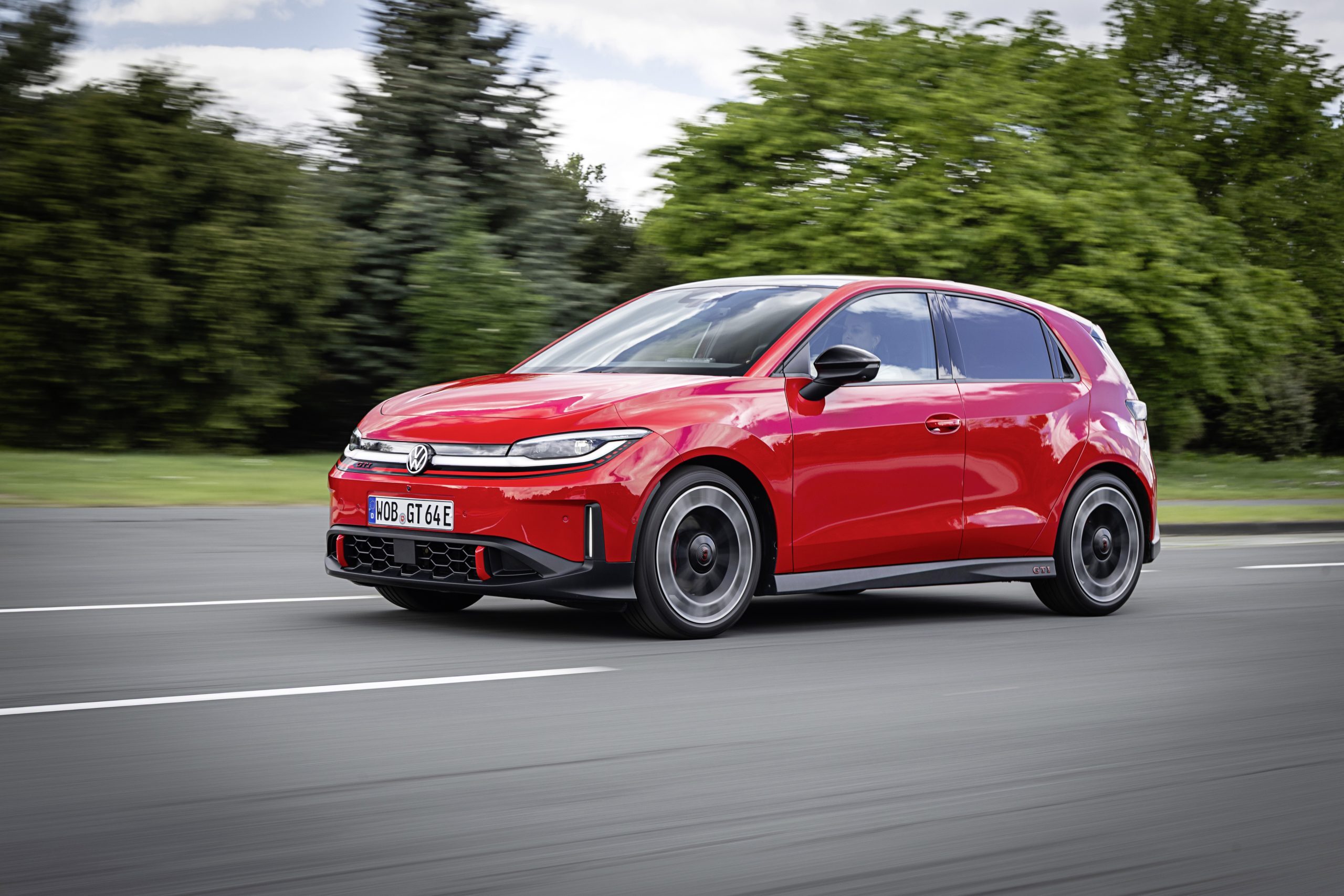
Volkswagen’s new ID. Polo was meant to prove that the affordable European electric car is not dead. Early sales figures provide strong support for that claim: more than 30,000 orders have been placed across Europe, and buyers ordering a freely configured car must currently expect to wait at least 10 months. Some customers have not yet even seen the ID. Polo in person.
Orders exceeded the production capacity Volkswagen had allocated
According to German publication Automobilwoche, demand for the ID. Polo has exceeded Volkswagen’s initial expectations, particularly in Germany. The head of a major Volkswagen dealer group described the situation clearly: the entire ID. Polo range is effectively sold out, while delivery times for individually configured cars extend to at least 10 months. Volkswagen confirmed to the publication that more than 30,000 orders for the ID. Polo have been placed in Europe.
The issue is not a lack of cars, but a sharp mismatch between production capacity and demand. Volkswagen builds the ID. Polo alongside the Cupra Raval at its Martorell plant in Spain, where series production of the electric cars began this year. Volkswagen says it is increasing production capacity gradually, but a production plan established over the long term cannot simply be rewritten within a few weeks.
Buyers willing to forgo a configuration tailored precisely to their preferences may receive their cars sooner. Pre-configured vehicles allocated to dealers can meet part of the demand without a queue of nearly a year.
€24,995 changed the game
There is no need to look for any mysterious enthusiasm for electric cars behind the ID. Polo’s success. Volkswagen has simply reached a price point at which an EV again becomes a rationally attractive proposition for European B-segment buyers.
In Germany, the ID. Polo Trend is priced from €24,995. This version has a battery with 37 kWh of usable capacity and an 85 kW electric motor. Volkswagen claims a WLTP range of up to 334 km on a single charge, while DC fast charging from 10 to 80 percent takes around 23 minutes. A 99 kW version is also available.
The larger 52 kWh battery increases range to up to 454 km, while the electric motor in the more powerful version delivers 155 kW. Volkswagen’s official combined energy consumption is approximately 13.3-14.8 kWh/100 km, depending on the version.
That means the ID. Polo is not simply a city car with a cheap battery and a small motor. An electric car in the four-metre class is already a fully usable main car, especially with the 52 kWh battery.
Volkswagen has found the sweet spot in Europe’s EV market
More importantly, the Polo is not an isolated success. Volkswagen Group announced as early as July that the Electric Urban Car Family built around the ID. Polo, Škoda Epiq and Cupra Raval had accumulated more than 70,000 orders. The group’s EV order volume in Europe rose by more than 50 percent in the second quarter.
According to Automobilwoche, orders for the Škoda Epiq now exceed 35,000, while the Cupra Raval is also sold out for several months. This makes the situation both welcome and uncomfortable for Volkswagen. The group has proved that Europeans do want electric cars when price, size and range finally align. Now it has to build them.
This is also important in competition with Chinese manufacturers. At the lower end of the European EV market, Volkswagen is no longer forced to respond solely with the more expensive ID.3 and ID.4 models. Starting below €25,000, the ID. Polo targets a segment where price has a far sharper influence on purchase decisions and where BYD and other Chinese manufacturers, for example, are hoping to grow volume rapidly in Europe.
Volkswagen also has an old but still valuable weapon: the Polo name. More than 20 million examples of previous Polo generations have been sold, and with its electric successor the company does not need to explain a new model name to buyers from scratch.
The technology has not been stripped bare in the name of a low price
The ID. Polo uses the further-developed MEB+ platform and front-wheel drive. Volkswagen offers the model with 37 and 52 kWh batteries and outputs of 85, 99 and 155 kW. A 166 kW ID. Polo GTI will be added later. Top speed for the standard versions is 160 km/h.
The importance of the MEB+ architecture extends beyond a single Polo. Volkswagen is using the same technical foundation to create an entire family of more affordable electric cars. The more components the Polo, Raval, Epiq and ID. Cross share, the more realistic it becomes to maintain the €25,000 price threshold while manufacturing in Europe.
However, the current 10-month queue shows the other side of this strategy. Designing a competitive EV alone is not enough. If a customer can get an equivalent rival within a few weeks or months, a year-long delivery time quickly becomes an obstacle to sales.
Volkswagen therefore has an unusually welcome problem: it does not need to push the ID. Polo into the market, but produce it quickly enough.


