
XPeng consolidates development into two product lines, without reducing model range
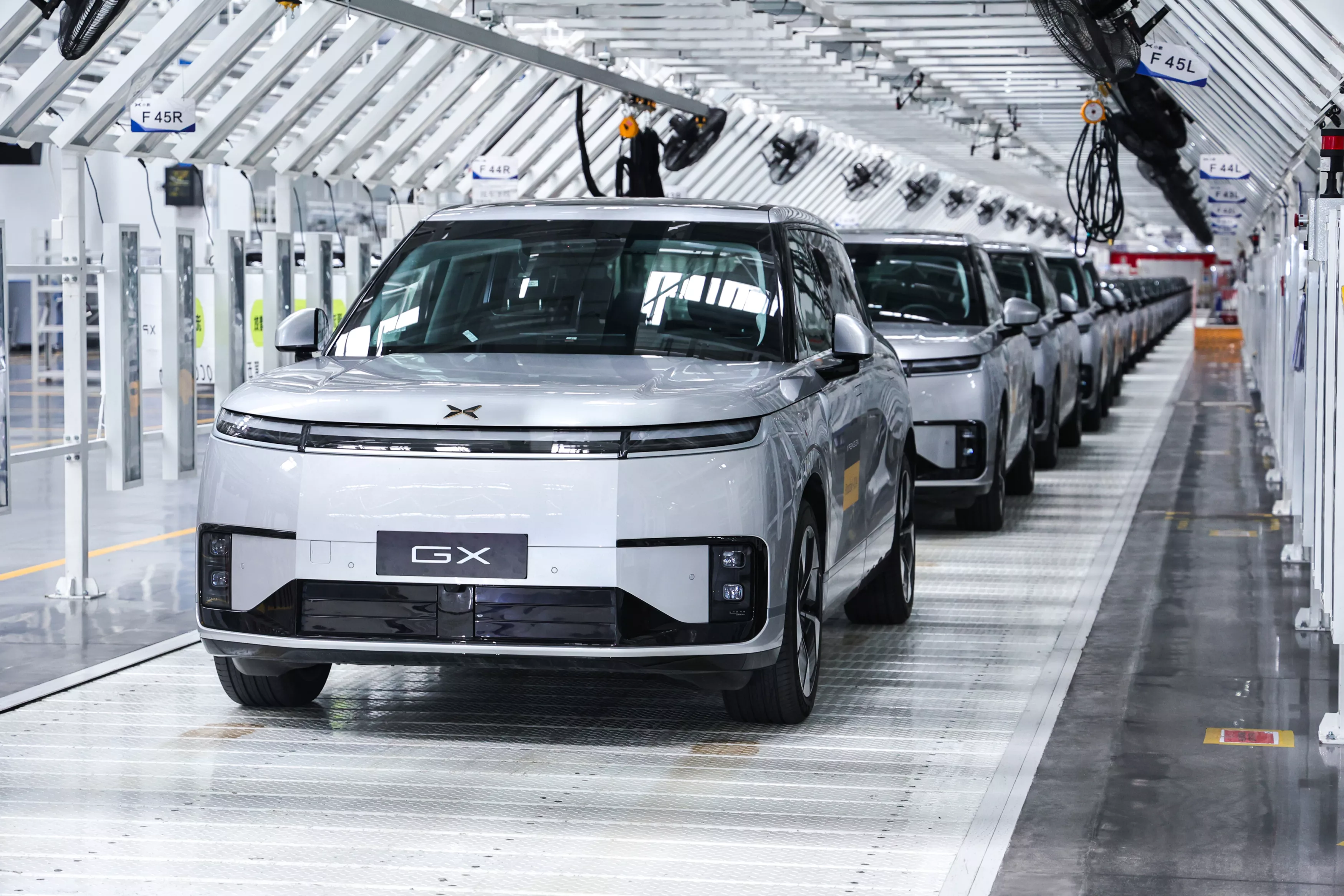
XPeng is simplifying its internal product development by merging its four existing product lines into two. This is not a cut to its model range, but an attempt to reduce duplicate engineering work as development costs rise and vehicle margins remain under pressure.
According to Chinese outlet 36Kr, XPeng will merge its existing F, I and G product lines into a single, larger G division. The D line will continue separately, focusing on the lower-priced MONA model family.
The terminology is important here. XPeng is not reducing its model range from four cars to two. Product lines refer to internal development units, not car models or technical platforms.
MONA remains separate, while the remaining models are brought together
The D line’s separate status is no coincidence. MONA accounts for a large share of XPeng’s sales volume and operates in a price segment where competition in China’s electric-vehicle market is particularly fierce.
The G line will henceforth include, among other things, larger SUVs, sedans and models intended for export markets. Ending the separate status of the international I line does not mean XPeng is retreating from Europe. Rather, the company wants to develop Chinese and export models on a more common technical basis than before, reducing costs and speeding up development.
Development is becoming expensive
According to XPeng’s own financial report, the company spent 2.91 billion yuan, or around €380 million, on research and development in the second quarter of 2026. The expense rose by 32.1% year on year.
At the same time, vehicle gross margin reached 12.1%, compared with 14.3% a year earlier. The company’s overall gross margin did rise to 20.7%, but this was supported by high-margin services and technology revenue.
This is where maintaining four parallel development units becomes a luxury. Shared components, software and project management should help avoid a situation in which several teams are separately solving essentially the same problem.
European model range is growing instead
XPeng’s product range is not shrinking. The company is expanding the MONA family, developing new G-series models and increasingly building cars outside China.
In Europe, Magna in Graz is already producing XPeng’s G6, G9 and P7+ models, and the company plans to add the G9L there as well. XPeng is therefore moving in the opposite direction: more models are being added, but their development needs to become less expensive.
That is the real purpose of the reorganisation. XPeng does not want to make fewer cars. It wants to make more cars with less internal duplication.
This matters from a European perspective. The pricing pressure from Chinese manufacturers does not stem only from cheaper labour or batteries, but also from the ability to develop multiple models using shared components and software platforms. XPeng is now trying to restructure itself according to the same logic.


