
Analogue revenge, Gordon Murray T.50s Niki Lauda crushes GT3 lap record
 1/6
1/6



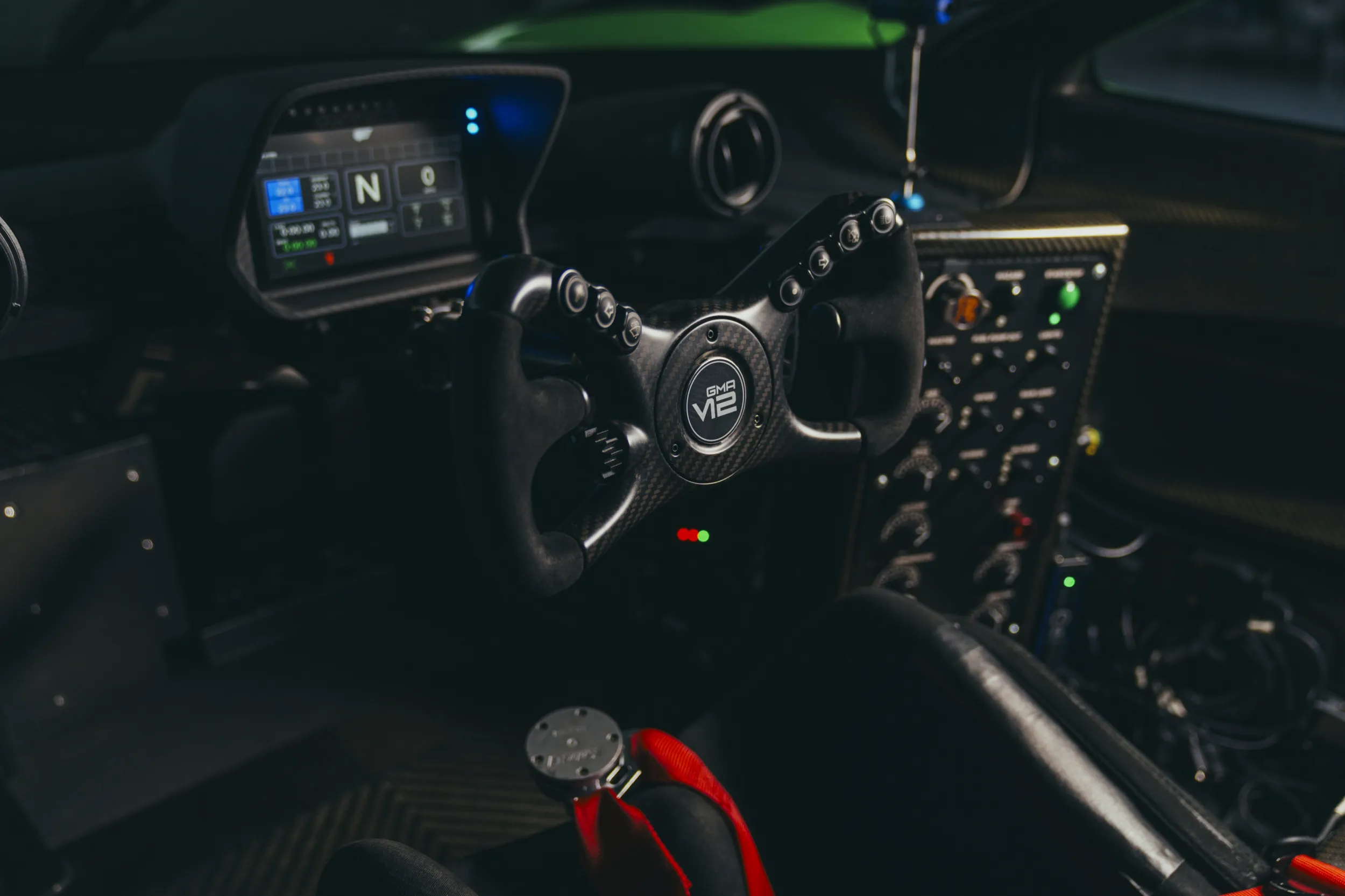

While mainstream manufacturers flood the market with anonymous electric appliances that weigh as much as a small planet, Gordon Murray offers a reminder of what genuine engineering looks like. A test session at the Bahrain circuit on 4 March 2026 turned into something close to a public humiliation for the modern racing establishment.
The track focused prototype T.50s Niki Lauda from Gordon Murray Automotive did not merely set a quick lap. It wiped out a GT3 class circuit record that had stood since 2001, beating it by a full seven seconds.
Mechanical violence in a digital age
In an era where marketing departments sell experiences through screens and software menus, Murray delivers something far more physical. The T.50s demands more from a driver than simply pressing a button.
Behind the wheel during the test was Dario Franchitti, four time IndyCar champion. His lap confirmed that the laws of physics still reward those who know how to bend them, especially when the car carries none of the extra mass that modern hybrid systems bring with them.
Radical lightweight engineering
GMA engineers built the car around an entirely new carbon fibre monocoque. The road going T.50 already follows a purist philosophy, but the Niki Lauda track version pushes that idea to its extreme.
The result weighs under 900 kilograms, a fraction of what many modern performance cars carry.
Power comes from a 3.9 litre naturally aspirated Cosworth V12 producing 772 horsepower. The rev limiter does not intervene until 12,100 rpm, a number that would have seemed outrageous not long ago.
At the rear sits one of the car’s most striking elements. A 400 millimetre fan draws air from beneath the body and effectively pulls the car towards the track surface, generating up to 1200 kilograms of downforce.
That figure exceeds the car’s own mass. In theory, the T.50s could drive along a tunnel ceiling, provided the driver could tolerate the strain on their internal organs.
A six speed Xtrac sequential gearbox swaps ratios with ruthless efficiency, making the idea of a traditional manual transmission feel almost quaint by comparison.
Speed through simplicity
Gordon Murray often insists that lap times are not his priority. Reality tells a slightly different story.
When a car is extremely light and its engine spins freely with minimal inertia, speed emerges naturally. That philosophy lands a quiet but pointed blow against today’s hybrid hypercars.
Machines such as the Mercedes AMG One rely on complex software, intricate energy management and elaborate cooling systems. Murray’s team chose a different path and focused on pure mechanical solutions.
A collector’s masterpiece
From a business perspective, the project borders on perfection. All 25 planned examples sold before the car even made its public debut.
The price exceeds €3 million, a figure that reflects more than exclusivity. Cars built around a screaming naturally aspirated V12 and extreme lightweight engineering are unlikely to survive future regulatory landscapes.
For buyers, the T.50s represents a snapshot of an era when burning petrol could still be considered an art form rather than a political offence.
A lesson for the industry
The technology behind the T.50s offers a broader lesson for automotive engineers. Murray demonstrates that innovation does not always come from larger battery packs or increasingly complicated software layers.
Sometimes it emerges from advanced materials and clever management of airflow.
As charging infrastructure continues to grow slowly across many markets, the T.50s stands as a reminder that a brilliant combustion engine and intelligent aerodynamics still provide a kind of independence that no fast charger can yet match.
Mechanical violence in a digital age
In an era where marketing departments sell experiences through screens and software menus, Murray delivers something far more physical. The T.50s demands more from a driver than simply pressing a button.
Behind the wheel during the test was Dario Franchitti, four time IndyCar champion. His lap confirmed that the laws of physics still reward those who know how to bend them, especially when the car carries none of the extra mass that modern hybrid systems bring with them.
Radical lightweight engineering
GMA engineers built the car around an entirely new carbon fibre monocoque. The road going T.50 already follows a purist philosophy, but the Niki Lauda track version pushes that idea to its extreme.
The result weighs under 900 kilograms, a fraction of what many modern performance cars carry.
Power comes from a 3.9 litre naturally aspirated Cosworth V12 producing 772 horsepower. The rev limiter does not intervene until 12,100 rpm, a number that would have seemed outrageous not long ago.
At the rear sits one of the car’s most striking elements. A 400 millimetre fan draws air from beneath the body and effectively pulls the car towards the track surface, generating up to 1200 kilograms of downforce.
That figure exceeds the car’s own mass. In theory, the T.50s could drive along a tunnel ceiling, provided the driver could tolerate the strain on their internal organs.
A six speed Xtrac sequential gearbox swaps ratios with ruthless efficiency, making the idea of a traditional manual transmission feel almost quaint by comparison.
Speed through simplicity
Gordon Murray often insists that lap times are not his priority. Reality tells a slightly different story.
When a car is extremely light and its engine spins freely with minimal inertia, speed emerges naturally. That philosophy lands a quiet but pointed blow against today’s hybrid hypercars.
Machines such as the Mercedes AMG One rely on complex software, intricate energy management and elaborate cooling systems. Murray’s team chose a different path and focused on pure mechanical solutions.
A collector’s masterpiece
From a business perspective, the project borders on perfection. All 25 planned examples sold before the car even made its public debut.
The price exceeds €3 million, a figure that reflects more than exclusivity. Cars built around a screaming naturally aspirated V12 and extreme lightweight engineering are unlikely to survive future regulatory landscapes.
For buyers, the T.50s represents a snapshot of an era when burning petrol could still be considered an art form rather than a political offence.
A lesson for the industry
The technology behind the T.50s offers a broader lesson for automotive engineers. Murray demonstrates that innovation does not always come from larger battery packs or increasingly complicated software layers.
Sometimes it emerges from advanced materials and clever management of airflow.
As charging infrastructure continues to grow slowly across many markets, the T.50s stands as a reminder that a brilliant combustion engine and intelligent aerodynamics still provide a kind of independence that no fast charger can yet match.


