
Aston Martin has another supercar in store for November, because the regular Vanquish apparently is not enough
Aston Martin has not yet laid all its cards on the table for 2026. The company is preparing to unveil another exclusive supercar in November, continuing the marque’s increasingly profitable special-model programme. For now, Aston Martin is keeping its name and technical specifications under wraps.
The news is hardly surprising. This year, the British marque has been churning out limited-edition cars at such a pace that an ordinary €600,000 supercar seems to have become a little too commonplace.
In August, Aston Martin unveiled the Valen, whose 5.2-litre twin-turbo V12 produces 625 kW and 1,000 Nm. Thanks to its carbon-fibre body, the car weighs up to 110 kg less than the marque’s existing V12 platform would allow, reaches 100 km/h in around three seconds and has a top speed of 344 km/h. Production is limited to 150 cars.
July saw the debut of the Vanquish 25, marking the Vanquish’s 25th anniversary. Just 50 will be built, split equally between the coupé and Volante.
Special models are no longer a side project for Aston Martin
With the new November car, the more important question is not whether Aston Martin can build another fast and expensive car, but why more and more of them are appearing.
The answer is rather prosaic: they are highly profitable.
In July, Aston Martin CEO Adrian Hallmark described limited-edition special models as a fundamental part of the company’s future financial success. The Valhalla, Vanquish 25 and Valen illustrate the strategy quite clearly. Small production volumes make it possible to use existing technology, add more expensive materials, more Q by Aston Martin craftsmanship and enough exclusivity to raise the price of each car significantly.
This is not a trick invented by Aston Martin. Ferrari has skilfully exploited the economics of limited-series and special models for years. Aston Martin simply has all the more reason to take the same lesson particularly seriously.
Meanwhile, the Valhalla changed the rules of the game
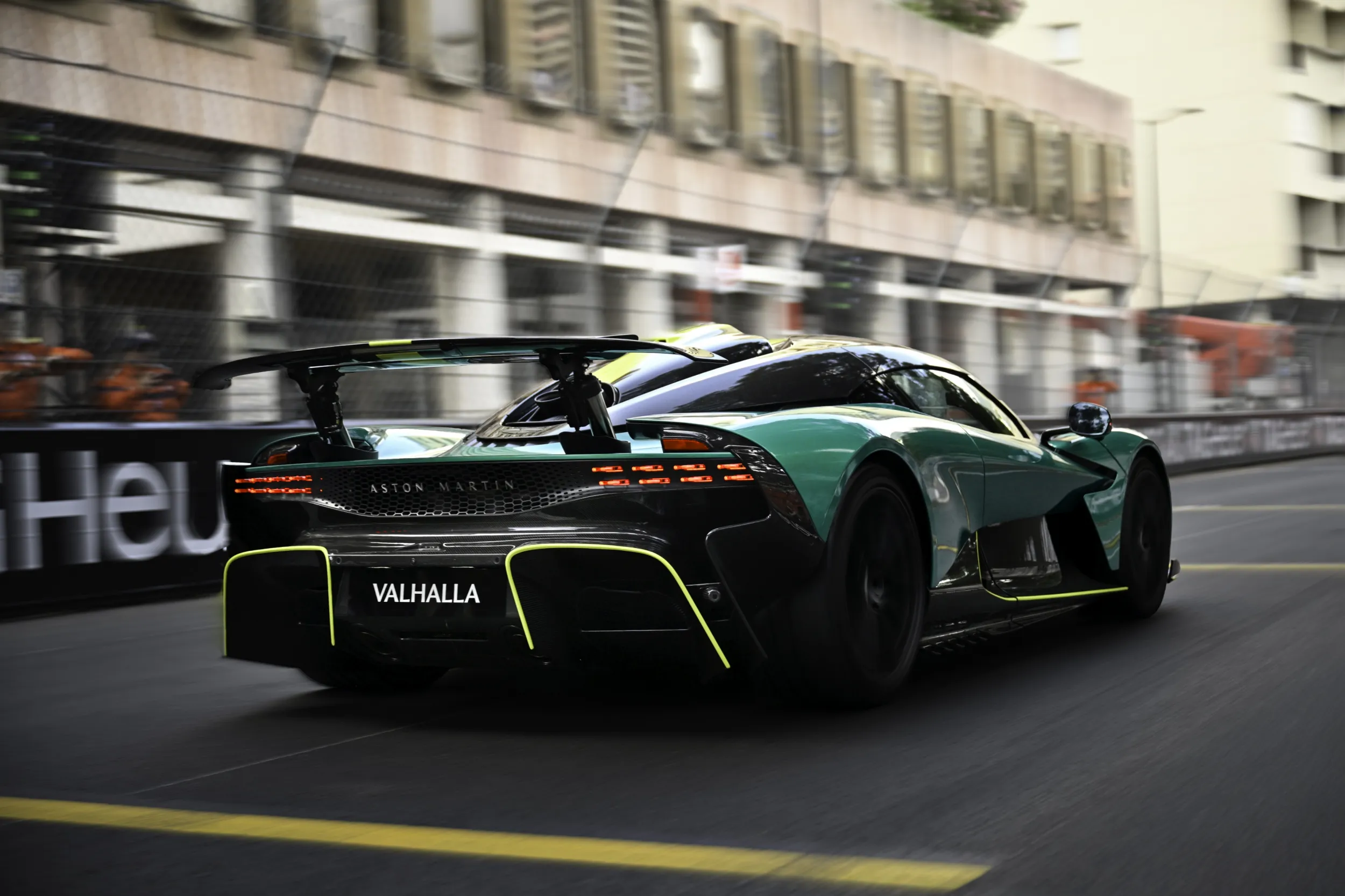
An even greater technical shift is taking place in the marque’s model range. The Valhalla is Aston Martin’s first mid-engined plug-in hybrid to enter series production. Its 4.0-litre twin-turbo V8 and three electric motors deliver a combined 794 kW and 1,100 Nm.
The all-wheel-drive Valhalla accelerates from 0-100 km/h in 2.5 seconds, reaches 350 km/h and generates more than 600 kg of downforce at 240 km/h. Production is limited to 999 cars.
This gives Aston Martin a fairly broad canvas. At one end sits the mid-engined hybrid Valhalla; at the other are the classically configured V12 Vanquish and Valen. November’s newcomer could fit somewhere between them or go further still.
For now, however, predicting a specific powertrain, price or production volume would be pure speculation.
One thing is certain. Aston Martin no longer sees small-series supercars as rare anniversary models. They have become part of its business model.
If there are enough buyers for whom the Vanquish is too ordinary and the Valen too widely available with its 150-unit production run, it would be almost rude not to sell them something new in November.


