
GM takes its new V8s to 6.6 litres, raising the bar for the Silverado
 1/3
1/3
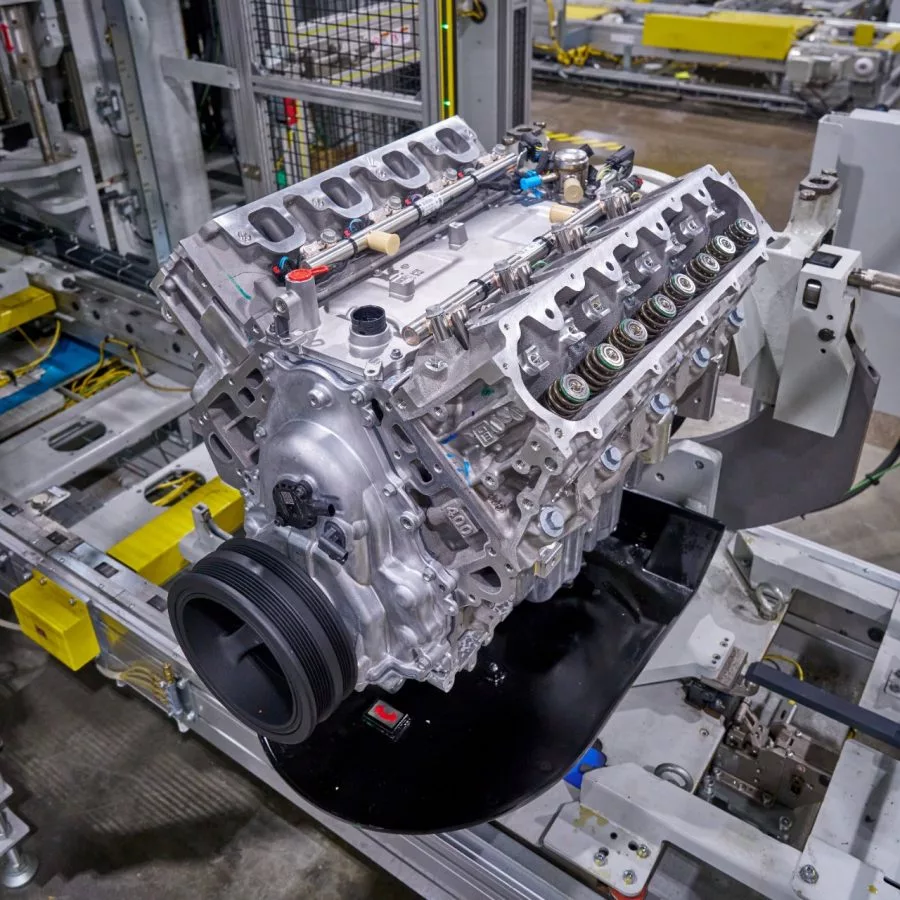
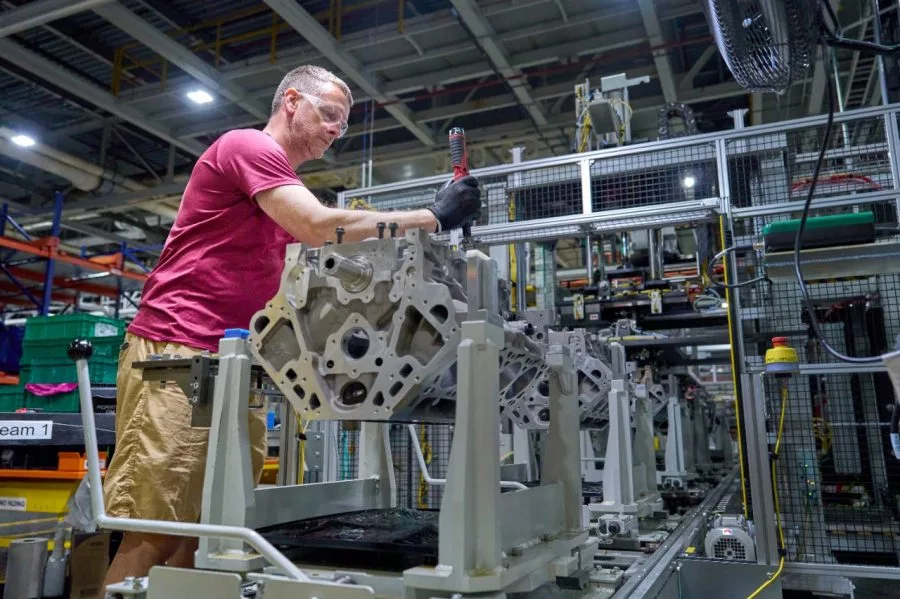
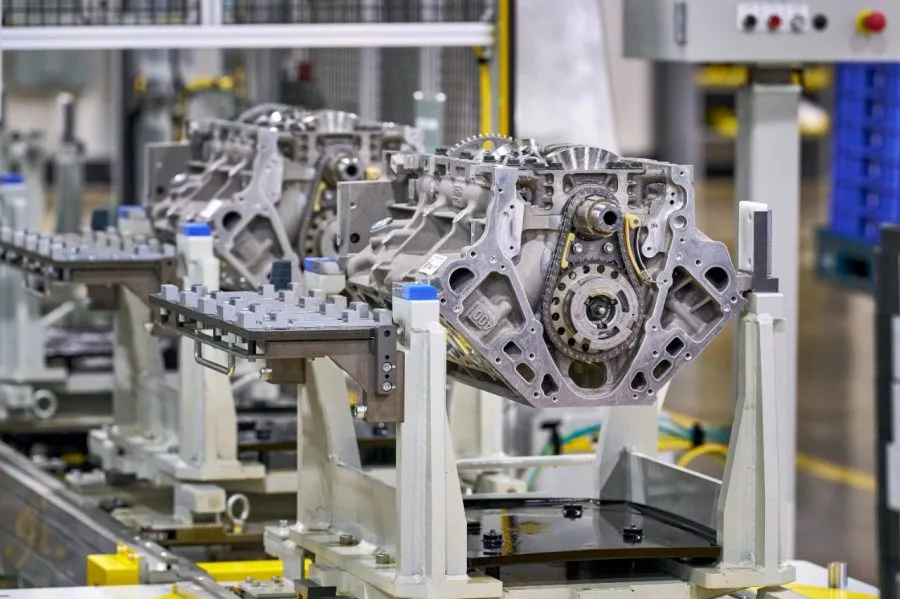
General Motors is not consigning the large naturally aspirated V8 to history just yet. On the contrary, the 2027 model-year Chevrolet Silverado 1500 and GMC Sierra 1500 will receive an all-new sixth-generation Small Block engine family, whose flagship version delivers 359 kW and 679 Nm. More telling still is the technical approach: GM has increased displacement, retained the two-valve pushrod architecture and added a combination of direct and port injection.
Manufacturer data show that this is not another software update for the old V8, but a new generation of engines that will replace the current 5.3- and 6.2-litre petrol engines.
5.3 litres becomes 5.7, and 6.2 litres becomes 6.6
The new L76 increases displacement to 5.7 litres and produces 300 kW and 580 Nm. Compared with the current 5.3-litre V8, this represents a significant increase in output.
Even more interesting is the L78. Replacing the current 6.2-litre engine is a 6.6-litre naturally aspirated V8 producing 359 kW and 679 Nm of torque. GM calls it the most powerful naturally aspirated V8 in its class.
The increase in displacement did not come from a larger cylinder bore. GM retained the Small Block's 111.8 mm cylinder spacing, a design principle dating back to 1955, but increased the piston stroke by 6 mm. Engineers also raised the compression ratio, increased the throttle diameter and designed new intake manifolds with tuned runners.
It is a distinctly American answer to the question of how to further develop the internal-combustion engine: not necessarily through smaller displacement and more boost pressure, but with a larger naturally aspirated engine and a more precise combustion process.
Old-school design gets modern injection
GM retains the basic Small Block formula: the camshaft sits in the engine block, the valves are actuated by pushrods, and each cylinder has two valves. GM has therefore not taken the route of a V8 with four camshafts and 32 valves.
At the same time, the fuel system becomes considerably more complex. The new engines use direct injection and port injection simultaneously. The control unit can select the solution best suited to the operating conditions in order to improve output, fuel consumption and emissions figures.
The lubrication system has also received an important update. GM uses a continuously variable-output oil pump, an engine-mounted oil cooler and revised oil passages to stabilise oil pressure under different operating conditions. This is no minor detail, because powertrain reliability under load matters more in a pickup truck than an impressive peak-power figure.
Before the vehicles go on sale, GM plans to cover more than 2.4 million kilometres in real-world traffic testing with the new powertrains.
The smaller TurboMax also gains power
The Silverado and Sierra will not become a parade of V8s alone, however. The 2.7-litre TurboMax four-cylinder petrol engine now develops 261 kW and 617 Nm. GM has increased its output by approximately 30 kW and its torque by 34 Nm.
The engine received a new turbocharger, improved injection, active thermal management and redesigned pistons. Instead of the previous eight-speed automatic, GM now pairs the TurboMax with a 10-speed automatic transmission. All other 2027 Silverado 1500 and Sierra 1500 engines also use a 10-speed automatic.
The line-up will also retain the 3.0-litre Duramax turbodiesel, producing 227 kW and 671 Nm of torque. GM therefore offers a turbocharged four-cylinder petrol engine, a six-cylinder diesel and two naturally aspirated V8s within a single model family.
The biggest V8 is not the best tow vehicle
The figures reveal an interesting detail. While the 6.6-litre L78 is the most powerful petrol engine, it does not offer the Silverado's highest maximum trailer weight.
According to GM, a properly configured Silverado 1500 with the 5.7-litre L76 can tow a trailer weighing up to about 6,210 kg. The maximum for the 6.6-litre V8 is around 4,400 kg. The difference stems from the vehicle configuration, axle loads and equipment, rather than any shortage of power from the larger engine.
Payload follows the same logic. The Silverado TurboMax has a maximum figure of about 1,060 kg, the 5.7-litre V8 around 984 kg and the 6.6-litre approximately 685 kg. The flagship engine is therefore primarily a performance choice rather than one for maximum working capability.
GM goes against the hybrid tide
The importance of the new engines extends beyond the Chevrolet and GMC model ranges. Competitors are moving in different directions in the US full-size pickup market. Ford has, among other things, focused on hybrid powertrains for the F-150, Stellantis is developing electrified solutions for Ram, while GM continues in parallel with V8 petrol engines and the Duramax diesel. According to Reuters, the next-generation Silverado and Sierra will reach the market in the fourth quarter of 2026.
GM has also put real money behind this strategy. As early as 2025, the group announced an $888 million investment in its Tonawanda plant for production of the sixth-generation V8. According to GM investor materials, the new engine family should be 4–6% more efficient than its predecessor. The group also produces engines in Flint and St. Catharines, Canada.
This investment shows that the V8 is not a nostalgic side project for GM. Full-size pickups and SUVs are among the group's most important and profitable models, and GM is preparing another long life cycle for their internal-combustion engines.
Exotic for Europe, an important global test
From a European perspective, naturally aspirated 5.7- and 6.6-litre petrol engines seem almost like products from another era. The Silverado 1500 and Sierra 1500 are not mainstream volume models here, and their dimensions, fuel consumption and tax environment make them primarily niche products.
Technically, however, the development is noteworthy. GM is showing how far a traditional large-displacement V8 can be taken without forced induction or hybrid assistance. Greater displacement, a higher compression ratio, dual injection, more precise thermal management and lower friction losses are intended to increase performance and reduce fuel consumption at the same time.
That makes the sixth-generation Small Block more than just another American pickup-truck engine. Ford, GM and Stellantis are currently trying different technological formulas in the same highly profitable segment. GM's approach says quite clearly that a properly developed naturally aspirated V8 still has work to do.


