
Mitsubishi updates year-old Eclipse Cross with cheaper LFP battery and 650 km of range
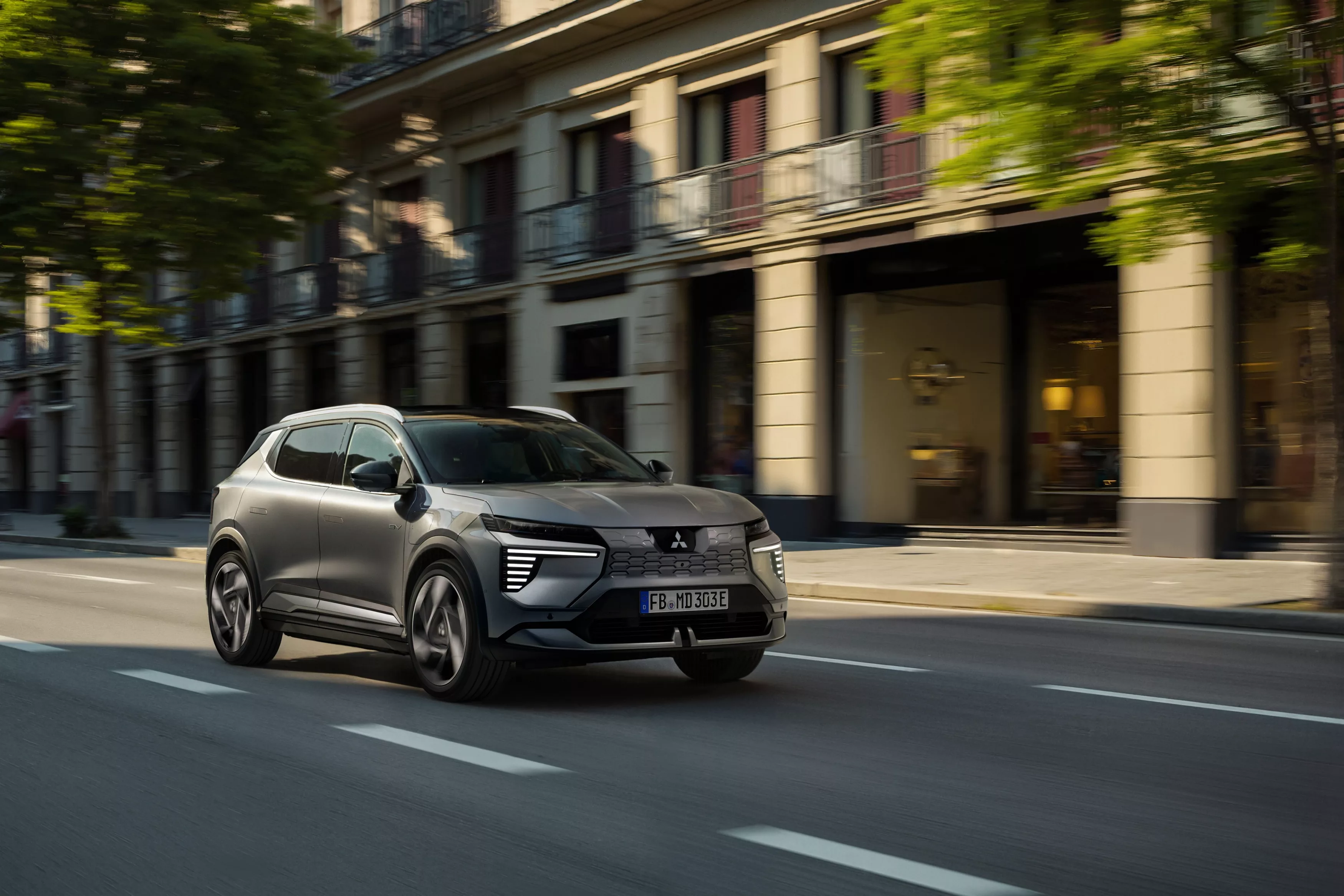
Mitsubishi is updating the electric Eclipse Cross just a year after its European debut. The existing 87 kWh battery will be replaced by an 89 kWh NMC unit, increasing WLTP range from 635 km to 650 km. More importantly, a new and cheaper 67 kWh LFP version is being added.
Both will reach the European market at the end of 2026. The motor remains unchanged: the front wheels are driven by a 160 kW, 300 Nm electric motor.
The smaller battery charges even faster
The new 67 kWh battery uses LFP chemistry and provides up to 472 km of WLTP range. Its maximum DC charging power is 165 kW, while charging from 15 to 80 per cent takes around 24 minutes, according to Mitsubishi.
Mitsubishi continues to use NMC chemistry for the larger 89 kWh battery. Compared with the current 87 kWh battery, capacity increases by just 2 kWh, but WLTP range rises by 15 km to 650 km.
The more significant improvement comes in charging. Peak power remains at 150 kW, but charging from 15 to 80 per cent now takes around 28 minutes, up to nine minutes less than before.
AC charging operates at 11 kW, while a 22 kW onboard charger is also available depending on the version.
Renault Scénic receives the same technology
The rapid update is no coincidence. The Eclipse Cross is a close technical relative of the Renault Scénic E-Tech Electric and is built at Renault’s Douai plant in France. Mitsubishi introduced the model to Europe in 2025 as a result of cooperation within the Renault-Nissan-Mitsubishi Alliance.
As a result, battery technology updates are reaching both models virtually hand in hand.
The 67 kWh version is particularly important for Mitsubishi. For example, the existing 87 kWh Eclipse Cross starts at €47,990 in the Netherlands, while the new 67 kWh model costs €35,990 there. This changes the car’s position in Europe’s electric SUV market far more than the extra 15 km of range offered by the larger battery.
At the same time, 650 km of WLTP range is no longer exceptional in this class. In the same price bracket on the European market, several electric cars from the Volkswagen Group, Renault and Korean manufacturers already offer long range. Mitsubishi’s strength must therefore come from a combination of a lower price with the smaller battery, long range with the larger one, and faster charging than before in both cases.
Within a year, the battery line-up has become much more logical
The original Eclipse Cross went on sale in Europe only with the large 87 kWh battery. While it offered up to 635 km of range, it left Mitsubishi without a cheaper version for buyers who do not constantly need more than 600 km of theoretical range.
The 67 kWh LFP battery addresses precisely that shortcoming. Its 472 km of WLTP range will be sufficient for a large share of users, while LFP chemistry should help keep the price under control.
The 89 kWh version’s extra 15 km of range alone would not make for a particularly exciting model update. But together with the 67 kWh entry-level version and shorter charging times, the Eclipse Cross has become considerably more competitive in a year.


