
Jaguar Type 01 gets a body panel engineers thought impossible to manufacture
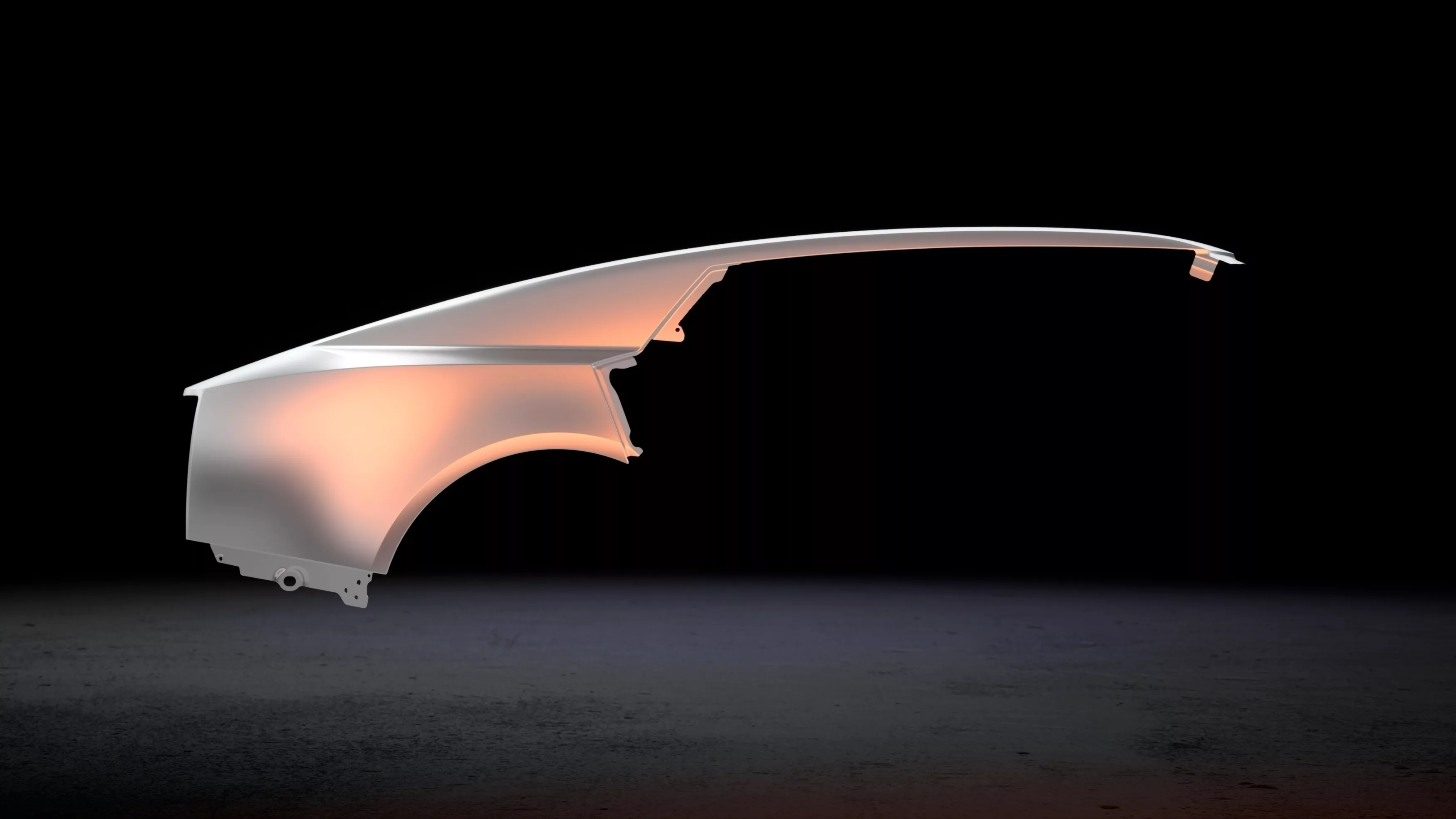
Jaguar has no intention of compromising on the design of its new electric luxury car. The Type 01’s aluminium body panel, almost three metres long, proved virtually impossible to manufacture using conventional methods, but rather than simplify the design, engineers developed a new stamping process.
According to a technical overview published by Jaguar, developing a manufacturing solution for the complex side panel took more than 1,500 hours of work. The component combines the side edge of the roof, the rear wheel arch and the body’s shoulder line into a single piece. Its five distinct surface levels and three converging design lines exceeded the capabilities of conventional cold stamping of aluminium.
Six stamping stages for one panel
Forming aluminium into such a complex component presents two main problems: springback and the risk of cracking. Jaguar’s engineers addressed these with a six-stage process in which a giant press applies approximately 24.5 MN of force.
A conventional solution would involve several smaller panels and additional joints. Jaguar opted for a single component to preserve the car’s clean side profile. The new technology also allows the panel to be manufactured with a cycle time suitable for series production.
Design is not the only objective
The Type 01’s distinctive body design also aids aerodynamics. The car has a drag coefficient of 0.23, the lowest in Jaguar’s history. Its long bonnet, low roofline and muscular rear end recall classic GTs, but beneath them lies the JEA platform, developed specifically for electric cars.
Three electric motors deliver a combined output of up to 757 kW and 1,365 Nm. Jaguar promises acceleration from 0–100 km/h in 3.2 seconds and a WLTP range of up to 720 km from a battery with 118 kWh of usable capacity. Fast charging at up to 350 kW can add enough energy for approximately 320 km in 13 minutes under ideal conditions.
Jaguar must justify a luxury-car price
Due to enter production next year, the Type 01 will compete in Europe primarily with the Porsche Taycan and Mercedes-AMG’s range-topping electric models. At a price of around €150,000, a powerful electric powertrain is no longer a distinctive selling point.
Jaguar is instead banking on distinctive design and sophisticated manufacturing technology. The three-metre aluminium panel demonstrates that ambition, but also brings a potential drawback: accident repairs involving such a large and complex component could prove expensive.
The Type 01’s real test, then, is not just speed, but the ability to turn exceptional design into a high-quality, durable production car.


