
Ford Ranger set for larger V6, but power output remains unclear
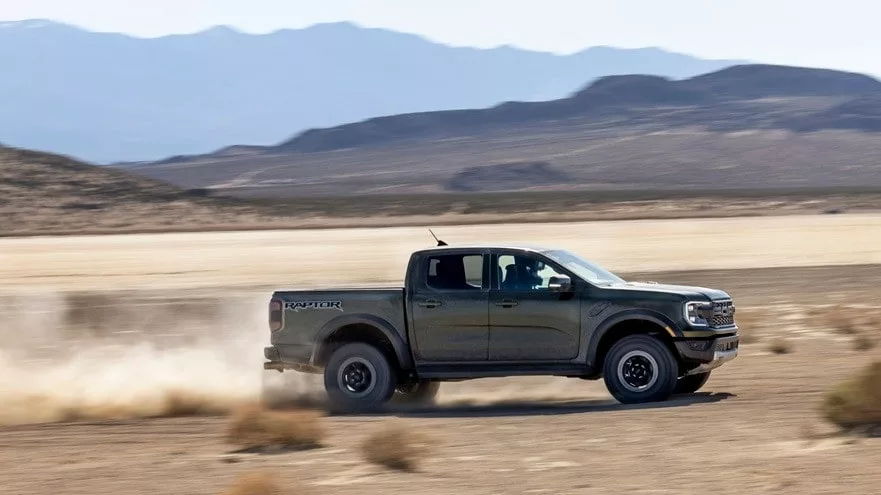
Ford is preparing to update the Ranger’s engine line-up for the 2027 model year. The pickup is expected to replace its current 2.7-litre V6 with a 3.0-litre twin-turbo EcoBoost engine, also used in the updated Bronco. The larger displacement promises stronger pulling power, but the Ranger’s final output figures are not yet known.
According to Ford Authority, the new V6 will be offered in the Ranger’s XLT and Lariat trim levels in the US market. The more powerful Ranger Raptor already has a 3.0-litre EcoBoost as standard. Ford has not yet officially confirmed the engine change for the regular versions.
A larger engine does not necessarily mean more kilowatts
The updated Ford Bronco’s 3.0-litre V6 produces 283 kW and 597 Nm, while the more powerful version in the Bronco Raptor delivers approximately 312 kW. The same engine family is also coming to the Ford F-150, but there its output is limited to 242 kW and 542 Nm.
In the F-150, peak figures remain at the level of the existing 2.7-litre engine. The more significant change is in torque delivery: the new V6 reaches peak torque at just 2250 rpm, whereas the previous engine needed 3500 rpm. Torque increases by approximately 10 per cent across the rev range used in everyday driving.
In the Ranger, a similar setup would mean stronger acceleration at low revs and easier towing. The power output Ford will ultimately choose for the pickup remains unknown.
The European Ranger follows its own path
For European buyers, the US engine change does not automatically mean a new petrol engine. In Europe, Ford continues to focus on diesel engines and a plug-in hybrid.
The European Ranger’s 3.0-litre V6 turbodiesel produces 184 kW and 600 Nm, providing strong pulling power and allowing it to tow a braked trailer weighing up to 3500 kg. The petrol-powered Ranger Raptor also uses a 3.0-litre V6, but in European-market tune it produces 215 kW.
Ford’s main rivals in the European pickup market are the Toyota Hilux, Volkswagen Amarok and Isuzu D-Max. The new EcoBoost could improve the Ranger’s competitiveness in terms of performance, but stricter emissions requirements and the fuel consumption of a large petrol engine constrain its prospects of reaching the European market.
The real aim of Ford’s engine change appears to be standardising powertrains and improving low-rev pulling power rather than setting power records. For European Ranger buyers, the further development of diesel engines and the plug-in hybrid will remain the more important issue, at least initially.


