
Škoda Kodiaq gains 200 kW plug-in hybrid that outpowers even the RS
 1/3


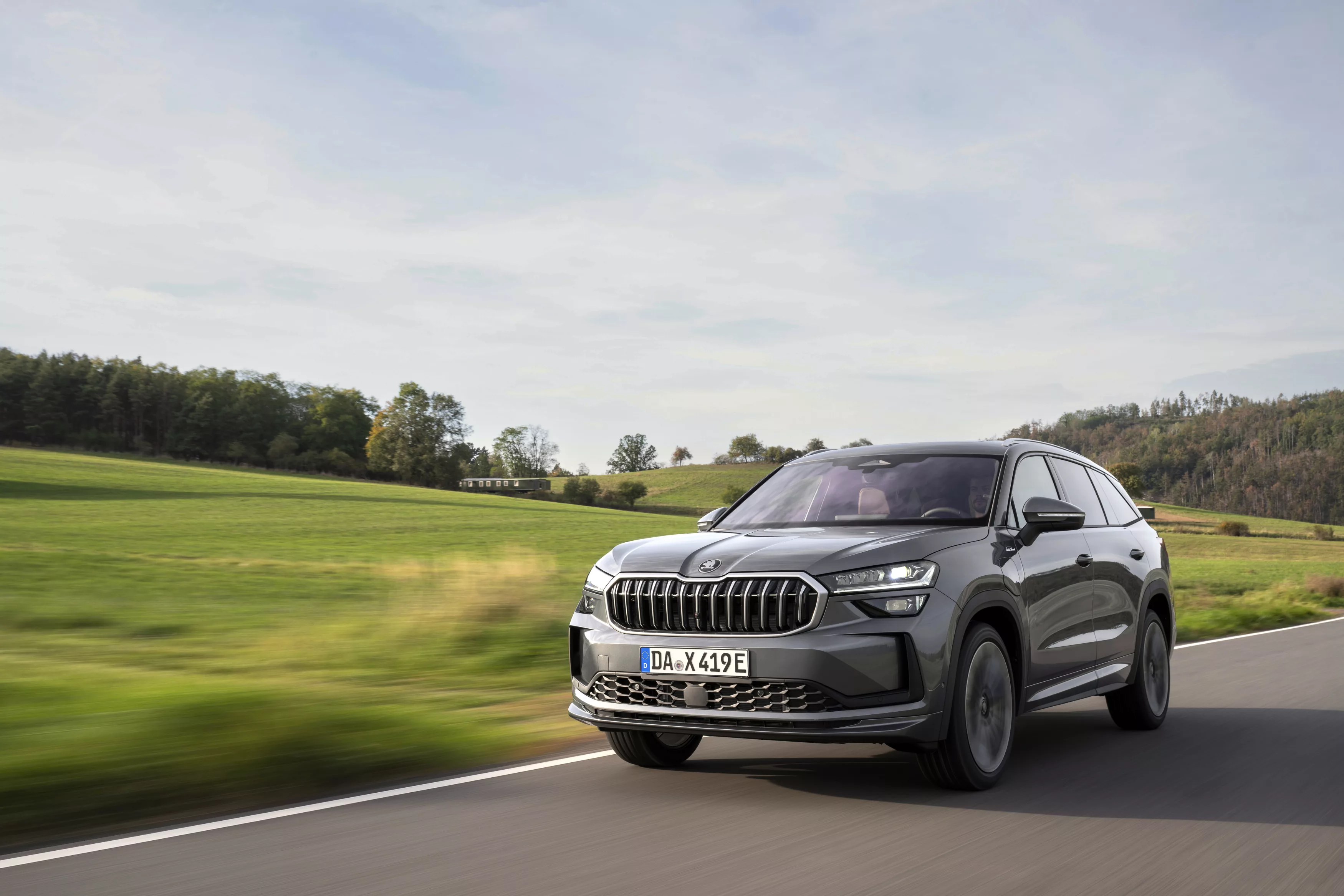
Škoda is marking the Kodiaq’s tenth anniversary with two additions. A plug-in hybrid with 50 kW more power joins the range, its 200 kW system output exceeding even that of the sporty Kodiaq RS. The luxurious Laurin & Klement trim also returns to the top of the line-up. The most powerful Kodiaq is therefore now a hybrid, but with one important caveat: unlike the RS, it drives only the front wheels.
Plug-in hybrid gains a third more power
According to Škoda’s official announcement published on 22 October, the new Kodiaq iV uses the same 200 kW plug-in hybrid powertrain that also joined the Superb range this year.
The powertrain combines a 1.5-litre TSI turbocharged petrol engine producing 130 kW with an 85 kW electric motor. Total system output reaches 200 kW, with maximum torque of 400 Nm.
Compared with the existing 150 kW plug-in hybrid, power has risen by 50 kW, or 33 per cent. The additional power comes from an upgraded petrol engine and changes to the powertrain control software.
The less powerful plug-in hybrid will also remain on sale, offering an alternative for buyers who prioritise a lower price over greater performance.
Interestingly, the new plug-in hybrid also outpowers the 195 kW Kodiaq RS. The latter uses a 2.0-litre turbocharged petrol engine and all-wheel drive, whereas the hybrid has to channel all 400 Nm through its front wheels.
Greater power therefore does not necessarily mean quicker acceleration from a standstill or better handling. All-wheel drive gives the RS a clear advantage, particularly on wet and slippery roads. Škoda has yet to publish acceleration figures or a top speed for the new plug-in hybrid.
More than 100 kilometres on electric power
The power increase has not brought a larger battery. The Kodiaq iV still uses a lithium-ion battery with a gross capacity of 25.7 kWh, of which 19.7 kWh is usable.
According to the manufacturer, electric range exceeds 100 km. Depending on the version, the existing 150 kW Kodiaq iV can cover up to 124 km on the WLTP test cycle, but Škoda has yet to confirm the exact figure for the new powertrain.
The battery supports DC fast charging at up to 50 kW, allowing it to be charged at conventional public fast-charging stations.
The practical value of a plug-in hybrid nevertheless depends on charging habits. With daily charging, most shorter journeys can be completed without starting the petrol engine. With a depleted battery, however, fuel consumption will be considerably higher than the official weighted-average figures for plug-in hybrids suggest.
Laurin & Klement returns as a more luxurious Kodiaq
The second anniversary-related addition concerns equipment. Familiar from the first-generation Kodiaq, Laurin & Klement returns to the top of the range, offering an alternative to the sportily styled Sportline and RS.
On the outside, the new version can be identified by its body-coloured bumpers and side sills, silver roof rails and distinctive alloy wheels. It comes with 19-inch Lefka wheels as standard, while 20-inch Venus or Rila wheels are available as options.
Matrix LED headlights are also included.
Inside, Škoda offers AGR-certified ergonomic front seats with an enhanced massage function. The car also gets three-zone climate control, a 13-inch central display, distinctive interior trim and Laurin & Klement badges.
The new trim level is not restricted to a single powertrain. Buyers can choose from several engines, including the new 200 kW plug-in hybrid.
Prices for the new version are still to come
Expanding the Kodiaq’s powertrain range strengthens Škoda’s position in Europe’s large family car market. Plug-in hybrids have become an important alternative to diesels, particularly for buyers who can charge their cars at home or at work.
In technical terms, the 200 kW powertrain brings nothing unprecedented to the Volkswagen Group. The Tiguan eHybrid R-Line, for example, already offers the same power output and 400 Nm of torque. The Kodiaq’s strengths remain its larger body and more practical cabin.
Prices for the more powerful plug-in hybrid and the Laurin & Klement are not yet known. Orders for the new luxury version are expected to open in Germany this autumn.
Sales figures also underline the Kodiaq’s importance in Škoda’s line-up. Since the first generation was unveiled in September 2016, the manufacturer has sold 1.2 million Kodiaqs worldwide. The model reaches buyers in around 70 markets and was Škoda’s second best-selling car in 2025.
The new 200 kW plug-in hybrid gives the Kodiaq a more powerful alternative, but the lack of all-wheel drive remains its most obvious compromise. In a large family car with close to 200 kW, the ability to distribute drive to all four wheels could be more than a privilege reserved for the RS.


